















 Workout

 Meditation







It can be challenging to keep weight off once you reach menopause. Losing weight after menopause is difficult. So I am Laura Bennett, Wellness Enthusiast and Healthy Aging Advocate, is sharing my experience on how I maintained my weight during menopause naturally.
My body started to change when I began going through menopause, which for me, was very frustrating and foreign – my energy level decreased, my sleep was erratic and it was harder than ever to stay at my weight.
For years, I had adhered to pretty much the same diet and lived pretty much the same lifestyle, but that all changed when I hit menopause. I was able to start putting on pounds a lot more easily, particularly in the tummy area, although I did not make any radical changes with my exercise plan. I initially blamed myself and felt I must be “toughing myself out” and dieting more, but as time went on I knew that menopause simply brings about a change in metabolism, hormone levels, muscle mass and energy expenditure.
Being aware of what was going on in my body led me to cease the frustration of trying to lose weight and engage in more healthy and sustainable practices. This change of attitude literally made a huge difference in my life. I didn’t worry about losing weight quickly, but instead, I worked on keeping myself physically fit, energetic, mobile and healthy as a woman during menopause.
Related Stories
 Mary Joan Schutz: Private Life, Lifestyle, and a Balanced Wellness Approach
 75 Soft Challenge: Rules, Benefits, Diet, Workout & Safety
Understanding Why Weight Changes During Menopause.
I learned the most that menopause impacts more than just the reproductive hormones. As levels of estrogen decline, so can the following:
- Metabolism.
- Fat storage.
- Muscle mass.
- Sleep quality.
- Digestion.
- Mood.
- Energy levels.
At least I felt my body started to accumulate fat in a different manner than it used to do, particularly around my waistline. I also noticed that I was losing muscle faster and thus my metabolism seemed to slow down.
Initially these changes were discouraging, but it was helpful to know these changes were common, and helped to be more compassionate towards myself. Don’t blame yourself for having gone into menopause; it is a major event in your life and you need to accept it and make some changes to your lifestyle.(1)
Benefits I Personally Experienced by Maintaining My Weight During Menopause.
I discovered that a healthy weight as I age was a lot more than what people think. It had a direct impact on my physical, mental and emotional existence each and every day.
1. I decreased my health problems risk.
One of my motivators was to keep my long term health in mind. Since the menopausal weight gain has been linked to various health problems, it can make you susceptible to:
- Heart disease.
- Type 2 diabetes.
- High blood pressure.
- All chronic conditions.
After I began to keep my weight under control and maintained it well, I was feeling more energetic and healthy in general.
2. Increased my bone health.
I was more conscious of bone health during menopause because as estrogen levels dropped, I knew that my bones could become weaker and become at risk of osteoporosis.
Incorporating strength training and eating foods that have high nutritional value gave me more strength and stability in my body.
3. My mood became more stable.
I really didn’t realize how much exercise and eating the right foods would impact my mood. Regular activity was beneficial to decrease stress, irritability and mood swings.
On each day that I did regular exercise, I observed:
- Better focus.
- Less anxiety.
- Improved patience.
- Positive mindset.
4. I Slept Better.
This was one of my most challenging menopause side effects: sleeping problems. I would be very tired the following day if I had night sweats and/or restlessness.
But, after making some positive changes in my daily routine, particularly exercise and drinking water, my sleep improved gradually as well.
5. I regained my energy.
Of all the most rewarding changes one made was re-gaining my energy. Focused on eating a better balanced diet and exercising more, I no longer feel exhausted and tired all the time.
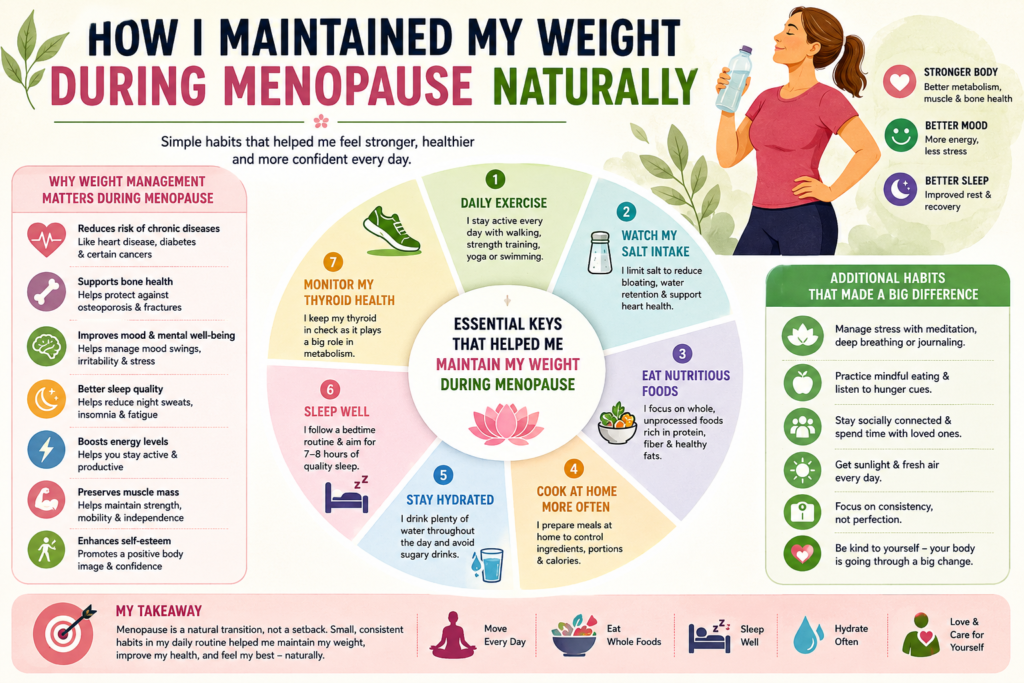
Essential Keys That Personally Helped Me Maintain My Weight During Menopause.
1. Daily Exercise Became Non-Negotiable.
This was definitely the one most important thing that assisted me.(2)
As women enter into menopause, their metabolism slows down so that they use fewer calories.
I knew that sitting around, but eating the same way, resulted in a quick gain in weight. So, rather than pushing myself to the max with workouts, I limited myself to what I could do for a long period of time.
The activities which helped me are:
- Walking.
- Swimming.
- Yoga.
- Light strength training.
- Cycling.
The daily walking became a habit since I found it to be a great way to keep my energy levels up, without being physically exhausted and made me happy as well as keeping my stress level down.
In addition, I worked in some resistance exercises a couple times a week as it’s so important to preserve muscle mass during menopause.
2. I took to moderating my salt consumption.
I found that foods high in salt caused me to retain water, feel bloated and during hot flashes worsened by water retention.
This was easier for me to manage, by eliminating all processed foods and cooking more of my own meals.
I started using:
- Herbs.
- Lemon.
- Garlic.
- Spices.
Rather than add a ton of salt to flavour.
3. I Completely Changed My Approach to Dieting.
One of the worst things I did was to go on a variety of fad diets.
They only made me:
- Tired.
- Hungry.
- Stressed.
- Inconsistent.
Rather, I concentrated on nutrition that assisted me with managing my menopause.
I personally began to have more food:
- Vegetables.
- Fruits.
- Legumes.
- Whole grains.
- Nuts.
- Lean proteins.
- Healthy fats.
I also reduced:
- Sugary snacks.
- Alcohol.
- Ultra-processed foods.
- Refined carbohydrates.
This seemed much more attainable and sustainable in the long-term.
4. Cooking at Home Helped Me Stay Consistent.
Eating my own meals was hugely beneficial for me because I was making the meals myself.
Foods prepared in restaurants and processed foods tend to contain:
- Excess sugar.
- Unhealthy fats.
- Sodium.
- Hidden calories.
I was able to cook at home and thus gained more control over:
- Ingredients.
- Portion sizes.
- Nutritional quality.
It has also made me more conscious of eating things.
5. Proper Hydration Became Extremely Important.
Previously I didn’t realize how much I needed to drink.
Since I was drinking more water on a regular basis, I saw:
- Reduced cravings.
- Improved digestion.
- Less bloating.
- Heightened energy and improved energy levels.
I also eliminated a lot of sugary beverages and began to opt for:
- Water.
- Herbal teas.
- Instead use 100% and unsweetened infusions.
6. Improving My Sleep Changed Everything
With poor sleep it made it much more difficult to maintain my weight.(3)
I realized that my sleep was poor when I:
- I craved more sugar,
- Felt hungrier.
- Had less motivation to exercise.
Personally, I am beginning to improve my sleep by:
- Avoiding screens prior to sleep
- Staying on a regular, well-maintained sleep schedule.
- Practicing relaxation exercises.
- Sit in front of the TV and do a few gentle stretches before going to bed at night.
It’s these small things that helped to improve my sleep over time.
7. I Started Monitoring My Thyroid Health.
This was one I hadn’t thought of prior to menopause.(4)
Later I found out that thyroid problems can be more prevalent during menopause, and can also be responsible for gaining weight and fatigue.
I shared my symptoms with my health care provider, learned more about the relationship between hormones and metabolism, and energy.
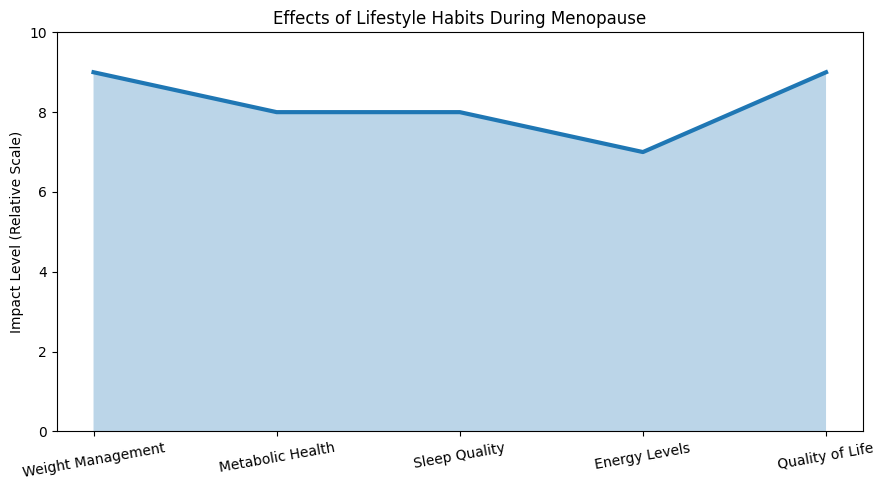
Additional Habits That Helped Me Personally.
In addition to the basics, there were a number of lesser habits that also came in very handy:
Savor each bite and savor the flavors by eating slowly.
- Managing stress levels.
- Avoiding emotional eating.
- Staying socially active.
- Spending time outdoors.
- Increasing the strength of my core and posture.
- Making sure that you are consistent, even if you don’t get it right all the time.
Also, changing my mindset from thinking of menopause as a battle to how to take care of my body differently.
My Personal Experience With Menopause Weight Management.
I can say that a major lesson that I learned from menopause is to be more patient and more aware of my body.
At first, I was frustrated as my body wasn’t reacting as it used to do when I was in my 30s and early 40s. However, I decided to give up the idea of having everything I wanted and instead think about wellness in the long-term, and it was quite a bit easier.(5)
The greatest gains that I personally made were:
- Better energy.
- Improved confidence.
- Stronger muscles.
- More stable moods.
- Healthier sleep.
- More love and appreciation for myself.
I also discovered that is consistency – not perfection. Little things done on a daily basis were able to make a definite impact.
“Menopause taught me that lasting results come from patience, consistency, and learning to support my body with healthier daily habits instead of chasing perfection.”

Bottom Line.
To me, getting through menopause and maintaining weight is an all but impossible task, but once you understand what is going on with the hormones and metabolism in your body, it can be quite easy.
The strategies that I found most beneficial for myself were:
- Daily movement.
- Balanced nutrition.
- Hydration.
- Proper sleep.
- Stress management.
- Selflessness and perseverance in the process.
I was not only focused on how to get rid of the excess weight, but how to make sure I’m strong, energetic, mobile, and healthy. When I realized that I was not going through menopause, but experiencing it, I was no longer frustrated and felt much better equipped and in control of my health.
+5 Sources
VerywelFit has strict sourcing guidelines and relies on peer-reviewed studies, educational research institutes, and medical organizations. We avoid using tertiary references. You can learn more about how we ensure our content is accurate and up-to-date by reading our editorial policy.
- Lifestyle Interventions Targeting Body Weight Changes during the Menopause Transition: A Systematic Review; https://www.researchgate.net/publication/262675300_Lifestyle_Interventions_Targeting_Body_Weight_Changes_during_the_Menopause_Transition_A_Systematic_Review
- Metabolic health, menopause, and physical activity—a 4-year follow-up study; https://www.nature.com/articles/s41366-021-01022-x
- Sleep quality and aerobic training among menopausal women–a randomized controlled trial; https://pubmed.ncbi.nlm.nih.gov/22673453/
- Effectiveness of an Individualized Comprehensive Weight Management Program in Perimenopausal Women: An Open-label Randomized Control Trial; https://pmc.ncbi.nlm.nih.gov/articles/PMC12711175/
- Time-Restricted Eating Combined with Exercise Reduces Menopausal Symptoms and Improves Quality of Life More than Exercise Alone in Menopausal Women: A Quasi-Randomized Controlled Trial; https://pubmed.ncbi.nlm.nih.gov/41156526/