











 Workout

 Meditation






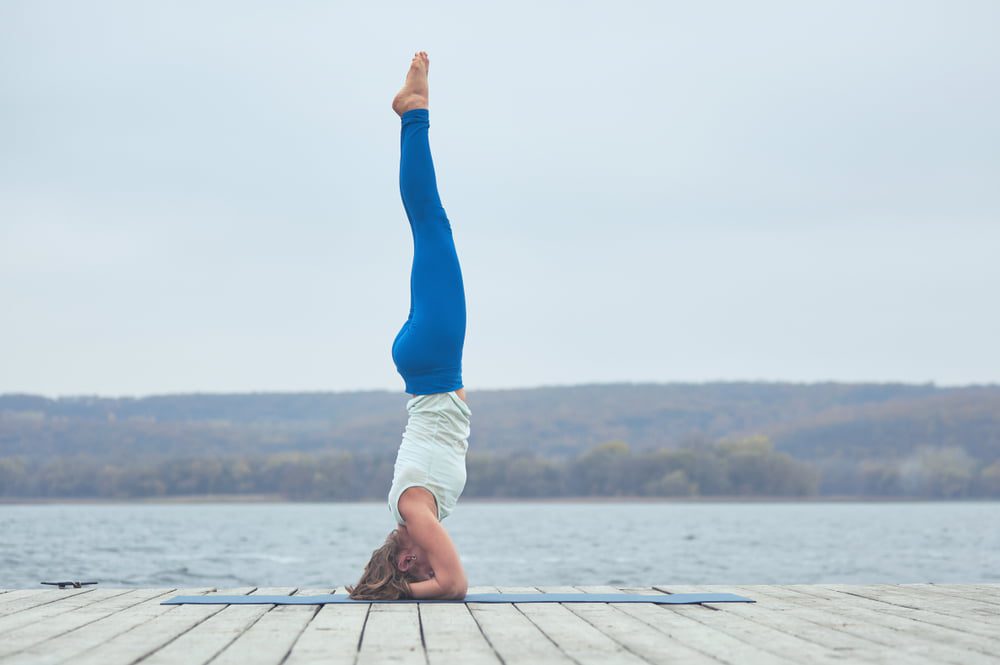
The importance of yoga and meditation has been there since ancient times. Yoga is not just a word but a spiritual process that works to unite the body, mind and soul. Its importance is also seen in Jainism and Buddhism. It reached China, Japan, Tibet, South East Asia and Sri Lanka and Buddhism from India, now the whole world knows and believes in Yoga. World Yoga Day is celebrated on June 21. There are many asanas in yoga. Among them, there is such an asana that is not made to sit or stand. Yes, we are talking about Shirshasana. This is our topic today “Shirshasan”. Through this article, we will provide detailed information about Shirshasana.
What is Shirshasana or Headstand?
In simple words, Shirshasana is a yoga position in which the head rests on the floor and the whole body is raised, that is, the legs go to the sky. The whole burden is on the head. This is Shirshasana.
This is a very powerful asana that improves blood circulation in the body, which cures many ailments. Shirshasana should be done only under the supervision of a yoga guru or specialist. It’s hard to do in the beginning, but it gets easier with practice.(1)
How to do a Shirshasana or Headstand?
- At first spread the mat on the floor.
- Sit on your knees in Vajrasana.
- Place the hands on the mat by pinching the fingers of both hands together.
- Now bend down and keep the head between the hands.
- Lift your hips and straighten your knees and legs.
- Now slowly lift the legs up and stretch them.
- The body should be in full support of the head.
- Stay in this state for 15-20 seconds, increase the speed of breathing.
- While exhaling, slowly return to the normal position by lowering the legs.
- In the beginning, do it for two or three rounds, then you can increase the rounds.
How Long Should You do Shirshasana or Headstand?
It depends entirely on the ability of your body, your arms, neck and back. According to several professionals it should be done for 2 minutes, some say a period of 2 to 4 and some even up to 5 minutes. But we say that you should do Shirshasana as long as you feel comfortable. If you feel even a little discomfort, then you just have to go back to your normal state.
Related Stories
 How I Began My Journey Toward Inner Peace Through Dharana, Dhyana, and Samadhi
 Revolved Half Moon Yoga Pose: Benefits, Steps and Variations
Benefits of Shirshasana or Headstand.
1. Make the Face Glow.
By doing Shirshasana regularly, it improve blood circulation, improve transportation of nutrients and minerals etc. also release their active effects, as a result pimples, wrinkles etc. is removed. Face become more glow and you looks beautiful.
2. Remove Stress.
Stress is a cause of physical and mental ill health as well as inequality and insecurity at work. Shirshasana is the best option to reduce stress. According to research papers, yoga is used to control stress and high blood pressure. Therefore, it is appropriate to say that by removing stress, Shirshasana also calms the mind.
3. Get Rid of Depression.
Depression is such a problem that directly affects a person’s mind and lifestyle. In psychology, depression means emotional sadness. When the human mind is not engaged in any activity, it remains indifferent.
There are biological, genetic and behavioral factors that cause depression. Not only this, due to biochemical imbalance, a person can also suffer from depression. It is also found that 90% of people with depression have sleep problems.

Shirshasana plays an important role in getting rid of this depression problem. It increases blood circulation in the brain. By doing this, there is a significant reduction in the secretion of a hormone called cortisol. Because of these hormones, stress is reduced. This changes your mood, makes you happy and calms your mind.
4. Improve the Digestive System.
By doing Shirshasana, blood circulation improves, which also affects your stomach. Such physical activity helps in digestion. It means that the asana improves the digestive system. Because of this there can be no age-related problems.
5. Effective for Headache and Migraine.
Headaches are common but migraine is a chronic disease. These two factors are the compression and stress of the brain cells. Shirshasana improves blood circulation and improves the function of the cells due to the flow balance, as a result of which these problems are reduced.
6. Useful in Diabetes.
Shirshasana helps in the secretion of insulin by stimulating the pancreas. A hormone called insulin is produced by the cells. These cells are found in the pancreas. This hormone works to convert glucose, a sugar, into energy and send it to the body’s cells for energy. Controls sugar levels. Shirshasana prevents the possibility of diabetes by helping in the work of the pancreas and insulin.
7. Effective for Brain Health.
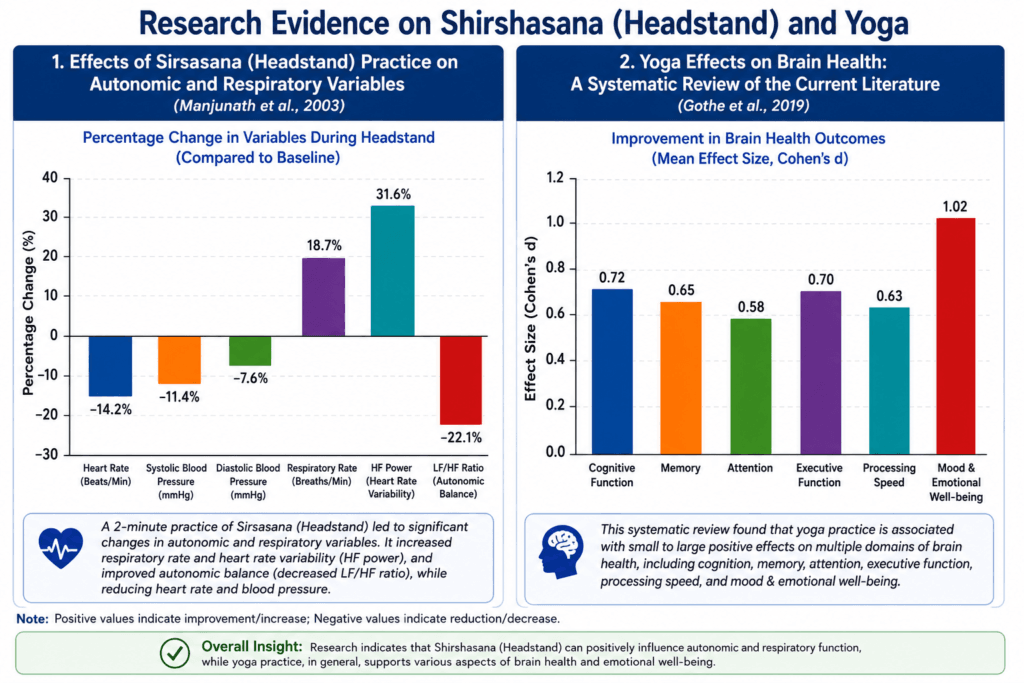
As we have already said that by doing Shirshasana, the circulation of blood improves, and crores of brain cells get enough nutrients and mineral. Because of these reasons, brain cells get a new life and the health of the brain is also improved.(2)
8. Help From Varicose Veins.
Varicose veins are caused by blood clots. Blood collects in the pile and in the varicose vein. Varicose veins are enlarged veins and any vein can be varicose.
But it mostly affects in the feet and toes. Because of this, there is great pain while standing and walking. For its treatment, doctors can remove or close these veins. Regular practice of Shirshasana can eliminate both these problems.
9. For Healthy Bones.
Regular practice of Shirshasana strengthens the bones. If it is done from a young age, there will be no bone-related problems until old age, or bone diseases such as osteoporosis.
10. For Asthma.
Yoga is considered as a better option for the treatment of breathing related problems. Asthma is also a respiratory disease that causes shortness of breath. The problem of this disease can be eliminated by the practice of Shirshasana.
11. Strengthens Your Hips and Thighs.
When you do Shirshasana, you are in a twisting position, which strengthens your hips and thighs. Shoulders, arms and upper body become stronger. Shirshasana also helps in making desired abs. It increases your physical strength.
12. Helps to Increase Balance.
When you start doing Shirshasana, you may take support of the wall. Thereafter try to maintain your balance. After a few days of practice, start to do headstand without the wall support and you also get the practice of balance. Then you start to feel comfortable with it. Through this, your ability to balance develops. So, in case of failure, you catch yourself easily.
13. For Hair Health.
Daily practice of Shirshasana has great results for hair. Not only does blood flow to the brain become easier, the skull also becomes stronger. This prevents premature graying, breakage, hair fall etc. Dandruff also gets relief.
Some Caution While doing Shirshasana or Headstand.
- If you are doing Shirshasana for the first time, do it under the supervision of a Yoga teacher/Professional.
- It is good to do the asana in the morning on an empty stomach.
- In the beginning, use the support of the wall to maintain balance.
- In the beginning, don’t put the whole weight on the head, and save the weight on the arms and shoulders. Otherwise, there may be a blow to the neck.
Who Should not do Shirshasana or Headstand?
- People suffering from heart disease, high blood pressure, constipation, phlegm and cold and having berry aneurysm (problem related to the veins of the brain) should avoid doing Shirshasana.
- People with head injury or neck problem or pain in shoulder, arm and back, injury etc., should avoid doing this asana.
- Avoid doing this asana if you have any kind of weakness in the body.
- Women should not perform this asana during menstruation.
- Pregnant women should not do Shirshasana.
- People above 50 years of age should not do this asana.
Side effects of Shirshasana or Headstand.
There is no harm if you do Shirshasana under the supervision of a Yoga teacher/professional. Otherwise, if you do it wrong it can lead to nerve compression in the neck, retinal tears and arthritis in the neck.
frequently asked questions.
1. Can beginners do Shirshasana (Headstand)?
Yes, Shirshasana can be practiced by beginners, but only with an experienced yoga teacher. The pose puts pressure on the head, neck and shoulders, so if performed incorrectly, could cause injury. For beginners, it is best to use wall support before developing strength and balance to work in the pose without it.
2. How many times should I hold Shirshasana for maximum benefit?
This will vary from person to person depending on their level of experience and comfort. For beginners it can be 10-20 seconds, for experienced practitioners, it can be 2-5 minutes. But don’t push yourself to stay longer than is comfortable. If dizzy, neck strain or discomfort, come down.
3. Who should not perform Shirshasana?
Shirshasana is contraindicated in case of high blood pressure, heart disease, neck or back injuries, glaucoma or other serious eye disorders, brain aneurysms and severe weakness. The pose is also not recommended for pregnant women, women at menstruation or older people with balance or health issues unless advised by a healthcare professional or yoga teacher with experience in contraindications.
Bottom Line.
Shirshasana, or the headstand pose, offers numerous benefits for both physical and mental well-being. This inverted yoga posture helps to improve blood circulation, strengthen the upper body, enhance core stability, and increase focus and mental clarity. It also stimulates the lymphatic system, boosts the immune system, and promotes a sense of calm and relaxation.
However, it’s important to approach Shirshasana with caution and proper guidance, as it can have potential side effects if performed incorrectly or by individuals with certain health conditions. Common side effects may include dizziness, headaches, neck strain, and increased pressure in the eyes. Pregnant women, people with high blood pressure, neck or back injuries, and certain eye conditions should avoid or modify this pose.
To ensure safety, it is advisable to learn Shirshasana under the supervision of a qualified yoga instructor, gradually build up strength and stability, and listen to your body’s limits. Consulting with a healthcare professional is also recommended, especially if you have any pre-existing medical conditions.
By practicing Shirshasana mindfully and responsibly, individuals can enjoy its numerous benefits while minimizing the risk of potential side effects.
Verywelfit has strict sourcing guidelines and relies on peer-reviewed studies, educational research institutes, and medical organizations. We avoid using tertiary references. You can learn more about how we ensure our content is accurate and up-to-date by reading our editorial policy.
- Effects of sirsasana (headstand) practice on autonomic and respiratory variables; https://pubmed.ncbi.nlm.nih.gov/12708122/
- Yoga Effects on Brain Health: A Systematic Review of the Current Literature; https://pmc.ncbi.nlm.nih.gov/articles/PMC6971819//