
















 Workout

 Meditation






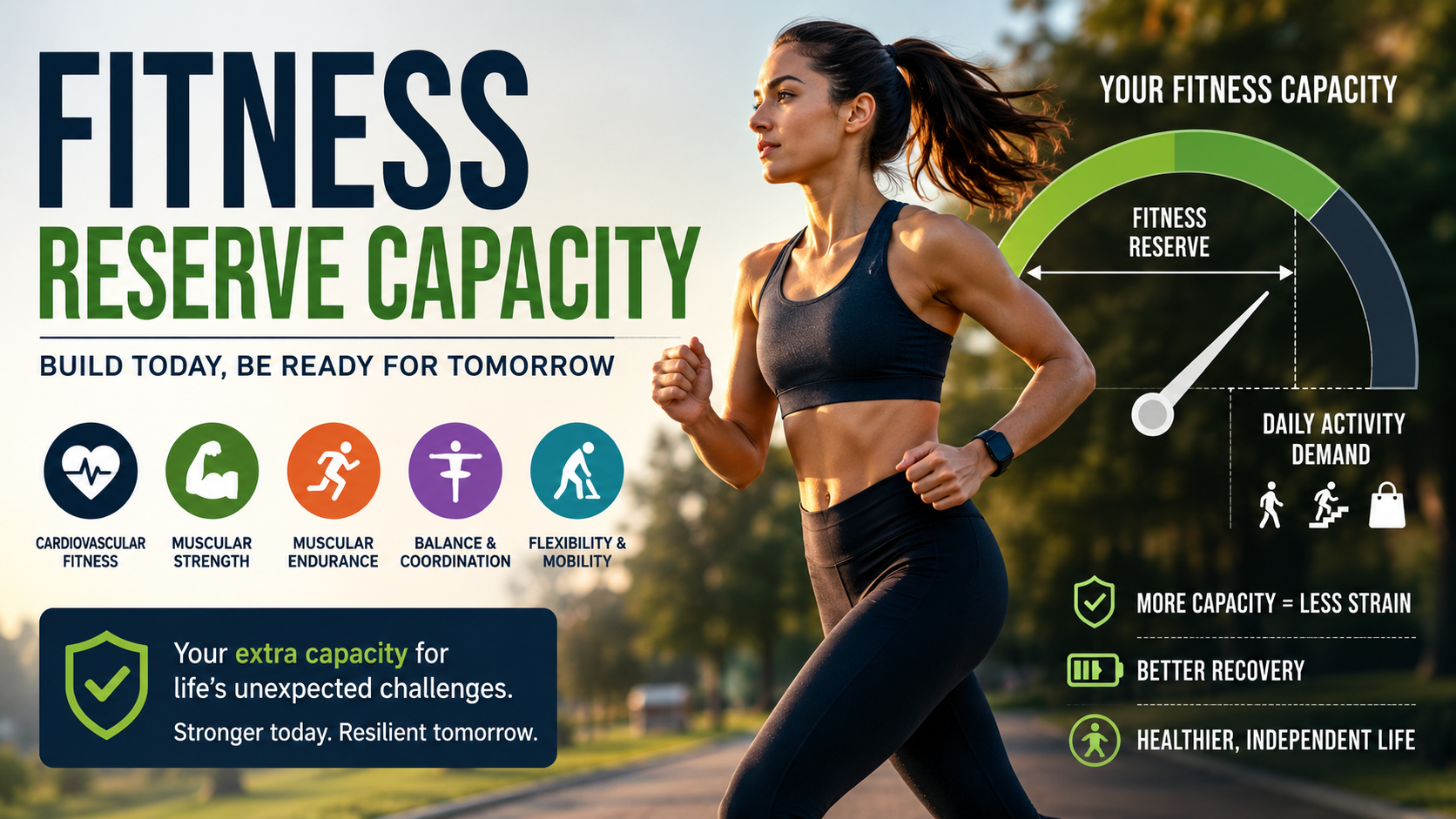
When most people think about fitness, they focus on visible goals such as losing weight, building muscle, or improving endurance. However, an often-overlooked concept known as Fitness Reserve Capacity (FRC) may provide a more meaningful picture of your long-term health and physical resilience.
Fitness Reserve Capacity refers to the difference between your maximum physical capacity and the amount of fitness required to perform your normal daily activities. In simple terms, it represents the “extra” physical ability your body can draw upon when life becomes more demanding.
Whether it’s climbing several flights of stairs, carrying heavy groceries, recovering from illness, playing with children, or responding to an emergency, a larger fitness reserve allows your body to perform these tasks with less effort and greater safety.
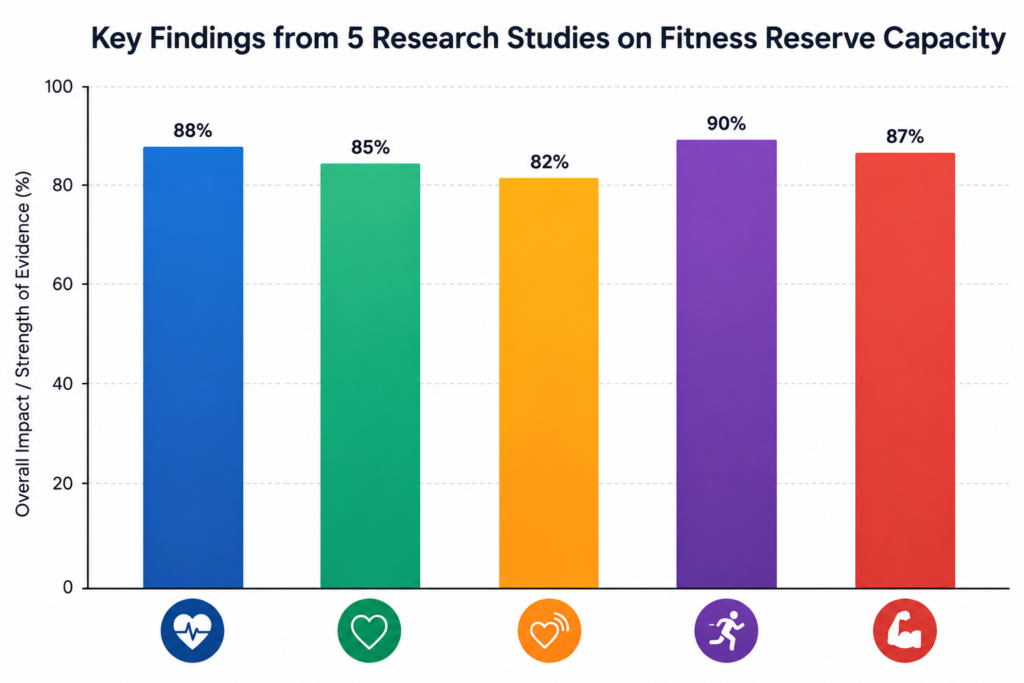
Recent research in exercise physiology and healthy aging suggests that maintaining a high fitness reserve is associated with improved functional independence, reduced risk of disability, enhanced quality of life, and healthier aging. While the term itself is still emerging in public health discussions, its underlying principles are well supported by decades of evidence on cardiorespiratory fitness, muscle strength, balance, and physical function.
Related Stories
 Shirodhara: Uses, Benefits And Side Effects Of This Ayurvedic Therapy
 How to Do a Killer Diamond Push Ups?
What Is Fitness Reserve Capacity?
Fitness Reserve Capacity (FRC) is the difference between your peak physical capability and the physical demands of everyday life.
Imagine two individuals who both need to climb three flights of stairs.
- Person A reaches the top breathing heavily and needs several minutes to recover.
- Person B reaches the top comfortably and continues walking without difficulty.
Although both completed the same task, Person B has a greater fitness reserve because everyday activities require only a small percentage of their maximum physical capacity.
A higher reserve means your body has additional strength, endurance, flexibility, balance, and cardiovascular capacity available when needed.

Why Fitness Reserve Capacity Matters?
Your body constantly adapts to physical stress. Daily activities, work, exercise, illness, and aging all place different demands on your muscles, heart, lungs, and nervous system.
When your reserve capacity is high:
- Everyday activities feel easier.
- Fatigue develops more slowly.
- Recovery is faster.
- Physical independence is better maintained.
- Injuries may be less likely during routine movement.
- The body is better prepared for unexpected challenges.
Conversely, individuals with low reserve capacity often experience fatigue during ordinary tasks because those tasks consume a large proportion of their available physical resources.
Components of Fitness Reserve Capacity.
Fitness Reserve Capacity is not determined by one measurement alone. Instead, it reflects the interaction of several fitness components.
1. Cardiorespiratory Fitness.
Cardiorespiratory fitness reflects how efficiently the heart, lungs, and muscles work together to deliver oxygen during physical activity.(1),(2),(3)
Individuals with higher aerobic fitness generally have a larger reserve because routine activities require less cardiovascular effort.
Walking, cycling, swimming, jogging, and aerobic exercise all contribute to improving this component.
2. Muscular Strength.
Strength determines your ability to generate force.
Simple daily tasks such as lifting luggage, carrying groceries, standing from a chair, or pushing heavy objects become easier when muscular strength is well developed.
Strength training also helps preserve muscle mass as people age.
3. Muscular Endurance.
Endurance refers to the ability of muscles to perform repeated contractions over time without excessive fatigue.
Examples include:
- Walking long distances.
- Climbing stairs.
- Gardening.
- Housework.
- Recreational sports.
Greater endurance means these activities require less effort.
4. Balance and Coordination.
Good balance reduces fall risk while improving movement efficiency.
This becomes particularly important in older adults because balance declines naturally with age.
Activities such as yoga, tai chi, and single-leg balance exercises help maintain reserve capacity.
5. Flexibility and Mobility
Healthy joints move efficiently through their full range of motion.
Poor mobility increases movement difficulty and places greater stress on muscles and joints.
Regular stretching and mobility exercises support functional movement throughout life.
Fitness Reserve Capacity and Healthy Aging.
One of the most important applications of Fitness Reserve Capacity is healthy aging.
Beginning around the fourth decade of life, adults gradually lose muscle mass, aerobic capacity, and strength if they remain inactive.
This natural decline reduces reserve capacity.
When reserve capacity becomes too small, everyday activities that once felt easy may become physically demanding.
Examples include:
- Getting up from the floor.
- Carrying shopping bags.
- Walking uphill.
- Climbing stairs.
- Playing with grandchildren.
Maintaining an active lifestyle helps preserve functional independence and may delay age-related physical decline.
Factors That Influence Fitness Reserve Capacity.
Several factors determine how much reserve capacity an individual has.
Physical Activity.
Regular exercise remains the strongest modifiable factor.
Individuals who consistently perform aerobic, strength, flexibility, and balance training generally maintain higher reserve capacity.(4),(5)
Age.
Reserve capacity naturally declines with age.
However, research consistently shows that physically active older adults often retain significantly greater functional capacity than sedentary individuals of the same age.
Nutrition.
Adequate protein intake supports muscle maintenance and recovery.
Balanced diets rich in fruits, vegetables, whole grains, healthy fats, vitamins, and minerals contribute to overall physical performance.
Sleep.
Quality sleep supports recovery, hormone regulation, muscle repair, and athletic performance.
Chronic sleep deprivation may impair physical capacity over time.
Chronic Health Conditions.
Conditions such as obesity, cardiovascular disease, arthritis, diabetes, and chronic lung disease may reduce reserve capacity by limiting physical performance.
Appropriate medical management combined with regular physical activity often helps improve functional ability.
How to Improve Fitness Reserve Capacity?
Improving reserve capacity does not require elite athletic performance.
Small, consistent improvements across multiple fitness domains can produce meaningful benefits.
Perform Regular Aerobic Exercise.
Aim for at least 150 minutes of moderate-intensity aerobic activity each week, or 75 minutes of vigorous activity, combined with muscle-strengthening exercises on two or more days per week, consistent with widely accepted physical activity guidelines.
Examples include:
- Brisk walking.
- Cycling.
- Swimming.
- Dancing.
- Rowing.
Strength Train Consistently.
Resistance training improves muscle strength, bone health, and functional movement.
Include exercises targeting:
- Legs
- Back
- Chest
- Shoulders
- Core
- Arms
Progress gradually while maintaining proper technique.
Improve Balance.
Balance exercises become increasingly valuable with age.
Simple options include:
- Standing on one leg.
- Heel-to-toe walking.
- Tai chi.
- Yoga.
- Functional balance drills.
Prioritize Recovery.
Exercise stimulates adaptation, but recovery allows those adaptations to occur.
Support recovery through:
- Sufficient sleep.
- Hydration.
- Balanced nutrition.
- Rest days.
- Stress management.
Stay Physically Active Throughout the Day.
Structured workouts are important, but daily movement also contributes to reserve capacity.
Increase non-exercise activity by:
- Walking during breaks.
- Taking stairs.
- Gardening.
- Household chores.
- Playing with children.
- Standing more frequently.
How Can You Estimate Your Fitness Reserve?
Although no single test directly measures Fitness Reserve Capacity, healthcare professionals and exercise specialists often evaluate it using multiple assessments.
These may include:
- Cardiorespiratory fitness testing (such as VO₂ max or submaximal exercise tests).
- Grip strength.
- Sit-to-stand tests.
- Walking speed.
- Timed Up and Go (TUG) test.
- Balance assessments.
- Flexibility tests.
- Functional movement evaluations.
Together, these assessments help identify whether your physical capacity substantially exceeds the demands of everyday life.
Common Myths About Fitness Reserve Capacity.
Myth 1: Only athletes need reserve capacity.
Reality: Everyone benefits from having additional physical capacity, especially as they age or recover from illness.
Myth 2: Weight loss automatically improves reserve capacity.
Reality: While maintaining a healthy weight can help, improvements in aerobic fitness, strength, mobility, and balance are equally important.
Myth 3: Older adults cannot improve reserve capacity.
Reality: Research consistently shows that appropriately prescribed exercise can improve strength, endurance, balance, and functional ability well into older adulthood.
Myth 4: Daily activities provide enough exercise.
Reality: Although staying active is beneficial, structured aerobic and resistance exercise often provides greater improvements in physical capacity than routine daily movement alone.
Limitations of the Concept.
Fitness Reserve Capacity is a useful framework, but it should not be viewed as a standalone medical measurement.
Current research uses various terms—including physiological reserve, functional reserve, and functional capacity—to describe similar concepts. Standardized methods for directly measuring Fitness Reserve Capacity are still evolving.
Individual reserve capacity is influenced by genetics, health status, lifestyle, medications, and environmental factors. Therefore, fitness assessments should always be interpreted within the context of a person’s overall health.
Frequently Asked Questions.
1. Is Fitness Reserve Capacity the same as VO₂ max?
No. VO₂ max measures maximal aerobic capacity, whereas Fitness Reserve Capacity reflects the broader difference between your maximum physical ability and the demands of daily life.
2. Can beginners improve their reserve capacity?
Yes. Most beginners experience meaningful improvements through consistent aerobic exercise, resistance training, flexibility work, and balance exercises.
3. Does strength training increase reserve capacity?
Yes. Stronger muscles make everyday activities require less relative effort, increasing functional reserve.
4. Why is reserve capacity important after age 40?
Because muscle mass, aerobic fitness, and physical function naturally decline with age, maintaining a larger reserve helps preserve independence and resilience.
5. Can Fitness Reserve Capacity predict longevity?
While it is not a direct predictor, higher levels of cardiorespiratory fitness, muscular strength, and physical function—key components of reserve capacity—have been associated with lower risks of chronic disease and premature mortality in many studies.
Bottom Line.
Fitness Reserve Capacity shifts the focus of exercise away from appearance alone and toward long-term physical resilience. By maintaining a reserve of strength, endurance, balance, and cardiovascular fitness beyond what everyday life requires, individuals are better prepared to handle unexpected physical challenges, recover from illness, and remain independent as they age.
Improving Fitness Reserve Capacity does not require extreme workouts or elite athletic ability. Consistent aerobic exercise, regular strength training, healthy nutrition, quality sleep, and an active lifestyle can collectively build a larger reserve that supports lifelong health and functional well-being. Rather than asking only, “Am I fit enough for today?” Fitness Reserve Capacity encourages a more valuable question: “Am I building enough capacity for the years ahead?”
+5 Sources
Verywelfit has strict sourcing guidelines and relies on peer-reviewed studies, educational research institutes, and medical organizations. We avoid using tertiary references. You can learn more about how we ensure our content is accurate and up-to-date by reading our editorial policy.
- Ageing and activity: their effects on the functional reserve capacities of the heart and vascular smooth and skeletal muscles; https://pubmed.ncbi.nlm.nih.gov/16338704/
- Cardiovascular reserve capacity in healthy older humans; https://pubmed.ncbi.nlm.nih.gov/7880870/
- Physiological cardiac reserve: development of a non-invasive method and first estimates in man; https://pubmed.ncbi.nlm.nih.gov/9602665/
- The Role of Exercise in Cardiac Aging: From Physiology to Molecular Mechanisms; https://pmc.ncbi.nlm.nih.gov/articles/PMC4914047/
- Effects of Exercise and Aging on Skeletal Muscle; https://pmc.ncbi.nlm.nih.gov/articles/PMC5830901/