
















 Workout

 Meditation







In the quest for height enhancement, individuals often explore various avenues, from supplements to surgeries. However, amidst these options lies a natural and effective method – the Low Lunge Arch Exercise. This comprehensive guide delves into the science-backed benefits, precise techniques, precautions, common pitfalls, and a tailored diet plan to maximize its efficacy.
Understanding the Low Lunge Arch Exercise.
Incorporating elements of yoga and stretching, the Low Lunge Arch Exercise targets multiple muscle groups, primarily focusing on the lower body, spine, and core. Its dynamic movement aids in stretching the hip flexors, quadriceps, and abdominals while promoting spinal extension, thus potentially aiding in height improvement.
Benefits of the Low Lunge Arch Exercise.
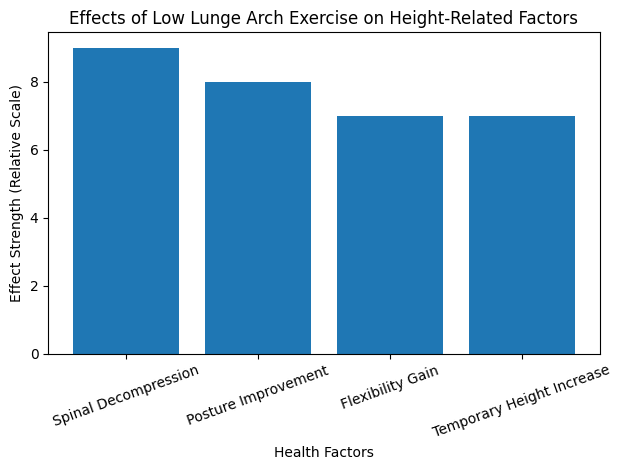
1. Height Enhancement: By elongating the spine and improving posture, the exercise may contribute to height increase over time.
2. Flexibility Improvement: Regular practice enhances flexibility in the hip flexors, hamstrings, and quadriceps, allowing for better range of motion.
Related Stories
 Is Doing Tai-Chi for 5 Minutes a Day Effective?
 Can You Exercise After Dysport: What do Experts Say?
3. Core Strengthening: Engaging the core muscles stabilizes the body during the arching motion, fostering core strength and stability.
4. Posture Correction: The exercise aids in correcting poor posture by stretching tight muscles and promoting spinal alignment.(1),(2)
How to Perform the Low Lunge Arch Exercise?
- Start in a standing position with feet hip-width apart.
- Step one foot back into a lunge position, ensuring the front knee is aligned with the ankle.
- Lower the back knee towards the ground while keeping the spine straight.
- Lift the arms overhead and arch the back slightly, aiming to open the chest.
- Hold the stretch for 20-30 seconds, then switch sides and repeat.
Precautions and Common Mistakes.
- Avoid excessive arching of the lower back to prevent strain or injury.
- Ensure proper alignment of the knees to prevent undue stress on the joints.
- Gradually increase the intensity of the stretch to avoid overexertion.
- Consult a healthcare professional before starting any new exercise regimen, especially if you have pre-existing medical conditions.
Best Time to Do Low Lunge Arch Exercise.
The effectiveness of the Low Lunge Arch Exercise can be enhanced by performing it at the right time of the day.

- Morning (Best Time): Practicing in the morning helps stretch the spine after sleep and improves posture throughout the day.
- Before Bed: A gentle session at night can relax muscles and improve flexibility.
- After Light Warm-Up: Always perform this exercise after a short warm-up to prevent injury and improve results.
Consistency matters more than timing, so choose a time that fits your routine and stick to it.
Who Should Avoid This Exercise?
While the Low Lunge Arch Exercise is generally safe, certain individuals should take extra precautions or avoid it:
- People with lower back pain or spinal injuries.
- Individuals with knee problems or joint issues.
- Those recovering from recent surgery or injury.
- Pregnant women (should consult a doctor before performing)
If you experience pain or discomfort during the exercise, stop immediately and consult a healthcare professional.
Scientific Evidence Supporting Height Enhancement through Exercise.
While no direct scientific studies have specifically examined the effects of the Low Lunge Arch Exercise on height, numerous studies highlight the benefits of stretching, strengthening, and improving posture in height optimization.
Diet Plan for Height Enhancement.
- Incorporate calcium-rich foods such as dairy products, leafy greens, and fortified cereals to support bone health.
- Consume protein-rich foods like lean meats, eggs, and legumes to aid in muscle growth and repair.
- Ensure adequate intake of vitamins and minerals, including vitamin D, vitamin K, magnesium, and phosphorus, essential for bone health.
Personal Interview with Yoga Instructor, Sarah Thompson.
Q: What makes the Low Lunge Arch Exercise effective for height enhancement?
A: “The Low Lunge Arch Exercise targets key muscle groups involved in maintaining proper posture and spinal alignment. By regularly practicing this exercise, individuals may experience improved posture, which can create the illusion of increased height.”
Frequently Asked Questions.
1. How often should I perform the Low Lunge Arch Exercise?
Aim for 3-5 sessions per week, gradually increasing intensity and duration over time.
2. Can this exercise be performed by individuals of all fitness levels?
Yes, modifications can be made to accommodate different fitness levels and mobility restrictions. It’s essential to listen to your body and work within your capabilities.
Bottom Line.
The Low Lunge Arch Exercise offers a natural and accessible approach to height enhancement, combining stretching, strengthening, and posture correction. By incorporating this exercise into a regular routine, along with a balanced diet and proper precautions, individuals can potentially unlock their height growth potential, standing tall with confidence and vitality.
+2 Sources
VerywelFit has strict sourcing guidelines and relies on peer-reviewed studies, educational research institutes, and medical organizations. We avoid using tertiary references. You can learn more about how we ensure our content is accurate and up-to-date by reading our editorial policy.
- Spine Height and Disc Height Changes As the Effect of Hyperextension Using Stadiometry and MRI; https://pmc.ncbi.nlm.nih.gov/articles/PMC1888420/
- Yoga decreases kyphosis in senior women and men with adult onset hyperkyphosis: results of a randomized controlled trial; https://pmc.ncbi.nlm.nih.gov/articles/PMC3700806/