














 Workout

 Meditation






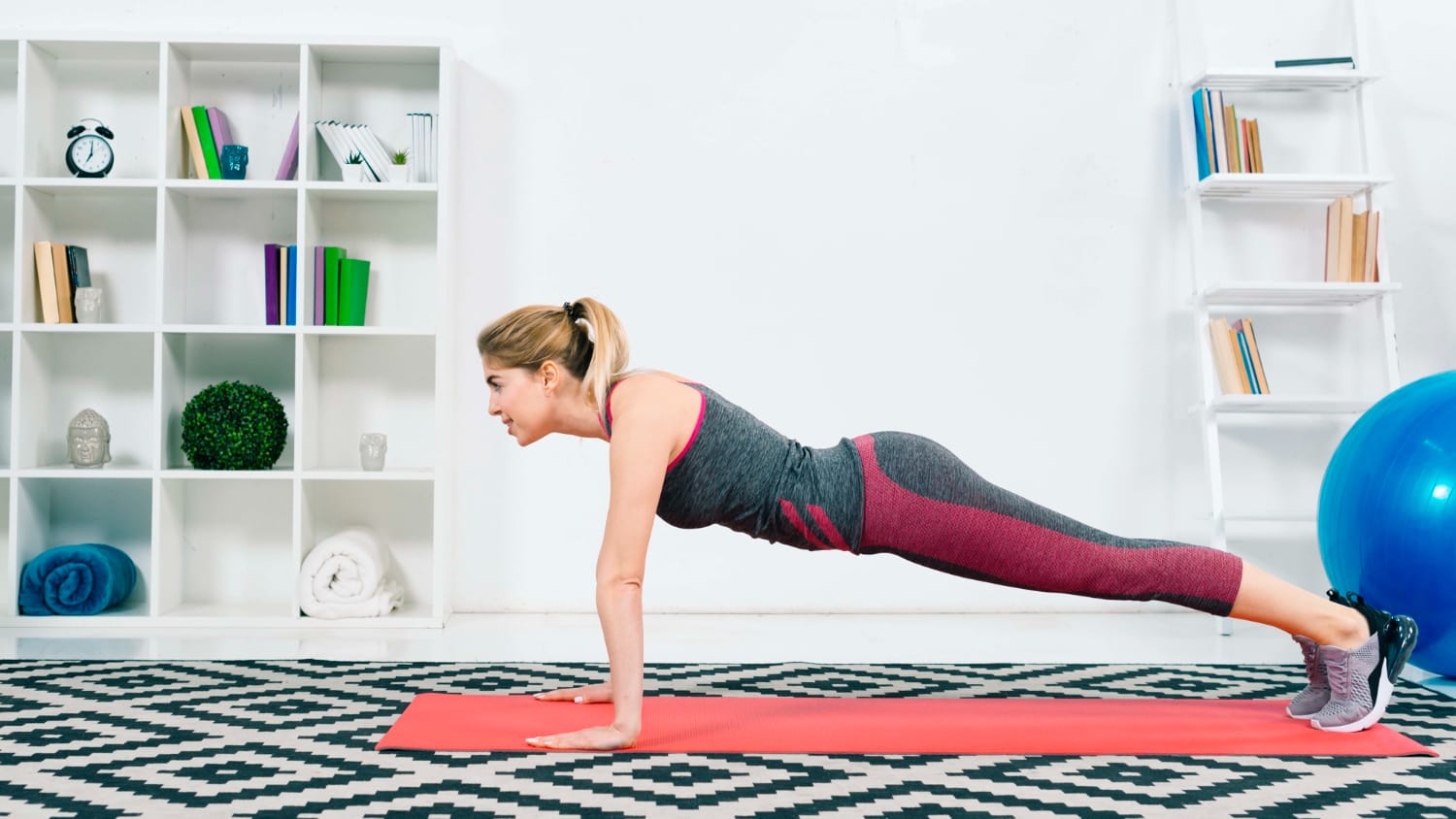
The first time I tried a yoga push up, I assumed it would be easier than a traditional push-up because the word “yoga” made me think of slow stretching and gentle movements.
I couldn’t have been more wrong.
Within a few repetitions, I realized this exercise challenged not only my upper-body strength but also my balance, flexibility, coordination, and breathing. Unlike a standard push-up, a yoga push up combines controlled movement with yoga postures, creating a full-body exercise that feels both strengthening and energizing.
One reason I appreciate yoga push ups is that they don’t just focus on building muscle. They also encourage better posture, body awareness, and mobility. Whether you’re new to fitness or looking to add variety to your workout routine, this movement can be a valuable addition when performed with proper technique.
Related Stories
 How Yoga Transforms Your Body?
 White Tantric Yoga: Meaning, Benefits, Practice & What to Expect
In this guide, I’ll explain what a yoga push up is, how to perform it correctly, the muscles it works, and practical tips to help you master the movement safely.
What Is a Yoga Push Up?
A yoga push up is a dynamic bodyweight exercise that blends elements of a traditional push-up with flowing yoga movements.(1)
It typically involves moving through positions such as:
- Plank Pose
- Chaturanga (Low Plank)
- Upward-Facing Dog or Cobra Pose
- Downward-Facing Dog
Because several yoga postures are linked together in one continuous movement, the exercise develops both strength and flexibility at the same time.

Unlike conventional push-ups that primarily emphasize pushing strength, yoga push ups encourage controlled movement through a greater range of motion while coordinating each phase with your breathing.
My First Impression of the Yoga Push Up.
When I first watched someone perform a yoga push up, it looked smooth and effortless.
However, once I tried it myself, I quickly realized that maintaining good form required:
- Shoulder stability
- Core strength
- Hip mobility
- Hamstring flexibility
- Controlled breathing
Rather than rushing through repetitions, I found that slowing down and focusing on technique made the exercise much more effective.
Where Did the Yoga Push Up Originate?
The yoga push up doesn’t come from one traditional yoga pose. Instead, it evolved from Vinyasa Yoga, a style of yoga in which postures flow continuously from one movement to another in coordination with the breath.
Many yoga classes include a sequence called the Vinyasa Flow, which transitions through:
- High Plank
- Chaturanga Dandasana
- Upward-Facing Dog
- Downward-Facing Dog
Fitness professionals later adapted this flowing sequence into what many people now refer to as the yoga push up.
Today, it’s commonly used in:
- Yoga classes
- Functional fitness
- HIIT workouts
- Mobility training
- Bodyweight exercise programs
How Is a Yoga Push Up Different from a Regular Push-Up?
Although both exercises strengthen the upper body, they emphasize different movement patterns.
| Feature | Yoga Push Up | Traditional Push-Up |
|---|---|---|
| Movement | Dynamic flowing sequence | Straight up-and-down |
| Flexibility | High | Moderate |
| Core Activation | High | High |
| Shoulder Mobility | Greater | Moderate |
| Yoga Integration | Yes | No |
| Breathing Focus | Strong | Moderate |
A traditional push-up mainly targets pushing strength, while a yoga push up combines strength, mobility, and flexibility into one continuous exercise.
Muscles Worked During a Yoga Push Up.
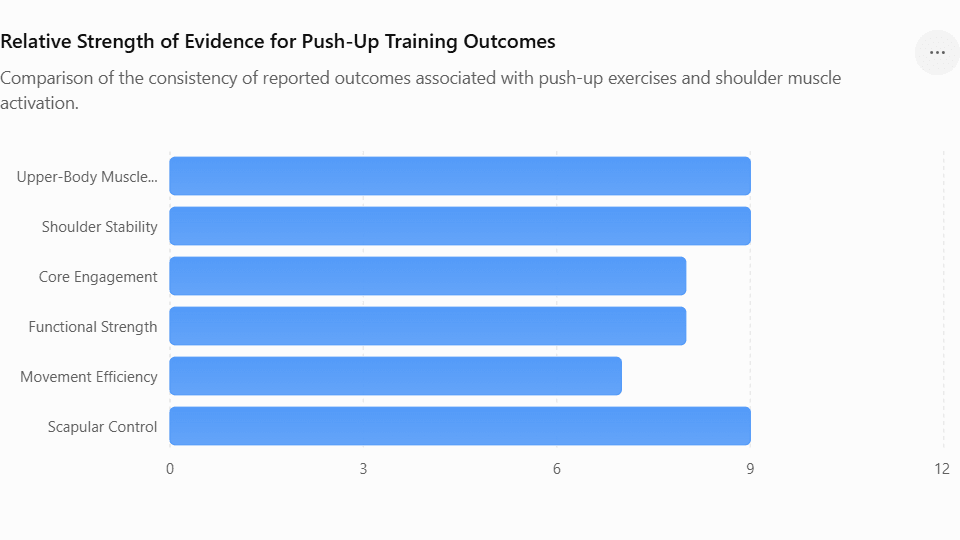
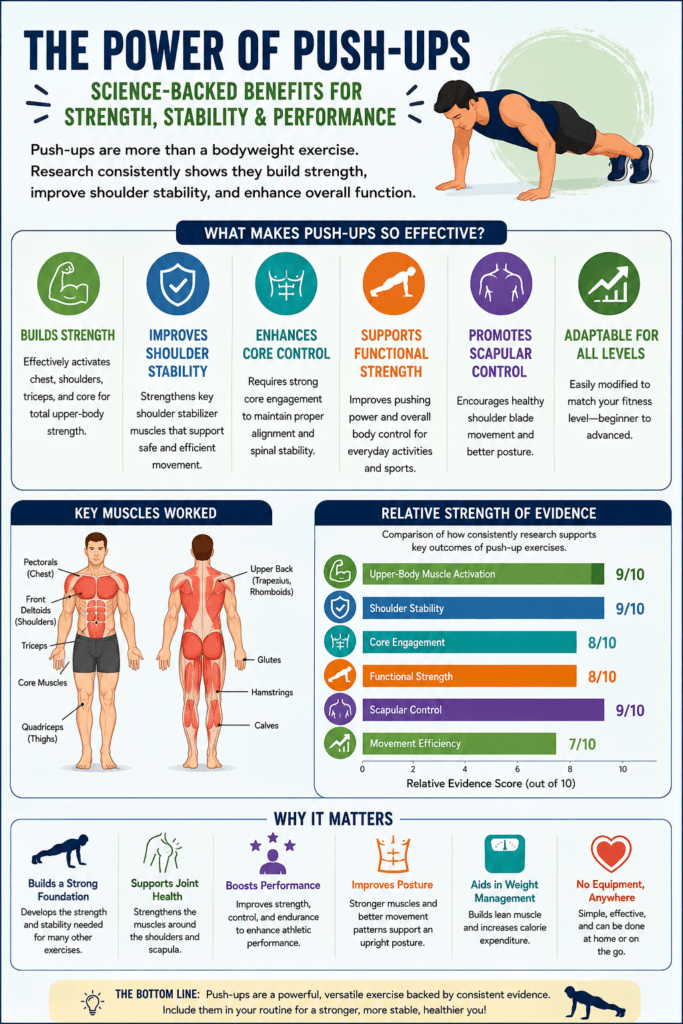
One reason I enjoy yoga push ups is that they engage multiple muscle groups simultaneously.(2),(3)
Chest (Pectorals).
The chest muscles provide much of the pushing power during the lowering and pressing phases.
Shoulders (Deltoids).
The shoulders stabilize the arms throughout the movement and help transition between yoga positions.
Triceps.
The triceps extend the elbows as you press away from the floor.
Core Muscles.
Your:
- Rectus abdominis
- Transverse abdominis
- Obliques
work continuously to stabilize your torso and maintain proper alignment.
Back Muscles.
Several muscles assist throughout the sequence, including:
- Latissimus dorsi
- Rhomboids
- Trapezius
- Erector spinae
These muscles help support posture and spinal stability.
Glutes.
Your glute muscles stabilize the hips and maintain body alignment.
Hip Flexors.
The hip flexors help control movement during transitions between poses.
Hamstrings.
As you move into Downward-Facing Dog, the hamstrings experience a gentle stretch that contributes to improved flexibility over time.
Calves.
The calves assist with ankle stability and are also stretched during the final position.
Benefits of Engaging Multiple Muscle Groups.
Because so many muscles work together, yoga push ups can help improve:
- Functional strength
- Body coordination
- Muscular endurance
- Stability
- Movement quality
Rather than isolating one muscle group, the exercise trains your body to move as an integrated system.
How to Do a Yoga Push Up Step by Step?
Learning proper technique is more important than completing many repetitions.
I always recommend mastering the movement slowly before increasing speed or volume.
Step 1: Begin in High Plank.
Start with your:
- Hands directly beneath your shoulders
- Arms straight
- Core engaged
- Legs extended
- Body forming a straight line from head to heels
Avoid allowing your hips to sag or lift too high.
Step 2: Lower into Chaturanga.
As you inhale or exhale (depending on your preferred yoga tradition), slowly bend your elbows.
Keep your elbows close to your ribs rather than allowing them to flare outward.
Lower until your upper arms are roughly parallel to the floor.
Maintain a straight body throughout.
Step 3: Transition into Upward-Facing Dog.
Roll your shoulders back.
Press through your hands.
Lift your chest.
Straighten your arms while allowing your hips to move toward the floor.
Keep your shoulders relaxed away from your ears.
Step 4: Move into Downward-Facing Dog.
Press firmly through your palms.
Lift your hips upward and backward.
Straighten your arms.
Lengthen your spine.
Allow your heels to move gently toward the floor.
Your body should resemble an inverted “V.”
Step 5: Return to High Plank.
Shift your body forward until you’re back in the plank position.
This completes one repetition.
Repeat while maintaining slow, controlled movement.
Proper Breathing Technique.
One thing I quickly learned is that breathing makes a significant difference.
Instead of holding your breath:
- Inhale as you prepare.
- Exhale during the lowering phase.
- Inhale as you lift your chest.
- Exhale while pressing back into Downward-Facing Dog.
Synchronizing breath with movement helps improve control and reduces unnecessary tension.
Common Alignment Tips for Beginners.
Good alignment helps maximize benefits while reducing injury risk.
I recommend focusing on these points:
Keep Your Neck Neutral.
Avoid looking too far forward or dropping your head.
Engage Your Core.
Imagine gently drawing your belly button toward your spine.
Relax Your Shoulders.
Avoid shrugging your shoulders toward your ears.
Keep Elbows Close.
Allowing elbows to flare excessively places additional stress on the shoulders.
Move Slowly.
Controlled movement improves muscle engagement and technique.
Beginner Modifications.
If a full yoga push up feels too difficult initially, try these easier options.
Knee Yoga Push Up.
Keep your knees on the floor during the lowering phase.
Elevated Yoga Push Up.
Place your hands on:
- A bench
- Yoga blocks
- A sturdy chair
Reducing the angle decreases the amount of body weight you must lift.
Shorter Range of Motion.
Instead of lowering all the way to Chaturanga, begin with a smaller range and gradually increase depth as strength improves.
Who Can Benefit from Yoga Push Ups?
Yoga push ups may be suitable for many individuals, including:
- Beginners learning bodyweight exercises
- Yoga practitioners
- Strength-training enthusiasts
- Home exercisers
- People wanting better posture
- Individuals looking to improve mobility
- Functional fitness athletes
As with any exercise, those with shoulder, wrist, or back injuries should consult a qualified healthcare professional or physical therapist before adding yoga push ups to their routine.
How Many Yoga Push Ups Should Beginners Do?
When starting out, I recommend prioritizing technique over repetitions.
A simple starting point might be:
- Beginners: 5–8 repetitions × 2–3 sets
- Intermediate: 8–12 repetitions × 3 sets
- Advanced: 12–15 repetitions × 3–4 sets
Rest for 30–60 seconds between sets and stop if you experience pain or lose proper form.
Benefits of Yoga Push Ups.
Once I became comfortable with the movement, I realized that a yoga push up is much more than an upper-body exercise. It combines strength training, flexibility, balance, and controlled breathing into one flowing sequence.
Unlike many traditional bodyweight exercises that target a single area, yoga push ups engage the entire body while encouraging mindful movement.
Let’s explore the biggest benefits.
1. Builds Upper-Body Strength.
One of the most obvious benefits is increased upper-body strength.
During each repetition, several muscles work together, including the:
- Chest
- Shoulders
- Triceps
- Upper back
Because you’re lifting your own body weight, the exercise gradually improves muscular endurance and functional strength.
Over time, stronger upper-body muscles can make everyday activities—such as lifting groceries or pushing heavy objects—feel easier.
2. Strengthens Your Core.
A yoga push up isn’t just about your arms.
Throughout the movement, your abdominal muscles work continuously to stabilize your spine.
Your core muscles help prevent:
- Excessive arching of the lower back
- Hip sagging
- Loss of balance
A stronger core may contribute to:
- Better posture
- Improved balance
- Greater stability during exercise
- Reduced risk of lower back discomfort
3. Improves Flexibility.
Unlike a regular push-up, a yoga push up includes stretches that improve mobility.
For example:
Upward-Facing Dog stretches:
- Chest
- Abdomen
- Hip flexors
Downward-Facing Dog stretches:
- Hamstrings
- Calves
- Shoulders
- Spine
Over time, this combination of strength and stretching may improve overall flexibility.
4. Enhances Shoulder Mobility.
Many people spend hours sitting at desks or looking down at phones.
This often leads to stiff shoulders and poor posture.
Because yoga push ups move the shoulders through multiple positions, they may help improve:
- Shoulder mobility
- Joint stability
- Range of motion
Proper form is essential to avoid placing unnecessary stress on the shoulder joints.
5. Supports Better Posture.
Poor posture often develops from prolonged sitting and weak upper-back muscles.
The yoga push up encourages:
- Chest opening
- Spinal extension
- Core engagement
- Shoulder stability
These qualities can contribute to healthier posture over time when combined with regular movement throughout the day.
6. Improves Functional Fitness.
One reason I enjoy bodyweight exercises is that they often mimic real-life movement patterns.
Yoga push ups improve your ability to:
- Push
- Stabilize
- Balance
- Transition smoothly between positions
Functional strength helps support everyday activities, sports, and recreational exercise.
7. Develops Body Awareness.
Yoga emphasizes mindful movement.
Instead of simply counting repetitions, I find myself paying attention to:
- Breathing
- Alignment
- Muscle activation
- Balance
- Movement quality
This increased body awareness often transfers to other forms of exercise.
8. Increases Muscular Endurance.
Performing multiple repetitions challenges muscles to sustain effort over time.
With consistent practice, yoga push ups may improve endurance in the:
- Chest
- Shoulders
- Arms
- Core
Muscular endurance becomes increasingly important for longer workouts and daily activities.
9. Requires No Equipment.
One of my favorite things about yoga push ups is their simplicity.
All you need is:
- A yoga mat (optional)
- Comfortable clothing
- Enough space to move
Because no equipment is required, they’re perfect for:
- Home workouts
- Travel
- Outdoor exercise
- Small apartments
10. Can Be Adapted for Different Fitness Levels.
Yoga push ups can be modified depending on your experience.
Beginners may perform:
- Knee yoga push ups
- Elevated yoga push ups
- Shorter range of motion
Advanced exercisers can increase the challenge by:
- Slowing the tempo
- Increasing repetitions
- Adding pause holds
- Combining them into flowing yoga sequences
Can Yoga Push Ups Help with Weight Loss?
Another common question I hear is:
“Are yoga push ups good for weight loss?”
The answer is:
They can support weight loss—but they don’t directly burn fat on their own.
Weight loss primarily depends on maintaining a calorie deficit through a combination of:
- Balanced nutrition
- Physical activity
- Adequate sleep
- Consistency
Yoga push ups contribute by:
- Burning calories
- Building muscle
- Improving functional fitness
- Supporting regular exercise habits
Including them in a full-body workout can increase your overall energy expenditure.
Yoga Push Ups for Strength.
Unlike isolation exercises that target only one muscle group, yoga push ups build functional strength across multiple areas of the body.
Regular practice may improve:
- Pushing strength
- Shoulder stability
- Core endurance
- Grip support
- Overall body control
This makes them useful for people participating in:
- Yoga
- Functional fitness
- Calisthenics
- Bodyweight training
Yoga Push Ups for Flexibility.
Flexibility is one of the biggest differences between yoga push ups and traditional push-ups.
The movement stretches several muscle groups, including:
- Chest
- Hamstrings
- Calves
- Hip flexors
- Spine
- Shoulders
Over time, improved flexibility may help reduce stiffness and make everyday movements feel more comfortable.
Yoga Push Up vs Traditional Push-Up.
Although these exercises look somewhat similar, they train the body differently.
| Feature | Yoga Push Up | Traditional Push-Up |
|---|---|---|
| Primary Goal | Strength + Flexibility | Upper-body Strength |
| Core Engagement | High | High |
| Mobility Training | Excellent | Limited |
| Stretching Included | Yes | No |
| Yoga Flow | Yes | No |
| Difficulty | Moderate | Moderate–High |
| Best For | Functional fitness & mobility | Strength development |
Neither exercise is necessarily better.
Many fitness professionals include both in a balanced workout routine.
Common Mistakes to Avoid.
Proper technique helps maximize results while reducing injury risk.
Here are the mistakes I see most often.
1. Letting the Hips Sag.
Allowing your hips to drop places unnecessary stress on the lower back.
Instead:
- Tighten your core.
- Keep your body aligned from head to heels.
2. Flaring the Elbows.
Wide elbows increase shoulder stress.
Aim to keep your elbows close to your torso during Chaturanga.
3. Rushing Through the Movement.
Yoga push ups aren’t meant to be performed as quickly as possible.
Slower movement improves:
- Muscle activation
- Stability
- Coordination
4. Holding Your Breath.
Breathing should remain smooth throughout each repetition.
Coordinating breath with movement helps improve control.
5. Skipping the Core Engagement.
Weak core activation often causes:
- Rounded shoulders
- Lower back arching
- Poor posture
Always engage your abdominal muscles before lowering.
6. Looking Forward Too Much.
Extending the neck excessively can create unnecessary tension.
Keep your gaze slightly ahead while maintaining a neutral neck.
7. Forcing Flexibility.
Some beginners try to push too deeply into Upward-Facing Dog or Downward-Facing Dog.
Move only within a comfortable range.
Flexibility improves gradually with consistent practice.
Yoga Push Up Variations.
Once you’ve mastered the basic movement, several variations can add variety.
Knee Yoga Push Up.
Ideal for beginners building strength.
Incline Yoga Push Up.
Hands remain elevated on a sturdy surface.
This reduces the amount of body weight lifted.
Slow Tempo Yoga Push Up.
Pause for two or three seconds during each phase.
This increases time under tension.
One-Leg Yoga Push Up.
Lift one leg during Downward-Facing Dog to challenge balance and core stability.
Power Yoga Push Up.
Performed continuously as part of a faster-paced yoga flow.
This increases cardiovascular demand.
How Often Should You Practice Yoga Push Ups?
Most healthy adults can include yoga push ups in their workout routine 2–4 times per week, depending on their fitness level and recovery.
General guidelines:
- Beginners: 2 sessions per week
- Intermediate: 3 sessions per week
- Advanced: 3–4 sessions per week
Allow at least one day of recovery between intense upper-body workouts to give your muscles time to repair and strengthen.
Can Beginners Learn Yoga Push Ups?
Absolutely.
When I first started, I focused on:
- Learning proper form
- Moving slowly
- Building strength gradually
- Prioritizing quality over quantity
Starting with easier modifications and progressing at your own pace is often the safest and most effective approach.
Combining Yoga Push Ups with Other Exercises.
Yoga push ups work well alongside exercises such as:
- Bodyweight squats
- Lunges
- Planks
- Glute bridges
- Bird dogs
- Cat-Cow stretches
- Mountain climbers
Together, these movements create a balanced routine that targets strength, mobility, stability, and endurance.
Who Should Avoid Yoga Push Ups?
Although yoga push ups are an excellent bodyweight exercise for many people, they may not be appropriate for everyone. If you have an existing injury or medical condition, it’s important to speak with a qualified healthcare professional or physical therapist before adding them to your routine.
People who should be cautious include:
- Individuals with shoulder injuries
- People with severe wrist pain or carpal tunnel syndrome
- Anyone recovering from chest or upper-body surgery
- People with uncontrolled high blood pressure (during strenuous exercise)
- Individuals with acute lower back pain
- Anyone advised to avoid weight-bearing exercises
If you experience sharp pain during the movement, stop immediately and seek professional guidance.
Safety Tips for Yoga Push Ups.
To perform yoga push ups safely, I always focus on quality over quantity.
Here are a few safety tips that can make a big difference:
Warm Up First.
Prepare your muscles with 5–10 minutes of light activity and dynamic stretches before starting.
Maintain Proper Form.
Avoid sacrificing technique just to complete more repetitions.
Good form reduces stress on your:
- Shoulders
- Wrists
- Lower back
- Elbows
Listen to Your Body.
Muscle fatigue is normal, but sharp or persistent pain is not.
Take a break if needed.
Avoid Holding Your Breath.
Steady breathing helps improve stability and prevents unnecessary tension.
Progress Gradually.
Increase repetitions, sets, or difficulty only after you’ve mastered the basic movement.
Warm-Up Routine Before Yoga Push Ups.
A proper warm-up prepares your joints and muscles for movement.
I recommend spending about 5–10 minutes on the following:
Cat-Cow Stretch.
- 10 repetitions
Helps mobilize the spine.
Arm Circles.
- 20 seconds forward
- 20 seconds backward
Warms up the shoulders.
Shoulder Rolls.
- 10 repetitions
Wrist Circles.
- 20 seconds each direction
Prepares the wrists for weight-bearing.
High Plank Hold.
- 20–30 seconds
Activates the core and shoulders.
Downward-Facing Dog.
- Hold for 20–30 seconds
Gently stretches the calves, hamstrings, and shoulders.
Cool-Down Routine.
Cooling down after your workout can help reduce muscle tightness.
Simple stretches include:
Child’s Pose.
Hold for 30–60 seconds.
Cobra Stretch.
Hold for 20–30 seconds.
Thread-the-Needle Stretch.
Helps release tension in the shoulders and upper back.
Standing Forward Fold.
Stretches the hamstrings and lower back.
Chest Stretch.
Hold for 20–30 seconds on each side.
Beginner Yoga Push Up Workout.
If you’re just starting out, here’s a simple routine you can follow 2–3 times per week.
| Exercise | Sets | Repetitions |
|---|---|---|
| High Plank | 2 | 20–30 sec |
| Knee Yoga Push Ups | 2 | 6–8 |
| Standard Yoga Push Ups | 2 | 5–8 |
| Downward Dog Hold | 2 | 20 sec |
| Child’s Pose | 2 | 30 sec |
Rest 45–60 seconds between sets.
Intermediate Yoga Push Up Routine.
Once you’re comfortable with the basics, you can gradually increase the challenge.
| Exercise | Sets | Repetitions |
|---|---|---|
| Yoga Push Ups | 3 | 10–12 |
| Plank Hold | 3 | 40 sec |
| Side Plank | 2 | 30 sec each side |
| Cobra Stretch | 2 | 30 sec |
| Downward Dog | 2 | 30 sec |
Advanced Yoga Push Up Routine.
For experienced exercisers looking for greater strength and endurance.
| Exercise | Sets | Repetitions |
|---|---|---|
| Slow Tempo Yoga Push Ups | 4 | 12–15 |
| One-Leg Yoga Push Ups | 3 | 8 each side |
| Plank to Downward Dog | 3 | 15 |
| Chaturanga Hold | 3 | 20 sec |
| Upward Dog Stretch | 2 | 30 sec |
How to Progress Over Time?
Progress doesn’t always mean doing more repetitions.
You can also improve by:
- Slowing the movement
- Increasing range of motion
- Improving flexibility
- Perfecting your breathing
- Reducing rest time
- Adding more sets gradually
Small, consistent improvements often lead to better long-term results.
Common Myths About Yoga Push Ups.
Let’s clear up some common misconceptions.
Myth 1: Yoga Push Ups Are Easy.
Fact: They require strength, balance, flexibility, and coordination, making them challenging for many beginners.
Myth 2: They Only Improve Flexibility.
Fact: Yoga push ups strengthen the chest, shoulders, triceps, core, and back while also improving flexibility.
Myth 3: They Replace Every Other Exercise.
Fact: Although they are effective, they work best as part of a well-rounded fitness routine that includes lower-body, cardiovascular, and mobility exercises.
Myth 4: Faster Is Better.
Fact: Slow, controlled repetitions improve muscle activation and reduce the risk of injury.
Myth 5: Only Yoga Practitioners Can Do Them.
Fact: Anyone with appropriate strength and mobility can learn yoga push ups through gradual progression and proper technique.
Frequently Asked Questions.
1. What is a yoga push up?
A yoga push up is a dynamic bodyweight exercise that combines a traditional push-up with yoga poses such as Plank, Chaturanga, Upward-Facing Dog, and Downward-Facing Dog.
2. What muscles do yoga push ups work?
Yoga push ups primarily target the chest, shoulders, triceps, core, back, glutes, and legs while also improving flexibility and balance.
3. Are yoga push ups good for beginners?
Yes. Beginners can start with modified versions, such as knee yoga push ups or incline yoga push ups, before progressing to the full movement.
4. Can yoga push ups help with weight loss?
They can contribute to weight loss by increasing physical activity and building muscle, but they work best when combined with a balanced diet and regular exercise.
5. How many yoga push ups should I do?
Beginners can start with 5–8 repetitions for 2–3 sets, gradually increasing as strength and technique improve.
6. Are yoga push ups better than regular push-ups?
Neither is universally better. Yoga push ups combine strength, flexibility, and mobility, while traditional push-ups place greater emphasis on upper-body pushing strength.
7. Can I do yoga push ups every day?
For most people, it’s better to practice them 2–4 times per week to allow muscles and joints adequate time to recover.
8. Do yoga push ups build muscle?
Yes. They help strengthen the chest, shoulders, triceps, and core, especially when performed consistently with progressive overload and proper nutrition.
Final Thoughts.
The yoga push up is much more than a variation of the traditional push-up. It combines strength training, mobility, flexibility, balance, and mindful breathing into one flowing movement, making it a valuable addition to many fitness routines.
What I appreciate most about this exercise is its versatility. Beginners can start with simple modifications, while more experienced individuals can progress to advanced variations that challenge strength and coordination. Beyond building the chest, shoulders, and triceps, yoga push ups also encourage better posture, greater body awareness, and improved flexibility through their dynamic sequence of movements.
Like any exercise, success comes from consistency and proper technique rather than rushing through repetitions. Focusing on controlled movement, steady breathing, and gradual progression will help you gain the greatest benefits while reducing the risk of injury.
Whether your goal is to improve functional strength, enhance flexibility, support weight management, or simply add variety to your workouts, yoga push ups can be an effective and rewarding exercise when practiced as part of a balanced fitness program.
+3 Sources
Verywelfit has strict sourcing guidelines and relies on peer-reviewed studies, educational research institutes, and medical organizations. We avoid using tertiary references. You can learn more about how we ensure our content is accurate and up-to-date by reading our editorial policy.
- Kinetic analysis of push-up exercises: a systematic review with practical recommendations; https://pubmed.ncbi.nlm.nih.gov/30284496/
- Electromyography of scapular stabilizers in people without scapular dyskinesis during push-ups: a systematic review and meta-analysis; https://pubmed.ncbi.nlm.nih.gov/38116582/
- Serratus Anterior and Upper Trapezius Electromyographic Analysis of the Push-Up Plus Exercise: A Systematic Review and Meta-Analysis; https://pubmed.ncbi.nlm.nih.gov/31584855/