













 Workout

 Meditation






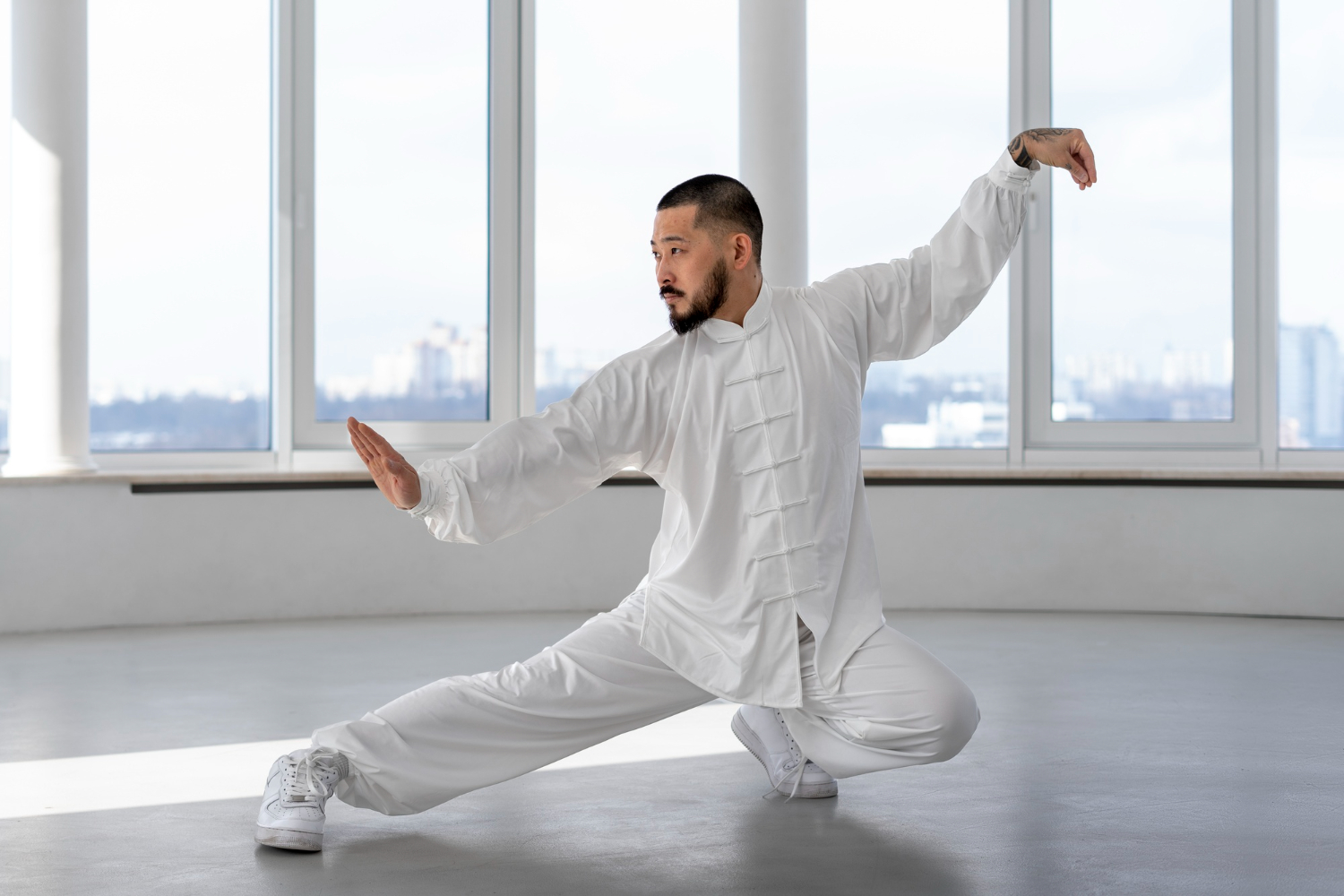
Tai Chi is a gentle mind-body exercise that combines slow, controlled movements with breathing, postural awareness, balance and concentration. Although the movements may appear simple, practicing Tai Chi effectively requires patience, consistency and attention to technique.
For beginners, one of the biggest advantages of Tai Chi is that it can generally be practiced without expensive equipment. However, “gentle” does not necessarily mean that every movement is suitable for everyone. Existing joint problems, balance difficulties, recent injuries or other health concerns may require modifications.
This guide provides practical Tai Chi tips for beginners and experienced practitioners, including how to start, how to breathe, how to improve balance, common mistakes to avoid, and ways to make your practice more consistent.
What Is Tai Chi?
Tai Chi, commonly written as Tai Chi Chuan or Taijiquan, is a traditional Chinese mind-body discipline involving coordinated movements, breathing and mental focus.
Related Stories
 What is the Ideal Weight for Having Six Pack Abs?
 Fitness in the Senior Years: Redefining Aging with Holistic Health Practices
Different styles exist, including:
- Yang-style Tai Chi
- Chen-style Tai Chi
- Wu-style Tai Chi
- Sun-style Tai Chi
- Hao-style Tai Chi
The movements vary between styles, but many forms emphasize relaxed posture, controlled weight shifting, coordinated movement and continuous transitions.
Tai Chi is sometimes described as a moving meditation because practitioners combine physical movement with attention and breathing.
For health and fitness purposes, it can be viewed as a low-impact activity that challenges balance, mobility, coordination and body awareness.

Importantly, Tai Chi should not be presented as a cure for diseases. Research has investigated Tai Chi for several health outcomes, but the strength of evidence differs depending on the condition, population and type of Tai Chi program studied.
Why Learn Tai Chi?
Tai Chi can be appealing to people who prefer slower, controlled exercise rather than high-impact workouts.
A regular practice may help develop:
- Balance
- Coordination
- Lower-body control
- Mobility
- Body awareness
- Concentration
- Relaxation
- Physical activity habits
One particularly well-studied area is balance and fall prevention among older adults. However, the results of individual studies vary, and Tai Chi should complement rather than replace appropriate medical or physical therapy care when someone has a significant balance disorder.
10 Practical Tai Chi Tips for Beginners.
1. Start With the Basics.
One of the most important Tai Chi tips is not to rush into a long sequence.
Beginners often try to memorize an entire form immediately. This can cause them to focus more on remembering the next movement than on posture and breathing.
Instead, learn:
- Basic standing posture
- Weight shifting
- Simple stepping
- Arm movements
- Breathing coordination
- Individual movements
- Short sequences
- Longer forms
Once the fundamental movements become comfortable, longer forms become easier to learn.
2. Keep Your Knees Soft.
Avoid locking your knees while practicing.
A slightly relaxed knee position allows you to shift your weight more smoothly and maintain better control.
However, this does not mean performing a deep squat.
Your knee angle should remain comfortable.
If you have knee osteoarthritis, a previous knee injury or significant knee pain, work within a comfortable range and consider professional guidance.
3. Keep Your Feet Stable.
Your feet provide the foundation for Tai Chi.
Try to maintain awareness of where your weight is distributed across your feet.
When shifting from one leg to another, move deliberately rather than suddenly.
A useful beginner principle is:
Move the weight first, then allow the rest of the body to follow.
This can help improve control during transitions.
4. Avoid Excessive Tension.
Tai Chi movements should generally appear relaxed and controlled.
Beginners sometimes tense their shoulders, hands, jaw, neck and forearms.
Try to release unnecessary tension.
Your arms do not need to be completely limp, but they should not be rigid.
A useful mental cue is:
“Relax without collapsing.”
5. Pay Attention to Your Posture.
Good posture does not mean making the body stiff.
Aim for a naturally upright position.
Keep the head comfortably aligned over the torso rather than pushing the chin forward.
Allow the shoulders to relax.
Keep the chest comfortable rather than deliberately forcing it outward.
The goal is efficient alignment rather than military-style rigidity.
6. Breathe Naturally.
Breathing is an important component of Tai Chi.
Beginners should avoid forcing complicated breathing patterns.
Start with slow, comfortable breathing.
Allow the breath to remain smooth while coordinating it with movement.
If you become breathless, dizzy or uncomfortable, stop and recover.
There is no benefit in holding your breath simply to perform a movement “correctly.”
7. Move Slowly, But Not Artificially.
Slow movement is characteristic of many Tai Chi forms.
However, moving extremely slowly does not automatically make the exercise better.
The movement should remain controlled and natural.
If you deliberately slow yourself so much that your muscles become excessively fatigued or your posture collapses, reduce the duration.
Quality matters more than speed.
8. Focus on Weight Transfer.
Weight shifting is one of the most valuable skills to develop.
Imagine your body weight moving gradually from one leg to the other.
Avoid suddenly dropping onto the supporting leg.
Controlled weight transfer can make Tai Chi more challenging for balance while helping you understand the mechanics of each movement.
9. Don’t Force Your Range of Motion.
Tai Chi is not a competition to see who can move the furthest.
Avoid forcing:
- Knee bends
- Hip rotation
- Shoulder movement
- Spinal rotation
- Ankle positions
Stay within a comfortable range.
Over time, regular movement may help you become more comfortable with your available range, but flexibility should develop gradually.
10. Keep Your Movements Connected.
Tai Chi is often practiced as a continuous sequence.
Instead of thinking about each body part separately, try to coordinate the whole body.
For example:
Feet → legs → hips → torso → arms → hands
This creates smoother transitions.
The exact principles vary between Tai Chi styles, so follow the teaching method of your instructor.
Tai Chi Tips for Better Balance.
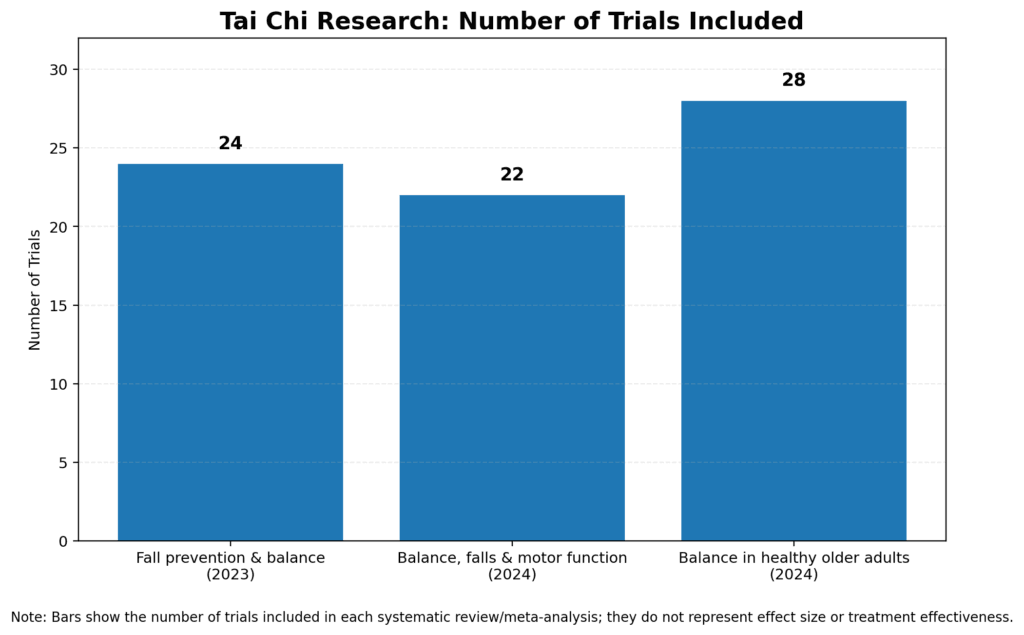
Balance is one of the most important reasons people choose Tai Chi.(1),(2),(3)
To make balance work more effective:
1. Practice Near a Stable Support.
Beginners who feel unsteady can practice near a wall or sturdy support.
Do not use an unstable chair or movable object as your support.
2. Keep Your Eyes Open.
Unless specifically instructed otherwise, beginners should generally keep their eyes open while practicing balance movements.
Closing the eyes can make balance considerably more difficult.
3. Practice Weight Shifting.
Slowly move your weight from side to side.
Pay attention to how your feet and legs respond.
4. Don’t Rush Steps.
A slow step can be more controlled than a quick one.
Place the foot deliberately before transferring your weight.
5. Practice Consistently.
Balance is a skill.
Short, regular practice may be more useful than occasional long sessions.
Tai Chi Tips for Older Adults.
Tai Chi is frequently used as a gentle form of exercise for older adults, particularly because many forms can be adapted to different physical abilities.
However, older adults should not assume that every Tai Chi movement is automatically safe.
Consider:
- Starting with a qualified instructor
- Using a chair for selected modifications if needed
- Avoiding excessively deep knee bends
- Practicing near a stable support
- Wearing appropriate footwear
- Keeping the practice area free of obstacles
- Starting with short sessions
If you have a history of falls, severe dizziness or significant mobility limitations, speak with a healthcare professional before starting a new exercise program.
Tai Chi Tips for People With Joint Problems.
Tai Chi is generally low impact, but joint-friendly does not mean completely stress-free.
If you experience joint pain:
1. Reduce the Depth.
You don’t necessarily need to bend deeply.
2. Shorten the Movement.
A smaller range may be more comfortable.
3. Avoid Painful Positions.
A mild stretching sensation can be different from sharp or worsening joint pain.
4. Modify Rather Than Quit.
A movement can often be adapted to suit your current ability.
If pain persists, seek an appropriate assessment rather than attempting to exercise through it.
Tai Chi and Breathing.
Breathing and movement are often coordinated in Tai Chi.
A simple beginner approach is:
Inhale naturally → move comfortably → exhale naturally → continue smoothly.
Do not become so focused on breathing that you create tension.
Some traditional systems use more specific breathing methods. Those techniques are best learned directly from a knowledgeable instructor rather than improvised from online instructions.
Tai Chi breathing should feel comfortable.
Stop if you experience:
- Dizziness
- Chest discomfort
- Unusual shortness of breath
- Faintness
How Long Should You Practice Tai Chi?
There is no single perfect duration for everyone.
A beginner could start with approximately 10–15 minutes and gradually increase practice time as tolerance improves.
For example:
Week 1: 10 minutes, 3 days per week.
Week 2: 15 minutes, 3–4 days per week.
Week 3: 15–20 minutes, 4 days per week.
Week 4: 20–30 minutes, 4–5 days per week.
This is an example rather than a medical prescription.
If you’re already physically active, you may tolerate longer sessions.
The key is consistency.
When Is the Best Time to Practice Tai Chi?
Tai Chi can be practiced at different times of day.
Morning.
Morning practice can provide a gentle way to begin the day.
Afternoon.
A short session can provide a movement break after prolonged sitting.
Evening.
Gentle practice may be relaxing for some people.
There is no universal “best” time.
The best time is usually the one you can maintain consistently.
Tai Chi Before or After Other Exercise?
Tai Chi can be incorporated into a broader fitness routine.
For example:
Morning: Tai Chi
Afternoon: Walking
Evening: Strength training
Or Tai Chi can be used as a gentle movement session on a recovery day.
If you are doing demanding strength or endurance training, consider how fatigue affects your balance and coordination before practicing challenging Tai Chi movements.
Common Tai Chi Mistakes.
Trying to Learn Too Much Too Quickly.
Memorizing a long form isn’t the same as learning Tai Chi.
Focus on quality.
Bending the Knees Too Deeply.
Deep stances aren’t required for everyone.
Locking the Knees.
This can make weight shifting less comfortable.
Raising the Shoulders.
Check whether your shoulders are creeping upward.
Relax them.
Looking Down Constantly.
Looking down can alter posture and balance.
Keep your gaze naturally forward unless your instructor gives another cue.
Moving Only the Arms.
Tai Chi is a whole-body movement practice.
The legs and torso should participate in coordinated movement.
Holding the Breath.
Keep breathing comfortably.
Practicing on a Slippery Surface.
Choose a stable surface with adequate traction.
Tai Chi Tips for Home Practice.
You don’t need a large room.
A relatively small, uncluttered area may be enough for many beginner movements.
Before starting:
- Remove loose objects
- Keep the floor dry
- Ensure adequate lighting
- Wear comfortable clothing
- Keep pets or obstacles away if they could cause tripping
- Keep a stable support nearby if balance is limited
If you’re following an online class, position the screen so you don’t need to constantly turn your head.
Should You Practice Tai Chi Barefoot?
This depends on your environment, balance and personal preference.
Some people practice barefoot indoors because it allows them to feel the floor.
Others prefer supportive footwear.
If you have diabetes, reduced foot sensation, balance difficulties or foot problems, footwear considerations may be particularly important.
Safety should take priority over tradition.
Tai Chi for Stress and Relaxation.
Tai Chi combines physical movement with attention and controlled breathing, which is one reason it is often used as a mind-body activity.
Some research has investigated Tai Chi for psychological well-being and stress-related outcomes.
However, it should not be marketed as a replacement for professional treatment for anxiety, depression or other mental-health conditions.
Think of Tai Chi as a potentially useful complementary activity, rather than a standalone treatment.
Tai Chi and Weight Loss.
Tai Chi can contribute to physical activity, but it is generally not a high-calorie-burning exercise compared with vigorous aerobic training.
If your goal is weight management, Tai Chi can be combined with:
- Walking
- Resistance training
- Aerobic exercise
- Adequate protein intake
- A balanced diet
- Sufficient sleep
Rather than expecting Tai Chi alone to produce substantial weight loss, consider it one part of an active lifestyle.
Tai Chi for Older Adults and Fall Prevention.
Fall prevention is one of the most commonly discussed health applications of Tai Chi.
The potential value comes from several features:
- Slow weight shifting
- Controlled stepping
- Postural awareness
- Coordination
- Lower-body control
- Attention to movement
However, someone with a high fall risk may require a more comprehensive fall-prevention program involving strength, balance assessment, environmental modifications and medical evaluation.
Tai Chi can be one component of that approach.
How to Choose a Tai Chi Instructor?
A good instructor can make learning much easier.
Look for someone who:
- Has recognized training in the style they teach
- Explains movements clearly
- Demonstrates modifications
- Prioritizes safety
- Does not encourage students to push through pain
- Has experience teaching beginners
- Understands the needs of older adults when relevant
Be cautious of instructors who promise that Tai Chi can cure numerous diseases or replace medical treatment.
Health claims should be evidence-based.
Tai Chi Tips for Building a Consistent Habit.
The biggest challenge is often not technique—it is consistency.
Try these strategies:
Set a Small Initial Goal.
Ten minutes is easier to maintain than an unrealistic one-hour commitment.
Practice at the Same Time.
A regular schedule can make exercise automatic.
Track Your Sessions.
Mark each practice on a calendar.
Learn One Movement at a Time.
Mastering small sections can create a sense of progress.
Practice With Others.
A class can provide accountability.
Don’t Aim for Perfection.
Missing one session doesn’t mean you’ve failed.
Simply return to the routine.
Who Should Be Cautious With Tai Chi?
Consult an appropriate healthcare professional before starting or modifying an exercise program if you have:
- Significant heart or lung disease
- Recent surgery
- Serious balance problems
- A recent fracture
- Severe joint pain
- Neurological problems affecting movement
- Frequent unexplained falls
- Severe dizziness
- Another condition that limits exercise
During practice, stop and seek appropriate medical attention for concerning symptoms such as chest pain, fainting, severe breathlessness or sudden neurological symptoms.
Tai Chi vs Yoga.
Tai Chi and yoga are both mind-body practices, but they are not identical.
Tai Chi generally emphasizes continuous flowing movements, weight shifting and coordinated stepping.
Yoga includes a much broader variety of postures, including standing, seated, balancing and lying positions, along with breathing and meditation practices.
Both can be adapted for different abilities.
The better option depends on your goals, preferences, physical abilities and access to appropriate instruction.
Some people enjoy practicing both.
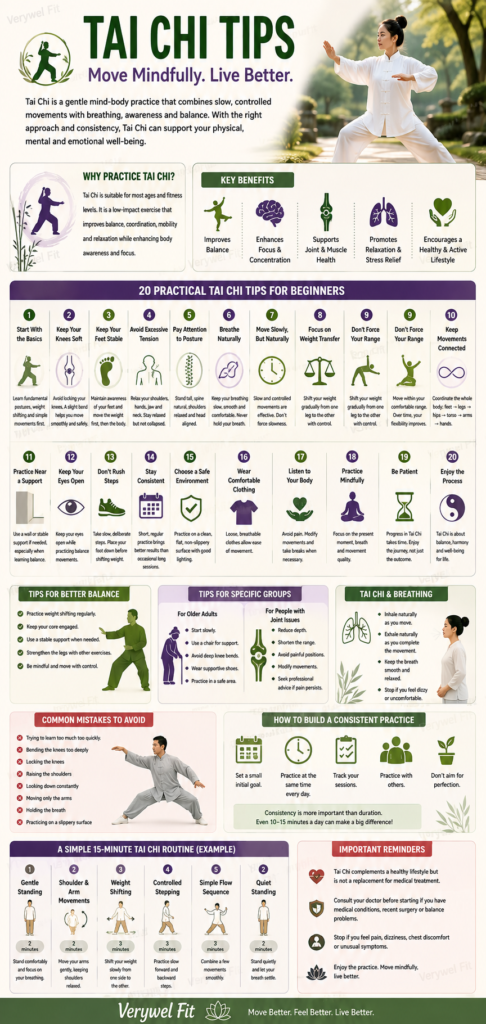
A Simple 15-Minute Tai Chi Routine for Beginners.
Here is an example structure:
1. Gentle Standing – 2 minutes.
Stand comfortably and focus on breathing.
2. Shoulder and Arm Movements – 2 minutes.
Move the arms gently while keeping the shoulders relaxed.
3. Weight Shifting – 3 minutes.
Shift your weight slowly from one side to another.
4. Controlled Stepping – 3 minutes.
Practice slow forward and backward steps.
5. Simple Flowing Sequence – 3 minutes.
Combine several movements you’ve already learned.
6. Quiet Standing – 2 minutes.
Finish by standing comfortably and allowing your breathing to settle.
This is an example routine, not a substitute for instruction in a specific Tai Chi form.
Frequently Asked Questions.
1. Is Tai Chi good for beginners?
Yes. Many Tai Chi programs can be adapted for beginners. Start with basic movements and avoid trying to learn advanced forms immediately.
2. How many times a week should I do Tai Chi?
There is no universal requirement. Starting with three sessions per week and gradually increasing according to your ability can be a practical approach.
3. Can I do Tai Chi every day?
Many people can practice gentle Tai Chi frequently, provided the movements are comfortable and recovery is adequate. More demanding stances may require adjustment.
4. Is Tai Chi difficult to learn?
The basic movements can be accessible, but learning a complete form can take time. Consistent practice is more important than learning quickly.
5. Does Tai Chi improve balance?
Research suggests Tai Chi may help balance in some populations, particularly older adults, although results vary between studies and programs.
6. Can Tai Chi help with stress?
Tai Chi is a mind-body activity that may support relaxation and psychological well-being. It should not replace professional treatment for significant mental-health concerns.
7. Can Tai Chi help with weight loss?
Tai Chi contributes to physical activity but usually does not burn as many calories as vigorous exercise. It can complement a broader weight-management program.
8. Can I do Tai Chi with knee pain?
Some Tai Chi movements may be modified for people with knee discomfort, but painful positions should not be forced. Significant or persistent knee pain warrants professional assessment.
9. Is Tai Chi better than walking?
They provide different forms of exercise. Walking generally provides more straightforward aerobic activity, while Tai Chi emphasizes balance, coordination, controlled movement and body awareness. They can complement each other.
10. Do I need equipment for Tai Chi?
Usually, no specialized equipment is required. Comfortable clothing and a safe, stable practice area are generally sufficient.
11. Can older adults practice Tai Chi?
Yes, many older adults practice Tai Chi. Movements can often be modified, but people with significant balance or mobility problems should receive appropriate guidance.
12. Should I practice Tai Chi barefoot?
You can practice barefoot on a safe indoor surface if comfortable, but supportive footwear may be preferable for some people. Safety and stability are more important than whether you practice barefoot.
13. Can Tai Chi replace strength training?
Not completely. Tai Chi provides movement and muscular control, but progressive resistance exercise is generally more appropriate when the goal is to specifically improve muscular strength and power.
Final Takeaway.
The best Tai Chi tips are surprisingly simple: start slowly, focus on posture, keep your breathing comfortable, shift your weight deliberately, relax unnecessary tension and practice consistently.
Don’t judge your progress by how complicated your movements look. A beginner who performs a simple movement with good balance, controlled breathing and proper alignment may be practicing more effectively than someone rushing through an advanced form.
Tai Chi can be a valuable addition to an active lifestyle because it combines movement with attention, coordination and balance. It can also be adapted to different fitness levels when taught appropriately.
However, it should not be treated as a cure-all. Evidence for health benefits varies by condition and population, and individual results can differ.
For the safest and most effective experience, learn the fundamentals from a qualified instructor, modify movements according to your abilities and stop rather than push through significant pain or concerning symptoms.
+3 Sources
Verywelfit has strict sourcing guidelines and relies on peer-reviewed studies, educational research institutes, and medical organizations. We avoid using tertiary references. You can learn more about how we ensure our content is accurate and up-to-date by reading our editorial policy.
- Tai Chi for fall prevention and balance improvement in older adults: a systematic review and meta-analysis of randomized controlled trials; https://pubmed.ncbi.nlm.nih.gov/37736087/
- Effectiveness of Tai Chi exercise on balance, falls, and motor function in older adults: a meta-analysis; https://pubmed.ncbi.nlm.nih.gov/39564508/
- Tai chi improves balance performance in healthy older adults: a systematic review and meta-analysis; https://pubmed.ncbi.nlm.nih.gov/39588165/