













 Workout

 Meditation






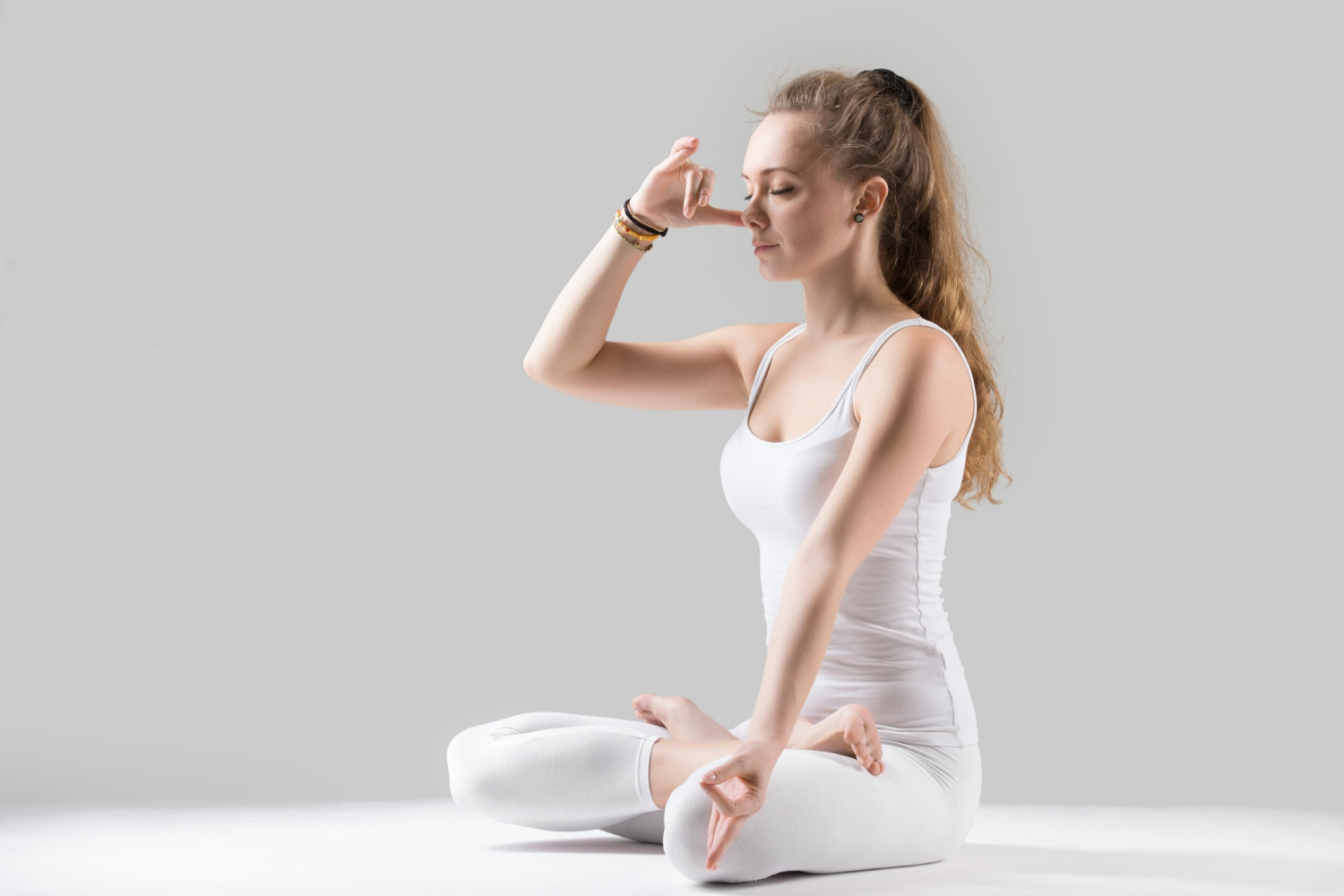
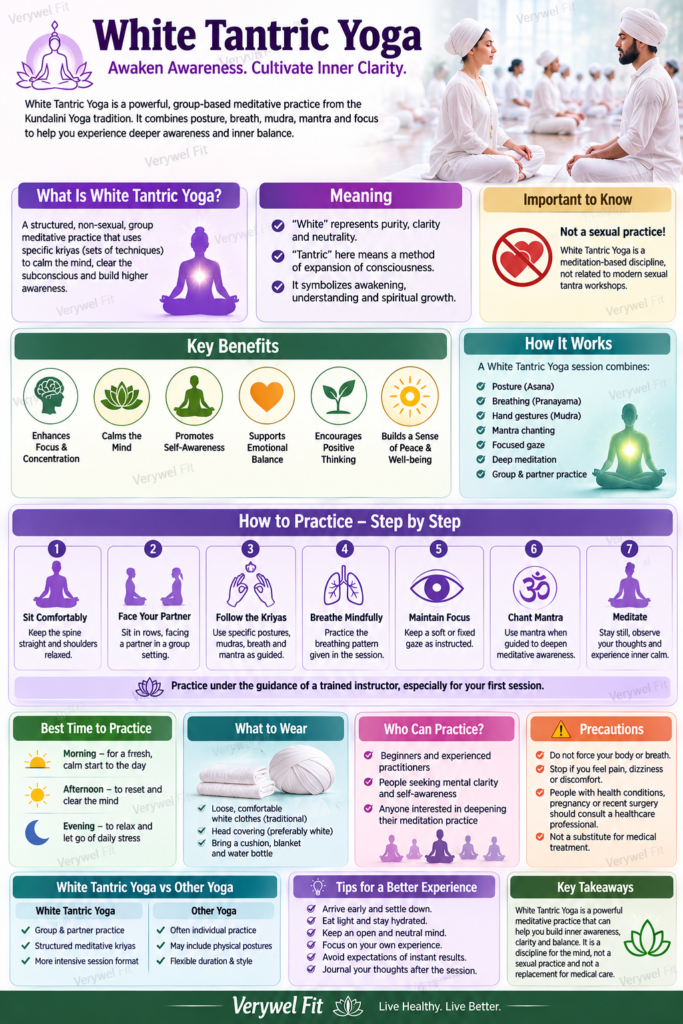
White Tantric Yoga is a structured, group-based meditative practice associated with the Kundalini Yoga tradition taught through the organization founded by Yogi Bhajan. Unlike the modern popular understanding of the word “tantra,” White Tantric Yoga is not a sexual practice. It is presented as a contemplative discipline involving meditation, posture, breath, mudra, gaze and mantra.
According to 3HO International, White Tantric Yoga is practiced in pairs within a group setting, with participants following guided kriyas that combine yogic techniques and meditation. Courses are generally structured as intensive sessions containing several kriyas, with breaks between practices.(1)
The practice has a distinctive format: participants sit facing a partner, generally in rows, while following standardized instructions. The emphasis is on maintaining awareness, discipline and meditative attention rather than physical performance.
From a health and wellness perspective, it is important to distinguish between traditional claims about White Tantric Yoga and what modern scientific research has actually demonstrated. Research specifically investigating White Tantric Yoga is limited. Studies examining broader yoga or Kundalini Yoga practices cannot automatically be interpreted as proof that White Tantric Yoga produces the same effects.
Related Stories
 Unlocking the Power Within: 10 Best Solar Plexus Chakra Yoga Poses
 Tattva Mudra: Meaning, Benefits, How to Practice & Safety
White Tantric Yoga Meaning.
The term “white” in White Tantric Yoga refers to one of several traditional classifications of tantra within the Kundalini Yoga framework.
In the tradition associated with Yogi Bhajan, White Tantric Yoga is described as a practice intended to work with the subconscious mind and promote greater clarity and awareness.
The official 3HO description emphasizes group meditation, discipline, neutrality and personal transformation. Its traditional framework also includes concepts such as the Mahan Tantric and “diagonal” or “Z” energy. These are elements of the spiritual philosophy of the practice rather than concepts established by modern physiology or neuroscience.
Therefore, someone approaching White Tantric Yoga from a scientific perspective can understand its observable components—such as meditation, breathing, posture, focused attention and group practice—without necessarily accepting its spiritual explanations as scientifically established facts.
Is White Tantric Yoga the Same as Sexual Tantra?
No.
This is one of the most important misconceptions to clarify.
White Tantric Yoga as taught within the Kundalini Yoga tradition is presented as a non-sexual meditative practice. Participants sit facing partners, but the partner relationship is not intended to be romantic or sexual. The official description specifically characterizes the practice as neutral rather than sexually or emotionally oriented.
The word “tantra” has a complex history across South Asian religious traditions. Modern popular culture has often reduced tantra to sexuality, but traditional tantric philosophies are considerably broader.
Consequently, White Tantric Yoga should not be confused with modern “tantra” workshops focused primarily on intimacy or sexuality.
History of White Tantric Yoga.
White Tantric Yoga became publicly associated with Yogi Bhajan and the Kundalini Yoga community he developed in the West.
According to 3HO’s historical account, Yogi Bhajan began teaching White Tantric Yoga publicly in 1971, including workshops connected with the early Solstice Sadhana gatherings.
The practice subsequently developed into organized courses and international events.
Historically, White Tantric Yoga was described as requiring direct guidance from the Mahan Tantric. After Yogi Bhajan’s death in 2004, the practice continued through a standardized video-guided format with facilitators supporting participants at courses.
This history is important because White Tantric Yoga is not simply a generic combination of yoga poses and meditation. It is a specific system with its own lineage, terminology, rituals and teaching structure.
How Does White Tantric Yoga Work?
A White Tantric Yoga session combines several components of yogic and meditative practice.
These can include:
- Asana or seated posture
- Mudra or hand position
- Pranayama or controlled breathing
- Mantra
- Focused gaze
- Meditation
- Group participation
- Partner-based positioning
According to the official description, individual kriyas can vary in duration and may include silent meditation, chanting, specific mudras, postures and different breathing techniques.
From a contemporary mind-body perspective, several of these elements overlap with techniques studied independently in meditation and yoga research.
For example, focused attention, controlled breathing and repetitive mantra practice may influence subjective relaxation and attention. However, this does not prove the specific spiritual mechanism traditionally proposed by White Tantric Yoga.
What Happens During a White Tantric Yoga Session?
A typical course is considerably more intensive than an ordinary yoga class.
Participants generally arrive at a designated venue and sit in pairs facing one another.
The instructor or facilitator introduces the practice, after which participants follow guided meditation instructions.
A session can include several kriyas.
Depending on the particular kriya, participants may:
- Sit quietly
- Maintain a specific posture
- Use a particular mudra
- Practice a breathing pattern
- Chant a mantra
- Maintain a specific gaze
- Face their partner
- Remain still for an extended period
Breaks are provided between practices.
According to 3HO, a White Tantric Yoga experience may contain six to eight kriyas, with individual kriyas lasting up to approximately 62 minutes.
This means that physical preparation can be useful, particularly for people who are not accustomed to sitting for prolonged periods.
White Tantric Yoga Benefits.
White Tantric Yoga is traditionally associated with mental clarity, subconscious awareness and spiritual development.
However, these traditional claims should not be presented as medically proven outcomes.
The potential benefits of the practice can be considered at several levels.
1. Meditation and Mental Focus.
White Tantric Yoga requires participants to maintain attention on instructions, posture, breathing, mantra and/or gaze.
This sustained attention can make the session mentally demanding.
For some practitioners, structured meditation may provide an opportunity to step away from everyday distractions and develop greater awareness of mental activity.
2. Relaxation.
Yoga and meditation research suggests that yoga-based practices may help reduce perceived stress in some populations.
A systematic review and meta-analysis of yoga for stressed adults included 13 randomized controlled trials involving 1,026 participants. The researchers found evidence of benefits for perceived stress, although the certainty of evidence varied and was not specific to White Tantric Yoga.(2)
Therefore, it is reasonable to say that White Tantric Yoga contains components that overlap with practices studied for stress management, but it would be inaccurate to claim that this particular form has been conclusively proven to treat stress.
3. Self-Awareness.
Long periods of meditation can encourage people to notice recurring thoughts, emotional reactions and habitual patterns.
The traditional White Tantric Yoga framework places substantial emphasis on working with subconscious patterns.
From a psychological perspective, practitioners may experience the practice as an opportunity for self-observation.
4. Group Connection.
White Tantric Yoga is deliberately practiced within a group.
The shared structure can create a sense of community and collective participation.
Group meditation may also make it easier for some individuals to maintain discipline compared with practicing alone.
5. Mindfulness.
Although White Tantric Yoga is not identical to secular mindfulness meditation, both can involve deliberate attention to present-moment experience.
Participants may become more aware of:
- Breathing
- Physical sensations
- Thoughts
- Emotional responses
- Attention
- External distractions
This awareness can be valuable as part of a broader contemplative practice.
6. Spiritual Reflection.
For people who approach yoga through a spiritual lens, White Tantric Yoga may provide a structured environment for contemplation.
Its traditional philosophy encourages practitioners to examine patterns of thought and develop greater awareness.
The spiritual value of such experiences is inherently personal and should not be treated as a measurable medical outcome.
What Does Science Say About White Tantric Yoga?
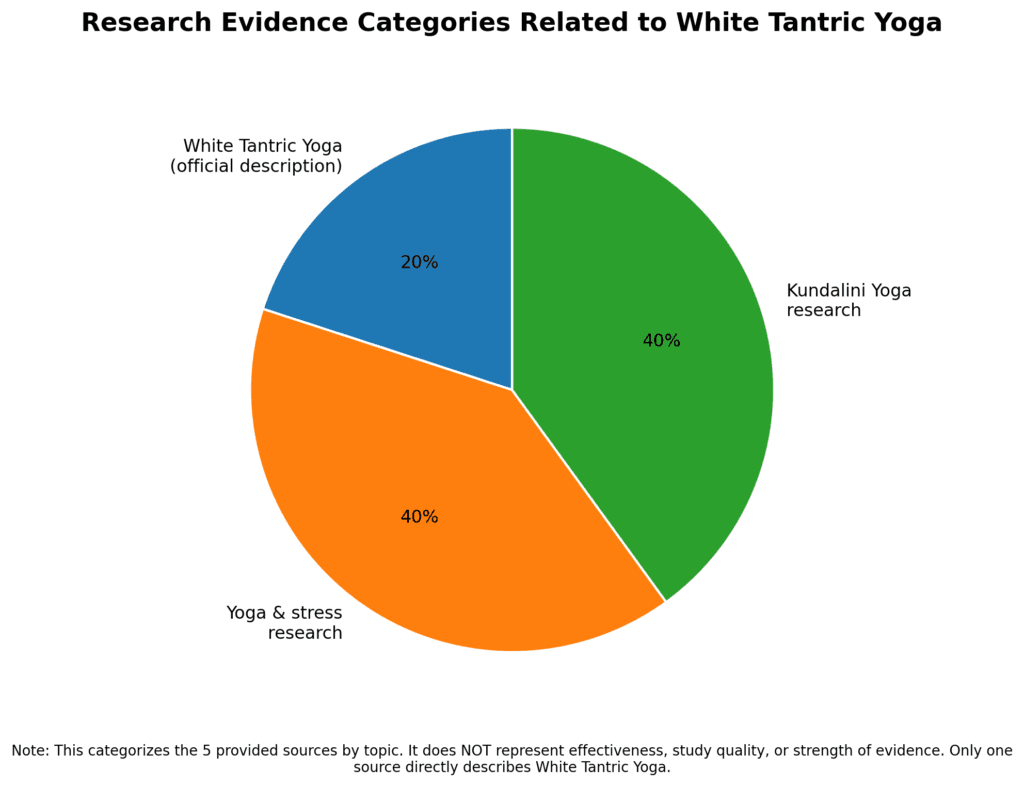
A systematic review published in 2020 examined 12 studies involving different forms of yoga and reported generally positive effects on stress in healthy populations, although the researchers noted the need for more research into long-term effects and mechanisms. (3)
Research specifically involving Kundalini Yoga is also emerging. A 2024 systematic review of randomized controlled trials examined Kundalini Yoga and cognitive function, identifying five RCTs involving 215 participants. The review reported promising findings related to memory and executive function but emphasized that larger and better-designed studies are still required.(4)
More recent systematic-review evidence has also evaluated Kundalini Yoga across multiple health outcomes, but this should still not be equated directly with White Tantric Yoga.(5)
Therefore, the scientifically responsible conclusion is:
White Tantric Yoga contains several components that have been studied within broader yoga and meditation research, but direct evidence for White Tantric Yoga as a distinct intervention remains limited.
White Tantric Yoga and Stress.
Stress management is one of the areas where people commonly seek yoga and meditation.
Yoga practices can incorporate physical movement, breathing, concentration and relaxation.
A systematic review of yoga for stress among healthy adults found that most of the included yoga approaches showed positive effects on stress, although the studies differed substantially in the type and duration of intervention.
A newer systematic review and meta-analysis focused specifically on stressed adults and included 13 randomized controlled trials. It found evidence of short-term improvement in perceived stress compared with passive controls, but the certainty of evidence was rated low for some outcomes.
Because White Tantric Yoga includes meditation, breathing and focused attention, practitioners may experience it as relaxing or emotionally meaningful.
However, it should not be described as a clinically established treatment for an anxiety disorder, depression or chronic stress.
White Tantric Yoga and the Nervous System.
Yoga and meditation are often described as influencing the nervous system.
There are plausible mechanisms through which slow breathing, focused attention and relaxation may affect autonomic activity.
However, statements such as “White Tantric Yoga resets the nervous system” or “cleanses the nervous system” are oversimplifications.
The human nervous system is complex, and a single meditation session should not be portrayed as permanently changing it.
A more evidence-based description is that relaxation and breathing practices may influence physiological arousal and subjective stress responses, while the precise mechanisms and long-term effects continue to be studied.
White Tantric Yoga for Beginners.
Beginners do not necessarily need previous experience with advanced yoga postures.
According to the official White Tantric Yoga description, the practice is intended for both beginners and experienced practitioners.
However, beginners should understand that a White Tantric Yoga course can be physically and mentally demanding because of prolonged sitting.
It is useful to prepare by practicing:
- Comfortable seated meditation
- Gentle hip mobility
- Simple breathing exercises
- Short periods of stillness
- Relaxation techniques
You do not need to force yourself into a traditional cross-legged position.
If sitting on the floor is uncomfortable, appropriate modifications such as a cushion or chair may be necessary.
What to Wear for White Tantric Yoga?
White clothing is traditionally associated with the practice.
According to 3HO’s preparation guidance, participants are encouraged to wear loose, comfortable white clothing and a white head covering that stays securely in place. Participants may also bring a cushion, blanket and water bottle.
Comfort is particularly important because participants may remain seated for extended periods.
Avoid clothing that restricts breathing, hip movement or circulation.
How to Prepare for White Tantric Yoga?
Because a course can last most of the day, preparation can make the experience more comfortable.
Sleep Well.
Try to get adequate sleep the night before.
Eat Lightly.
Avoid arriving excessively full.
Stay Hydrated.
Bring water and drink according to your needs.
Practice Sitting.
If you are unfamiliar with long periods of seated meditation, gradually increase your sitting time beforehand.
Wear Comfortable Clothing.
Choose loose clothing that allows unrestricted movement and comfortable breathing.
Arrive Early.
Arriving early can give you time to settle down rather than entering the practice hurriedly.
White Tantric Yoga vs Kundalini Yoga.
White Tantric Yoga and Kundalini Yoga are related within the tradition associated with Yogi Bhajan, but they are not identical.
Kundalini Yoga can involve:
- Kriyas
- Asanas
- Pranayama
- Mantra
- Meditation
- Mudras
It may be practiced regularly in classes or individually.
White Tantric Yoga, by contrast, has a distinctive group format involving paired participants, standardized guided meditations and a more intensive course structure.
Therefore, practicing ordinary Kundalini Yoga does not necessarily mean that someone is practicing White Tantric Yoga.
White Tantric Yoga vs Other Forms of Tantra.
The word “tantra” covers diverse traditions.
White Tantric Yoga as practiced within the Kundalini Yoga community should not be assumed to represent all tantric traditions.
Different schools of tantra have different:
- Philosophies
- Rituals
- Meditation methods
- Religious contexts
- Historical lineages
Therefore, “White Tantra” should be understood as a specific tradition rather than a universal definition of tantra.
Is White Tantric Yoga Safe?
For many healthy adults, gentle meditation and yoga-based practices can be appropriate.
However, White Tantric Yoga can involve prolonged sitting and sustained mental concentration.
Potential practical challenges include:
- Knee discomfort
- Hip discomfort
- Back stiffness
- Muscle fatigue
- Headaches
- Dizziness from inappropriate breathing
- Emotional discomfort during intensive meditation
The official guidance recommends that people who are pregnant or under medical care consult their healthcare provider and speak with course facilitators. It also notes that chairs can be used when needed.
If a position causes pain, modify it rather than trying to “push through.”
Who Should Be Cautious?
Extra caution may be appropriate for people with:
- Significant knee or hip problems
- Recent surgery
- Severe back pain
- Balance difficulties
- Cardiovascular conditions affected by exertion or breathing techniques
- Pregnancy
- Conditions requiring ongoing medical care
Anyone with a significant health condition should discuss participation with an appropriate healthcare professional.
People who experience distressing psychological symptoms during meditation should also stop and seek appropriate professional guidance.
Meditation is not automatically suitable for every person in every circumstance.
Common Myths About White Tantric Yoga.
Myth 1: White Tantric Yoga Is a Sexual Practice.
Fact: The White Tantric Yoga system associated with Yogi Bhajan is presented as a non-sexual meditation practice.
Myth 2: It Can Cure Diseases.
Fact: There is insufficient evidence to claim that White Tantric Yoga cures medical conditions.
Myth 3: You Need to Be an Advanced Yogi.
Fact: The official organization states that beginners can participate.
Myth 4: More Pain Means Better Results.
Fact: Pain is not a sign that meditation is working. Physical discomfort should be addressed through appropriate modification.
Myth 5: Scientific Research Has Proven Every Traditional Claim.
Fact: Research on yoga and Kundalini Yoga does not automatically validate every spiritual or energetic claim associated with White Tantric Yoga.
How to Get the Most From the Practice?
If you decide to explore White Tantric Yoga, approach it with realistic expectations.
Do not attend expecting an instant transformation.
Instead, consider the practice an opportunity to explore:
- Attention
- Discipline
- Meditation
- Breath awareness
- Self-reflection
- Group practice
- Personal values
Afterward, journaling can help you reflect on what you experienced.
Questions such as “What thoughts repeatedly appeared?”, “What physical sensations did I notice?”, and “What did I learn about my reactions?” can turn the experience into a longer-term reflective practice.
Frequently Asked Questions.
1. What is White Tantric Yoga?
White Tantric Yoga is a structured, group-based meditative practice associated with the Kundalini Yoga tradition taught by Yogi Bhajan. It combines meditation with posture, breath, mudra, gaze and mantra. (3HO International)
2. Is White Tantric Yoga sexual?
No. The White Tantric Yoga system described by 3HO is explicitly presented as a non-sexual practice in which participants sit facing partners for meditation.
3. What are the benefits of White Tantric Yoga?
Traditional descriptions associate it with mental clarity, self-awareness and spiritual development. Research directly studying White Tantric Yoga is limited, although broader yoga and meditation research suggests potential benefits for stress and psychological well-being.
4. Can beginners do White Tantric Yoga?
Yes. The official description states that the practice is open to beginners as well as experienced practitioners.
5. How long does White Tantric Yoga take?
White Tantric Yoga courses are typically intensive experiences. A course may contain several kriyas, with breaks between them, and individual kriyas can last up to approximately 62 minutes. (3HO International)
6. Do I have to wear white?
White clothing is traditionally recommended for White Tantric Yoga courses. Comfortable, loose clothing is encouraged.
7. Can I practice White Tantric Yoga at home?
The formal White Tantric Yoga system is traditionally taught in its structured course setting rather than as an improvised home routine. The official organization describes its courses as guided, standardized group experiences.
8. Is White Tantric Yoga scientifically proven?
There is limited research specifically on White Tantric Yoga. Evidence from broader yoga and Kundalini Yoga research provides useful context but should not be presented as direct proof of the effectiveness of White Tantric Yoga.
9. Can White Tantric Yoga reduce anxiety?
Yoga and meditation may help reduce stress and anxiety symptoms in some people, but White Tantric Yoga should not be presented as a replacement for evidence-based treatment of an anxiety disorder.
10. Can White Tantric Yoga replace medical treatment?
No. It should be considered a complementary wellness or contemplative practice rather than a replacement for appropriate medical or psychological care.
Final Takeaway.
White Tantric Yoga is a distinctive, intensive form of group meditation associated with the Kundalini Yoga tradition of Yogi Bhajan. Its practice combines elements such as posture, breathwork, mudra, mantra, gaze and meditation in a structured partner-based environment.
Its traditional philosophy emphasizes mental clarity, self-awareness and transformation. At the same time, an evidence-based approach requires separating these traditional interpretations from scientifically established health outcomes.
Research on broader yoga and Kundalini Yoga suggests potential benefits for areas such as stress, cognitive function and psychological well-being, but direct clinical evidence specifically evaluating White Tantric Yoga remains limited.
For someone interested in exploring the practice, the best approach is to remain curious while maintaining realistic expectations. White Tantric Yoga can be viewed as a structured contemplative experience rather than a medical treatment or a guaranteed method of healing.
+5 Sources
Verywelfit has strict sourcing guidelines and relies on peer-reviewed studies, educational research institutes, and medical organizations. We avoid using tertiary references. You can learn more about how we ensure our content is accurate and up-to-date by reading our editorial policy.
- White Tantric Yoga; https://www.3ho.org/library/white-tantric-yoga/white-tantric-yoga/
- Effects of yoga on stress in stressed adults: a systematic review and meta-analysis; https://pubmed.ncbi.nlm.nih.gov/39553891/
- Effects of Yoga on Stress Among Healthy Adults: A Systematic Review; https://pubmed.ncbi.nlm.nih.gov/32088671/
- The Impact of Kundalini Yoga on Cognitive Function and Memory: A Systematic Review of Randomized Controlled Trials; https://pubmed.ncbi.nlm.nih.gov/39070487/
- Evidence-Based Clinical Effectiveness of Kundalini Yoga: Systematic Review of RCTs Across Multiple Health Conditions; https://pubmed.ncbi.nlm.nih.gov/40985958/