











 Workout

 Meditation






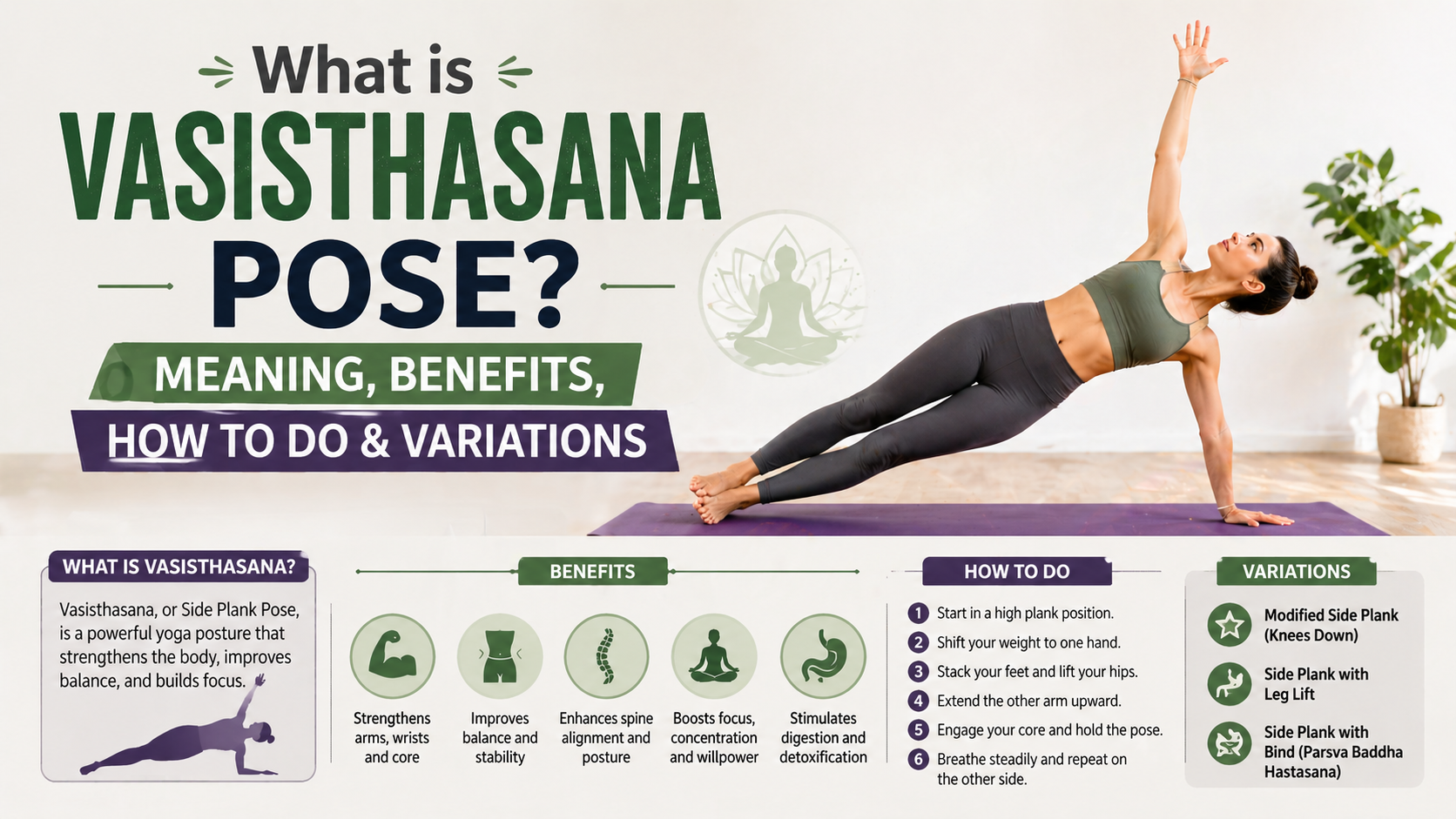
Vasisthasana, also known as Side Plank Pose, is a popular yoga posture that offers a multitude of benefits for the mind, body, and spirit. Derived from the Sanskrit word “Vasistha,” which translates to “most excellent, best, richest,” this pose is named after the great sage Vasistha, who was known for his wisdom and spiritual enlightenment.
Vasisthasana is often practiced as part of the Sun Salutation sequence and is highly regarded for its ability to strengthen the core, improve balance, and promote mental focus. In this article, we will delve into the meaning and significance of Vasisthasana, explore its numerous benefits, learn how to properly execute the pose, and explore variations that can be incorporated to challenge and deepen the practice. Whether you are a seasoned yogi or a beginner, this comprehensive guide will provide you with valuable insights into Vasisthasana and help you cultivate a stronger, more balanced, and mindful yoga practice.
Vasisthasana Meaning.
The term “Vasistha” refers to the sage Vasistha, who was known for his wisdom and spiritual insight. This pose represents the strength, balance, and stability that the sage possessed, both physically and spiritually. By practicing Vasisthasana, one can tap into their inner strength and find balance and stability in their body, mind, and spirit. This pose also symbolizes the importance of maintaining a strong core and a steady foundation, both on and off the mat. Overall, Vasisthasana encourages practitioners to embrace their inner power, build resilience, and find harmony in their lives.
What is the Benefits of Vasisthasana?
Let’s explore the wide range of advantages that practicing Vasisthasana can bring:
Related Stories
 How Simple Lower Back Stretches Reduced My Pain and Improved My Mobility?
 Reclining Hero Pose: Benefits, How To Do and Precautions
1. Core Strength.
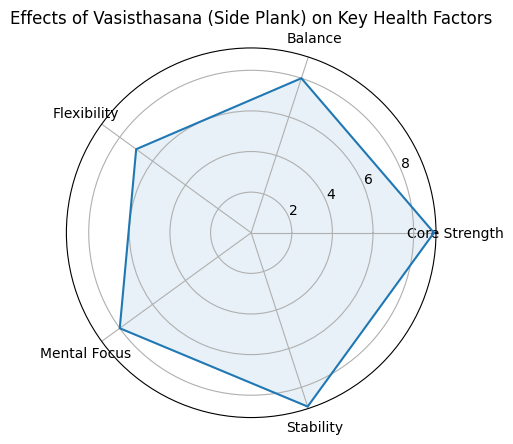
Vasisthasana primarily targets the core muscles, including the abdominals, obliques, and lower back. By engaging these muscles, it helps to build a strong and stable core, promoting better posture and overall body strength.(1)
2. Arm and Shoulder Strength.
This pose challenges the strength of the arms and shoulders as they support the body’s weight. Regular practice of Vasisthasana helps to tone and strengthen these areas, enhancing upper body strength and stability.
3. Balance and Stability.
Maintaining balance in Vasisthasana requires focus, concentration, and body awareness. Regularly practicing this pose enhances proprioception and stability, improving overall balance both on and off the mat.
4. Toning the Legs.
While the focus may be on the upper body, Vasisthasana also engages the leg muscles. The legs work to support the body and maintain alignment during the pose, resulting in toned and strengthened leg muscles.

5. Increased Flexibility.
Vasisthasana stretches and opens the hips, hamstrings, and shoulders. Through regular practice, it helps to improve flexibility in these areas, reducing muscle stiffness and enhancing overall range of motion.
6. Improved Digestion.
The compression of the abdominal area in Vasisthasana stimulates the digestive organs, aiding in digestion and improving overall gut health. This pose can help alleviate digestive issues and promote a healthy digestive system.
7. Mental Focus and Concentration.
Holding Vasisthasana requires mental focus and concentration to maintain balance and stability. By training the mind to stay present and focused, this pose helps to cultivate mindfulness and enhance mental clarity.
8. Stress Relief.
Like most yoga poses, Vasisthasana promotes stress relief by encouraging deep breathing, relaxation, and the release of tension. Regular practice can help calm the mind, alleviate anxiety, and promote an overall sense of well-being.
9. Improved Energy Flow.
Vasisthasana stimulates the energy channels in the body, allowing for a smooth flow of prana (life force). This revitalizes the body, increases vitality, and promotes a sense of rejuvenation.
10. Self-Confidence and Empowerment.
As Vasisthasana challenges and strengthens the body, it also fosters a sense of self-confidence and empowerment. The ability to hold this pose and witness personal progress can boost self-esteem, creating a positive mindset both on and off the mat.
| 💡 Tips FitToFar.com Incorporating Vasisthasana into your regular yoga practice can bring forth a multitude of benefits, allowing you to cultivate strength, balance, flexibility, and mental well-being. As with any yoga pose, it is essential to practice with proper alignment and listen to your body, honoring its limitations and gradually progressing at your own pace. |
How to Do Vasisthasana?
Here is a step-by-step guide to help you practice Vasisthasana:
1. Begin by coming into a high plank position, with your shoulders directly above your wrists and your body in a straight line. Engage your core muscles and keep your legs extended behind you.
2. Shift your weight onto your right hand and right foot, and roll onto the outer edge of your right foot. Stack your left foot on top of your right foot, keeping your legs straight and active.
3. As you balance on your right hand and foot, extend your left arm towards the sky, reaching your fingertips up. Keep your gaze focused on your left hand.
4. To deepen the pose, lift your left leg parallel to the floor, engaging your thigh muscles. You can also flex your left foot for added stability.
5. Engage your core muscles by drawing your belly button towards your spine. This will help you maintain balance and stability in the pose.
6. Keep your shoulders relaxed and away from your ears. Maintain a steady breath throughout the pose, inhaling and exhaling deeply.
7. Hold the pose for a few breaths, gradually increasing the duration as you build strength and stability. Aim for 30 seconds to 1 minute on each side.
8. To release the pose, slowly lower your left leg and arm back to the starting position, coming back into a high plank. Rest in child’s pose or downward facing dog to counterbalance the intensity of the pose.
9. Repeat the steps on the other side, shifting your weight onto your left hand and foot, and extending your right arm towards the sky.
| 💡 Tips Verywel Fit.com Remember to listen to your body and modify the pose as needed. If you have any wrist or shoulder issues, you can practice Vasisthasana with your forearm on the mat instead of your hand. With regular practice, Vasisthasana can help improve your balance, strengthen your core, and cultivate a sense of inner stability. |
Vasisthasana Variations.
There are several variations of Vasisthasana that can be practiced to intensify the pose or target specific areas of the body. These variations allow practitioners to modify the pose according to their skill level and individual needs.
1. Modified Vasisthasana.
This variation is suitable for beginners or those with limited upper body strength. Instead of fully extending the bottom leg, the knee can be bent and placed on the ground for added support. This modification helps to build strength in the arms, core, and shoulders, while still providing the benefits of the pose.
2. Extended Leg Vasisthasana.
To challenge the balance and engage the core muscles further, the top leg can be extended straight up towards the ceiling. This variation requires greater strength and stability in the supporting arm, as well as increased engagement of the glutes and hamstrings.
3. Thread the Needle Vasisthasana.
This variation adds a twist to the traditional Side Plank Pose. From the standard Vasisthasana position, the top arm can be threaded under the body, reaching towards the opposite side. This variation helps to open the chest and shoulders, while also stretching the obliques and strengthening the core.
4. Vasisthasana with Hip Dips.
In this variation, the hips can be lowered towards the ground and then lifted back up, creating a dipping motion. This movement helps to target the obliques and build strength in the side body. It also challenges the stability of the pose and improves overall balance.
5. One-Legged Vasisthasana.
Taking the Side Plank Pose to the next level, this variation involves lifting the top leg off the bottom leg and extending it straight out in front of the body. This advanced variation requires exceptional core strength, balance, and stability. It engages the glutes, quads, and hip flexors, while also improving focus and concentration.
| 💡 Tips Verywel Fit.com Regardless of the variation chosen, it is important to maintain proper alignment and engage the core muscles throughout the pose. Practicing Vasisthasana variations regularly can help build strength, stability, and resilience in both the body and mind. |
Bottom Line.
Vasisthasana, or Side Plank pose, is a powerful and challenging yoga asana that offers numerous physical and mental benefits. By engaging multiple muscle groups and enhancing core strength, this pose helps to improve balance, stability, and posture. Additionally, it increases flexibility and tones the arms, legs, and buttocks. Beyond the physical advantages, Vasisthasana cultivates mental focus, concentration, and self-confidence. Through regular practice and proper alignment, individuals can experience the transformative effects of this pose on both the body and mind.
+1 Source
VerywelFit has strict sourcing guidelines and relies on peer-reviewed studies, educational research institutes, and medical organizations. We avoid using tertiary references. You can learn more about how we ensure our content is accurate and up-to-date by reading our editorial policy.
- Exploring the therapeutic effects of yoga and its ability to increase quality of life; https://pmc.ncbi.nlm.nih.gov/articles/PMC3193654/