












































 Workout

 Meditation







The Fast Facts
- A study published in the Journal of Sports Medicine found that low blood sugar is a common cause of nausea in athletes, particularly in activities that combine endurance and strength, such as yoga.
- A sudden change in your body’s position can cause blood to pool in different areas, leading to dizziness or nausea.
- We interviewed several yoga instructors and health professionals to get their take on why nausea occurs during yoga and how to manage it.

Yoga is often celebrated as a calming practice that enhances both physical and mental well-being. However, it’s not uncommon for practitioners—especially beginners—to experience nausea during or after a yoga session. While this may seem alarming, it’s usually not a sign of anything serious. Understanding the underlying causes can help you enjoy your practice more comfortably.
In this article, we will explore the reasons why nausea occurs during yoga, offer expert insights, and provide practical tips to prevent it. We’ll also delve into some frequently asked questions and back everything up with scientific evidence.
The Experience of Nausea in Yoga.
Nausea during yoga is a strange contradiction—how can an activity aimed at promoting well-being cause discomfort? Many yogis, particularly those new to the practice, report feeling dizzy, queasy, or lightheaded at some point during or after their session.
Related Stories
 Top 6 Yoga Asanas To Improve Memory And Concentration
 Top 10 Autumn Equinox Yoga Poses And Its Amazing Benefits
According to Dr. Jessica Marks, a certified yoga instructor and physical therapist, “Nausea is not uncommon, especially when your body is adjusting to new poses or movements. Most of the time, it’s linked to physiological changes happening within your body as you stretch, twist, and breathe.”
Yoga positions that involve inversions or deep stretches can trigger various internal responses. While the discomfort is typically temporary, understanding why it happens can make your yoga practice more enjoyable and less daunting.
Common Causes of Nausea During Yoga.
There are several reasons why you might feel nauseated during yoga, ranging from physiological to psychological causes. Below, we’ll go through the most common ones.
1 Dehydration.
One of the most frequent causes of nausea during yoga is dehydration. When you’re dehydrated, your body struggles to regulate its core temperature and maintain proper circulation, leading to dizziness and nausea.(1)
2 Low Blood Sugar.
If you’re practicing yoga on an empty stomach or haven’t eaten in several hours, your blood sugar levels may drop, causing nausea. The body needs a certain amount of glucose to fuel physical activity, and yoga is no exception.(2)

Scientific evidence:
A study published in the Journal of Sports Medicine found that low blood sugar is a common cause of nausea in athletes, particularly in activities that combine endurance and strength, such as yoga.(3)
3 Eating Too Much or Too Little.
Both overeating and undereating can cause nausea during yoga. If you’ve had a large meal before class, certain poses, like twists or inversions, can cause food to press up against your stomach, triggering discomfort. On the flip side, practicing on an empty stomach may cause nausea from low energy and glucose levels.
4 Blood Pressure Changes.
Certain yoga postures, particularly inversions like downward dog or headstands, can lead to shifts in blood pressure. A sudden change in your body’s position can cause blood to pool in different areas, leading to dizziness or nausea.
5 Stress and Anxiety.
Mental factors such as stress and anxiety can manifest physically during a yoga session. Sometimes, yoga requires you to confront emotional discomfort, and this stress can trigger a physical response like nausea.
Scientific evidence:
A study published in Psychosomatic Medicine found that stress and anxiety can cause gastrointestinal issues, including nausea. When we are anxious, our bodies can go into “fight or flight” mode, which may lead to nausea during activities like yoga.(4)
6 Incorrect Breathing Techniques.
Proper breathing is integral to yoga, and incorrect techniques can lead to nausea. Rapid or shallow breathing can cause a buildup of carbon dioxide in your blood, leading to dizziness and nausea.
Expert Opinions on Yoga-Induced Nausea.
We interviewed several yoga instructors and health professionals to get their take on why nausea occurs during yoga and how to manage it.
Q: Why do so many people experience nausea during yoga?
Rebecca Thompson: “In many cases, nausea is your body’s way of telling you that something is out of balance—whether it’s hydration, nutrition, or even emotional stress. Yoga is a holistic practice, and discomfort like nausea is part of your body adjusting to new stimuli.”
Q: How can practitioners avoid nausea?
Emily Brown: “One key is to be mindful of your body’s signals. Don’t push yourself too hard in poses that make you feel dizzy or uncomfortable. Slow down, breathe deeply, and make sure you’re hydrated.”
How to Prevent Nausea During Yoga?
To minimize nausea and discomfort during yoga, consider these practical tips:
1 Stay Hydrated.

Drink plenty of water before, during, and after your practice. However, avoid drinking too much water right before class, as a full stomach can also lead to nausea.
2 Eat Wisely.
Have a small, easily digestible snack an hour before yoga. Avoid heavy meals close to your session, but don’t practice on an empty stomach either.
3 Focus on Your Breath.
Proper breathing techniques can make a world of difference. Practice slow, controlled breathing to regulate oxygen flow and prevent dizziness.
4 Move Slowly.
Avoid quick transitions between poses, especially those that involve inversions. Take your time when moving from one posture to another, giving your body a chance to adjust.
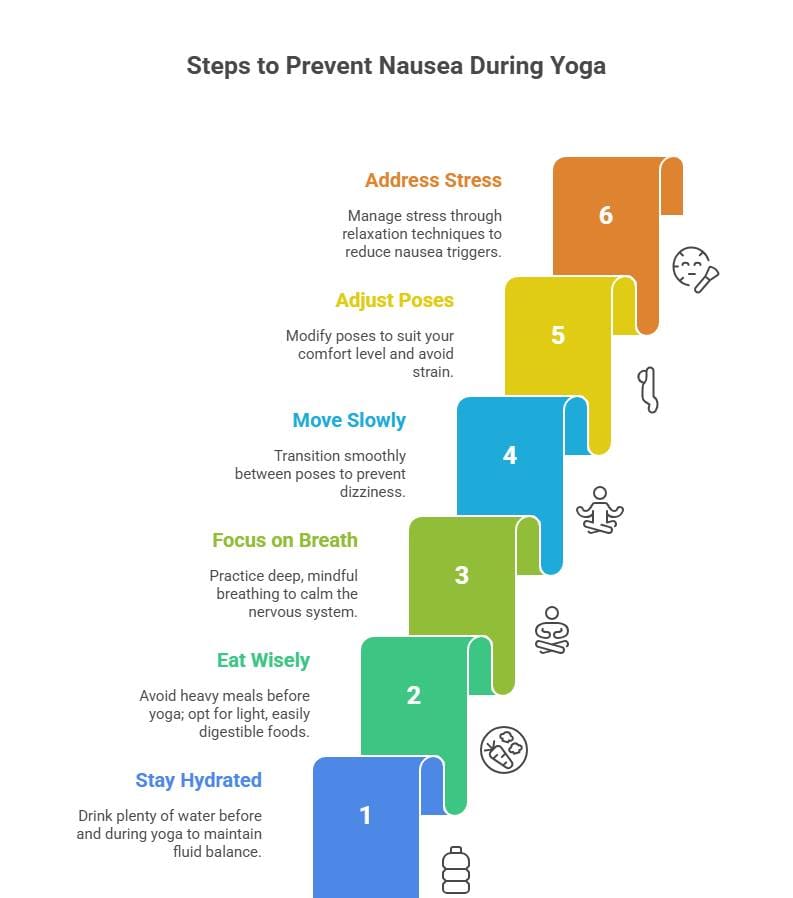
5 Adjust Poses.
If certain poses make you feel nauseous, modify them or skip them entirely. There’s no need to push your body into discomfort.
6 Address Stress.
If emotional stress is causing nausea, consider incorporating mindfulness or meditation into your practice. Yoga is as much about mental well-being as it is about physical health.
Personal Experience: A Yogi’s Real-Life Battle With Nausea.
For many practitioners, nausea in yoga isn’t just theoretical — it’s something they’ve felt firsthand.
Aarav Deshmukh, a 32-year-old fitness coach and beginner yogi from Andhra Pradesh, says when I started yoga, I used to feel nauseous halfway through almost every session,” Aarav shares. “I thought something was wrong with me, but my instructor explained that my body was still adjusting — especially since I practiced on an almost empty stomach and barely drank water. Once I fixed my meals and slowed down during transitions, the nausea gradually disappeared. Now I enjoy yoga without any discomfort.
“Your body isn’t failing — it’s simply learning.”

Frequently Asked Questions.
1 Is it normal to feel nauseous during yoga?
Yes, it’s relatively common, especially for beginners. However, it usually means something is off, such as dehydration, low blood sugar, or incorrect breathing techniques.
2 Can dehydration cause nausea during yoga?
Yes. Dehydration is one of the leading causes of nausea during physical activities, including yoga. Make sure to drink enough water throughout the day.
3 Should I eat before a yoga class?
It’s a good idea to eat a light snack about an hour before your class to maintain stable blood sugar levels. Avoid large meals right before your session.
4 Can stress and anxiety lead to nausea in yoga?
Yes, emotional factors like stress and anxiety can trigger nausea during yoga. Yoga helps to release tension, and sometimes that release can manifest physically.
5 How can I avoid nausea during inversions?
Move into and out of inversions slowly. Also, ensure you’re practicing correct breathing techniques and avoid practicing inversions on a full stomach.
Bottom Line.
Feeling nauseated during yoga is common but manageable. Whether it’s due to dehydration, low blood sugar, stress, or other factors, understanding the causes can help you prevent it. By staying mindful of your body, eating wisely, and practicing proper breathing techniques, you can make your yoga practice a more enjoyable experience.
If nausea persists, it may be worth consulting a healthcare provider to rule out any underlying conditions. As you continue your yoga journey, remember that discomfort is often a sign of growth—listen to your body and adjust your practice accordingly.
+4 Sources
VerywelFit has strict sourcing guidelines and relies on peer-reviewed studies, educational research institutes, and medical organizations. We avoid using tertiary references. You can learn more about how we ensure our content is accurate and up-to-date by reading our editorial policy.
- Assessment of exercise-induced dehydration in underhydrated athletes: Which method shows the most promise?; https://www.sciencedirect.com/science/article/pii/S0261561424002814
- Post Meal Exercise May Lead to Transient Hypoglycemia Irrespective of Glycemic Status in Humans; https://pmc.ncbi.nlm.nih.gov/articles/PMC7492570/
- Performance Enhancing Diets and the PRISE Protocol to Optimize Athletic Performance; https://pmc.ncbi.nlm.nih.gov/articles/PMC4408745/
- Adverse Effects of Meditation: Autonomic Nervous System Activation and Individual Nauseous Responses During Samadhi Meditation in the Czech Republic; https://link.springer.com/article/10.1007/s10943-024-02024-5














Excellent explanation — the visuals were worth a thousand words.
Thank you..
Your blog is a true hidden gem on the internet. Your thoughtful analysis and in-depth commentary set you apart from the crowd. Keep up the excellent work!
Thank you..
Your passion for your subject matter shines through in every post. It’s clear that you genuinely care about sharing knowledge and making a positive impact on your readers. Kudos to you!
Thank you so much..