












































 Workout

 Meditation







In the pursuit of inner peace and emotional balance, ancient wisdom meets modern science in the exploration of chakras. These energy centers within the body, often associated with Eastern philosophies, offer profound insights into managing emotions like anger. Let’s embark on a journey to delve deep into chakras, understanding their types, benefits, techniques to balance them, and common pitfalls to avoid.
What Are Chakras?
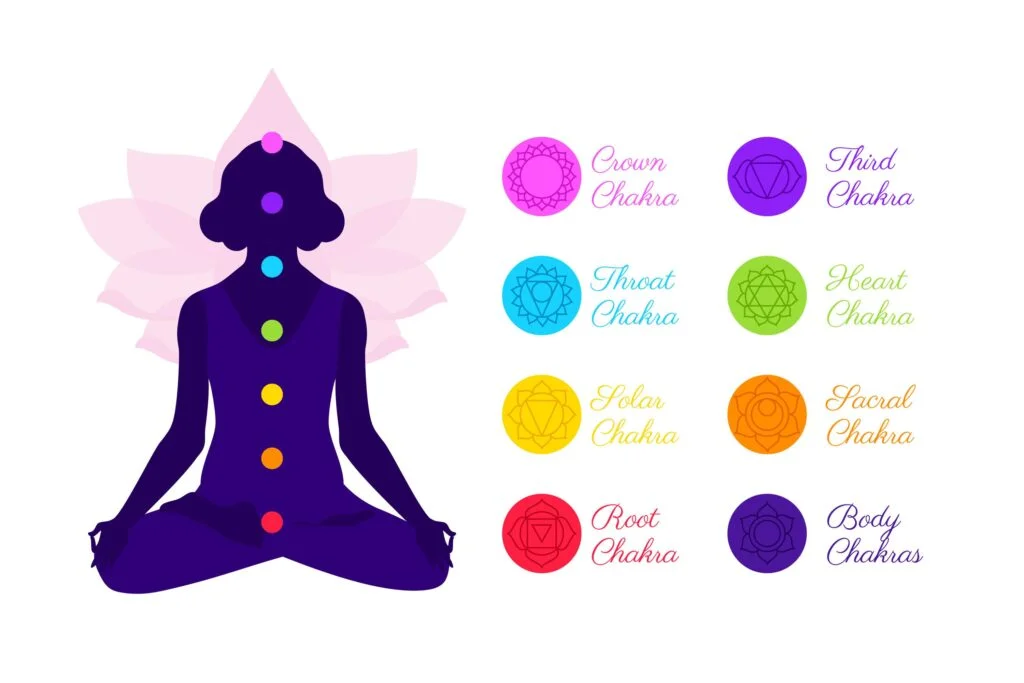
Chakras, originating from Sanskrit, meaning “wheels,” are swirling energy centers within the body that correspond to various physical, emotional, and spiritual aspects of our being. There are seven main chakras aligned along the spine, each vibrating at a different frequency and governing specific functions in our lives.
Chakras and Anger: Exploring the Connection.
Anger, often viewed as a negative emotion, can stem from imbalances in our chakras. Understanding which chakras are associated with anger can provide valuable insights into addressing and managing this powerful emotion effectively.
Types of Chakras Related to Anger.
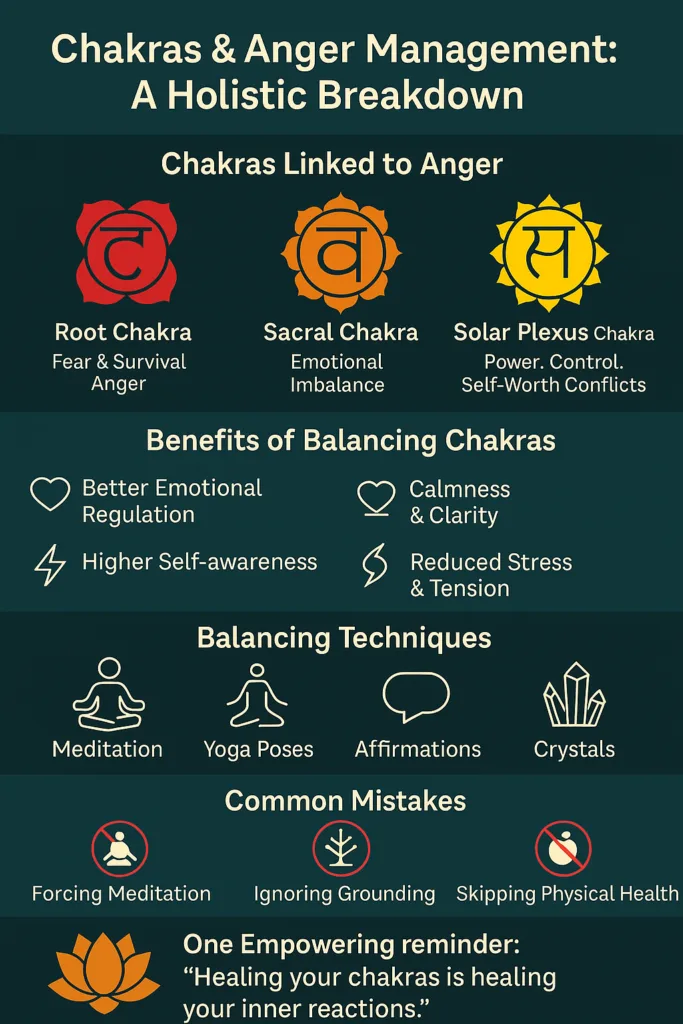
1 Root Chakra (Muladhara): The root chakra, located at the base of the spine, is associated with our sense of security, stability, and survival instincts. When imbalanced, it can manifest as fear, insecurity, and anger towards perceived threats to our safety.
Related Stories
 Get Rid of Back Pain With These Amazing Yoga Poses
 Can Meditation and Hypnotherapy Really Rewire Your Mind? Here’s What to Know
2 Sacral Chakra (Svadhisthana): Positioned in the lower abdomen, the sacral chakra governs our emotions, creativity, and sexuality. An imbalance here can lead to mood swings, impulsive behavior, and unresolved anger stemming from past emotional wounds.
3 Solar Plexus Chakra (Manipura): Located in the upper abdomen, the solar plexus chakra is the seat of personal power, self-esteem, and confidence. Anger arising from feelings of powerlessness, rejection, or low self-worth often indicates an imbalance in this chakra.
Benefits of Balancing Chakras for Anger Management.
| Benefit | Description |
|---|---|
| Enhanced Emotional Resilience & Self-Awareness | Helps you recognize triggers, stay grounded, and respond calmly instead of reacting impulsively. |
| Improved Communication & Relationships | Balances emotional expression, making it easier to communicate clearly and compassionately.(1) |
| Greater Clarity of Thought & Better Decision-Making | Reduces emotional cloudiness, allowing your mind to think logically and with confidence. |
| Increased Energy Levels & Vitality | Restores energetic flow in the body, reducing fatigue and increasing motivation. |
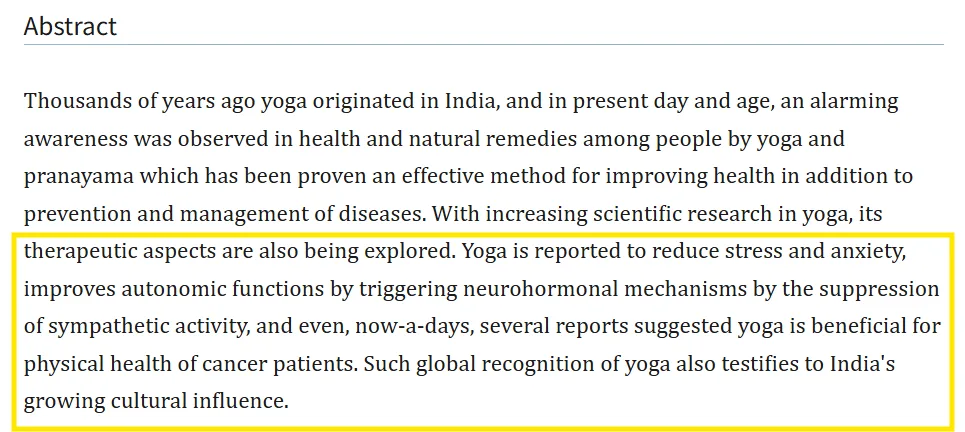
| Heightened Spiritual Connection & Inner Peace | Enhances mindfulness, intuition, and a deep sense of inner harmony.(2),(3),(4) |
Techniques to Balance Chakras for Anger Management.
1 Meditation: Practice chakra meditation focusing on each energy center sequentially, visualizing them as vibrant, spinning wheels of light. Imagine releasing any blocked energy or negative emotions associated with anger.
2 Yoga: Incorporate yoga poses that target specific chakras, such as child’s pose for the root chakra or cobra pose for the solar plexus chakra. Combine movement with deep breathing to promote energy flow and release tension.
3 Affirmations: Use positive affirmations tailored to each chakra to reprogram limiting beliefs and emotions. Repeat statements like “I am safe and secure” for the root chakra or “I am worthy of love and respect” for the sacral chakra.
4 Crystal Therapy: Experiment with crystals aligned with each chakra, such as garnet for the root chakra or citrine for the solar plexus chakra. Place them on the corresponding area during meditation or carry them as pocket stones for ongoing support.
Precautions and Common Mistakes.
While working with chakras, it’s essential to approach the practice with mindfulness and respect for your body’s unique needs. Some precautions and common mistakes to avoid include:
– Overexertion: Avoid pushing yourself too hard in yoga or meditation practice, as this can lead to physical strain or burnout.
– Neglecting Grounding: Ensure a balance between spiritual exploration and staying grounded in everyday life to maintain stability and mental clarity.
– Ignoring Physical Health: Remember that chakra work is holistic and complements, rather than substitutes for, conventional medical care. Attend to any physical ailments or imbalances alongside energetic healing practices.
How Chakras Awareness Helped Me Break My Anger Patterns- Personal Experience.
I am Arvind Rao, 45 — Senior Mechanical Engineer, Hyderabad, India, as someone who spent decades in a high-pressure engineering environment, I never believed in energy work or chakras. My anger was something I controlled with silence, long hours, or sheer willpower — none of which actually worked. It was only after constant irritability began affecting my relationships at home that I decided to try something different.
A meditation coach introduced me to chakra balancing, especially focusing on the root and solar plexus chakras. I was skeptical at first, but the simple grounding meditations and breathwork made an unexpected difference. I became more aware of what triggered my anger and felt less ‘on edge.’ Within a few weeks, I noticed that I responded instead of reacted. Chakra work didn’t just calm my anger — it helped me understand it. For the first time in years, I felt emotionally steady, both at work and with my family.
“Chakra healing taught me that anger isn’t something to suppress — it’s energy to understand, release, and transform.”

Personal Insights: An Interview with Experienced Practitioners.
To gain further insights into the practical application of chakra balancing for anger management, we interviewed experienced practitioners in the field:
Interviewer: “How have you found chakra work to be effective in addressing anger issues?”
Expert: “Chakra work provides a holistic approach to understanding and resolving anger by addressing its root causes on emotional, energetic, and spiritual levels. By identifying which chakras are out of balance, individuals can tailor their healing practices to target specific areas of concern.”
Expert Opinion.
Dr. Meera Sadhwani, Clinical Psychologist & Energy Healing Practitioner stated that Chakra-based anger management works because it connects emotional triggers with the body’s energetic responses. When chakras like the root, sacral, or solar plexus are blocked, the body stores unresolved tension that can surface as anger or irritability. By combining breathwork, mindful movement, and guided introspection, individuals learn to release this stored emotional energy safely. This approach not only reduces anger but also improves emotional resilience and self-awareness.
Frequently Asked Questions.
1 Can chakra work help with deep-seated anger issues?
Yes, chakra work can be beneficial for addressing deep-seated anger by uncovering and releasing underlying emotional blocks stored in the energy body.
2 How long does it take to see results from chakra balancing practices?
The timeline for experiencing results varies from person to person, depending on factors such as consistency of practice, willingness to confront and process emotions, and individual energetic makeup.
3 Can chakra imbalances lead to physical symptoms of anger?
Yes, unresolved anger and chakra imbalances can manifest as physical symptoms such as headaches, digestive issues, or muscle tension due to the interconnectedness of mind, body, and spirit.
Bottom Line.
Chakras offer a profound framework for understanding and managing anger from a holistic perspective. By exploring the types of chakras related to anger, their benefits, effective techniques for balancing them, and precautions to take, individuals can embark on a transformative journey towards emotional healing and inner peace. Remember, the key lies in cultivating self-awareness, compassion, and a willingness to embrace the interconnectedness of mind, body, and spirit on the path to emotional mastery.
+4 Sources
VerywelFit has strict sourcing guidelines and relies on peer-reviewed studies, educational research institutes, and medical organizations. We avoid using tertiary references. You can learn more about how we ensure our content is accurate and up-to-date by reading our editorial policy.
- Effects of Yoga on Mental and Physical Health: A Short Summary of Reviews; https://pmc.ncbi.nlm.nih.gov/articles/PMC3447533/
- The Effects of Meditation, Yoga, and Mindfulness on Depression, Anxiety, and Stress in Tertiary Education Students: A Meta-Analysis; https://pmc.ncbi.nlm.nih.gov/articles/PMC6491852/
- Impact of 10 Weeks of Yoga Intervention on Mental Health and Overall Well-Being Among Medical Students: GSY Study; https://pmc.ncbi.nlm.nih.gov/articles/PMC12031128/
- Health Impacts of Yoga and Pranayama: A State-of-the-Art Review; https://pmc.ncbi.nlm.nih.gov/articles/PMC3415184/