




































 Workout

 Meditation





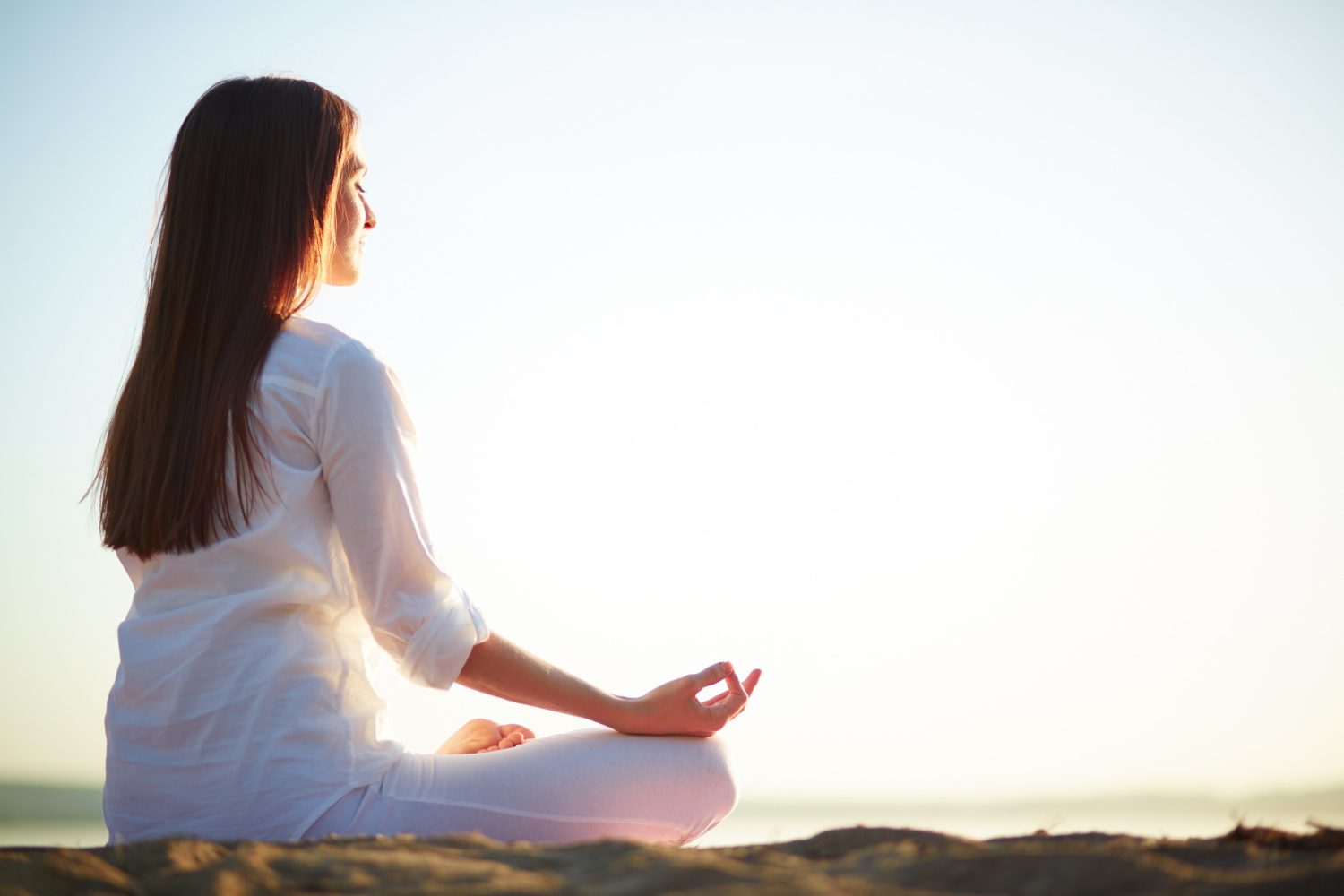
Hair fall is a common concern for many individuals, and finding effective ways to prevent it has become a prevailing interest. While there are numerous factors contributing to hair fall, including genetics, stress, and poor nutrition, incorporating yoga into your routine can greatly aid in reducing hair fall. Yoga poses not only promote relaxation and stress reduction but also improve blood circulation to the scalp, strengthen hair follicles, and nourish the hair from within. In this article, we will explore the top 10 yoga poses that have been proven to be effective in preventing hair fall. By incorporating these poses into your daily practice, you can take a holistic approach towards maintaining healthy hair and preventing excessive hair loss.
Causes of Hair fall.
There are various reasons behind hair fall which is also known as hair loss or alopecia. Understanding these causes can help individuals to identify the root of their hair fall problem & seek appropriate treatment. Here are some common factors that contribute to hair fall:
1 Genetics.
One of the primary reasons for hair fall is genetics. If there is a family history of hair loss, individuals may have a higher likelihood of experiencing hair fall themselves. This type of hair loss is known as androgenetic alopecia or male/female pattern baldness.
2 Hormonal changes.
Hormonal imbalances can lead to hair fall. This commonly occurs during pregnancy, childbirth, menopause or when individuals have thyroid disorders. Hormonal changes can disrupt the hair growth cycle & cause excessive shedding.
Related Stories
 Jnana Mudra: Benefits, Side Effects, How To Do and Precautions
 Unveiling the Power of Chakras: A Comprehensive Guide to Manifestation, Benefits, Types, and Precautions
3 Poor nutrition.
A diet lacking in essential nutrients such as vitamins, minerals & proteins, can contribute to hair fall. Insufficient intake of nutrients vital for hair health can weaken the hair strands, leading to breakage and hair loss.
4 Stress.

High levels of stress can trigger a condition called telogen effluvium, causing hair follicles to enter a resting phase prematurely. This results in excessive shedding & noticeable hair loss. Emotional stress, physical trauma or major life events can all contribute to this condition.
5 Medical conditions.
Certain medical conditions such as alopecia areata, scalp infections & autoimmune disorders can cause hair fall. These conditions affect the hair follicles, leading to weakened hair shafts or inhibited hair growth.
6 Medications & treatments.
Some medications such as those used in chemotherapy or radiation therapy can cause temporary or permanent hair loss. Additionally, aggressive hairstyling practices, excessive heat or chemical treatments can damage the hair follicles & lead to hair fall.
7 Age.
As individuals age, their hair growth cycle naturally slows down, resulting in thinner & more fragile hair strands. This age related hair loss is known as involutional alopecia.
8 Environmental factors.
Exposure to harsh environmental conditions such as pollution, UV radiation or excessive heat, can weaken the hair & contribute to hair fall. Additionally, using harsh hair products or not properly caring for the scalp can further exacerbate the issue.
| 💡 Tips Verywel Fit.com It is important to note that hair fall can have multiple causes and determining the specific reason behind an individual’s hair loss may require consultation with a healthcare professional or dermatologist. Proper diagnosis & treatment can help to address the underlying cause and potentially prevent further hair loss. |
How does Yoga prevent hair fall?
Yoga has been recognized as a beneficial practice for preventing hair fall. One of the main ways yoga helps in this regard is by improving blood circulation.
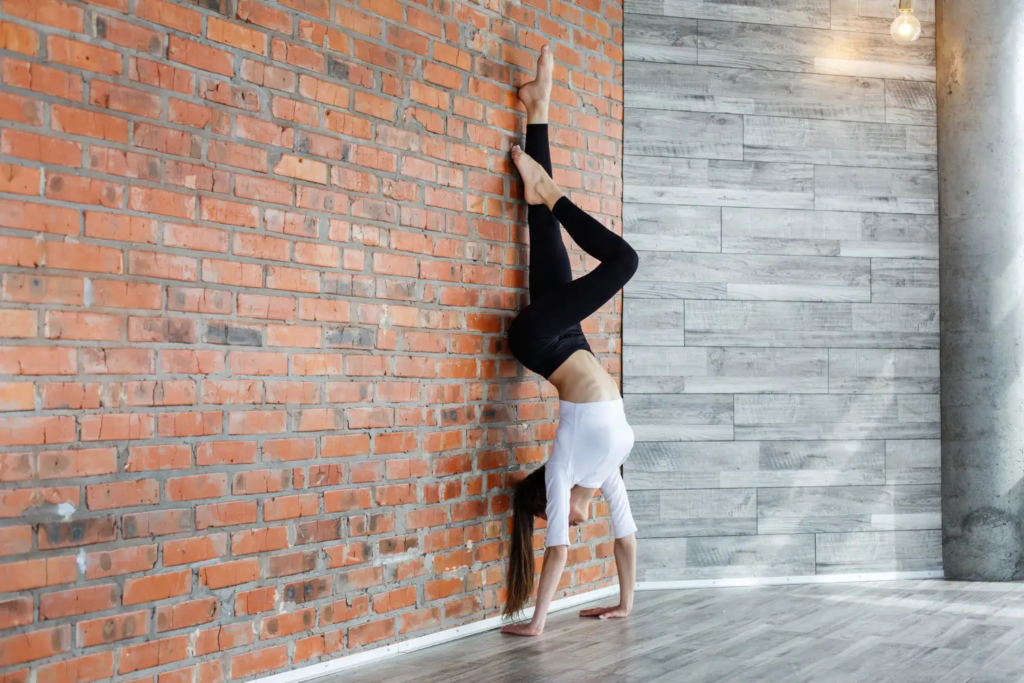
Certain yoga postures like inverted poses like headstands or shoulder stands, help to increase the blood flow to the scalp. This increased blood circulation nourishes the hair follicles, thereby promoting hair growth & reducing hair fall.
Additionally, yoga helps in reducing stress levels, which is a major cause of hair fall. The deep breathing and relaxation techniques employed in yoga help to calm the mind, reducing stress & anxiety.
This, in turn, prevents hair fall caused by stress related factors. Regular practice of yoga not only enhances overall wellbeing but also contributes to healthier hair.
Top 10 Expert Recommended Yoga Poses to Prevent Hair Fall.
Yoga is a holistic practice that not only benefits our physical and mental well-being but can also contribute to promoting healthy hair. In this context, here are 10 yoga poses that can help combat hair fall:
1 Adho Mukha Svanasana (Downward-Facing Dog Pose).
This pose improves blood circulation to the scalp, helping to nourish the hair follicles and promote hair growth.
How to do Adho Mukha Svanasana (Downward-Facing Dog Pose)?
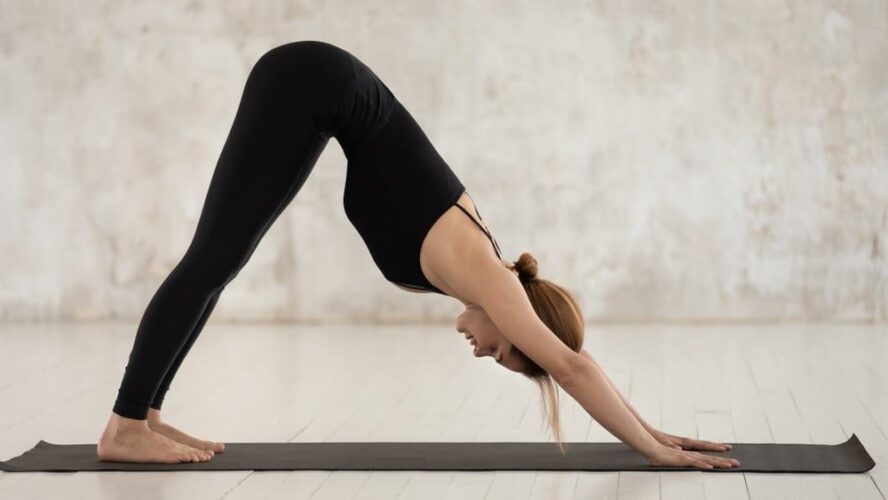
- Start on your hands & knees, with your hands shoulder width apart and your knees hip width apart.
- Press firmly into your hands and lift your knees off the ground, straightening your arms & legs.
- Walk your hands forward slightly, spreading your fingers wide and pressing into the mat.
- Engage your core and lift your hips up towards the ceiling, straightening your legs as much as possible.
- Press your heels towards the ground but it’s okay if they don’t touch.
- Lengthen your spine and relax your head, allowing it to hang between your arms.
- Keep your shoulders away from your ears & your neck relaxed.
- Breathe deeply and hold the pose for several breaths, focusing on lengthening your spine and opening your chest.
- To come out of the pose, slowly lower your knees back down to the mat.
2 Uttanasana (Standing Forward Bend).
Uttanasana increases blood flow to the scalp, which strengthens the hair roots and reduces hair fall.
How to do Uttanasana (Standing Forward Bend)?
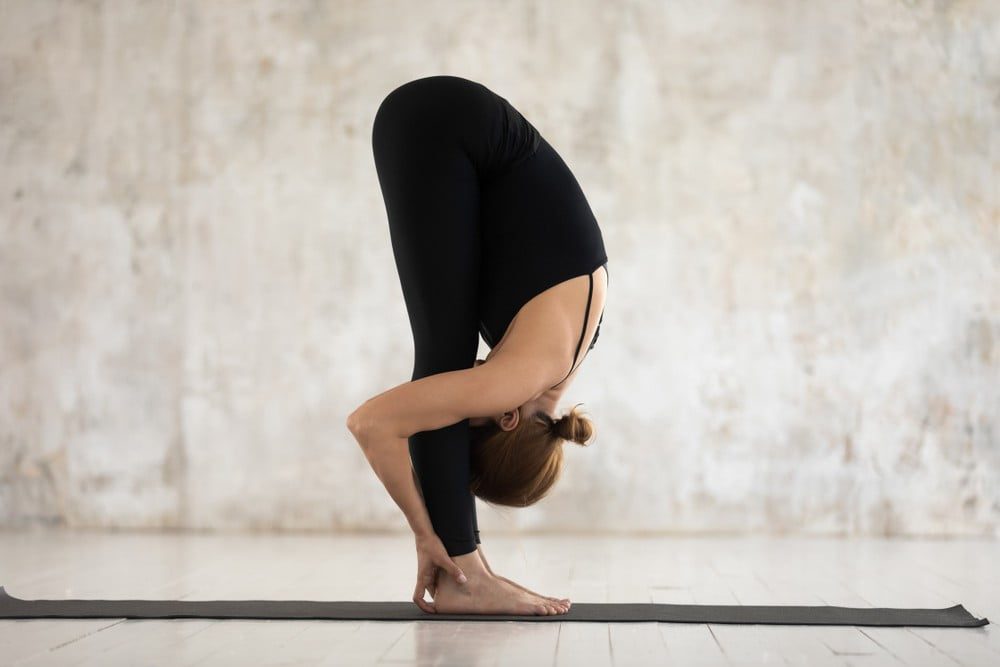
- Stand tall with your feet hip width apart.
- Slowly bend forward from your hips, keeping your back straight.
- Let your arms hang down towards the floor or grab onto your elbows.
- Relax your neck and let your head hang down towards the ground.
- Engage your quadriceps to help lengthen the back of your legs.
- Breathe deeply and hold the pose for a few breaths or longer if comfortable.
- To come out of the pose, engage your core and slowly roll up one vertebra at a time.
3 Sarvangasana (Shoulder Stand Pose).
Sarvangasana stimulates blood flow to the head and scalp, thereby nourishing the hair follicles and preventing hair loss.
How to do Sarvangasana (Shoulder Stand Pose)?
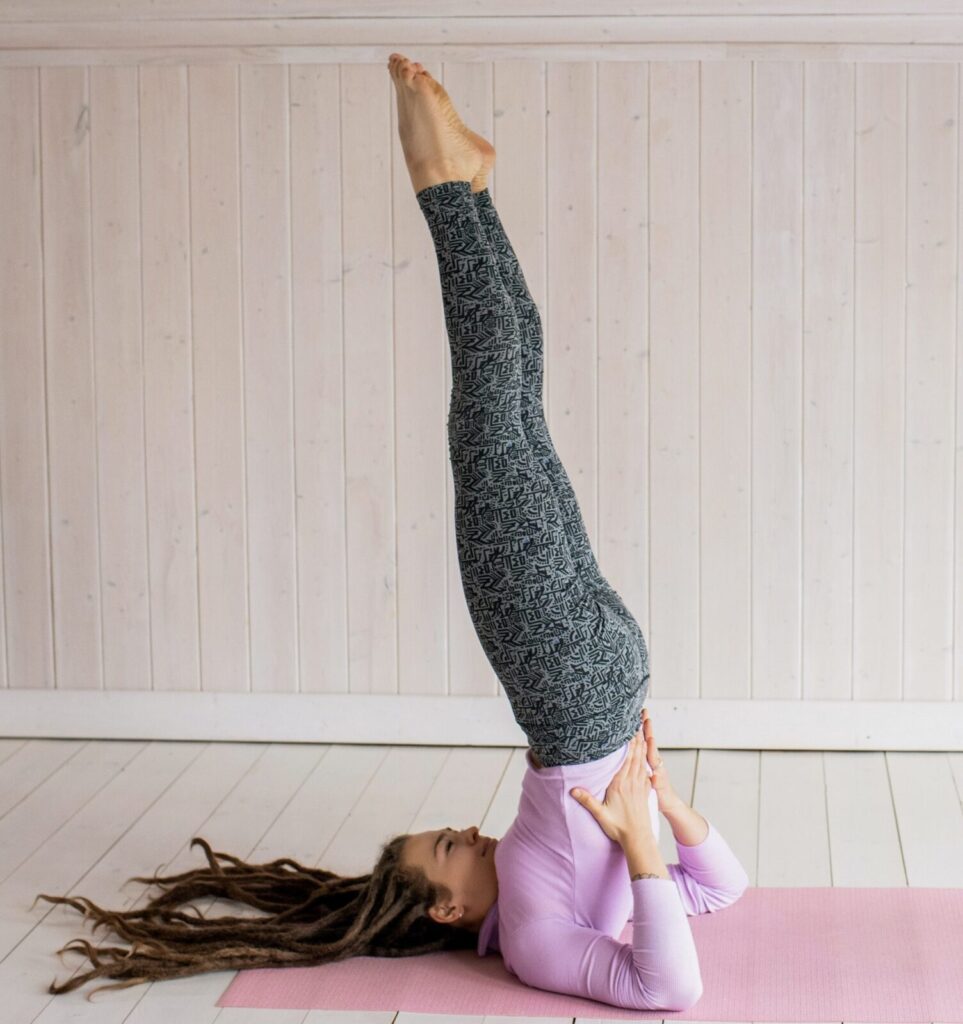
- Start by lying flat on your back with your arms along your sides & palms facing down.
- Bend your knees and bring your feet close to your buttocks, keeping them hip width apart.
- Inhale deeply and use your abdominal muscles to lift your legs off the ground, bringing them perpendicular to the floor.
- Place your hands on your lower back for support, fingers pointing upwards.
- Continue to lift your hips off the ground, using your core strength to support your body.
- Slowly straighten your legs and point your toes towards the ceiling, creating a straight line from your shoulders to your feet.
- Keep your neck relaxed & your gaze focused towards the toes.
- Breathe deeply and hold the pose for a few breaths, gradually increasing the duration as you become more comfortable.
- To release the pose, bend your knees and slowly lower your legs back down to the ground, vertebra by vertebra.
- Rest for a few moments in Corpse Pose (Shavasana) to allow your body to relax and integrate the benefits of the pose.
4 Sirsasana (Headstand Pose).
Practicing Sirsasana increases blood flow to the scalp, promoting hair growth and reducing hair fall.
How to do Sirsasana (Headstand Pose)?
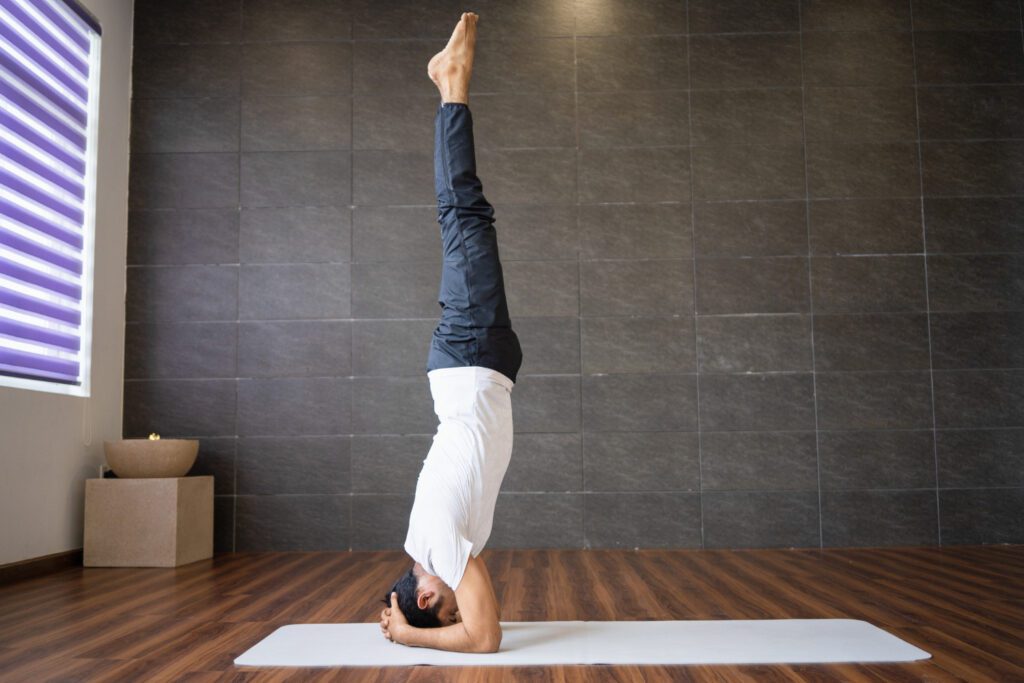
- Start by kneeling on the floor with your hands & forearms placed on the ground in front of you, shoulder width apart.
- Interlock your fingers and place your elbows on the ground, forming a triangle with your forearms.
- Lower the top of your head onto the ground, positioning it between your hands.
- Tuck your toes under and lift your knees off the ground, straightening your legs and walking your feet closer to your head.
- Engage your core muscles and slowly lift your legs off the ground, extending them upwards towards the ceiling.
- Maintain a straight line from your wrists to your hips & all the way to your heels.
- Balance your weight evenly between your forearms and head, avoiding excessive pressure on the neck.
- Keep your gaze focused between your hands or slightly forward to maintain stability.
- Breathe deeply and hold the pose for as long as comfortable, gradually increasing the duration over time.
- To come out of the pose, slowly lower your legs back to the ground and rest in Child’s Pose or any other comfortable resting position.
5 Vajrasana (Thunderbolt Pose).
Vajrasana improves digestion, which in turn helps to prevent nutrient deficiencies that can lead to hair fall.
How to do Vajrasana (Thunderbolt Pose)?
- Start by kneeling on the floor with your knees together & your feet slightly apart.
- Sit back on your heels, ensuring that your big toes are touching each other.
- Place your palms on your thighs, facing downwards.
- Keep your spine straight and lengthened & relax your shoulders.
- Gently close your eyes and take a few deep breaths, allowing your body to relax.
- Hold the pose for a few minutes, gradually increasing the duration over time.
- To release the pose, slowly bring your hands forward and rise up onto your knees.
- Shake out your legs and take a few moments to relax before moving on to other poses or activities.
6 Kapalabhati Pranayama (Skull Shining Breathing Technique).
This powerful breathing exercise helps to detoxify the body and stimulate the scalp, promoting healthy hair growth.
How to do Kapalabhati Pranayama (Skull Shining Breathing Technique)?
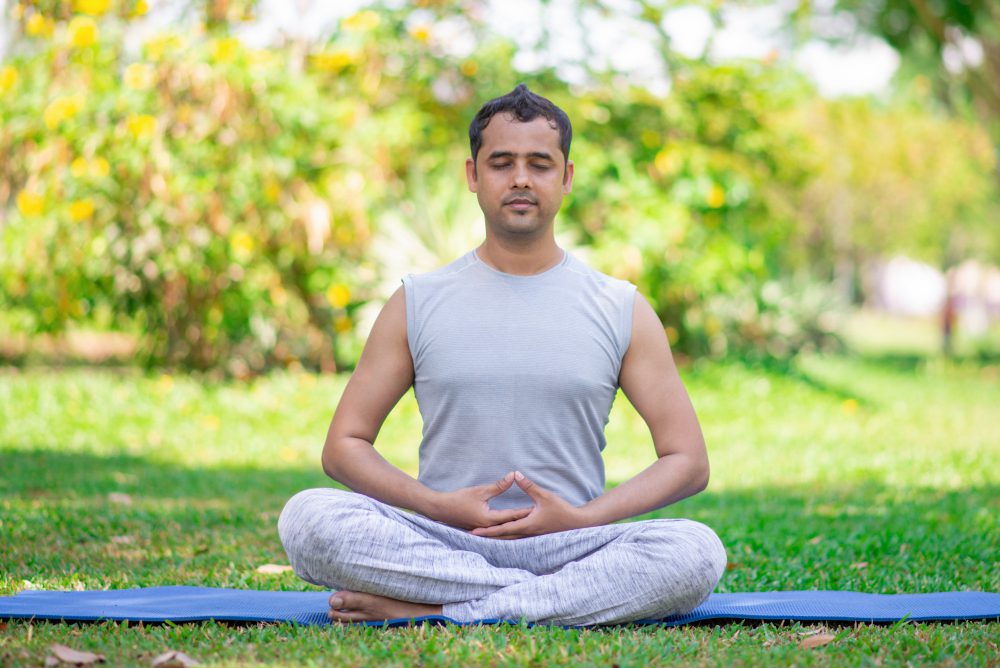
- Sit in a comfortable cross legged position with your spine straight.
- Close your eyes and take a few deep breaths to relax.
- Take a deep inhalation and then forcefully exhale through your nose, contracting your abdominal muscles to push the breath out. This is the active part of the breath.
- Allow the inhalation to happen naturally without any effort. It will happen automatically as a result of the forceful exhalation.
- Continue this rhythmic pattern of forceful exhalation and passive inhalation for several rounds. Start with 10 rounds and gradually increase the number as per your comfort level.
- Focus on the movement of your abdomen with each exhalation, feeling the contraction and release of the abdominal muscles.
- Keep your awareness on the breath and the sensation of energy flowing through your body.
- If you feel dizzy or lightheaded, take a break and resume when you feel ready.
- Practice Kapalabhati Pranayama on an empty stomach, preferably in the morning or before meals.
- Gradually increase the duration of each round and the overall practice time as you become more comfortable and experienced with the technique.
- Remember to listen to your body and stop if you experience any pain or discomfort. Consult with a qualified yoga teacher if you have any health concerns before practicing Kapalabhati Pranayama.
7 Balayam Yoga (Rubbing Nails Technique).
Balayam yoga involves rubbing the nails of both hands together, which is believed to increase blood circulation to the scalp and reduce hair fall.
How to do Balayam Yoga (Rubbing Nails Technique)?
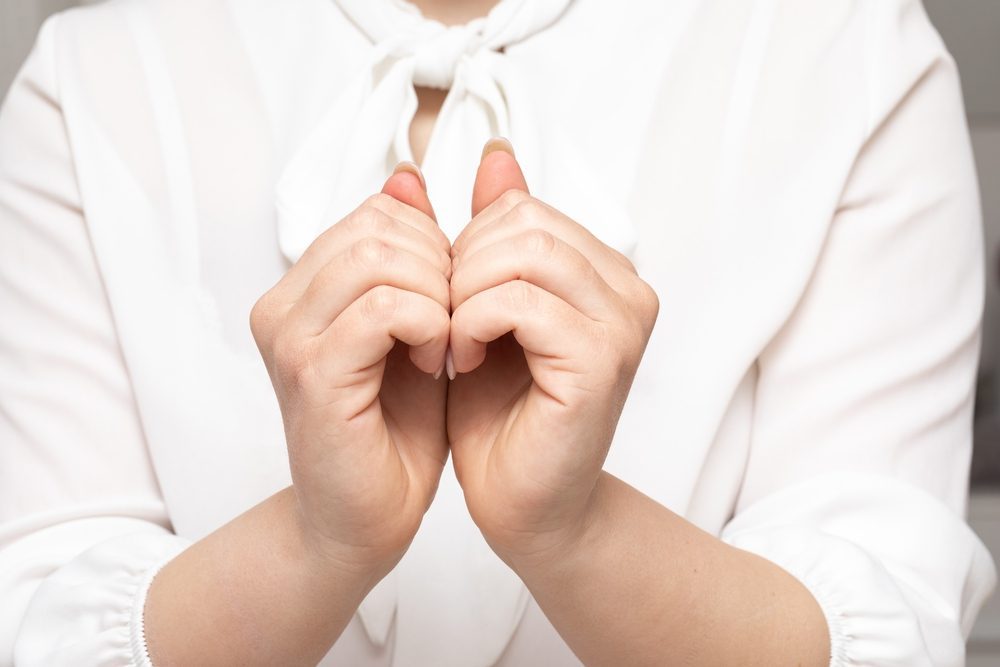
- Sit comfortably in a cross legged position or on a chair with your back straight.
- Bring both hands in front of you, palms facing each other.
- Curl your fingers inward, except for the fingertips.
- Press the nails of both hands against each other.
- Start rubbing the nails of both hands vigorously against each other in a back-and-forth motion.
- Continue rubbing the nails for at least 5 to 10 minutes, or longer if desired.
- Focus on your breath and relax your mind while performing the technique.
- Repeat the exercise daily, preferably in the morning on an empty stomach.
- Gradually increase the duration of the exercise as you become more comfortable and experienced.
8 Matsyasana (Fish Pose).
Matsyasana stretches the neck and improves blood circulation to the scalp, stimulating hair growth and reducing hair fall.
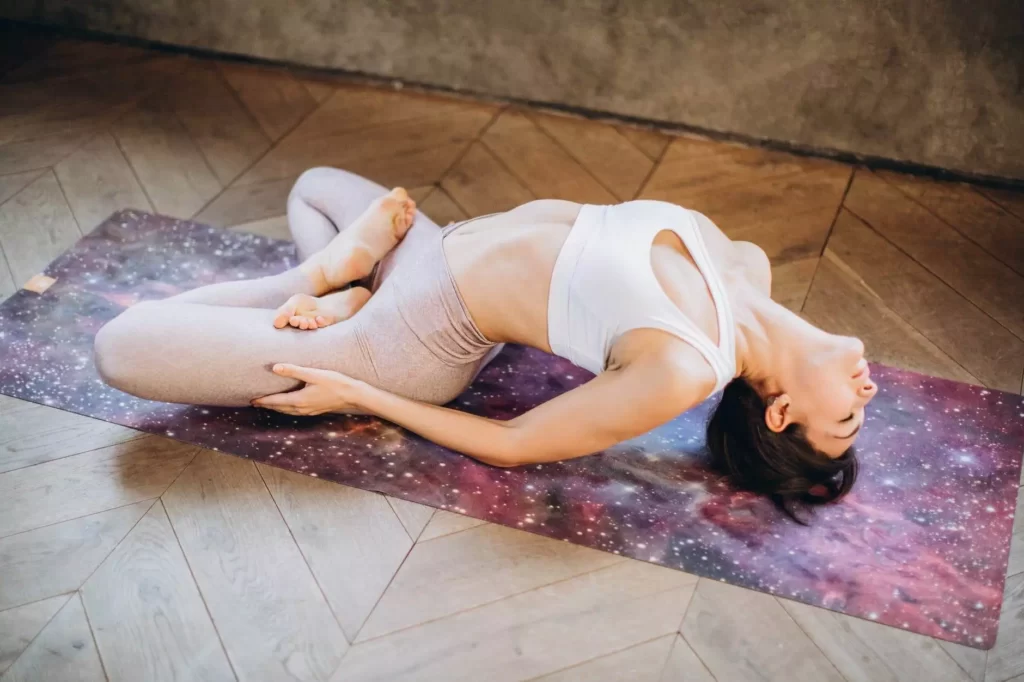
How to do Matsyasana (Fish Pose)?
- Start by lying flat on your back with your legs extended and arms resting alongside your body.
- Bend your knees and place your feet flat on the ground, keeping them hip width apart.
- Slide your hands palms down, underneath your hips, with your fingers pointing towards your feet.
- Pressing your forearms and elbows firmly into the ground, lift your upper body and chest off the floor.
- Gently lower the top of your head or the back of your head onto the floor, depending on your flexibility and comfort.
- Keep your weight balanced on your elbows and forearms, allowing your chest to open up and expand.
- Relax your neck and throat, ensuring that your breath is smooth and steady.
- Hold the pose for a few breaths or as long as comfortable, focusing on deep inhales and exhales.
- To release the pose, gently lift your head off the ground and slowly lower your upper body back down to the floor.
- Extend your legs and rest in Savasana (Corpse Pose) for a few moments to allow your body to relax and integrate the benefits of the pose.
9 Anulom Vilom Pranayama (Alternate Nostril Breathing).
Anulom Vilom Pranayama improves blood circulation and oxygen supply, nourishing the hair follicles and preventing hair loss.
How to do Anulom Vilom Pranayama (Alternate Nostril Breathing)?
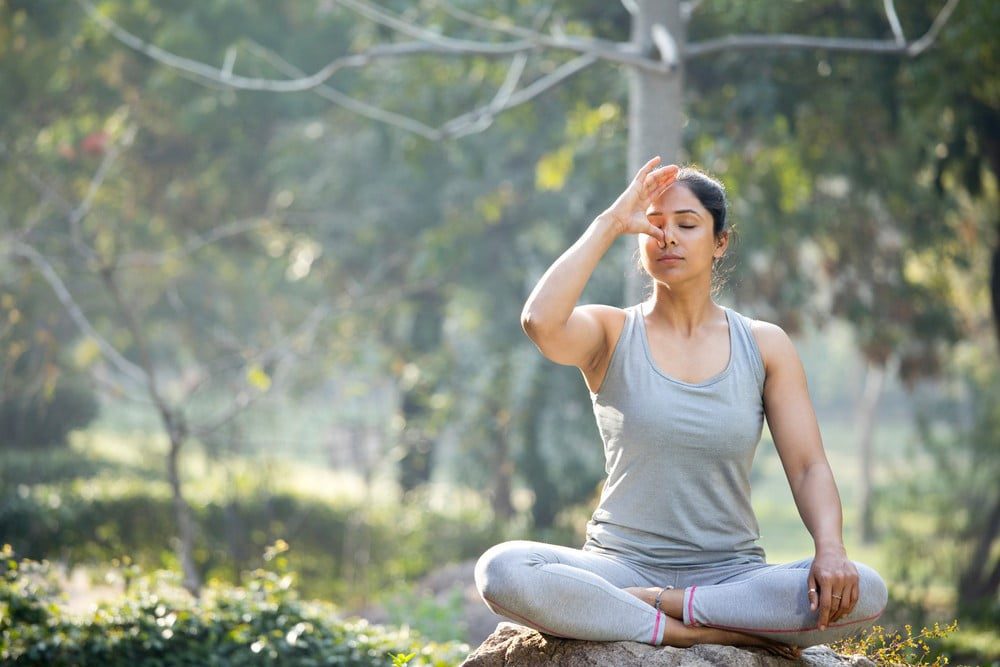
- Sit in a comfortable seated position, with your spine straight and shoulders relaxed.
- Close your eyes and take a few deep breaths to relax your body and mind.
- Place your left hand on your left knee, with your palm facing upward.
- Bring your right hand near your face and place the tip of your index and middle fingers on the space between your eyebrows.
- Use your right thumb to close your right nostril, and inhale deeply through your left nostril.
- Once you have filled your lungs with air, use your right ring finger to close your left nostril, and exhale slowly through your right nostril.
- Inhale through your right nostril, then close it with your thumb again, and exhale through your left nostril.
- Continue this pattern, alternating between nostrils with each inhalation and exhalation.
- Make sure to breathe deeply and slowly, focusing on the sensation of the breath as it enters and leaves your nostrils.
- Start with a few minutes of practice and gradually increase the duration as you become more comfortable.
- To finish, exhale through your left nostril and release your right hand back to your knee.
- Take a few moments to observe the sensations in your body and the effects of the practice on your mind.
10 Shavasana (Corpse Pose).
Shavasana relaxes the body and mind, reducing stress & anxiety, which are common causes of hair fall.
How to do Shavasana (Corpse Pose)?
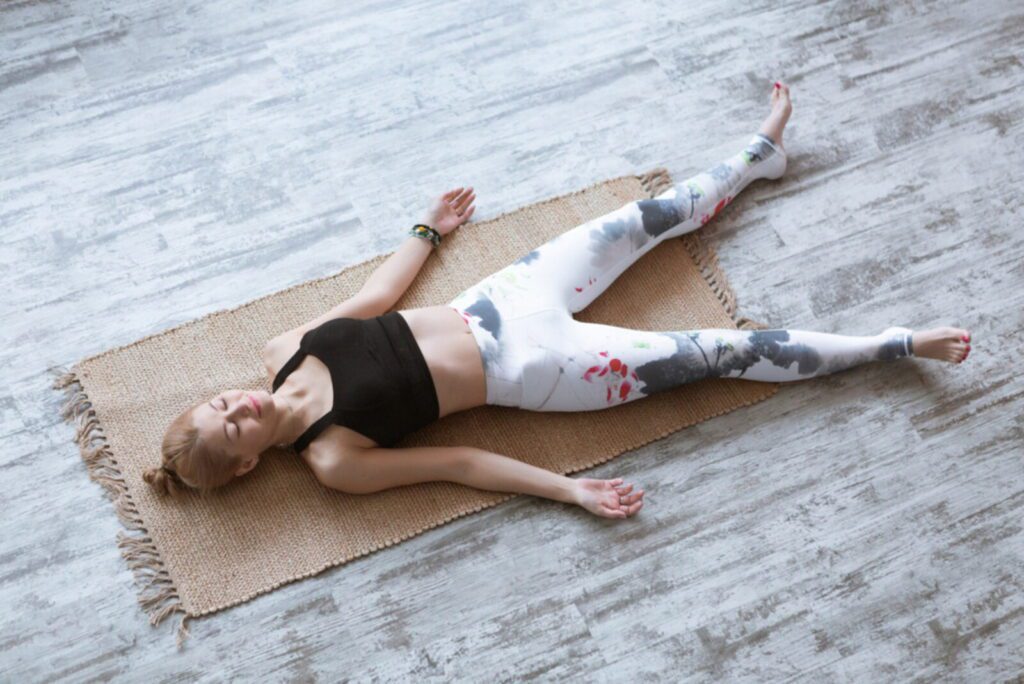
- Find a quiet and peaceful place to practice Shavasana.
- Lie down on your back on a yoga mat or a comfortable surface.
- Keep your legs extended and slightly apart, with your feet falling outward.
- Place your arms alongside your body, with your palms facing up.
- Close your eyes and bring your attention to your breath.
- Relax your entire body, starting from your toes and moving upward to your head.
- Let go of any tension or stress, allowing your body to completely surrender to the floor.
- Focus on your breath, allowing it to flow naturally and rhythmically.
- Clear your mind of any thoughts or distractions, and simply be in the present moment.
- Stay in this pose for at least 5 to 10 minutes, or longer if desired.
- To come out of Shavasana, gently wiggle your fingers and toes, and slowly awaken your body.
- Roll onto one side and take a few deep breaths before slowly sitting up.
- Take a moment to notice how you feel after practicing Shavasana, and carry that sense of calmness and relaxation with you throughout the day.
| 💡 Tips Verywel Fit.com Remember that yoga should be practiced consistently and in conjunction with a healthy lifestyle, including a balanced diet & proper hair care routine, for optimal results in preventing hair fall. |
Frequently Asked Questions.
1 Can yoga really prevent hair fall?
Yoga is not a direct solution for hair fall prevention, but it can help by improving overall health and reducing stress. Stress is a common cause of hair fall, so by practicing yoga, you can reduce stress levels and indirectly prevent hair fall.
2 How often should I practice yoga poses to prevent hair fall?
To see benefits, it is recommended to practice these poses regularly. Aim for at least 3 to 4 times a week, but you can gradually increase the frequency as you feel comfortable.
3 Are there any specific breathing exercises that can help to prevent hair fall?
Breathing exercises like Kapalabhati (skull shining breath), Anulom Vilom (alternate nostril breathing) and Bhramari (bee breath) are known to reduce stress & improve blood circulation, which can indirectly contribute to hair fall prevention.
4 Can yoga alone prevent hair fall or do I need to incorporate other lifestyle changes?
While yoga can be beneficial, it is important to adopt a holistic approach to prevent hair fall. Along with regular yoga practice, you should also maintain a healthy diet, avoid excessive use of hair styling products, minimize heat damage from hair tools, and practice good hair hygiene.
5 How long does it take to see results from practicing yoga for hair fall prevention?
Results can vary for each individual. Consistency is key and it may take several weeks or even months before you notice a significant reduction in hair fall. Patience and regular practice are crucial for achieving desired results.
6 Can yoga help with other hair related issues like dandruff or scalp conditions?
Yoga can indirectly improve scalp health by reducing stress and improving blood circulation. However, for specific scalp conditions like dandruff or infections, it is recommended to consult a dermatologist or a healthcare professional for appropriate treatment and guidance.
7 What is the best time to practice yoga poses to prevent hair fall?
There is no specific time of day that can guarantee prevention of hair fall through yoga poses. However, the best time to practice yoga poses to prevent hair fall is whenever it fits into your schedule and allows you to maintain consistency.
Bottom Line.
Incorporating yoga into your daily routine can be a powerful tool in preventing hair fall. The top 10 expert recommended yoga poses mentioned above target various aspects of hair health, such as improving blood circulation, reducing stress, and balancing hormones. By practicing these poses regularly, you can stimulate the scalp, nourish the hair follicles, and promote overall hair growth. Additionally, yoga offers numerous other benefits for your physical and mental wellbeing, making it a holistic approach to maintaining healthy hair. Remember, consistency is key, so make sure to commit to a regular yoga practice and consult with a yoga instructor or healthcare professional for personalized guidance. Embrace the power of yoga and take control of your hair fall concerns for a healthier, fuller, and more vibrant mane.