
















 Dar certo

 Meditação







O 75 Soft Challenge é um desafio de estilo de vida e bem-estar de 75 dias, projetado em torno da consistência, em vez de restrições extremas. Tornou-se popular como uma alternativa mais flexível ao altamente exigente desafio 75 Hard.
Ao contrário do 75 Hard, a versão comumente circulada de 75 Soft geralmente enfatiza a alimentação bem, se exercitando por 45 minutos por dia com um dia de recuperação ativa por semana, bebendo cerca de 3 litros de água diariamente e lendo 10 páginas de um livro por dia. Importante, o A versão comumente descrita não requer reiniciar a partir do dia 1 após uma tarefa perdida.
No entanto, não existe um único livro de regras suaves 75 universalmente padronizado. Diferentes sites e comunidades modificaram o desafio adicionando fotos de progresso, alterando os requisitos nutricionais ou ajustando os objetivos de exercício e hidratação.
Isso significa que a maneira mais saudável de se aproximar do 75 Soft é não tratá-la como um teste rígido de força de vontade. Em vez disso, pode ser visto como uma oportunidade estruturada de 75 dias para construir hábitos sustentáveis em torno do movimento, nutrição, hidratação e desenvolvimento pessoal.
Histórias relacionadas
 Mat Pilates: como fazer, benefícios e erros comuns
 8 dias para entrar em forma: o que você pode (e não pode) alcançar de forma realista
Quais são as 75 regras do Soft Challenge?
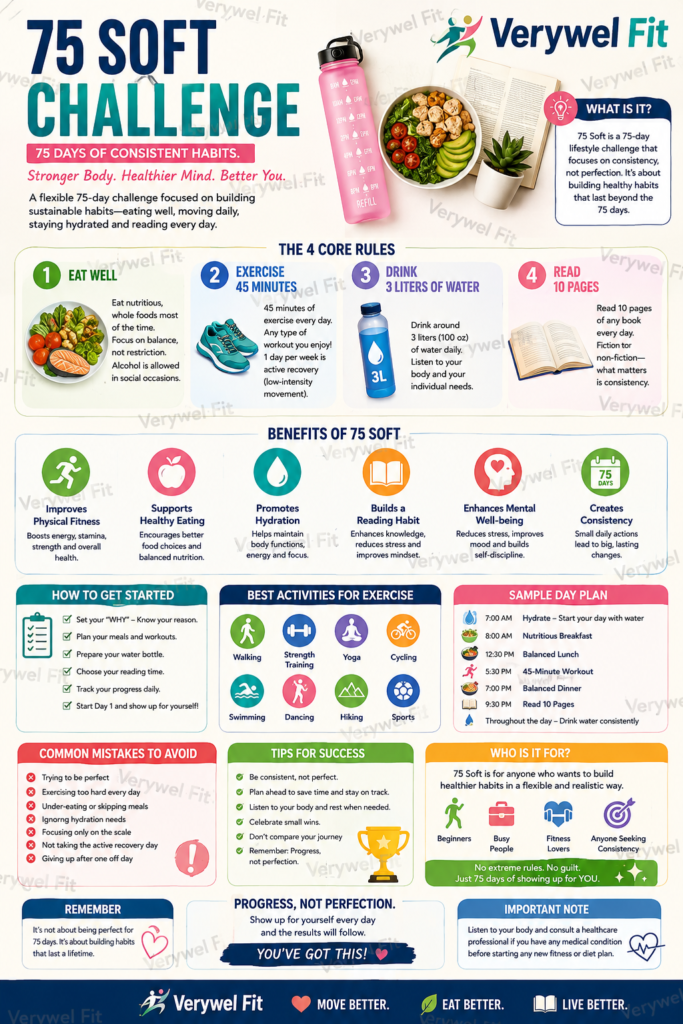
A versão mais citada inclui quatro hábitos essenciais.
1. Coma bem.
A primeira regra é geralmente descrita como uma alimentação bem e limitando o álcool a ocasiões sociais.
Ao contrário de muitos desafios restritivos de condicionamento físico, 75 Soft não prescreve uma dieta específica. Essa flexibilidade pode tornar mais fácil a adaptação a diferentes preferências e estilos de vida alimentares.
Uma interpretação prática pode incluir:

- Comer uma variedade de vegetais e frutas
- Escolhendo alimentos minimamente processados regularmente
- incluindo proteína adequada
- Consumir grãos integrais ou outros carboidratos ricos em nutrientes
- Inclui fontes saudáveis de gordura
- Limitando alimentos excessivos altamente processados
- Comer porções apropriadas
- planejando refeições Em torno do seu estilo de vida
A palavra importante é sustentável.
Comer bem não significa comer perfeitamente.
A Uma dieta saudável pode incluir alimentos que você gosta. Transformar 75 Soft em uma dieta altamente restritiva pode prejudicar a própria sustentabilidade que torna o desafio atraente.
2. Exercite-se por 45 minutos.
O formato suave tradicional 75 exige aproximadamente 45 minutos de exercícios todos os dias, com um dia por semana dedicado à recuperação ativa.
O exercício não precisa ser intenso.
Dependendo do seu nível de condicionamento físico, metas e estado de saúde, suas sessões podem incluir:
- ambulante
- corrida
- treinamento de força
- ciclismo
- natação
- ioga
- pilates
- dançante
- caminhada
- treinamento de mobilidade
- esportes recreativos
Caminhada suave, alongamento, fácil ciclismo ou ioga relaxada Podem ser exemplos apropriados de recuperação ativa. A Cleveland Clinic recomenda especificamente o movimento de baixa intensidade em vez de exercícios de alta intensidade neste dia.
3. Beba cerca de 3 litros de água.
O alvo 75 macio comumente citado é de 3 litros de água por dia, o que representa aproximadamente 100 onças fluidas.
No entanto, esse número não deve ser tratado como um requisito médico universal.
Os requisitos individuais do fluido variam de acordo com fatores como:
- tamanho do corpo
- nível de atividade
- clima
- suando
- ração
- enfermidade
- Gravidez ou amamentação
- medicamentos
- Saúde renal e cardíaca
Por exemplo, alguém que se exercita ao ar livre em um clima quente pode exigir uma ingestão de líquidos substancialmente diferente de alguém que é sedentário em um ambiente legal.
Por outro lado, pessoas com certas condições médicas podem ter restrições individualizadas de fluidos.
Portanto, se um profissional de saúde forneceu uma orientação específica sobre fluidos, siga essa orientação em vez de se forçar automaticamente a chegar a 3 litros.
4. Leia 10 páginas todos os dias.
A quarta regra comumente citada é ler 10 páginas de um livro todos os dias.
ao contrário 75 Difícil, que tradicionalmente enfatiza a não-ficção ou a leitura de desenvolvimento pessoal, a versão do Common 75 Soft é mais flexível sobre o que você lê.
Você pode escolher:
- ficção
- biografia
- história
- ciência
- desenvolvimento pessoal
- psicologia
- negócio
- filosofia
- literatura
O objetivo é menos completar um tipo específico de livro e mais sobre o desenvolvimento de um hábito de leitura consistente.
Dez páginas podem parecer pequenas, mas um pequeno compromisso diário geralmente é mais fácil de manter do que um alvo ambicioso que rapidamente se torna esmagador.
75 Soft exige uma foto de progresso diário?
Esta é uma área em que as versões do desafio diferem.
Algumas versões mais recentes do 75 Soft incluem uma foto diária do progresso, enquanto a versão comumente citada de quatro regras não.
Portanto, se você estiver seguindo 75 Soft, decida suas regras antes do primeiro dia.
Se você optar por tirar fotos do Progresso, não precisará publicá-las publicamente.
Você pode simplesmente manter fotografias particulares para sua própria referência.
Lembre-se também de que peso corporal e aparência flutuam naturalmente. Mudanças na hidratação, digestão, ciclo menstrual, ingestão de sódio e exercícios podem afetar a aparência do corpo no dia a dia.
O progresso não deve, portanto, ser julgado exclusivamente por fotografias.
Como 75 soft é diferente de 75 difícil?
A maior diferença é a rigidez.
75 Hard geralmente requer dois treinos de 45 minutos todos os dias, um alvo específico para água, uma dieta sem álcool ou refeições de trapaça, fotos diárias do Progresso e requisitos de leitura. Perder um requisito tradicionalmente significa reiniciar o desafio.
75 Soft destina-se a ser mais flexível. A versão comumente descrita usa um treino de 45 minutos, inclui um dia de recuperação ativa, permite maior flexibilidade alimentar e não requer recomeçar após um dia perdido.
| característica | 75 macio | 75 Difícil |
|---|---|---|
| duração | 75 dias | 75 dias |
| exercer | 45 minutos diários, com recuperação ativa | Dois de 45 minutos treinos diariamente |
| ração | Coma bem; interpretação flexível | dieta escolhida estrita |
| álcool | A versão comum permite ocasiões sociais | Sem álcool |
| irrigar | Comumente 3 litros | Comumente 1 galão |
| leitura | 10 páginas | 10 páginas de não-ficção |
| Tarefa perdida | Geralmente continuam | tradicionalmente reinicie |
| abordagem geral | flexível | altamente rígido |
A distinção é importante porque um desafio só é útil se for apropriado para a pessoa que o faz.
Os benefícios potenciais do 75 Soft Challenge.
O 75 Soft Challenge em si não foi estabelecido como uma intervenção validada medicamente que garante resultados específicos para a saúde.
No entanto, os hábitos individuais incluídos no desafio estão amplamente alinhados com vários princípios de estilo de vida saudável.
1. Incentiva a atividade física regular.
O movimento regular é um componente importante da saúde cardiovascular, da aptidão muscular, da mobilidade e do bem-estar geral.
A vantagem de 75 Soft é que o exercício não significa intenso treino de ginástica.
Uma caminhada de 45 minutos pode ser uma atividade física significativa para alguém que atualmente é sedentário.
Alguém pode preferir o treinamento de força ou natação.
Essa flexibilidade pode tornar o desafio mais acessível para os iniciantes.
2. Construa consistência.
Talvez o maior apelo psicológico de 75 Soft seja sua ênfase na repetição.
Em vez de perguntar: “Posso transformar minha vida completamente em uma semana?” O desafio pede que você execute repetidamente vários comportamentos gerenciáveis.
Isso pode encorajar as pessoas a pensarem na saúde como uma coleção de Ações diárias em vez de uma dieta de curto prazo.
3. Pode estimular melhores hábitos alimentares.
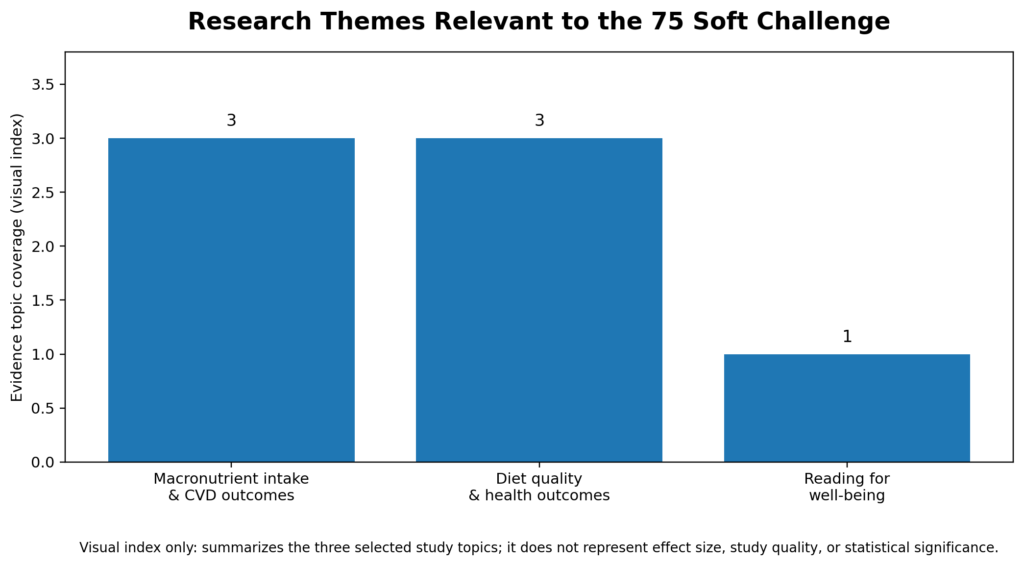
A regra “comer bem” pode incentivar as pessoas a se conscientizarem de suas escolhas alimentares.(1),(2)
Em vez de seguir uma dieta de eliminação extrema, os participantes podem se concentrar em comportamentos práticos, como:
- Preparando as refeições em casa
- Comer mais vegetais
- Adicionando proteína às refeições
- planejando lanches
- Reduzindo bebidas açucaradas excessivas
- Comer conscientemente
A estratégia nutricional exata deve ser individualizada.
4. Incentiva o reconhecimento da hidratação.
Muitas pessoas simplesmente se esquecem de beber líquidos regularmente.
Um objetivo de hidratação pode incentivar as pessoas a prestar mais atenção à ingestão de líquidos.
No entanto, o número de 3 litros deve ser tratado como uma convenção de desafio e não como uma prescrição médica universal.
5. Cria um hábito de leitura.
Ler 10 páginas por dia pode oferecer uma oportunidade estruturada para passar um tempo longe da estimulação digital constante.(3)
Os benefícios mentais da leitura dependem do material, do indivíduo e de como a leitura é incorporada à vida diária.
Ainda assim, tornar a leitura um hábito regular pode ser uma meta útil de desenvolvimento pessoal.
6. Fornece estrutura.
As pessoas costumam lutar com objetivos vagos, como:
“Quero ficar mais saudável.”
75 Soft transforma essa ampla intenção em comportamentos diários concretos.
Em vez de simplesmente querer ser mais saudável, um participante pode decidir:
- Vou caminhar por 45 minutos.
- Vou preparar refeições equilibradas.
- Vou beber líquidos regularmente.
- Vou ler antes de dormir.
Comportamentos específicos são mais fáceis de rastrear do que intenções vagas.
75 soft é bom para perda de peso?
Pode apoiar os hábitos associados a controle de peso, mas não é especificamente um programa de perda de peso.
A mudança de peso é influenciada pela ingestão de energia, gastos de energia, composição corporal, genética, medicamentos, sono, estresse, hormônios e outros fatores.
O desafio não garante a perda de gordura.
Uma pessoa pode perder peso Se seus novos hábitos alimentares e de atividade criarem um déficit de energia adequado, enquanto outra pessoa pode ter pouca ou nenhuma mudança de peso.
Isso não significa necessariamente que o desafio falhou.
Melhorias em:
- força
- Fitness
- mobilidade
- energia
- dormir
- Qualidade dos alimentos
- Consistência do exercício
Pode ser valioso mesmo quando a escala permanece relativamente estável.
Os iniciantes podem fazer o desafio 75 Soft?
Sim, mas os iniciantes devem modificar o desafio de acordo com seu nível de condicionamento físico atual.
Alguém que está inativo não deve começar de repente com exercícios intensos de 45 minutos, sete dias por semana.
Uma progressão mais segura pode parecer:
Semana 1: 20–30 minutos de caminhada confortável ou exercícios para iniciantes.
Semana 2: Aumente a duração gradualmente.
Semana 3 em diante: Construa para sessões mais longas conforme tolerado.
A progressão exata depende da idade, condicionamento físico, histórico de saúde e objetivos.
Os “45 minutos” não devem se tornar uma desculpa para se exercitar por meio de uma dor significativa.
O que conta como exercício durante 75 Soft?
O desafio é intencionalmente flexível.
As opções potenciais incluem:
Caminhando.
Caminhar é uma forma acessível de atividade física e pode ser particularmente útil para iniciantes.
Treinamento de força.
O treinamento de força pode ajudar a desenvolver a força muscular e a função física.
As sessões podem incluir:
- agachamento
- luvas
- flexões
- fileiras
- dobradiças de quadril
- Exercícios básicos
Os exercícios devem ser apropriados para o seu nível de condicionamento físico.
Yoga.
Yoga pode combinar mobilidade, equilíbrio, força e relaxamento, dependendo do estilo.
ciclismo.
O ciclismo interno ou externo pode fornecer exercícios cardiovasculares sem a necessidade de correr.
Nadar.
Natação pode fornecer um treino aeróbico de corpo inteiro, reduzindo o impacto nas articulações.
Dança.
A dança é outra maneira de tornar o movimento agradável, em vez de tratar o exercício como punição.
O que é recuperação ativa?
Recuperação ativa significa realizar movimentos de baixa intensidade em vez de completar Inatividade.
Exemplos incluem:
- Caminhada fácil
- ciclismo suave
- alongamento leve
- ioga relaxada
- exercícios de mobilidade
O objetivo não é estabelecer um recorde pessoal.
é para Continue em movimento enquanto permite o corpo Para se recuperar de um treinamento mais difícil.
Se você estiver extremamente cansado, ferido ou mal, no entanto, o repouso completo pode ser mais apropriado do que forçar uma sessão de recuperação ativa.
O que você deve comer durante o 75 Soft?
Não existe uma única “Dieta suave 75”.”
A A abordagem prática é criar uma estrutura de nutrição simples que você pode manter por 75 dias.
Por exemplo:
Café da manhã: Proteína + fruta + grãos integrais ou outros carboidratos ricos em nutrientes
Almoço: Proteína + legumes + carboidrato + gordura saudável
Lanche: Frutas, iogurte, nozes ou outra opção satisfatória
Jantar: Proteína + Legumes + Carboidrato
Os alimentos exatos devem refletir suas preferências culturais, orçamento, necessidades alimentares e objetivos de saúde.
Você não precisa eliminar os carboidratos, evitar completamente as sobremesas ou seguir uma dieta da moda simplesmente porque está participando de um desafio.
Você deve evitar o álcool durante o 75 Soft?
A versão comumente citada permite álcool em ocasiões sociais.
No entanto, “permitido pelo desafio” não significa “saudável”.”
O álcool traz riscos à saúde, e consumir menos – ou não beber – geralmente é um risco menor.
Se você optar por beber, mantenha seu consumo dentro das orientações de saúde pública aplicáveis e considere se o álcool interfere no seu sono, exercícios, nutrição ou objetivos.
Pessoas que devem evitar o álcool por completo não devem usar a regra suave 75 como Motivo para beber.
Beber 3 litros de água é seguro para todos?
não .
Esta é uma das considerações de segurança mais importantes.
O alvo de 3 litros comumente associado ao 75 Soft não é apropriado para todos.
O consumo excessivo de líquidos pode, em certas circunstâncias, contribuir para Níveis baixos de sódio no sangue, principalmente quando grandes quantidades são consumidas rapidamente.
Pessoas com condições que afetam o equilíbrio de fluidos também podem ter restrições individualizadas.
Se você tem doença renal, insuficiência cardíaca, doença hepática, toma medicamentos que afetam o equilíbrio de fluidos ou foram instruídos a restringir os fluidos, fale com seu profissional de saúde antes de adotar um alvo de hidratação fixo.
Não se force a beber água Simplesmente para marcar uma caixa de desafio.
Erros comuns que as pessoas cometem com 75 soft.
Erro 1: Tratar “soft” como uma competição.
O objetivo é consistência, não provando que você pode sofrer mais do que todos os outros.
Erro 2: exercitar-se muito.
Quarenta e cinco minutos de exercício não significam 45 minutos de esforço máximo.
Erro 3: Sub-comer.
tentando perder peso Rapidamente, reduzindo drasticamente a ingestão de alimentos, pode aumentar a fadiga e tornar o exercício mais difícil.
Erro 4: Tratar 3 litros como obrigatório para todos.
As necessidades de hidratação variam.
Erro 5: ficar obcecado com a escala.
O peso é apenas uma medida de progresso.
Erro 6: ignorando a recuperação.
Músculos e tecidos conjuntivos precisam de recuperação após o treinamento.
Erro 7: Transformando um dia perdido em fracasso.
Um hábito perdido não apaga tudo o que você realizou antes dele.
O formato 75 soft comumente descrito difere especificamente de 75, permitindo que os participantes continuem após uma tarefa perdida em vez de reiniciar.
O que acontece se você perder um dia?
É aqui que 75 Soft pode ser consideravelmente mais indulgente.
Na versão comumente citada, a falta de um requisito não significa retornar ao Dia 1. Você simplesmente continua o desafio.
Por exemplo, suponha que você complete 20 dias de sucesso, mas fique doente no dia 21.
Você não precisa se punir reiniciando.
Em vez disso:
- recuperar.
- Identifique o que interrompeu sua rotina.
- Modifique seu plano, se necessário.
- Continue quando estiver pronto.
Essa abordagem pode impedir a mentalidade de “tudo ou nada” que torna difícil sustentar muitos desafios restritivos.
Como tornar 75 soft mais sustentável?
Defina metas de exercícios realistas.
Se você é novo no exercício, construa gradualmente sua carga de trabalho.
Prepare os alimentos com antecedência.
O preparo de refeições pode reduzir a dependência de alimentos de conveniência quando sua agenda estiver ocupada.
Leve uma garrafa de água.
Isso pode facilitar a hidratação regular sem pensar constantemente nisso.
Leia antes de dormir.
Substituir algumas rolagens noturnas por leitura pode facilitar o objetivo de 10 páginas.
Agende seu dia de recuperação ativo.
Escolha um dia previsível a cada semana para o movimento de baixa intensidade.
Acompanhe os hábitos, não apenas os resultados.
Uma lista de verificação simples pode mostrar se você está executando de forma consistente os comportamentos pretendidos.
Uma amostra de 75 dias suaves.
Um dia típico pode ficar assim:
7h00: Acorde e beba líquidos de acordo com suas necessidades de hidratação.
8h00: Café da manhã equilibrado.
12h30: Almoço nutritivo.
17h30: Sessão de treinamento de força de 45 minutos.
19:00: Jantar equilibrado.
21h30: Leia 10 páginas.
Este é apenas um exemplo.
Sua rotina pode parecer completamente diferente, dependendo do seu trabalho, das responsabilidades familiares, do cronograma de treinamento e do estilo de vida.
O desafio deve se adequar à sua vida, em vez de forçar toda a sua vida a girar em torno do desafio.
Quem deve ter cuidado com 75 Soft?
Fale com um profissional de saúde qualificado antes de iniciar um novo exercício ou programa alimentar, se tiver:
- uma condição cardiovascular significativa
- doença renal
- Diabetes que requer exercícios individualizados ou planejamento nutricional
- Uma lesão musculoesquelética importante
- História de distúrbios alimentares
- uma condição que requer restrição de fluido
- Considerações sobre exercícios relacionados à gravidez
- Outra condição que afeta a tolerância ao exercício
Pessoas com histórico de desordens alimentares devem ser particularmente cautelosas com regras alimentares rígidas e desafios focados no peso.
Em tais situações, um plano personalizado desenvolvido com um profissional de saúde adequado pode ser mais benéfico do que seguir um desafio de mídia social.
75 macio é melhor que 75 difícil?
Não existe uma resposta universal.
Para algumas pessoas, a estrutura rígida de 75 Hard pode parecer motivadora.
Para outros, suas regras estritas de reinicialização e requisitos de exercícios exigentes podem incentivar uma mentalidade insalubre de tudo ou nada.
75 Soft oferece mais flexibilidade e pode ser mais fácil de integrar na vida comum.
Mas a melhor abordagem é aquela que promove comportamentos saudáveis sem criar estresse físico ou psicológico desnecessário.
Você não precisa completar um desafio viral para se tornar mais saudável.
Você pode simplesmente adotar os componentes úteis e deixar de fora as peças que não atendem às suas necessidades.
Perguntas frequentes.
1. Qual é o desafio 75 suave?
É um desafio de bem-estar de 75 dias, centrado em hábitos como comer bem, se exercitar, se hidratar e ler diariamente.
2 . Quantos dias é 75 macio?
O desafio dura 75 dias.
3. Você tem que reiniciar se perder um dia?
A versão comumente citada não requer uma reinicialização após uma tarefa perdida. Você continua com o desafio.
4. Você pode comer carboidratos durante 75 soft?
Sim. Não existe uma regra universal que exija a eliminação de carboidratos. Um padrão alimentar equilibrado pode incluir fontes de carboidratos densos em nutrientes.
5. Você pode fazer uma refeição de trapaça?
Não existe uma definição padronizada de uma “refeição de trapaça” nas 75 regras do Soft Common. É melhor se concentrar em um padrão geral de alimentação equilibrado em vez de categorizar os alimentos como moralmente bons ou ruins.
6. Caminhar pode contar como exercícios?
Sim. Caminhar é comumente considerado uma forma apropriada de movimento para 75 Soft, incluindo recuperação ativa.
7 . A ioga pode contar?
Sim. Yoga pode ser usado como exercício ou recuperação ativa de baixa intensidade, dependendo do estilo e da intensidade.
8. Tenho que ir à academia?
não . O desafio não requer a adesão à academia.
9. Tenho que beber exatamente 3 litros?
Nenhum número fixo de hidratação é apropriado para todas as pessoas. O alvo de 3 litros é uma regra de desafio comumente citada, mas as necessidades individuais de fluido variam.
10. 75 soft adequado para perda de peso?
Pode incentivar hábitos que apóiam o controle de peso, mas não garantem perda de peso.
11. Posso fazer 75 Soft se for iniciante?
Sim, mas a intensidade e a duração do exercício devem ser adaptadas à sua capacidade atual.
12. 75 soft é comprovado cientificamente?
O 75 Soft Challenge como um todo não é um programa médico validado cientificamente. Seus componentes individuais – atividade física regular, alimentação saudável, hidratação e leitura adequadas – são comportamentos gerais de estilo de vida, mas completar o desafio não garante resultados específicos para a saúde.
Final descolagem.
O 75 Soft Challenge é melhor visto como uma estrutura flexível de construção de hábitos de 75 dias, em vez de um teste estrito de resistência física.
A versão comumente citada se concentra em quatro hábitos: comer bem, fazer exercícios por cerca de 45 minutos por dia com um dia de recuperação ativa a cada semana, beber cerca de 3 litros de água e ler 10 páginas diariamente. Ao contrário de 75 Hard, a versão comum não exige que os participantes reiniciem todo o desafio após um dia perdido.
Sua maior força também é sua maior oportunidade de personalização. Em vez de ficar obcecado com a conformidade perfeita, os participantes podem usar o 75 dias para desenvolver realistas Rotinas que continuam após o término do desafio.
No entanto, as regras devem ser adaptadas quando necessário. O alvo de hidratação de 3 litros não é apropriado para todos, e 45 minutos de exercício todos os dias não devem significar treinamento de alta intensidade sem uma recuperação adequada.
A interpretação mais saudável de 75 Soft é, portanto, simples:
Mova-se de forma consistente. Coma alimentos nutritivos. Hidrate-se adequadamente. Dê tempo à sua mente para aprender e descansar. Recupere-se quando necessário. E não deixe que um dia imperfeito o convença de que você falhou.
Um desafio de 75 dias é valioso apenas se os hábitos que você cria durante esses 75 dias puderem continuar no dia 76 ou mais.
+3 de fontes
A Verywelfit possui diretrizes rigorosas para a seleção de suas fontes e se baseia em estudos revisados por pares, institutos de pesquisa educacional e organizações médicas. Evitamos o uso de referências terciárias. Você pode saber mais sobre como garantimos a precisão e a atualização do nosso conteúdo lendo nossa Política de Privacidade. política editorial.
- Ingestão dietética de macronutrientes e risco e mortalidade por doenças cardiovasculares: uma revisão sistemática e meta-análise de dose-resposta de estudos prospectivos de coorte; https://pubmed.ncbi.nlm.nih.gov/38201983/
- Qualidade da dieta avaliada pelo Índice de Alimentação Saudável, Índice Alternativo de Alimentação Saudável, Abordagens Dietéticas para Parar o Escore de Hipertensão e Resultados de Saúde: Uma Revisão Sistemática Atualizada e Meta-análise de Estudos de Coorte; https://pubmed.ncbi.nlm.nih.gov/29111090/
- Leitura para o bem-estar: uma revisão realista de evidências; https://pubmed.ncbi.nlm.nih.gov/41321266/