















 Dar certo

 Meditação






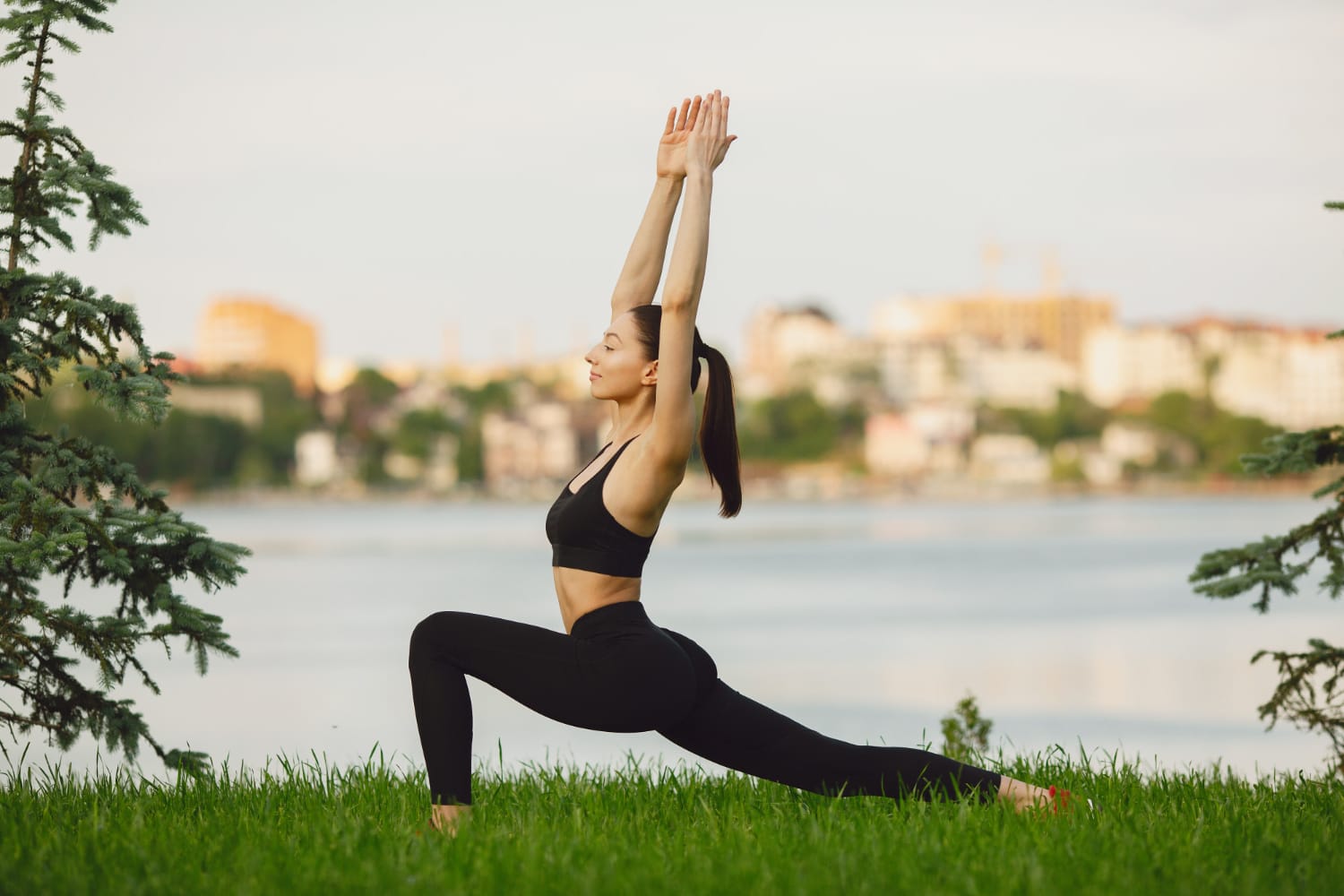
A primeira vez que pratiquei ioga ao ar livre, esperava que parecesse semelhante às minhas sessões regulares internas. Afinal, as poses eram as mesmas e meu tapete de ioga não mudou.
O que me surpreendeu foi tudo que estava acontecendo ao meu redor.
O som dos pássaros substituindo a música de fundo.
Ar fresco enchendo meus pulmões.
Histórias relacionadas
 Como comecei minha jornada em direção à paz interior por meio de Dharana, Dhyana e Samadhi
 Nasagra Mudra: benefícios, efeitos colaterais, como fazer e precauções
Sol quente na minha pele.
O movimento suave das árvores na brisa.
Em vez de me sentir distraído, me senti mais conectado ao meu redor. Minha respiração diminuiu naturalmente, minha mente ficou mais calma e cada pose parecia mais refrescante.
que A experiência me ajudou a entender por que tantos yoga Os entusiastas preferem praticar ao ar livre sempre que possível. Enquanto os estúdios de ioga indoor oferecem conforto e conveniência, praticar na natureza pode criar um ambiente único que encoraje a atenção plena, relaxamento e apreciação do momento presente.

Esteja você pensando em ioga no seu quintal, num parque tranquilo, em uma praia ou em uma trilha de montanha, este guia ajudará você a entender como funciona o yoga ao ar livre, Benefícios potenciais, e como começar com segurança.
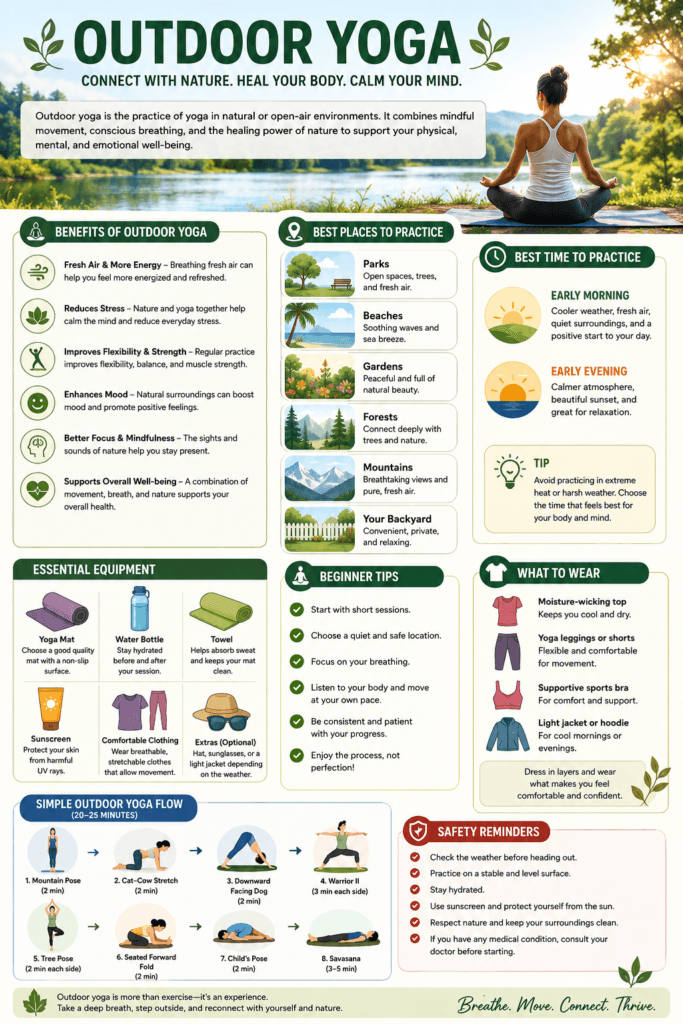
O que é ioga ao ar livre?
ioga ao ar Refere-se à prática de ioga em ambientes naturais ou ao ar livre, em vez de dentro de um estúdio, academia ou casa.
o prática de ioga Em si permanece praticamente o mesmo, mas a configuração muda.
Locais comuns ao ar livre incluem:
- Parques públicos.
- Praias.
- Jardins.
- florestas.
- telhados.
- beira do lago.
- Montanhas.
- Quintal.
O yoga ao ar livre combina técnicas tradicionais de ioga com os efeitos calmantes de passar o tempo na natureza.
Muitas pessoas também se referem a isso como:
- Yoga da Natureza.
- Parque de ioga.
- Yoga na praia.
- Jardim Yoga.
- Yoga ao ar livre.
Embora os nomes sejam diferentes, o objetivo permanece o mesmo – trazer movimento, respiração e atenção plena para um ambiente natural.
Minha primeira sessão de ioga ao ar livre.
Ainda me lembro como foi diferente na minha primeira sessão ao ar livre.
Em vez de olhar para quatro paredes, eu podia observar as nuvens se movendo pelo céu.
Em vez de iluminação artificial, a luz natural iluminava suavemente minha prática.
mesmo poses de equilíbrio Tornei-me mais interessante porque eu tinha que me concentrar apesar do vento ocasional e dos sons ao redor.
Não se tratava de alcançar poses perfeitas.
Tratava-se de ficar mais consciente do meu corpo e do ambiente ao meu redor.
Por que o yoga ao ar livre está se tornando mais popular?
Nos últimos anos, o yoga ao ar livre tornou-se cada vez mais popular em todo o mundo.
Vários fatores contribuíram para esse interesse crescente:
- Maior consciência do bem-estar mental.
- Apreciação crescente por passar o tempo ao ar livre.
- Eventos de ioga comunitários.
- Retiros de bem-estar.
- Inspiração nas redes sociais.
- Horários de trabalho flexíveis.
- Domiciliar rotinas de condicionamento físico.
Muitos instrutores de ioga agora organizam aulas regulares em parques e jardins para ajudar os participantes a desfrutar tanto do movimento quanto da natureza.
Benefícios do yoga ao ar.
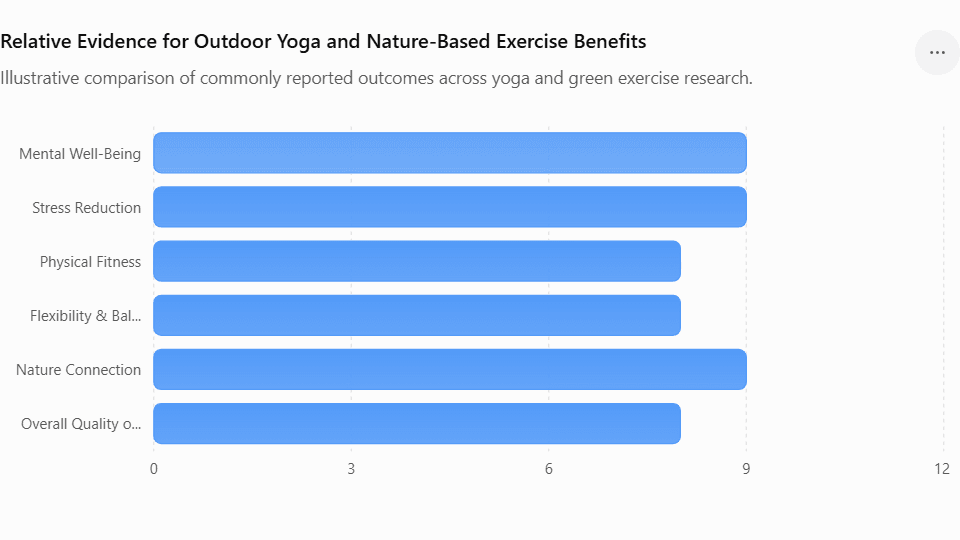
Uma razão pela qual continuo recomendando o ioga ao ar livre é que ele oferece mais do que exercícios físicos.(1)
Praticar fora pode fornecer vários benefícios físicos, mentais e emocionais.(2),(3)
1. O ar fresco pode parecer energizante.
Os espaços internos às vezes parecem abafados, especialmente após longos períodos sentados.
Praticar fora permite respirar ar fresco enquanto se move através de cada pose.
Embora a qualidade do ar varie dependendo da localização, muitas pessoas acham que os ambientes externos parecem mais refrescantes do que os espaços fechados.
2 . Incentiva a atenção plena.
Mindfulness significa prestar atenção ao momento presente sem julgamento.
O yoga ao ar livre naturalmente incentiva isso, atraindo sua consciência para:
- Pássaros cantando.
- Vento se movendo por entre árvores.
- Água corrente.
- Sol.
- aromas naturais.
Esses sensoriais suaves experiências frequentemente Torne mais fácil permanecer presente durante a prática.
3. Pode ajudar a reduzir o estresse diário.
muitas pessoas Pratique Yoga para relaxar.
A adição da natureza à experiência pode aumentar ainda mais a sensação de calma e relaxamento.
Embora a resposta de todos seja diferente, passar um tempo em espaços verdes foi associado a um melhor bem-estar psicológico em vários estudos.
4. Suporta flexibilidade.
O yoga ao ar livre usa os mesmos movimentos de alongamento que o yoga indoor.
A prática regular pode gradualmente Melhore a flexibilidade no:
- isquiotibiais.
- quadris.
- ombros.
- de volta.
- peito.
A consistência é mais importante que a intensidade.
5. Melhora o equilíbrio.
natural irregular Superfícies requerem um pouco mais de consciência corporal.
Praticar cuidadosamente na grama ou no solo estável e natural pode ajudar a melhorar o equilíbrio e a coordenação.
Sempre escolha uma superfície segura e nivelada sempre que possível.
6. Incentiva a atividade física suave.
Yoga ao ar livre é acessível a muitos níveis de condicionamento físico.
Dependendo do estilo, pode envolver:
- alongamento.
- Construção de força.
- Treinamento de equilíbrio.
- Respiração controlada.
- Relaxamento.
Essa combinação o torna adequado para muitas pessoas que buscam exercícios de baixo impacto.
7 . Cria uma pausa nas telas.
um benefício que eu pessoalmente aprecio é pisar Longe de telefones, computadores e televisores.
Outdoor Yoga oferece um tempo dedicado para se desconectar da tecnologia e se reconectar consigo mesmo.
8. Suporta uma melhor consciência da respiração.
Yoga coloca uma ênfase significativa na respiração controlada.
Estar ao ar livre geralmente incentiva respirações mais lentas e profundas, ajudando você a se tornar mais consciente do seu padrão de respiração.
Os melhores lugares para praticar ioga ao ar livre.
Escolher o local certo pode fazer uma diferença significativa.
Parques públicos.
Os parques estão entre os locais mais populares.
As vantagens incluem:
- Espaço aberto.
- Grama.
- Árvores.
- ar fresco.
- Fácil acessibilidade.
Tente visitar em horários mais tranquilos para menos distrações.
Praias.
praticando ioga Perto do oceano oferece uma experiência sensorial única.
Muitas pessoas gostam:
- som das ondas.
- brisa do mar.
- Sessões do nascer do sol.
- Sessões do por do sol.
No entanto, a areia macia pode tornar o equilíbrio das poses mais desafiadores.
Jardins.
Jardins botânicos e jardins privativos oferecem ambientes tranquilos, repletos de flores e vegetação.
Esses ambientes são ideais para estilos de ioga.
florestas.
O Yoga da Floresta enfatiza a profunda conexão com a natureza.
Escolha áreas claramente marcadas e seguras com terreno estável.
Montanhas.
As configurações de montanha oferecem paisagens deslumbrantes e ar fresco.
Como o terreno pode ser irregular, eles geralmente são mais adequados para praticantes experientes.
telhados.
Os praticantes urbanos costumam usar telhados para criar uma experiência ao ar livre sem sair da cidade.
Certifique-se de que a superfície esteja segura e segura.
seu quintal.
Um dos lugares mais fáceis de começar é o seu próprio quintal.
As vantagens incluem:
- privacidade.
- Conveniência.
- Ambiente familiar.
- Horário flexível.
Equipamento essencial para ioga ao ar livre.
Felizmente, o yoga ao ar livre requer muito pouco equipamento.
Tapete de ioga.
Escolha um tapete com:
- Boa aderência.
- Amortecimento confortável.
- Portabilidade fácil.
Alguns tapetes são projetados especificamente para uso externo.
Garrafa de água.
A hidratação continua importante, especialmente durante o tempo quente.
toalha.
Uma toalha ajuda a absorver o suor e pode ser colocada sob seu tapete se o solo estiver úmido.
protetor solar.
Se praticar durante o dia, considere Protegendo a pele exposta com protetor solar adequado ao seu tipo de pele.
Roupa confortável.
Use roupas que:
- Permite a livre circulação.
- Respira bem.
- combina com o clima.
chapéu ou óculos de sol.
Útil durante o sol brilhante antes ou depois da prática.
Cobertor pequeno.
Útil durante as poses de relaxamento ou meditação.
Melhor horário para ioga ao ar livre.
O momento de sua prática afeta o conforto e a segurança.
madrugada.
As sessões matinais geralmente fornecem:
- temperaturas mais baixas.
- Ambiente tranquilo.
- Sol suave.
- Menos distrações.
manhã Yoga também pode ajudá-lo a começar o dia Sentindo-se energizado.
noite.
Ofertas à noite:
- clima mais frio.
- belo por do sol.
- relaxamento após o trabalho.
- Exposição UV mais baixa.
Muitas pessoas acham as sessões noturnas ideais para relaxar.
Evite o calor do meio-dia.
Durante o tempo quente, a prática do meio-dia pode aumentar o risco de:
- desidratação.
- exaustão do calor.
- queimaduras solares.
Sempre que possível, escolha partes mais frias do dia.
Como começar o yoga ao ar livre como iniciante?
Se você nunca praticou ao ar livre antes, não se preocupe.
Você não precisa de habilidades avançadas de ioga.
Veja como sugiro começar:
- Comece com um local tranquilo.
- Mantenha sua primeira sessão curta.
- Concentre-se na respiração em vez de poses difíceis.
- Use roupas confortáveis.
- Traga água.
- Pratique em terreno plano.
- Aceite que a natureza inclui distrações – elas fazem parte da experiência.
Preparando-se para sua sessão de ioga ao ar livre.
Um pouco de preparação pode tornar sua prática mais agradável.
Antes de sair de casa:
- Verifique a previsão do tempo.
- Escolha um local adequado.
- Embale seu tapete e garrafa de água.
- Use roupas apropriadas para o clima.
- Aplique protetor solar, se necessário.
- Informe alguém se você estiver praticando em uma área remota.
- Chegue alguns minutos mais cedo para se acomodar em seus arredores.
Tirar alguns momentos de silêncio antes do início pode ajudá-lo a passar da ocupação da vida diária para um estado mais consciente.
Melhores poses de ioga para ioga ao ar livre.
Uma das coisas que mais gosto no ioga ao ar livre é que quase qualquer pose de ioga pode ser praticada fora. No entanto, algumas poses parecem especialmente gratificantes porque complementam o ambiente natural e estimulam a respiração constante.
Aqui estão algumas poses para iniciantes que são funciona bem ao ar livre.
1. Pose da montanha (Tadasana).
A pose da montanha pode parecer simples, mas estabelece a base para muitas sequências de ioga.
Benefícios
- Melhora a postura.
- Incentiva a respiração consciente.
- Melhora a consciência do corpo.
- Promove o equilíbrio.
2 Pose da árvore (Vrikshasana).
pose na árvore É perfeito para praticar o equilíbrio ao ar livre.
Observar árvores durante a execução dessa pose também pode fazer com que a experiência pareça mais conectada à natureza.
Benefícios.
- Melhora o equilíbrio.
- Fortalece as pernas.
- Constrói a concentração.
- Melhora a postura.
3. Cão voltado para baixo (Adho Mukha Svanasana).
este clássico pose de ioga Alonga vários grupos musculares simultaneamente.
Benefícios.
- Alonga os isquiotibiais.
- Alonga a coluna.
- Fortalece os ombros.
- Melhora a flexibilidade.
4. Guerreiro II (Virabhadrasana II).
Warrior II desenvolve força na parte inferior do corpo, incentivando a confiança e a estabilidade.
Benefícios.
- Fortalece as pernas.
- Melhora a mobilidade do quadril.
- Constrói resistência.
- Melhora o foco.
5. Pose da criança (Balasana).
Sempre que quero fazer uma pausa e me reconectar com a respiração, a pose da criança é minha primeira escolha.
Benefícios.
- Incentiva o relaxamento.
- gentilmente Alonga as costas.
- Reduz a tensão.
- Promove a atenção plena.
6. Alongamento de vaca-gato.
Este movimento suave ajuda a aquecer a coluna antes de poses mais desafiadoras.
Benefícios.
- Melhora a mobilidade da coluna.
- Reduz a rigidez.
- Coordena a respiração com o movimento.
7 . Dobra para frente sentada (Paschimottanasana).
Um alongamento calmante que funciona bem no final de uma sessão de ioga ao ar livre.
Benefícios.
- Alonga os isquiotibiais.
- relaxa o sistema nervoso.
- Melhora a flexibilidade.
8. Pose do cadáver (savasana).
Terminar uma sessão ao ar livre com Savasana pode parecer especialmente pacífica.
Ouvir pássaros, vento ou água corrente pode ajudar a aprofundar o relaxamento.
Benefícios.
- Suporta recuperação.
- Incentiva o relaxamento.
- Promove a atenção plena.
Técnicas de respiração para ioga ao ar.
A respiração é um dos aspectos mais importantes do yoga.
Praticar fora permite que muitas pessoas se tornem mais conscientes de cada respiração.
Alguns exercícios de respiração amigável para iniciantes incluem:
Respiração diafragmática.
Concentre-se em expandir o abdômen enquanto inspira e o contrai suavemente enquanto expira.
Respiração igual (sama vritti).
Inspire por quatro contagens.
Expire por quatro contagens.
Repita por alguns minutos.
Respiração nasal profunda.
Respire lentamente pelo nariz, mantendo uma postura relaxada.
isso pode ajudar Melhore o foco em toda a sua prática.
Dicas de segurança para ioga ao ar livre.
Embora o yoga ao ar livre seja geralmente agradável, a segurança deve sempre vir em primeiro lugar.
Escolha uma superfície estável.
Pratique em terreno plano sempre que possível.
Evitar:
- Pedras soltas.
- terreno irregular.
- Grama escorregadia.
- Superfícies molhadas.
Mantenha-se hidratado.
Leve água, especialmente durante o tempo mais quente.
Beba antes e depois da sessão.
Proteja-se do sol.
Se praticar ao ar livre durante o dia:
- Use protetor solar.
- Considere um chapéu antes ou depois da prática.
- Use óculos de sol ao caminhar de e para sua localização.
Observe o clima.
Evite praticar durante:
- trovoadas.
- chuva forte.
- Ventos fortes.
- calor extremo.
Sempre verifique a previsão antes de sair.
Respeite a vida selvagem.
Yoga ao ar livre significa compartilhar a natureza com outras criaturas vivas.
Mantenha uma distância respeitosa de:
- pássaros.
- insetos.
- pequenos animais.
Evite perturbar os habitats naturais.
Dicas sazonais de ioga ao ar livre.
Cada temporada oferece uma experiência única.
Primavera.
A primavera fornece temperaturas confortáveis e paisagens florescentes.
Vista-se com camadas leves porque as manhãs ainda podem ser legais.
verão.
Pratique no início da manhã ou no final da noite para evitar calor excessivo.
Aumente sua ingestão de água e use roupas leves e respiráveis.
Outono.
Muitas pessoas acham o outono ideal para ioga ao ar livre por causa de suas temperaturas mais frias e cenários coloridos.
Traga uma camada extra se o tempo estiver frio.
inverno.
Yoga ao ar livre ainda é possível em climas amenos.
Use roupas quentes e flexíveis e encurte suas sessões se as temperaturas estiverem muito baixas.
Erros comuns a evitar
Quando comecei a praticar ao ar livre, cometi vários erros simples.
Aprender com eles tornou as sessões futuras muito mais agradáveis.
Pulando o aquecimento.
Os músculos frios são mais propensos ao desconforto.
Gaste de cinco a dez minutos aquecendo antes de começar.
Escolhendo a superfície errada.
Um tapete de ioga confortável não pode compensar completamente o solo instável.
Procure áreas planas e de suporte.
Ignorando a hidratação.
mesmo Yoga suave Pode levar à perda de fluido em climas quentes.
beber água regularmente.
vestindo a roupa errada.
Roupas pesadas ou restritivas podem deixar o movimento desconfortável.
Escolha tecidos respiráveis que permitam uma amplitude completa de movimento.
Focando demais na perfeição.
A ioga ao ar livre não é sobre conseguir poses perfeitas.
A natureza é imprevisível.
Vento, sons e terreno irregular fazem parte da experiência.
Quem pode se beneficiar do yoga ao ar livre?
O yoga ao ar livre pode ser adequado para muitas pessoas, incluindo:
- Iniciantes.
- adultos mais velhos.
- trabalhadores de escritório.
- Alunos.
- atletas.
- Pessoas que buscam alívio do estresse.
- Indivíduos que desejam uma atividade física suave.
Como acontece com qualquer programa de exercícios, as pessoas com condições médicas ou lesões devem procurar orientação personalizada antes de começar.
Experimente uma rotina de ioga ao ar livre de 20 minutos.
Se você é novo no yoga ao ar livre, experimente esta sequência simples.
| atividade | tempo |
|---|---|
| Respiração profunda | 2 minutos |
| pose da montanha | 2 minutos |
| alongamento de vaca-gato | 2 minutos |
| cão virado para baixo | 2 minutos |
| Guerreiro II | 4 minutos |
| pose na árvore | 3 minutos |
| dobra para a frente sentado | 2 minutos |
| pose da criança | 2 minutos |
| savasana | 1 minuto |
Ajuste o tempo com base no seu nível de conforto e experiência.
Perguntas frequentes.
1. O que é ioga ao ar livre?
O yoga ao ar livre é a prática do yoga em ambientes abertos, como parques, praias, jardins, florestas, telhados ou quintais em vez de dentro de casa.
2 . O yoga ao ar livre é melhor do que o ioga indoor
Nenhum é universalmente melhor. O yoga ao ar livre oferece a experiência adicional de praticar na natureza, enquanto o yoga indoor oferece um ambiente mais controlado. A melhor escolha depende de suas preferências e circunstâncias.
3. O que devo levar para o yoga ao ar livre?
Traga um tapete de ioga, uma garrafa de água, uma toalha, uma roupa confortável, protetor solar, se necessário, e um cobertor leve para relaxar ou meditar.
4. Os iniciantes podem fazer ioga ao ar livre?
Sim. Os iniciantes podem começar com poses simples, escolher um local tranquilo e praticar em seu próprio ritmo.
5. Qual é o melhor momento para ioga ao ar livre?
O início da manhã e o início da noite costumam ser os horários mais confortáveis porque as temperaturas são mais frias e a luz solar é menos intensa.
6. O yoga ao ar livre é seguro?
O yoga ao ar livre geralmente é seguro quando praticado em terrenos estáveis, em condições climáticas adequadas e com hidratação adequada e proteção solar.
7 . A ioga ao ar livre pode ajudar a reduzir o estresse?
Muitas pessoas acham que combinar ioga com o tempo gasto na natureza promove o relaxamento e ajuda a se sentir mais calmo. As experiências individuais podem variar.
8. Com que frequência devo praticar ioga ao ar livre?
Praticar 2 a 5 vezes por semana pode ajudar a melhorar a flexibilidade, o equilíbrio, a força e a atenção plena, permitindo uma recuperação adequada entre as sessões.
9. O que vestir para ioga ao ar livre?
Use roupas confortáveis, respiráveis e elásticas, como um top de absorção de umidade, leggings ou shorts de ioga e um sutiã esportivo de suporte. Pratique descalço para melhor aderência e leve uma jaqueta leve, chapéu ou óculos escuros, se necessário, com base no clima.
Considerações finais.
Outdoor Yoga oferece uma oportunidade única de combinar os benefícios físicos do yoga com a influência calmante da natureza. Se você optar por praticar em um parque tranquilo, em uma praia de areia, no quintal ou ao lado de um lago tranquilo, o ambiente natural pode adicionar uma dimensão refrescante à sua rotina.
Desde a melhoria da flexibilidade, equilíbrio e postura até o incentivo à respiração consciente e a redução do estresse diário, o yoga ao ar livre oferece um suporte ao bem-estar físico e mental. Ele também oferece uma pausa bem-vinda nas telas e ambientes internos movimentados, ajudando você a se reconectar com você e com o mundo ao seu redor.
A chave é começar com poses simples, priorizar a segurança e aproveitar a experiência em vez de buscar a perfeição. Cada sessão ao ar livre é diferente, e isso faz parte do charme. Com prática consistente e preparação ponderada, o yoga ao ar livre pode se tornar uma parte recompensadora de uma saúde, Estilo de vida e.
+3 de fontes
A Verywelfit possui diretrizes rigorosas para a seleção de suas fontes e se baseia em estudos revisados por pares, institutos de pesquisa educacional e organizações médicas. Evitamos o uso de referências terciárias. Você pode saber mais sobre como garantimos a precisão e a atualização do nosso conteúdo lendo nossa Política de Privacidade. política editorial.
- Os benefícios para a saúde do yoga e do exercício: uma revisão dos estudos de comparação; https://pubmed.ncbi.nlm.nih.gov/20105062/
- Os efeitos do exercício verde no bem-estar físico e mental: uma revisão sistemática; https://pmc.ncbi.nlm.nih.gov/articles/PMC6518264/
- Atividades externas baseadas na natureza para saúde mental e física: revisão sistemática e meta-análise; https://pmc.ncbi.nlm.nih.gov/articles/PMC8498096/