











































 Workout

 Meditation






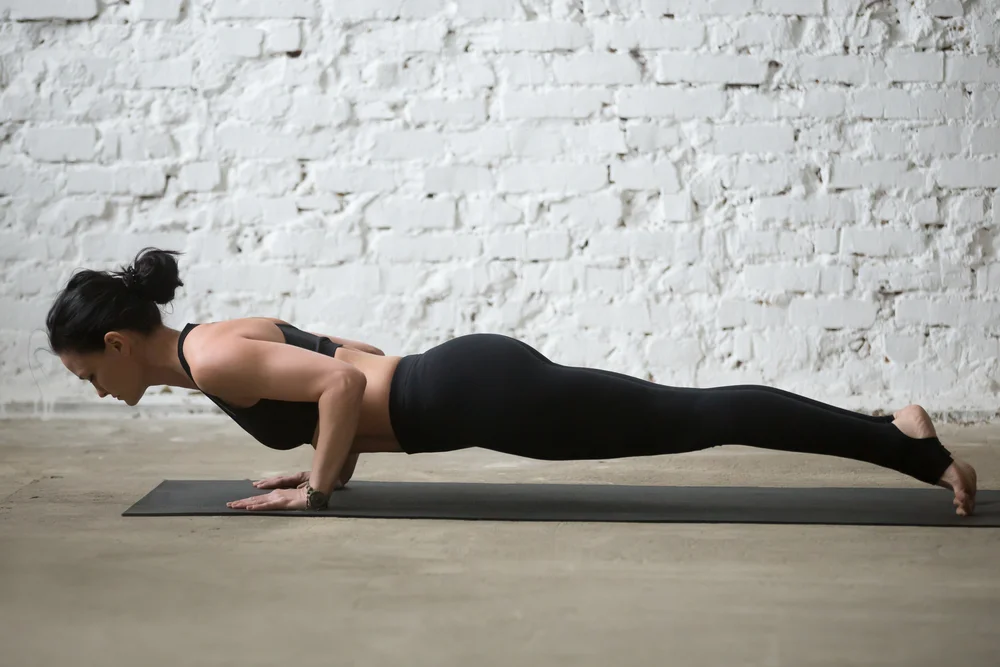
Chaturanga Dandasana, commonly known as the yoga push-up, is a fundamental pose in many yoga practices. This pose is essential for building strength, stability, and alignment in your yoga practice. It’s often part of the Sun Salutation sequence and is crucial for transitions between poses. Whether you’re a beginner or an experienced yogi, mastering Chaturanga can greatly enhance your practice.
What is Chaturanga Yoga Push-Up?
Chaturanga Dandasana translates to “Four-Limbed Staff Pose” in Sanskrit. This pose resembles a low push-up and requires significant upper body strength, core stability, and proper alignment. It engages multiple muscle groups, including the arms, shoulders, chest, back, and core.
Benefits of Chaturanga Yoga Push-Up.
Before diving into the technique, it’s important to understand the benefits of incorporating Chaturanga into your yoga practice:
- Builds Upper Body Strength: It targets the arms, shoulders, chest, and upper back.
- Enhances Core Stability: It requires engagement of the core muscles to maintain proper alignment.
- Improves Posture: Regular practice helps strengthen the muscles that support good posture.
- Prepares for Advanced Poses: Mastering Chaturanga is essential for progressing to more complex yoga poses.
- Boosts Endurance: Holding the pose increases muscular endurance over time.
Step-by-Step Guide to Chaturanga.
1 Start in Plank Pose.
Begin in Plank Pose with your wrists directly under your shoulders and your body in a straight line from head to heels. Engage your core and ensure your back is flat.
Related Stories
 7 Mudras for Hair Growth and Thickness You Must Try Today
 Upward Facing Bow: Meaning, Benefits, Steps, Contraindications And Variations
2 Shift Forward.
Gently shift your body weight forward, so your shoulders move past your wrists. This forward motion helps to distribute weight evenly and prevents strain on your wrists.
3 Lower Down.
Bend your elbows and lower your body in a straight line. Your elbows should be tucked close to your ribs, forming a 90-degree angle. Lower yourself until your upper arms are parallel to the floor.
4 Engage Your Core.
Throughout the pose, keep your core muscles engaged to support your lower back. Avoid letting your hips sag or lift too high.
5 Maintain Alignment.
Ensure your shoulders are not dipping below your elbows. Keep your body in a straight line from head to heels. Your gaze should be slightly forward to keep the neck in a neutral position.
6 Hold and Breathe.
Hold the pose for a few breaths, maintaining your alignment and engagement. Breathe deeply and steadily.
7 Transition.
To exit Chaturanga, you can either press back up to Plank Pose or continue to Upward-Facing Dog by straightening your arms and lifting your chest.
Common Mistakes and How to Avoid Them.
Mistake 1: Dropping the Hips.
Correction: Engage your core and glutes to keep your body in a straight line. Think about drawing your belly button towards your spine.
Mistake 2: Flared Elbows.
Correction: Keep your elbows tucked close to your sides to protect your shoulders and ensure proper alignment.
Mistake 3: Sagging Shoulders.
Correction: Avoid letting your shoulders dip below your elbows. Maintain a strong plank alignment with your shoulders slightly ahead of your wrists.
Mistake 4: Holding Breath.
Correction: Remember to breathe! Steady, deep breaths help maintain focus and muscle engagement.
Personal Interview: Insights from an Experienced Yogi.
| 💡 Expert Insights. To provide more in-depth insights, we spoke with Emily Peterson, a certified yoga instructor with over 10 years of experience. Q: What challenges do beginners face with Chaturanga, and how can they overcome them? Emily: “One of the biggest challenges for beginners is building the necessary upper body strength. I recommend starting with modified versions, such as lowering the knees to the mat, to gradually build strength. Consistent practice and focusing on proper alignment are key.” Q: How important is proper alignment in Chaturanga? Emily: “Proper alignment is crucial to avoid injury and gain the full benefits of the pose. Misalignment can lead to strain in the wrists, shoulders, and lower back. Always listen to your body and make adjustments as needed.” Q: Any tips for improving Chaturanga practice? Emily: “Incorporate strengthening exercises for the arms and core outside of your yoga practice. Additionally, using props like blocks can help maintain alignment and provide support.” |
Scientific Evidence Supporting Chaturanga.
Scientific research supports the physical benefits of Chaturanga Dandasana:
- Muscle Engagement: Studies show that Chaturanga effectively engages the pectoral muscles, deltoids, triceps, and core muscles. This comprehensive muscle engagement improves overall strength and stability.(1)
- Core Strength: Research indicates that poses like Chaturanga, which require core activation, enhance balance and stability, contributing to better posture and reduced risk of lower back pain.
- Joint Health: Properly performed Chaturanga helps improve joint stability and reduces the risk of shoulder injuries. It also promotes healthy joint movement by encouraging a full range of motion.
Frequently Asked Questions.
1 Can beginners do Chaturanga?
Yes, beginners can practice modified versions of Chaturanga, such as lowering the knees to the mat. This helps build strength and proper alignment gradually.
2 How often should I practice Chaturanga?
Incorporating Chaturanga into your regular yoga practice, such as in Sun Salutations, is ideal. Aim for 3-4 times a week to build strength and familiarity with the pose.
3 What should I do if I experience wrist pain?
Ensure proper alignment and weight distribution to avoid straining your wrists. Consider using yoga blocks or practicing on your forearms if wrist pain persists.
4 How can I transition smoothly from Chaturanga to Upward-Facing Dog?
Maintain your core engagement as you lower into Chaturanga. From there, straighten your arms and lift your chest, rolling over your toes to enter Upward-Facing Dog. Focus on a fluid motion to maintain balance.
5 Are there any preparatory poses for Chaturanga?
Yes, poses like Plank, Dolphin, and Cobra can help build the necessary strength and alignment awareness for Chaturanga. Practicing these regularly will prepare your body for the pose.
Final Thought.
Mastering Chaturanga Dandasana is a rewarding journey that enhances your overall yoga practice. By focusing on proper alignment, building strength, and practicing consistently, you can reap the numerous benefits of this powerful pose. Remember, it’s essential to listen to your body and progress at your own pace. With dedication and mindful practice, Chaturanga will become a staple in your yoga routine, contributing to your strength, stability, and overall well-being.
+1 Source
Verywelfit has strict sourcing guidelines and relies on peer-reviewed studies, educational research institutes, and medical organizations. We avoid using tertiary references. You can learn more about how we ensure our content is accurate and up-to-date by reading our editorial policy.
- Core Muscle Activity during Physical Fitness Exercises: A Systematic Review; https://pmc.ncbi.nlm.nih.gov/articles/PMC7345922/