










































 تدرب
تدرب

 تأمل
تأمل






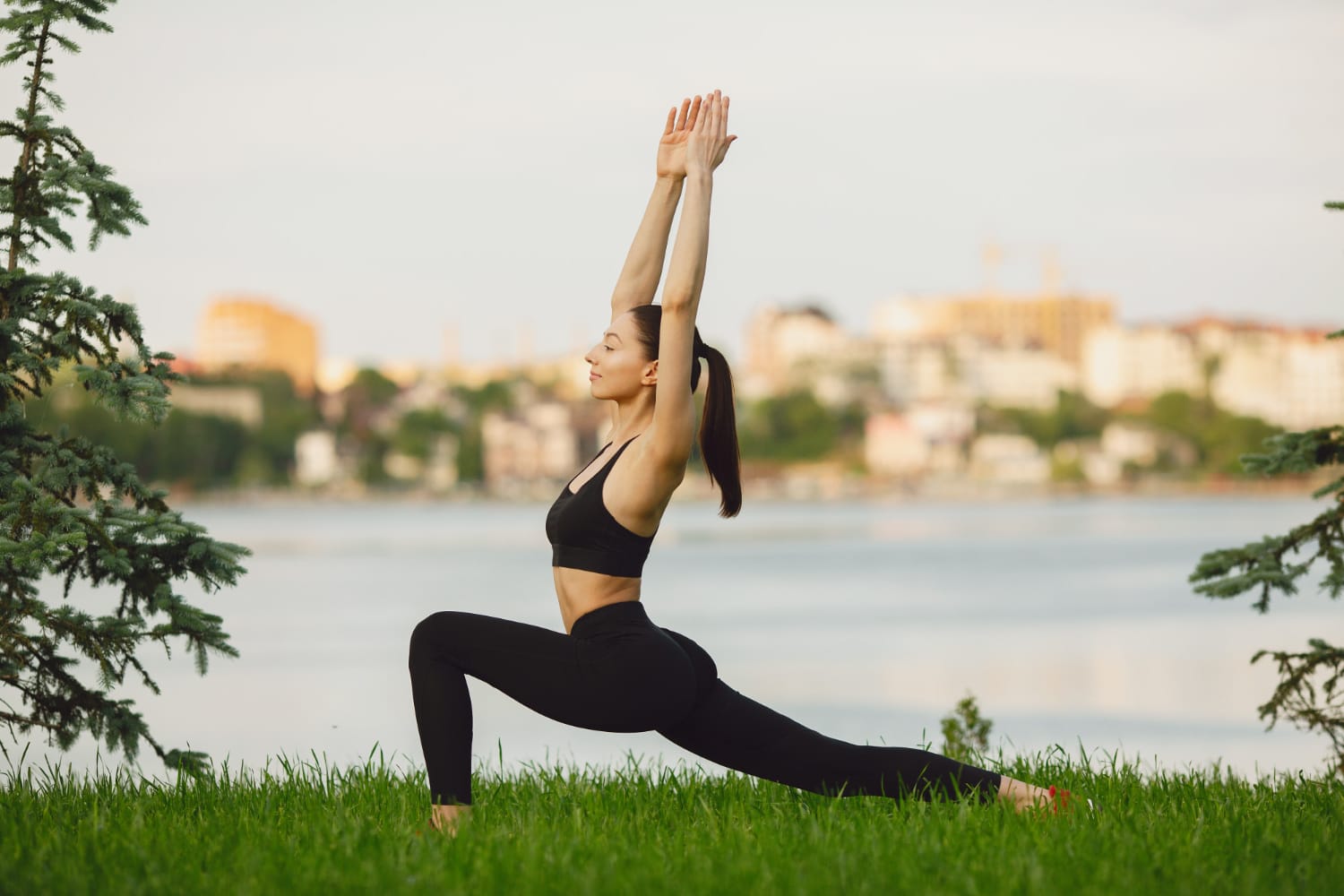
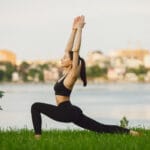
The first time I practiced outdoor yoga, I expected it to feel similar to my regular indoor sessions. After all, the poses were the same, and my yoga mat hadn’t changed.
What surprised me was everything happening around me.
The sound of birds replacing background music.
Fresh air filling my lungs.
قصص ذات صلة
 لاكشمي مدرا: الفوائد والآثار الجانبية وكيفية القيام به والاحتياطات
 تجربتي مع تدليك التصريف اللمفاوي: كم مرة أفعل ذلك للحصول على أفضل النتائج
Warm sunlight on my skin.
The gentle movement of trees in the breeze.
Instead of feeling distracted, I felt more connected to my surroundings. My breathing naturally slowed, my mind became calmer, and every pose felt more refreshing.
That experience helped me understand why so many yoga enthusiasts prefer practicing outdoors whenever possible. While indoor yoga studios provide comfort and convenience, practicing in nature can create a unique environment that encourages mindfulness, relaxation, and appreciation for the present moment.

Whether you’re considering yoga in your backyard, a quiet park, a beach, or a mountain trail, this guide will help you understand how outdoor yoga works, its الفوائد المحتملة, and how to begin safely.
What Is Outdoor Yoga?
اليوغا في الهواء ال refers to practicing yoga in natural or open-air environments instead of inside a studio, gym, or home.
لامه ممارسة اليوجا itself remains largely the same, but the setting changes.
Common outdoor locations include:
- Public parks.
- Beaches.
- Gardens.
- Forests.
- Rooftops.
- Lakesides.
- Mountains.
- Backyards.
Outdoor yoga combines traditional yoga techniques with the calming effects of spending time in nature.
Many people also refer to this as:
- Nature yoga.
- Park yoga.
- Beach yoga.
- Garden yoga.
- Open-air yoga.
Although the names differ, the goal remains the same—bringing movement, breathing, and mindfulness into a natural environment.
My First Outdoor Yoga Session.
I still remember how different my first outdoor session felt.
Instead of staring at four walls, I could watch clouds moving across the sky.
Instead of artificial lighting, natural sunlight gently illuminated my practice.
Even balancing poses became more interesting because I had to focus despite occasional wind and surrounding sounds.
It wasn’t about achieving perfect poses.
It was about becoming more aware of my body and the environment around me.
Why Outdoor Yoga Is Becoming More Popular?
In recent years, outdoor yoga has become increasingly popular around the world.
Several factors have contributed to this growing interest:
- Greater awareness of mental well-being.
- Increased appreciation for spending time outdoors.
- Community yoga events.
- Wellness retreats.
- Social media inspiration.
- Flexible work schedules.
- Home-based روتين اللياقة البدنية.
Many yoga instructors now organize regular classes in parks and gardens to help participants enjoy both movement and nature.
Benefits of Outdoor Yoga.
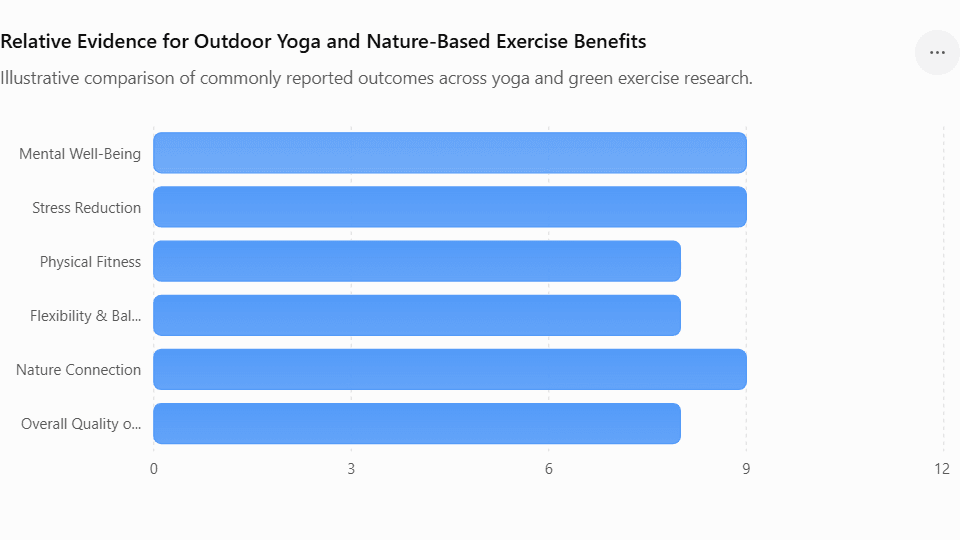
One reason I continue recommending outdoor yoga is that it offers more than physical exercise.(1)
Practicing outside may provide several physical, mental, and emotional benefits.(2),(3)
1. Fresh Air Can Feel Energizing.
Indoor spaces sometimes feel stuffy, especially after long periods of sitting.
Practicing outside allows you to breathe fresh air while moving through each pose.
Although air quality varies depending on location, many people find outdoor environments feel more refreshing than enclosed spaces.
2. Encourages Mindfulness.
Mindfulness means paying attention to the present moment without judgment.
Outdoor yoga naturally encourages this by drawing your awareness toward:
- Birds singing.
- Wind moving through trees.
- Flowing water.
- Sunshine.
- Natural scents.
These gentle sensory experiences often make it easier to remain present during practice.
3. May Help Reduce Everyday Stress.
Many people practice yoga to relax.
Adding nature to the experience may further enhance feelings of calm and relaxation.
Although everyone’s response is different, spending time in green spaces has been associated with improved psychological well-being in numerous studies.
4. Supports Flexibility.
Outdoor yoga uses the same stretching movements as indoor yoga.
Regular practice may gradually تحسين المرونة in the:
- أوتار الركبة.
- Hips.
- أكتاف.
- Back.
- Chest.
Consistency is more important than intensity.
5. Improves Balance.
Uneven natural surfaces require slightly greater body awareness.
Practicing carefully on grass or stable natural ground may help improve balance and coordination.
Always choose a safe, level surface whenever possible.
6. Encourages Gentle Physical Activity.
Outdoor yoga is accessible to many fitness levels.
Depending on the style, it may involve:
- تمتد.
- بناء القوة.
- Balance training.
- Controlled breathing.
- Relaxation.
This combination makes it suitable for many people seeking low-impact exercise.
7. Creates a Break from Screens.
One benefit I personally appreciate is stepping away from phones, computers, and televisions.
Outdoor yoga provides dedicated time to disconnect from technology and reconnect with yourself.
8. Supports Better Breathing Awareness.
Yoga places significant emphasis on controlled breathing.
Being outdoors often encourages slower, deeper breaths while helping you become more conscious of your breathing pattern.
Best Places to Practice Outdoor Yoga.
Choosing the right location can make a significant difference.
Public Parks.
Parks are among the most popular locations.
Advantages include:
- Open space.
- Grass.
- Trees.
- Fresh air.
- Easy accessibility.
Try visiting during quieter hours for fewer distractions.
Beaches.
ممارسة اليوجا near the ocean offers a unique sensory experience.
Many people enjoy:
- Sound of waves.
- Sea breeze.
- Sunrise sessions.
- Sunset sessions.
However, soft sand may make balancing poses more challenging.
Gardens.
Botanical gardens and private gardens provide peaceful surroundings filled with flowers and greenery.
These environments are ideal for slower yoga styles.
Forests.
Forest yoga emphasizes deep connection with nature.
Choose clearly marked, safe areas with stable ground.
Mountains.
Mountain settings offer breathtaking scenery and fresh air.
Because terrain may be uneven, they are generally better suited to experienced practitioners.
Rooftops.
Urban practitioners often use rooftops to create an outdoor experience without leaving the city.
Ensure the surface is secure and safe.
Your Backyard.
One of the easiest places to begin is your own backyard.
Advantages include:
- الخصوصية.
- الراحة.
- Familiar surroundings.
- Flexible schedule.
Essential Equipment for Outdoor Yoga.
Fortunately, outdoor yoga requires very little equipment.
Yoga Mat.
Choose a mat with:
- Good grip.
- Comfortable cushioning.
- Easy portability.
Some mats are specifically designed for outdoor use.
Water Bottle.
Hydration remains important, especially during warm weather.
Towel.
A towel helps absorb sweat and can be placed beneath your mat if the ground is damp.
Sunscreen.
If practicing during daylight hours, consider protecting exposed skin with sunscreen appropriate for your skin type.
Comfortable Clothing.
Wear clothing that:
- Allows free movement.
- Breathes well.
- Matches the weather.
Hat or Sunglasses.
Useful during bright sunshine before or after practice.
Small Blanket.
Helpful during relaxation poses or meditation.
Best Time for Outdoor Yoga.
The timing of your practice affects both comfort and safety.
Early Morning.
Morning sessions often provide:
- Cooler temperatures.
- Peaceful surroundings.
- Gentle sunlight.
- Fewer distractions.
Morning yoga can also help you begin the day feeling energized.
مساء.
Evening yoga offers:
- Cooler weather.
- Beautiful sunsets.
- Relaxation after work.
- Lower UV exposure.
Many people find evening sessions ideal for winding down.
Avoid Midday Heat.
During hot weather, midday practice may increase the risk of:
- الجفاف.
- Heat exhaustion.
- Sunburn.
Whenever possible, choose cooler parts of the day.
How to Start Outdoor Yoga as a Beginner?
If you’ve never practiced outdoors before, don’t worry.
You don’t need advanced yoga skills.
Here’s how I suggest getting started:
- Begin with a quiet location.
- Keep your first session short.
- Focus on breathing rather than difficult poses.
- Wear comfortable clothing.
- Bring water.
- Practice on level ground.
- Accept that nature includes distractions—they’re part of the experience.
Preparing for Your Outdoor Yoga Session.
A little preparation can make your practice more enjoyable.
Before leaving home:
- Check the weather forecast.
- Choose an appropriate location.
- Pack your mat and water bottle.
- Wear weather-appropriate clothing.
- Apply sunscreen if needed.
- Inform someone if you’re practicing in a remote area.
- Arrive a few minutes early to settle into your surroundings.
Taking a few quiet moments before beginning can help you transition from the busyness of daily life into a more mindful state.
Best Yoga Poses for Outdoor Yoga.
One of the things I enjoy most about outdoor yoga is that almost any yoga pose can be practiced outside. However, some poses feel especially rewarding because they complement the natural environment and encourage steady breathing.
Here are some beginner-friendly poses that work well outdoors.
1. جبل بوز (تاداسانا).
Mountain Pose may look simple, but it establishes the foundation for many yoga sequences.
مزايا
- Improves posture.
- Encourages mindful breathing.
- Enhances body awareness.
- Promotes balance.
2 . شجرة تشكل (vrikshasana).
وضع الشجرة is perfect for practicing balance outdoors.
Watching trees while performing this pose can also make the experience feel more connected to nature.
مزايا.
- Improves balance.
- Strengthens the legs.
- Builds concentration.
- Enhances posture.
3. Downward-Facing Dog (Adho Mukha Svanasana).
This classic وضعية اليوجا stretches multiple muscle groups simultaneously.
مزايا.
- Stretches the hamstrings.
- Lengthens the spine.
- Strengthens the shoulders.
- Improves flexibility.
4. Warrior II (Virabhadrasana II).
Warrior II develops lower-body strength while encouraging confidence and stability.
مزايا.
- Strengthens the legs.
- Improves hip mobility.
- Builds endurance.
- Enhances focus.
5. Child’s Pose (Balasana).
Whenever I want to pause and reconnect with my breathing, Child’s Pose is my first choice.
مزايا.
- Encourages relaxation.
- Gently stretches the back.
- Reduces tension.
- Promotes mindfulness.
6. Cat-Cow Stretch.
This gentle movement helps warm up the spine before more challenging poses.
Benefits.
- Improves spinal mobility.
- Reduces stiffness.
- Coordinates breathing with movement.
7. Seated Forward Fold (Paschimottanasana).
A calming stretch that works well toward the end of an outdoor yoga session.
مزايا.
- Stretches the hamstrings.
- Relaxes the الجهاز العصبي.
- Improves flexibility.
8. Corpse Pose (Savasana).
Ending an outdoor session with Savasana can feel especially peaceful.
Listening to birds, wind, or flowing water may help deepen relaxation.
مزايا.
- Supports recovery.
- Encourages relaxation.
- Promotes mindfulness.
Breathing Techniques for Outdoor Yoga.
Breathing is one of the most important aspects of yoga.
Practicing outside allows many people to become more aware of each breath.
Some beginner-friendly breathing exercises include:
Diaphragmatic Breathing.
Focus on expanding your abdomen as you inhale and gently contracting it as you exhale.
Equal Breathing (Sama Vritti).
Inhale for four counts.
Exhale for four counts.
Repeat for several minutes.
Deep Nasal Breathing.
Breathe slowly through your nose while maintaining a relaxed posture.
This can help improve focus throughout your practice.
Safety Tips for Outdoor Yoga.
Although outdoor yoga is generally enjoyable, safety should always come first.
Choose a Stable Surface.
Practice on level ground whenever possible.
Avoid:
- Loose rocks.
- Uneven terrain.
- Slippery grass.
- Wet surfaces.
ابق رطبًا.
Bring water, especially during warmer weather.
Drink before and after your session.
Protect Yourself from the Sun.
If practicing outdoors during daylight:
- ارتداء واقي من الشمس.
- Consider a hat before or after practice.
- Use sunglasses when walking to and from your location.
Watch the Weather.
Avoid practicing during:
- Thunderstorms.
- Heavy rain.
- Strong winds.
- Extreme heat.
Always check the forecast before heading outside.
Respect Wildlife.
Outdoor yoga means sharing nature with other living creatures.
Maintain a respectful distance from:
- Birds.
- Insects.
- Small animals.
Avoid disturbing natural habitats.
Seasonal Outdoor Yoga Tips.
Each season offers a unique experience.
Spring.
Spring provides comfortable temperatures and blooming landscapes.
Dress in light layers because mornings may still be cool.
Summer.
Practice early in the morning or later in the evening to avoid excessive heat.
Increase your water intake and wear lightweight, breathable clothing.
Autumn.
Many people find autumn ideal for outdoor yoga because of its cooler temperatures and colorful scenery.
Bring an extra layer if the weather is chilly.
Winter.
Outdoor yoga is still possible in mild climates.
Wear warm, flexible clothing and shorten your sessions if temperatures are very low.
Common Mistakes to Avoid
When I first started practicing outdoors, I made several simple mistakes.
Learning from them made future sessions much more enjoyable.
Skipping the Warm-Up.
Cold muscles are more prone to discomfort.
Spend five to ten minutes warming up before beginning.
Choosing the Wrong Surface.
A comfortable yoga mat cannot completely compensate for unstable ground.
Look for flat, supportive areas.
Ignoring Hydration.
Even اليوغا اللطيفة can lead to fluid loss in warm weather.
Drink water regularly.
Wearing the Wrong Clothing.
Heavy or restrictive clothing can make movement uncomfortable.
Choose breathable fabrics that allow a full range of motion.
Focusing Too Much on Perfection.
Outdoor yoga isn’t about achieving flawless poses.
Nature is unpredictable.
Wind, sounds, and uneven ground are part of the experience.
Who Can Benefit from Outdoor Yoga?
Outdoor yoga may be suitable for many people, including:
- Beginners.
- Older adults.
- Office workers.
- Students.
- الرياضيون.
- People seeking stress relief.
- Individuals wanting gentle physical activity.
As with any exercise program, those with medical conditions or injuries should seek personalized guidance before beginning.
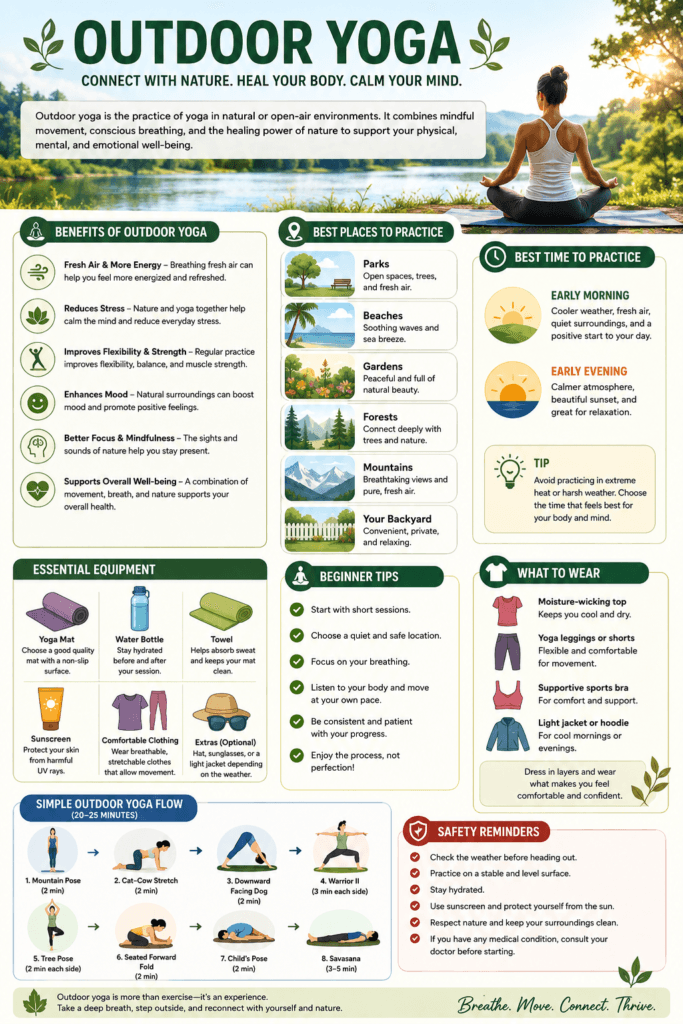
Sample 20-Minute Outdoor Yoga Routine.
If you’re new to outdoor yoga, try this simple sequence.
| نشاط | Time |
|---|---|
| Deep breathing | 2 minutes |
| وقفة جبلية | 2 minutes |
| Cat-Cow Stretch | 2 minutes |
| Downward-Facing Dog | 2 minutes |
| Warrior II | 4 minutes |
| وضع الشجرة | 3 minutes |
| Seated Forward Fold | 2 minutes |
| Child’s Pose | 2 minutes |
| سافاسانا | 1 minute |
Adjust the timing based on your comfort level and experience.
الأسئلة المتداولة.
1. What is outdoor yoga?
Outdoor yoga is the practice of yoga in open-air environments such as parks, beaches, gardens, forests, rooftops, or backyards instead of indoors.
2. Is outdoor yoga better than indoor yoga?
Neither is universally better. Outdoor yoga offers the added experience of practicing in nature, while indoor yoga provides a more controlled environment. The best choice depends on your preferences and circumstances.
3. What should I bring to outdoor yoga?
Bring a yoga mat, water bottle, towel, comfortable clothing, sunscreen if needed, and a light blanket for relaxation or meditation.
4. Can beginners do outdoor yoga?
Yes. Beginners can start with simple poses, choose a quiet location, and practice at their own pace.
5. What is the best time for outdoor yoga?
Early morning and early evening are often the most comfortable times because temperatures are cooler and sunlight is less intense.
6. Is outdoor yoga safe?
Outdoor yoga is generally safe when practiced on stable ground, in suitable weather conditions, and with proper hydration and sun protection.
7. Can outdoor yoga help reduce stress?
Many people find that combining yoga with time spent in nature promotes relaxation and helps them feel calmer. Individual experiences may vary.
8. How often should I practice outdoor yoga?
Practicing 2–5 times per week can help improve flexibility, balance, strength, and mindfulness while allowing adequate recovery between sessions.
9. What to wear for outdoor yoga?
Wear comfortable, breathable, and stretchable clothing such as a moisture-wicking top, yoga leggings or shorts, and a supportive sports bra. Practice barefoot for better grip, and bring a light jacket, hat, or sunglasses if needed based on the weather.
الأفكار النهائية.
Outdoor yoga offers a unique opportunity to combine the physical benefits of yoga with the calming influence of nature. Whether you choose to practice in a quiet park, on a sandy beach, in your backyard, or beside a peaceful lake, the natural environment can add a refreshing dimension to your routine.
From improving flexibility, balance, and posture to encouraging mindful breathing and reducing everyday stress, outdoor yoga supports both physical and mental well-being. It also provides a welcome break from screens and busy indoor environments, helping you reconnect with yourself and the world around you.
The key is to begin with simple poses, prioritize safety, and enjoy the experience rather than striving for perfection. Every outdoor session is different, and that’s part of its charm. With consistent practice and thoughtful preparation, outdoor yoga can become a rewarding part of a healthy, أسلوب حياة متوازن.
+3 مصادر
لدى VeryWelfit إرشادات صارمة بشأن المصادر وتعتمد على الدراسات التي راجعها الأقران ومعاهد البحوث التعليمية والمنظمات الطبية. نتجنب استخدام المراجع من الدرجة الثالثة. يمكنك معرفة المزيد حول كيفية ضمان دقة المحتوى الخاص بنا وتحديثه من خلال قراءة سياسة التحرير.
- The health benefits of yoga and exercise: a review of comparison studies; https://pubmed.ncbi.nlm.nih.gov/20105062/
- The Effects of Green Exercise on Physical and Mental Wellbeing: A Systematic Review; https://pmc.ncbi.nlm.nih.gov/articles/PMC6518264/
- Nature-based outdoor activities for mental and physical health: Systematic review and meta-analysis; https://pmc.ncbi.nlm.nih.gov/articles/PMC8498096/