










































 Dar certo

 Meditação





Os fatos rápidos
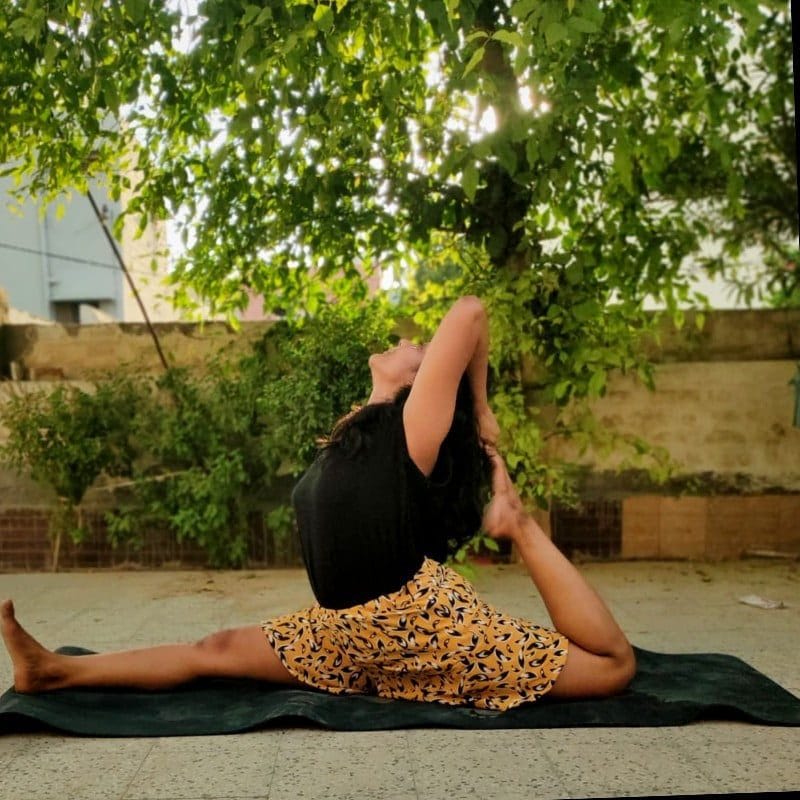
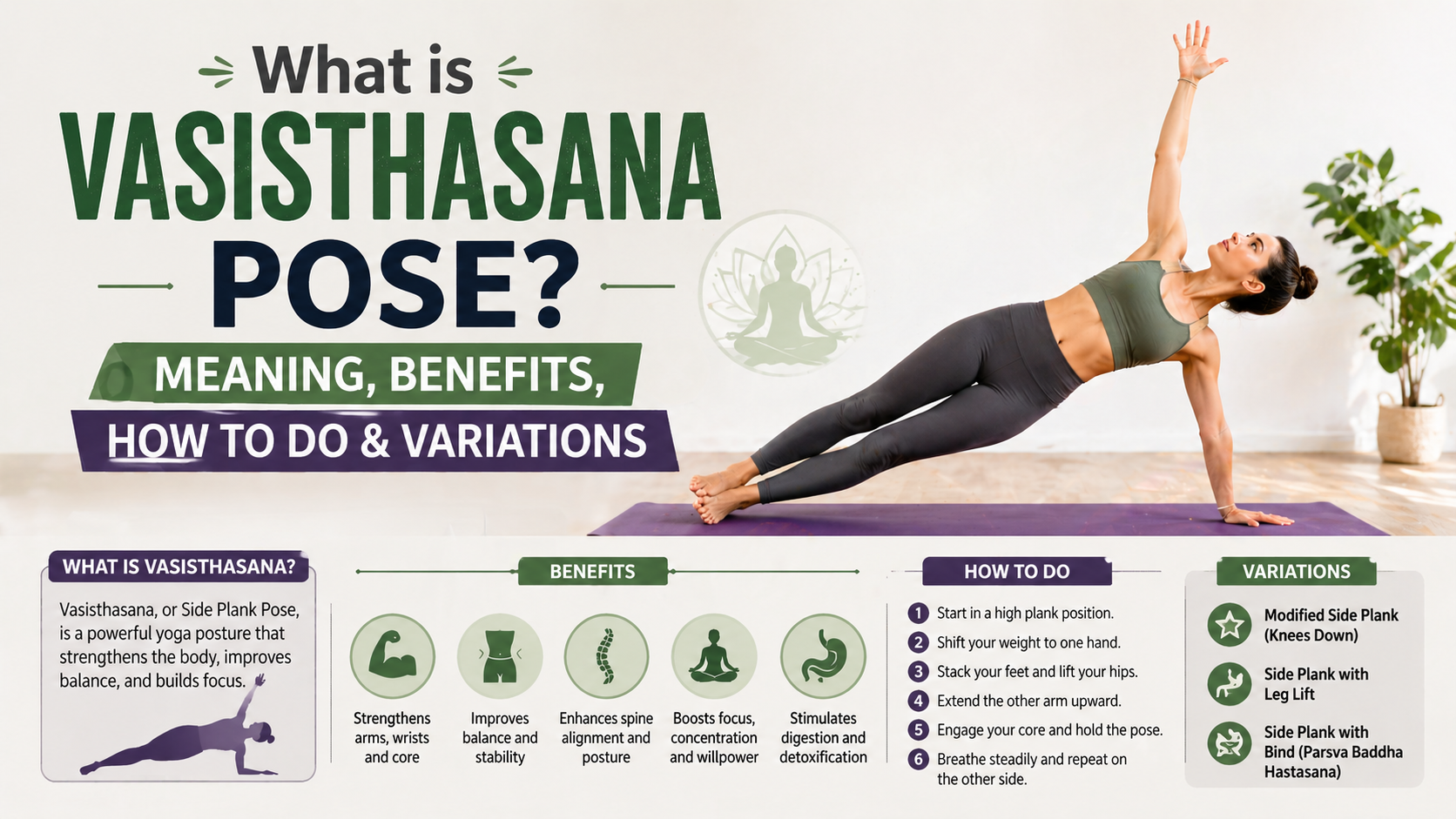
- Neste artigo, vamos aprofundar o significado e o significado de Vasisthasana, explorar seus inúmeros benefícios, aprender a executar adequadamente a pose e explorar variações que podem ser incorporadas para desafiar e aprofundar a prática.
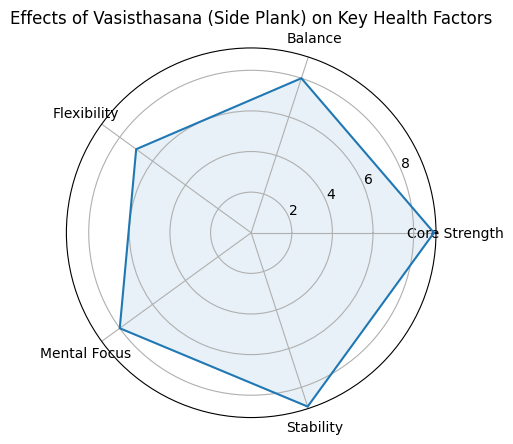
- O gráfico destaca os efeitos de Vasisthasana (postura lateral da prancha) nos principais fatores de saúde, mostrando benefícios mais fortes para a força e estabilidade do núcleo, com melhorias notáveis no equilíbrio, foco mental e flexibilidade (com base em estudos clínicos relacionados à tábua e ioga).
- Vasisthasana é frequentemente praticado como parte da sequência de saudação ao sol e é altamente considerado por sua capacidade de fortalecer o núcleo, melhorar o equilíbrio e promover o foco mental.

Vasisthasana, também conhecida como Side Plank Pose, é uma postura popular de ioga que oferece uma infinidade de benefícios para a mente, o corpo e o espírito. Derivado da palavra sânscrita “vasistha”, que se traduz em “mais excelente, melhor, mais rico”, esta pose tem o nome do grande sábio Vasistha, conhecido por sua sabedoria e iluminação espiritual.
Vasisthasana é frequentemente praticado como parte da sequência de saudação ao sol e é altamente considerado por sua capacidade de fortalecer o núcleo, melhorar o equilíbrio e promover o foco mental. Neste artigo, vamos nos aprofundar no significado e significado de Vasisthasana, Explore seus inúmeros benefícios, aprenda a executar adequadamente a pose e explore variações que podem ser incorporadas para desafiar e aprofundar a prática. Seja você um iogue experiente ou um iniciante, este O guia fornecerá informações valiosas em Vasisthasana e ajuda você a cultivar uma prática de ioga mais forte, equilibrada e consciente.
significado de Vasisthasana.
O termo “vasistha” refere-se ao sábio Vasistha, que era conhecido por sua sabedoria e discernimento espiritual. isto pose representa a força, equilíbrio e estabilidade que o sábio possuía, tanto física quanto espiritualmente. Ao praticar Vasisthasana, pode-se aproveitar sua força interior e encontrar equilíbrio e estabilidade em seu corpo, mente e espírito. Essa postura também simboliza a importância de manter um núcleo forte e uma base estável, dentro e fora do tapete. De modo geral, Vasisthasana incentiva os praticantes a adotar seus poder interior, construir resiliência e encontrar harmonia em suas vidas.
Histórias relacionadas
 Eka Pada Bakasana: Benefícios, Como Fazer e Variações
 Como comecei minha jornada em direção à paz interior por meio de Dharana, Dhyana e Samadhi
Quais são os benefícios do Vasisthasana?
vamos Explore a ampla gama de vantagens que praticar Vasisthasana pode trazer:
1. Força do núcleo.
Vasisthasana tem como alvo principalmente os músculos do núcleo, incluindo os abdominais, oblíquos e parte inferior das costas. Ao envolver esses músculos, ajuda a construir um núcleo forte e estável, promovendo uma melhor postura e força geral do corpo.(1)
2. Força do braço e ombro.
Essa postura desafia a força dos braços e ombros, pois eles suportam o peso do corpo. A prática regular de Vasisthasana ajuda a tonificar e fortalecer essas áreas, aumentando a força e a estabilidade da parte superior do corpo.
3. Equilíbrio e estabilidade.
Manter o equilíbrio em Vasisthasana requer foco, concentração e consciência corporal. regularmente Praticar essa pose aumenta Propriocepção e estabilidade, melhorando o equilíbrio geral dentro e fora do tapete.

4. Tonificando as pernas.
Embora o foco possa estar na parte superior do corpo, Vasisthasana também envolve os músculos das pernas. o pernas funcionam Para apoiar o corpo e manter o alinhamento durante a pose, resultando em músculos tonificados e fortalecidos.
5. Maior flexibilidade.
Vasisthasana alonga e abre os quadris, isquiotibiais e ombros. Por meio da prática regular, ajuda a melhorar a flexibilidade nessas áreas, reduzindo a rigidez muscular e aumentando a amplitude geral de movimento.
6. Digestão melhorada.
A compressão da área abdominal em Vasisthasana estimula os órgãos digestivos, auxiliando na digestão e melhorando a saúde intestinal. isto A pose pode ajudar a aliviar os problemas digestivos e promover uma saúde sistema digestivo.
7 Concentração e concentração mental.
Segurar Vasisthasana requer foco mental e concentração para manter o equilíbrio e a estabilidade. Ao treinar a mente para permanecer presente e focado, essa postura ajuda a cultivar a atenção plena e a aumentar a clareza mental.
8. Alívio do estresse.
como a maioria poses de ioga, Vasisthasana promove o alívio do estresse, incentivando a respiração profunda, o relaxamento e a liberação de tensão. A prática regular pode ajudar a acalmar a mente, aliviar a ansiedade e promover uma sensação geral de bem-estar.
9. Fluxo de energia melhorado.
Vasisthasana estimula os canais de energia do corpo, permitindo um fluxo suave de prana (força vital). Isso revitaliza o corpo, aumenta a vitalidade e promove uma sensação de rejuvenescimento.
10. Autoconfiança e empoderamento.
À medida que Vasisthasana desafia e fortalece o corpo, ele também promove um senso de autoconfiança e empoderamento. A capacidade de manter essa pose e testemunhar o progresso pessoal pode aumentar a auto-estima, criando uma mentalidade positiva dentro e fora do tatame.
| 💡 Dicas FitTofar.com Incorporando Vasisthasana em seu regular A prática de ioga pode trazer uma infinidade de benefícios, permitindo que você cultive a força, o equilíbrio, a flexibilidade e o bem-estar mental. Como com qualquer pose de ioga, é essencial praticar com o alinhamento adequado e ouvir seu corpo, honrando suas limitações e progredindo gradualmente em seu próprio ritmo. |
Como fazer Vasisthasana?
aqui está um guia passo a passo Para ajudá-lo a praticar Vasisthasana:
1. Comece por entrar em uma posição de prancha alta, com os ombros diretamente acima dos pulsos e do corpo em linha reta. Envolva os músculos do núcleo e mantenha as pernas estendidas atrás de você.
2 . Coloque o peso na mão direita e no pé direito e role na borda externa do pé direito. Empilhe o pé esquerdo em cima do pé direito, mantendo as pernas retas e ativas.
3. Ao se equilibrar com a mão e o pé direito, estenda o braço esquerdo em direção ao céu, alcançando as pontas dos dedos. Mantenha o olhar focado na mão esquerda.
4. Para aprofundar a pose, levante a perna esquerda paralelamente ao chão, envolvendo os músculos da coxa. Você também pode flexionar o pé esquerdo para maior estabilidade.
5. Envolva os músculos do núcleo, desenhando o umbigo em direção à coluna. Isso ajudará você a manter o equilíbrio e a estabilidade na postura.
6. Mantenha os ombros relaxados e afastados das orelhas. Mantenha uma respiração constante em toda a pose, inspirando e expirando profundamente.
7 Segure a postura por algumas respirações, aumentando gradualmente a duração à medida que aumenta a força e a estabilidade. Apontar para 30 segundos a 1 minuto de cada lado.
8. Para liberar a postura, abaixe lentamente a perna e o braço esquerdos para a posição inicial, voltando para uma prancha alta. Descanse na pose da criança ou no cão virado para baixo para contrabalançar a intensidade da pose.
9. Repita os passos do outro lado, deslocando o peso para a mão esquerda e para os pés e estendendo o braço direito em direção ao céu.
| 💡 Dicas Muito Bem Fit.com Lembre-se de ouvir seu corpo e modificar a pose conforme necessário. Se você tiver problemas no pulso ou no ombro, pode praticar Vasisthasana com o antebraço no tapete em vez da mão. Com a prática regular, Vasisthasana pode ajudar a melhorar seu equilíbrio, fortalecer seu núcleo e cultivar uma sensação de estabilidade interior. |
Variações de Vasisthasana.
Existem várias variações de Vasisthasana que podem ser praticadas para intensificar a pose ou Alvo áreas específicas do corpo. estes Variações permitem que os praticantes modifiquem a pose de acordo com seu nível de habilidade e necessidades individuais.
1. Vasisthasana modificada.
isto Variação é adequada para iniciantes ou aqueles com força limitada na parte superior do corpo. Em vez de estender totalmente a perna inferior, o joelho pode ser dobrado e colocado no chão para obter mais suporte. Essa modificação ajuda a aumentar a força dos braços, do núcleo e dos ombros, enquanto fornece o Benefícios da pose.
2 . Vasisthasana estendida da perna.
Para desafiar o equilíbrio e envolver ainda mais os músculos do núcleo, a perna superior pode ser estendida diretamente para o teto. Essa variação requer maior resistência e estabilidade no braço de suporte, bem como maior envolvimento dos glúteos e isquiotibiais.
3. Passe a agulha Vasisthasana.
isto A variação adiciona um toque à prancha tradicional lateral pose. A partir da posição padrão de Vasisthasana, o braço superior pode ser enfiado sob o corpo, chegando ao lado oposto. Essa variação ajuda a abrir o peito e os ombros, além de alongar os oblíquos e fortalecer o núcleo.
4. Vasisthasana com mergulhos no quadril.
Nesta variação, os quadris podem ser abaixados em direção ao solo e, em seguida, levantados de volta, criando um movimento de imersão. Esse movimento ajuda a direcionar os oblíquos e fortalecer o corpo lateral. Também desafia a estabilidade da pose e melhora o equilíbrio geral.
5. Vasisthasana com uma perna.
Levando a posição da prancha lateral para o próximo nível, essa variação envolve levantar a perna superior da perna inferior e estender a mesma para fora na frente do corpo. Essa variação avançada requer força, equilíbrio e estabilidade excepcionais do núcleo. Ele envolve os glúteos, quadríceps e flexores do quadril, enquanto Melhorando o foco e concentração.
| 💡 Dicas Muito Bem Fit.com Independentemente da variação escolhida, é importante manter o alinhamento adequado e envolver os músculos do núcleo em toda a pose. Praticar regularmente as variações de Vasisthasana pode ajudar a construir força, estabilidade e resiliência no corpo e na mente. |
Resumindo.
Vasisthasana, ou pose lateral da prancha, é um asana de ioga poderoso e desafiador que oferece inúmeros benefícios físicos e mentais. Ao envolver vários grupos musculares e aumentar a força do núcleo, essa postura ajuda a melhorar o equilíbrio, a estabilidade e a postura. Além disso, aumenta a flexibilidade e tonifica os braços, as pernas e as nádegas. Além das vantagens físicas, Vasisthasana cultiva o foco mental, a concentração e a autoconfiança. Por meio da prática regular e do alinhamento adequado, os indivíduos podem experimentar o processo transformador Efeitos desta pose Tanto no corpo quanto na mente.
+1 Origem
VerywelFit tem estrita de abastecimento de diretrizes e depende de estudos peer-reviewed, educacional, institutos de pesquisa e organizações médicas. Devemos evitar o uso terciário referências. Você pode aprender mais sobre como vamos garantir nosso conteúdo é preciso e atualizado através da leitura de nosso política editorial.
- Explorando os efeitos terapêuticos do yoga e sua capacidade de aumentar a qualidade de vida; https://pmc.ncbi.nlm.nih.gov/articles/PMC3193654/