











































 Workout

 Meditation






The Fast Facts
- Worn in the form of a face mask or a bath, it may.
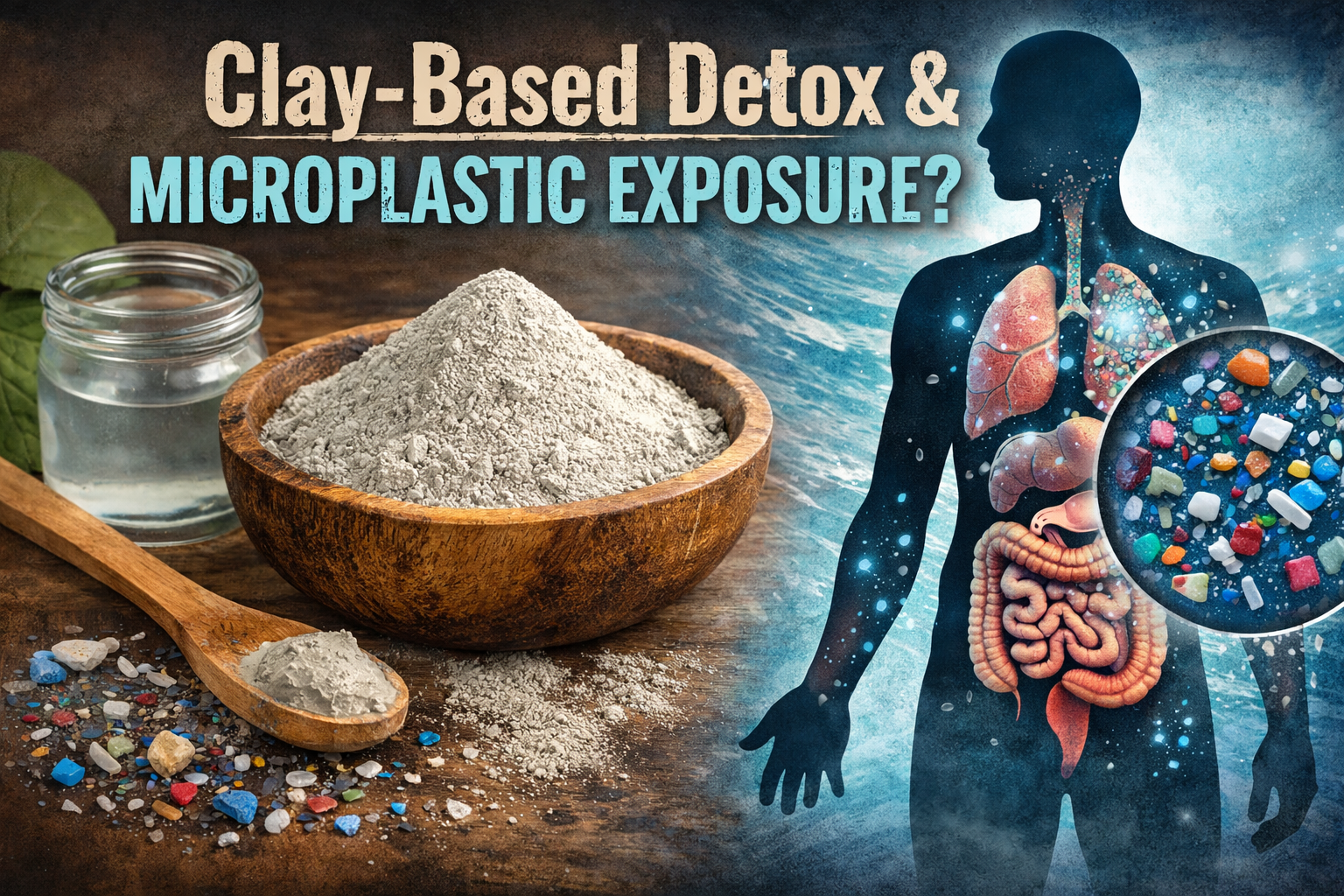
- These small plastic elements, which are present in water, food, air, and even human blood have provoked a surge of interest in the methods of detoxification.
- Probably one of the most discussed (and controversial ones) is a method known as clay-based detox with the help of bentonite clay.

The past few years have seen a surge in worries on exposure to microplastic. These small plastic elements, which are present in water, food, air, and even human blood have provoked a surge of interest in the methods of detoxification. Probably one of the most discussed (and controversial ones) is a method known as clay-based detox with the help of bentonite clay.
However, is it a valid health practice- or another wellness trend that is fear-based?
We can dissect it in an evidence-based manner.
Related Stories
 What is a Non-surgical Facelift With PDO Threads?
 Hair Gel vs Hair Spray: Which is Right for Your Hair?
What Is Bentonite Clay?
Bentonite clay is a natural absorbent clay, which is made of the volcanic ash. It has been centuries old and used in:(1)
- Traditional medicine.
- Skin treatments.
- Digestive remedies.
- Water purification.
The main characteristic of it is its negative ionic charge, which enables it to interact with positively charged substances such as toxins, heavy metals and impurities.
Why People Are Linking It to Microplastics?
Microplastics are:
- Extremely small (less than 5 mm).
- Chemically stable.
This is difficult to the body to get rid of.
Researchers and wellness practitioners theorize that such substances as bentonite clay may:

Through mutual adhesion, connects to foreign particles in the gut.
- Assist in getting them out of the body through stool.
- Reduce overall toxic burden
This concept is based on the fact that clay has been known to bind:
- Heavy metals
- Certain bacteria
- Organic toxins
The jump is, therefore: In case it holds toxins, it could hold microplastics as well.
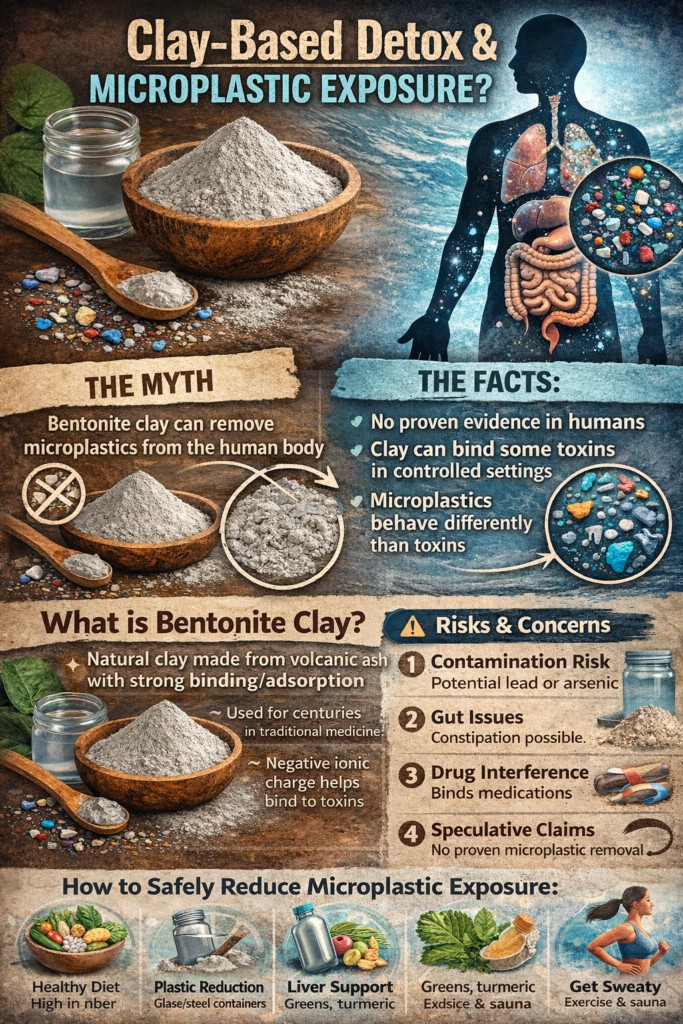
The Importance of Scientific Reality.
The following is where things must be straight:
No direct scientific research has been conducted to show that bentonite clay can remove microplastics in the human body.
What we do know:
There is evidence that bentonite clay can be used to absorb some toxins under laboratory conditions.
- It can enhance the intestinal health under some conditions.
- It finds application in water filtration systems to eliminate the impurities.
But:
Microplastics are not similar to dissolved toxins.
- The workings of human digestion are much more complicated than the laboratory.
So although the theory is fascinating, it has not been proven in human beings yet.
Possible (What It Can) Benefits.
Bentonite clay could have certain advantages even without the claim about microplastic:
1 Gut Cleaning and binding exercise.
It can bind:
- Certain toxins.
- Bacterial byproducts.
- Excess oils.
This may help reduce:
- Bloating.
- Gas.
- Digestive discomfort.
2 Skin Detox (External Use).
Worn in the form of a face mask or a bath, it may:
- Absorb impurities from skin.
- Reduce oiliness.
- Improve acne.
3 Limited Evidence Heavy metal binding.
It has been proposed that it may be useful in binding:(2)
- Lead.
- Cadmium.
However, this remains to be not a major medical treatment.
Risks & Concerns You Should NOT Ignore.
These are the areas in which most wellness blogs fail you.
1 Contamination Risk.
Certain products of bentonite clay have been determined to contain:
- Lead.
- Arsenic.
This may actually do more harm than good and this is the case when taken habitually.
2 Perforations in the Gut and Constipation.
Overuse may lead to:
- Constipation.
- Blockages.
- Decreased absorption of nutrients.
3 Drug Interference.
Clay can bind to:
- Medications.
- Supplements.
Weakening their efficiency.
4 None of the microplastic removal proven.
This is the biggest issue:
- The claim is speculative.
- No clinical validation yet.
Common Ways People Use Bentonite Clay.
When done responsibly (and through moderation), common methods are:
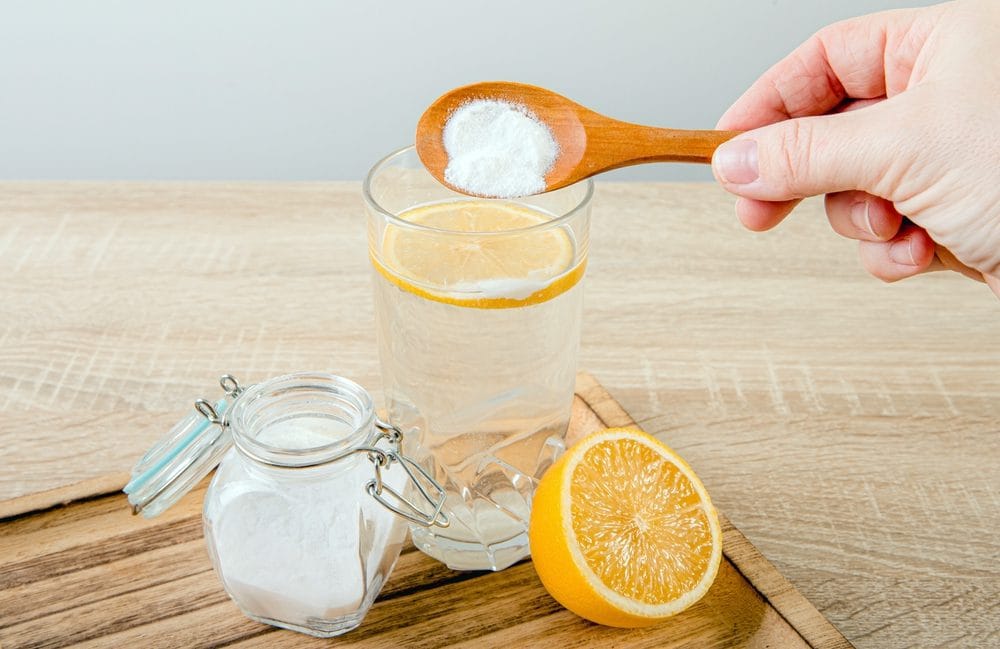
1 Clay Water (Internal Use).
- Small amounts mixed in water.
- Taken on an empty stomach.
Only with medical guidance.
2 Clay Baths.
- Added to bathwater.
- Absorbed through skin.
Less risk as compared to ingestion.
3 Face Masks.
Mixed with water or vinegar of apples.
- Applied to skin.
Unsafeest and least acceptable use.
Better, Evidence-Based Ways to Reduce Microplastic Exposure.
Rather than trying risky detox tips, pay attention to natural detox systems reduction and support:
1 Improve Your Diet.
- Belly-filling foods (oats, flax seeds, vegetables, etc.)
- Assists in reducing wastes effectively.
2 Hydration.
- Supports kidney filtration
3 Plastic Disaster Where possible.
- Containers Use glass or steel.
Prohibit heating food in plastic.
4 Support Liver Function.
Form of turmeric, green leafy vegetables.
- Reduce processed foods
5 Sweat Regularly.
- Exercise or sauna.
- Assists in getting rid of some toxins.
So, Should You Try Clay Detox?
Here’s the honest answer:
- To use on the skin? → Yes, usually safe and effective.
- To digest? → It may come in handy, but it is not necessary.
- On microplastics? → There is no identifiable good.
In case you want to lose fat, decrease bloating, and improve your health (as you have already said before), you should be concentrated on:
- Diet quality
- Consistent movement
- Gut health
—not quick detox fixes.
Final Takeaway.
The bentonite clay intersects in an interesting crossroad between the practice of ancient and the inquisitiveness of the modern. Although it is permissibly used (particularly in skin and limited amounts of detox), the notion it can **eliminate microplastics in your body is not a fact, but a hypothesis.
It is not in one product that the real detox can be found.
It’s built through:
- Daily habits
- Consistency
- Smarter lifestyle choices
+2 Sources
VerywelFit has strict sourcing guidelines and relies on peer-reviewed studies, educational research institutes, and medical organizations. We avoid using tertiary references. You can learn more about how we ensure our content is accurate and up-to-date by reading our editorial policy.
- Bentonite Clay as a Natural Remedy: A Brief Review; https://pmc.ncbi.nlm.nih.gov/articles/PMC5632318/
- Insights on applications of bentonite clays for the removal of dyes and heavy metals from wastewater: a review; https://pubmed.ncbi.nlm.nih.gov/36418828/