
















 Workout

 Meditation






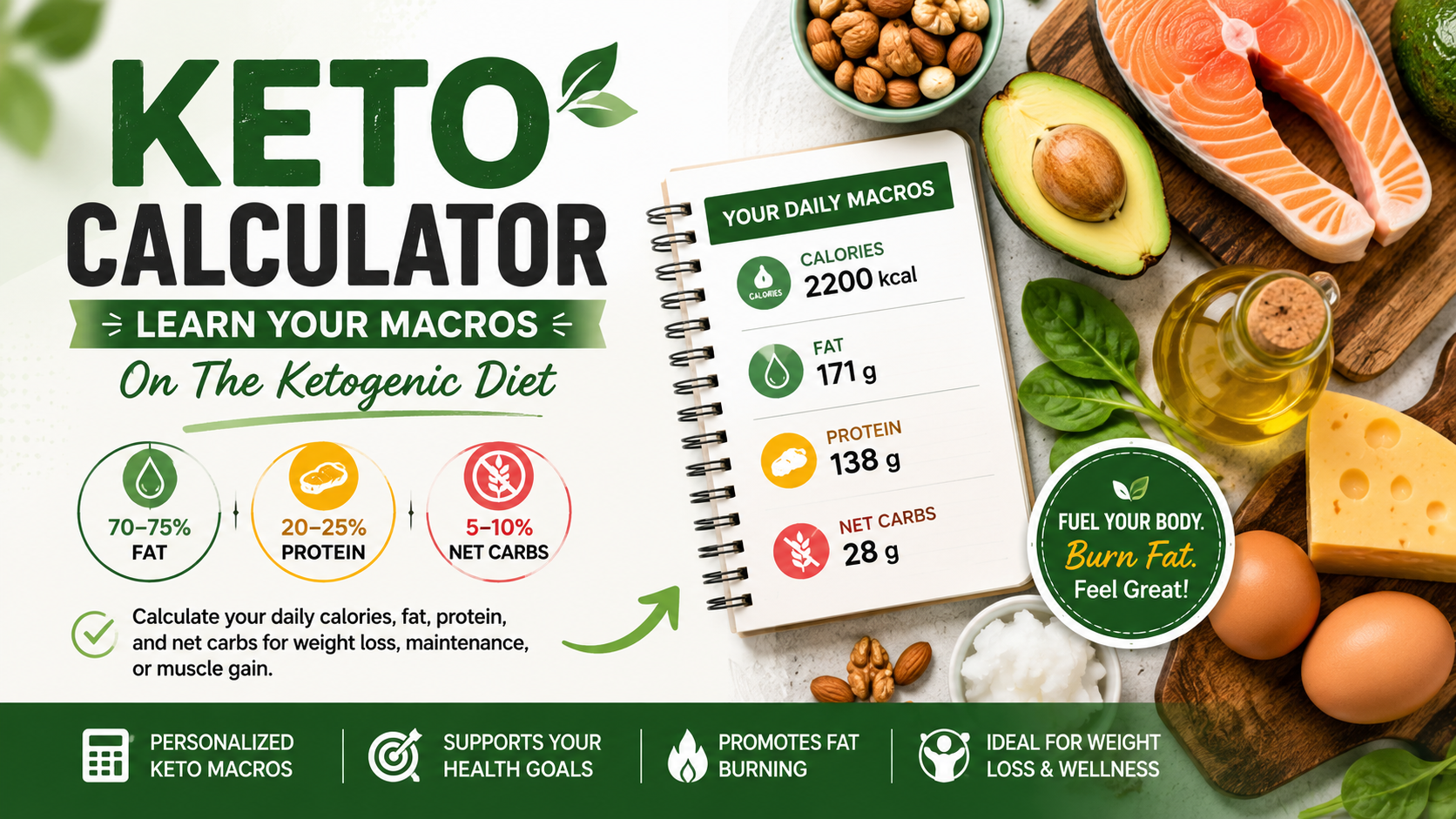
The ketogenic diet, also called the keto diet, is one of the most popular low-carbohydrate diets for weight loss, metabolic health and body composition. But, while eating less carbohydrate is a key part of being successful on keto, it’s just as important to balance out your daily “macros” intake of fat, protein, and carbohydrates.
Use our Keto Calculator to calculate your individual keto macros by age, gender, weight, height, activity and health objective. This calculator can help you get started on your keto journey, whether you’re looking to lose weight, maintain weight or build muscle.
What Is a Keto Calculator?
A keto calculator is a device which offers an estimate of:
- Daily calorie requirements.
- Fat intake.
- Protein intake.
- Net carbohydrate intake.
These calculations are used to develop a nutritional plan that can aid in achieving ketosis, a metabolic state where the body switches to using fat as its primary energy source, rather than carbohydrates.
Related Stories
 Free Biological Readiness & Recovery Scorecard: Check Your Daily Training Readiness
 Why Your Cholesterol Test May Show False High or False Low Levels?
What Is the Ketogenic Diet?
Ketogenic diet is a diet that is high in fat, moderate in protein and very low in carbohydrates.
If carbohydrate intake is drastically low, the body starts to make use of stored fat to produce ketones, which the brain and body can use as fuel.
A typical ketogenic diet consists of:
- 70–75% of calories from fat.
- Food should contain 20-25% protein.
- The dietary guidelines suggest a carbohydrate intake between 5 and 10% of your calories.
The purpose is to keep the person in a state of nutritional ketosis, without giving too much energy or nutrients.

How Does the Keto Calculator Work?
The calculator is based on the Mifflin-St Jeor equation that estimates your Basal Metabolic Rate (BMR) that is the number of calories that your body burns at rest.
The calculator then calculates your calorie needs based on:
- Activity level.
- Weight loss goals.
- Maintenance goals.
- Muscle gain goals.
Last, it breaks down calories into macronutrient combinations that are keto-friendly with your recommended daily intake of:
- Fat (grams).
- Protein (grams).
- Net carbohydrates (grams).
🥑 Keto Calculator
Learn your personalized keto macros for fat loss, maintenance, or muscle gain. Calculate your daily calories, fat, protein, and carbohydrate targets based on your body measurements and activity level.
🔥 Daily Calories
🥑 Fat
🍗 Protein
🥦 Net Carbs
📊 Your Personalized Keto Summary
How to Use the Keto Calculator?
Calculating is easy and quick (less than a minute).
They will let you choose your gender.They will allow you to pick your sex.
Step 1: Select Your Gender.
This will make the calorie calculations easier since the calories needs vary by sex.
Step 2: Enter Your Age.
Enter your current age in years.
Metabolism and calorie needs vary with age.
Step 3: Enter Your Weight.
Enter the weight of your body in Kg.
Weight details is essential for better macro calculations.
Step 4: Enter Your Height.
Enter your height in centimeters.
Height is used to estimate your daily energy expenditure.
Step 5: Select Your Activity Level.
Decide which type of service suits your lifestyle:
- Sedentary.
- Lightly Active.
- Moderately Active.
- Very Active.
- Extremely Active.
How active you are influences your calorie requirements.
Step 6: Choose Your Goal.
Choose one of the options below:
Weight Loss.
Cuts calories to aid fat burn.
Maintenance.
Offers calories to help you keep your current weight.
Muscle Gain.
Increases calories to promote muscle growth and repair.
Step 7: Click “Calculate Keto Macros”.
The calculator will automatically compute:
- Daily calorie target.
- Daily fat target.
- Daily protein target.
Daily net carbs goal.
Understanding Your Results.
Daily Calories.
This is an approximation of how much energy you burn per day, depending on your activities and goals.
Fat Intake.
On a keto diet, fat is the main source of energy, and most of the calories consumed will come from fat.
Examples include:
- Avocados.
- Olive oil.
- Coconut oil.
- Butter.
- Nuts and seeds.
Protein Intake.
Protein supports:
- Muscle maintenance.
- Recovery.
- Immune function.
- Hormone production.
The following are good protein sources:
- Eggs.
- Chicken.
- Fish.
- Turkey.
- Paneer.
- Greek yogurt.
Net Carbohydrates
Net carbs are defined as:
Net Carbs = Total Carbs – Fiber.
Low net carbs could help keep you in Ketosis.
Here are some common low carb foods you can eat:
- Leafy greens.
- Broccoli.
- Cauliflower.
- Zucchini.
- Bell peppers.
Potential Benefits of the Keto Diet.
There are some indications that the keto diet could provide a number of advantages to certain people.
Weight Management.
A lower carb diet can help keep appetite suppressed and can aid in fat loss.(1),(2)
Blood Sugar Control.
Some people may benefit from low-carbohydrate diets because they are more effective for controlling glycemia.
Improved Satiety.
A high-fat meal might help to make you feel full and decrease your appetite.
Metabolic Health.
A few studies indicate that keto diets may actually offer a benefit on some indicators of metabolic health.
Common Keto Mistakes.
Eating Too Much Protein.
Some people may find high protein intake hinders ketosis.
Hidden Carbohydrates.
The amount of sugars and starches found in many packaged foods is a surprise.
Ignoring Electrolytes.
Low carbohydrate diets can lead to loss of sodium, potassium and magnesium.
Not Tracking Macros.
Knowing what to eat and how much to eat can help you stay on track with your keto goals.
Frequently Asked Questions.
1. What are keto macros?
Keto macros are the portion of fat, protein, and carbs that are consumed in a single day when following a ketogenic diet.
2. How many carbs can I eat on keto?
Most ketogenic diets limit net carbohydrates to approximately 20–50 grams per day.
3. Is keto safe?
While it is safe for many healthy adults to follow a keto diet, those with medical issues should check with their medical care provider before beginning.
4. Is keto a weight loss plan?
There are some studies that indicate that a ketogenic diet may aid in weight loss due to the appetite suppressant and increased fat usage.
5. Can you count calories on Keto?
Tracking calories and macros can be helpful for some people to ensure consistency and accuracy in losing weight, although some people do not need to keep an eye on these.
Final Thoughts.
When followed properly, the ketogenic diet can be a successful weight loss and metabolic health diet. It is crucial to grasp your calorie and macronutrient needs before you can make headway towards your objectives.
We have a Keto Calculator that will give you individual estimates of calories, fat, protein and carbs so you can create a ketogenic diet that aligns with your lifestyle and goals.
You will need to use the calculator frequently as you change your weight, activities, and goals to make sure your keto macro is on track with what you need.
+2 Sources
Verywelfit has strict sourcing guidelines and relies on peer-reviewed studies, educational research institutes, and medical organizations. We avoid using tertiary references. You can learn more about how we ensure our content is accurate and up-to-date by reading our editorial policy.
- Ketogenic Diet Benefits to Weight Loss, Glycemic Control, and Lipid Profiles in Overweight Patients with Type 2 Diabetes Mellitus: A Meta-Analysis of Randomized Controlled Trails; https://pmc.ncbi.nlm.nih.gov/articles/PMC9408028/
- Effects of ketogenic diet on health outcomes: an umbrella review of meta-analyses of randomized clinical trials; https://pmc.ncbi.nlm.nih.gov/articles/PMC10210275/