













 Dar certo

 Meditação





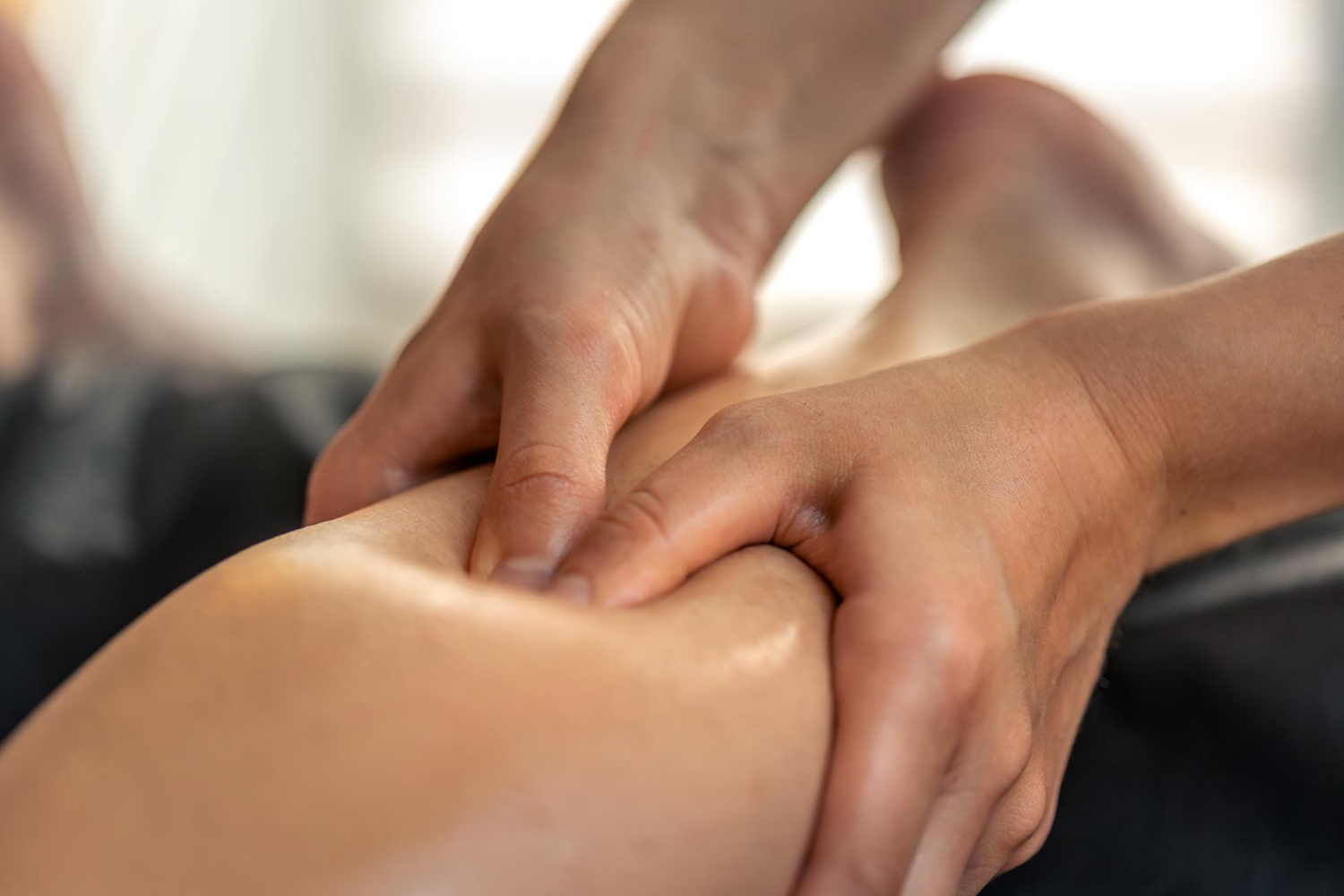
A massagem Shiatsu é uma forma japonesa de carroçaria terapêutica que usa a pressão do dedo, polegar, palma e, às vezes, do cotovelo ao longo de áreas específicas do corpo. A palavra Shiatsu se traduz aproximadamente como “pressão de dedos”.”
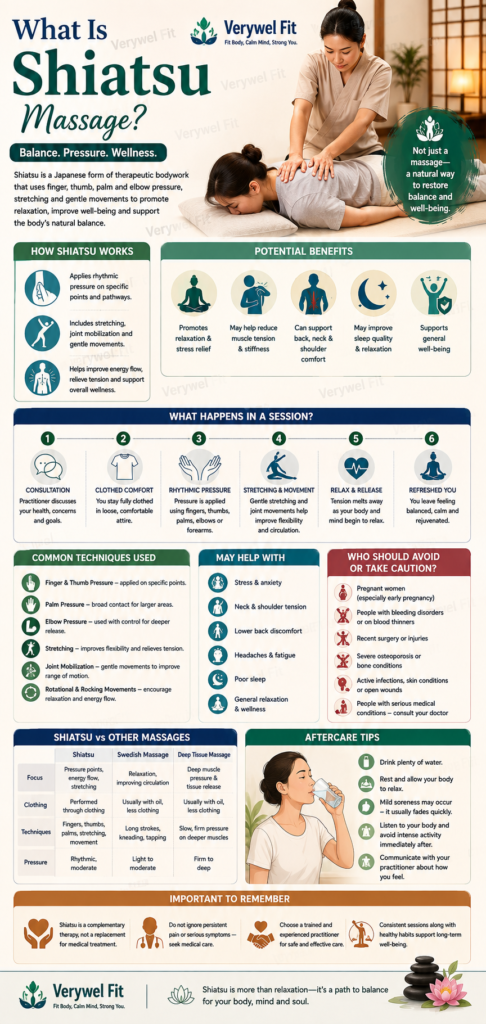
Ao contrário de muitas técnicas de massagem ocidentais que dependem principalmente de músculos de amassamento e massagem, o Shiatsu tradicionalmente usa pressão rítmica, alongamento, movimento articular e manipulação suave do corpo. Os praticantes podem aplicar pressão a pontos ou caminhos específicos enquanto o destinatário permanece totalmente vestido.
Shiatsu é frequentemente descrito como uma terapia complementar destinada a promover o relaxamento e apoiar o bem-estar geral. Às vezes, também é usado por pessoas que experimentam tensão muscular, estresse, fadiga ou certos tipos de dor.
No entanto, é importante distinguir as explicações tradicionais das evidências científicas modernas. Shiatsu se desenvolveu dentro das tradições terapêuticas japonesas e tem ligações conceituais com a medicina do Leste Asiático, enquanto a pesquisa contemporânea investigou se seus efeitos físicos se traduzem em melhorias mensuráveis nos sintomas.
Histórias relacionadas
 Shakti Mudra: benefícios, efeitos colaterais, como fazer e precauções
 Noose Pose de Yoga para Iniciantes: Benefícios, Como Fazer e Variações
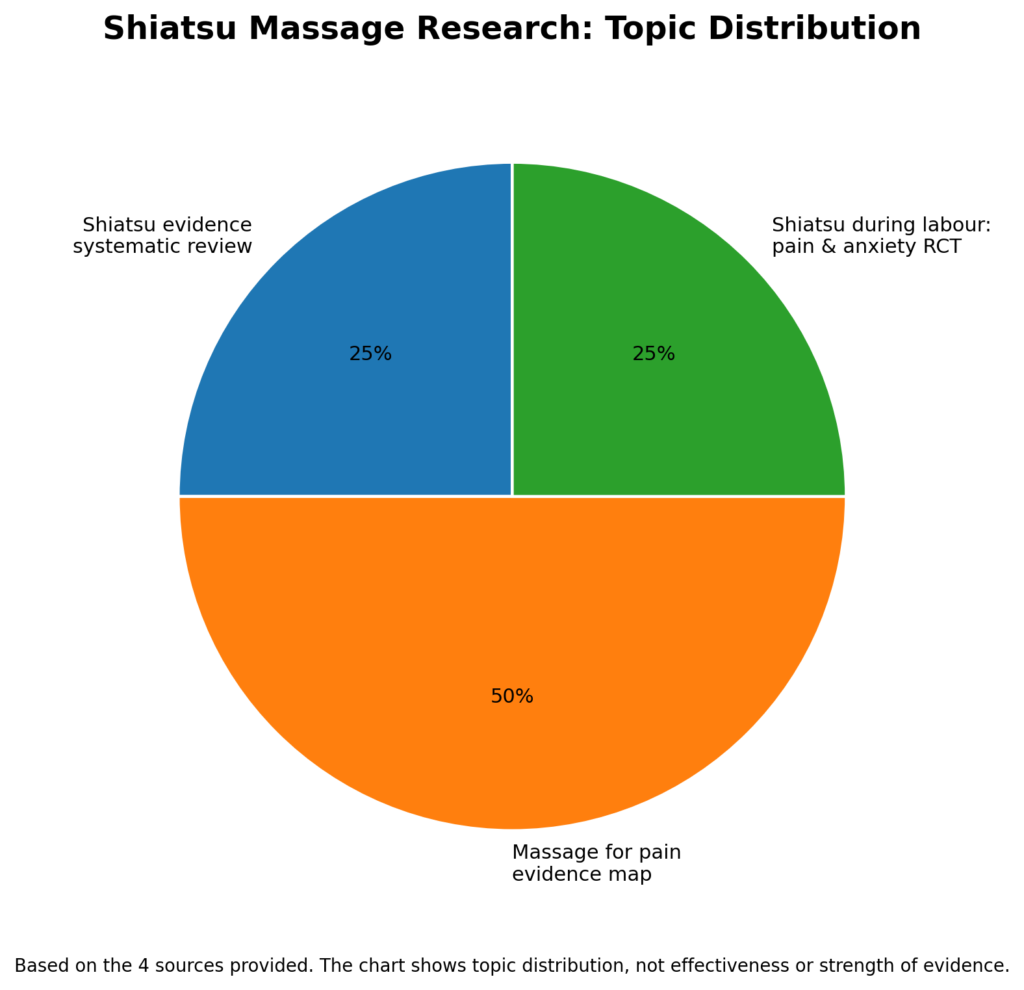
Uma revisão sistemática examinando o shiatsu e a acupressão descobriu que as evidências que apoiam especificamente o shiatsu eram limitadas, com relativamente poucos ensaios clínicos de alta qualidade disponíveis. Os pesquisadores concluíram que pesquisas mais rigorosas eram necessárias antes que conclusões firmes pudessem ser feitas sobre a eficácia do Shiatsu.(1)
Portanto, o shiatsu é melhor entendido como uma abordagem complementar, em vez de um substituto para o diagnóstico médico ou o tratamento baseado em evidências.
Como funciona a massagem Shiatsu?
Durante uma sessão típica de shiatsu, o praticante usa pressão controlada em diferentes partes do corpo. A pressão pode ser aplicada com:
- dentado
- dedos
- palma
- antebraços
- Cotovelos, dependendo da técnica
- ocasionalmente joelhos ou outros partes do corpo Em certas abordagens
O praticante também pode incorporar:

- Alongamento suave
- mobilização conjunta
- movimentos rotacionais
- bamboleio
- pressão rítmica
- Movimentos de amplitude de movimento assistidos
Uma sessão geralmente ocorre em um confortável tapete ou mesa de massagem. Ao contrário da massagem à base de óleo, o receptor geralmente permanece vestido.
A pressão é tipicamente rítmica e não contínua. O praticante ajusta a intensidade de acordo com o conforto, a condição física, a idade e os objetivos do tratamento da pessoa.
De uma perspectiva fisiológica moderna, a pressão e o movimento podem estimular os receptores sensoriais na pele, músculos e tecidos conjuntivos. O toque e a terapia manual também podem influenciar a percepção da dor e contribuir para o relaxamento.
No entanto, algumas explicações tradicionais de Shiatsu envolvem conceitos como Ki, ou energia vital e caminhos conhecidos como meridianos. Esses conceitos tradicionais não devem ser apresentados como estruturas fisiológicas cientificamente estabelecidas.
As evidências em torno do próprio Shiatsu permanecem relativamente limitadas. Uma revisão sistemática identificou apenas nove estudos de Shiatsu entre a literatura avaliada e concluiu que a quantidade e a qualidade das evidências eram insuficientes para conclusões clínicas firmes.
O que acontece durante uma sessão de massagem Shiatsu?
Uma consulta Shiatsu geralmente começa com uma breve conversa entre o profissional e o cliente.
O praticante pode perguntar sobre:
- Desconforto atual
- Lesões anteriores
- condições médicas
- medicamentos
- nível de atividade
- tensão
- dormir
- áreas de tensão
- Expectativas de tratamento
Esta avaliação inicial é importante porque a massagem não é adequada para todas as condições.
O cliente normalmente permanece vestido com roupas confortáveis. Calças soltas, camiseta ou roupas semelhantes geralmente facilitam o movimento.
O praticante então posiciona o cliente e começa a aplicar a pressão.
Ao contrário de uma massagem típica sueca, você não deve necessariamente esperar traços longos e fluidos usando óleo de massagem. Shiatsu comumente enfatiza a pressão, o alongamento, o movimento e o contato rítmico.
Uma sessão pode envolver o praticante trabalhando nas costas, ombros, braços, pernas, quadris, pescoço, mãos ou pés.
A pressão geralmente deve parecer proposital, mas tolerável.
A dor não é o objetivo.
Se a pressão se tornar aguda, excessivamente dolorosa, causar dormência ou se sentir inadequado, comunique-se imediatamente com o praticante.
Quais são os benefícios potenciais da massagem Shiatsu?
As pessoas buscam o shiatsu por muitas razões diferentes, embora a quantidade de evidências científicas que suportem cada uso varie.
1. Relaxamento e gerenciamento do estresse.
Uma das razões mais comuns pelas quais as pessoas recebem Shiatsu é o relaxamento.
A pressão lenta e rítmica e o contato físico focado podem criar uma experiência calmante. A massagem de forma mais geral tem sido associada ao relaxamento e melhorias em certos sintomas, embora a qualidade da pesquisa varie entre as condições e as técnicas.(2)
Shiatsu pode, portanto, ser útil como parte de uma rotina de relaxamento mais ampla.
No entanto, não deve ser promovido como um tratamento comprovado para transtornos de ansiedade, depressão ou outros problemas mentais condições de saúde.
Se alguém está passando por uma ansiedade persistente, depressão, ataques de pânico ou sofrimento psicológico significativo, os cuidados profissionais de saúde mental não devem ser substituídos por massagem.
2. Tensão muscular.
Muitas pessoas usam o shiatsu quando seus músculos se sentem tensos após uma sessão prolongada, atividades repetitivas, exercícios ou estresse diário.
A pressão manual pode mudar temporariamente a forma como uma pessoa percebe a tensão e o desconforto muscular.
Uma sessão de shiatsu pode ser particularmente atraente para pessoas que preferem um estilo de massagem que combina pressão com alongamento e movimento.
No entanto, a tensão muscular recorrente pode ter uma causa subjacente, como ergonomia ruim, recuperação inadequada, fraqueza, carga excessiva de treinamento ou uma condição musculoesquelética subjacente.
A massagem pode resolver sintomas sem necessariamente corrigir a causa subjacente.
3. Controle da dor.
A massagem terapêutica foi estudada por várias condições de dor, incluindo costas, pescoço, ombros e outros problemas músculo-esqueléticos.
O NCCIH relata que a massagem pode ajudar em certas condições de dor, embora as evidências sejam frequentemente limitadas e os benefícios possam ser de curto prazo.
Um amplo mapa de evidências de massagem para dor identificou 31 revisões sistemáticas. Embora algumas revisões de alta qualidade tenham sugerido benefícios potenciais para várias condições de dor, nenhuma das descobertas foi classificada como tendo evidências de força moderada ou alta.(3)
Isso é particularmente importante ao discutir o shiatsu porque a pesquisa sobre massagem terapêutica em geral não pode ser interpretada automaticamente como uma prova de que o próprio Shiatsu funciona igualmente bem.
4. Desconforto no pescoço e no ombro.
Shiatsu pode ser atraente para pessoas que sentem tensão nos ombros e na parte superior das costas.
O uso prolongado do computador, o trabalho repetitivo, o estresse e a configuração ruim da estação de trabalho podem contribuir para o desconforto do pescoço e do ombro.
A massagem pode proporcionar alívio dos sintomas de curto prazo, mas a dor cervical persistente ou intensa deve ser avaliada medicamente.
Sintomas como fraqueza, dormência, dor de cabeça intensa, perda de coordenação, dor relacionada ao trauma ou dor irradiando para o braço garantem uma avaliação profissional em vez de autotratamento com massagem.
5. Desconforto na parte inferior das costas.
A massagem terapêutica foi investigada para dores lombares, com algumas evidências sugerindo melhoras de curto prazo.
O NCCIH observa que as avaliações de massagem para dor lombar Benefícios potenciais, embora a força das evidências não seja alta e a pesquisa não tenha estabelecido um estilo de massagem tão claramente superior a outros.
Shiatsu pode, portanto, ser considerado uma opção complementar para algumas pessoas com desconforto muscular sem complicações.
Não deve ser usado para retardar a avaliação de inexplicáveis ou persistentes dor nas costas.
6. Sono e relaxamento.
Algumas pessoas relatam sentir-se relaxadas ou sonolentas após a massagem.
Shiatsu pode apoiar uma rotina relaxante na hora de dormir, especialmente quando o estresse ou a tensão muscular dificultam o relaxamento.
No entanto, as evidências que estabelecem especificamente o shiatsu como um tratamento eficaz para a insônia são limitadas.
Problemas persistentes do sono devem ser avaliados quanto a causas como apneia do sono, efeitos de medicação, ansiedade, depressão, dor crônica, síndrome das pernas inquietas ou maus hábitos de sono.
7 . bem-estar geral.
Shiatsu é frequentemente usado como prática de bem-estar e não exclusivamente para tratar um problema médico específico.
Uma pessoa pode procurar uma sessão simplesmente porque gosta de toques terapêuticos, alongamento, tempo de silêncio e relaxamento.
Este é um uso razoável de massagem, desde que as expectativas permaneçam realistas.
Massagem Shiatsu e medicina tradicional japonesa.
Shiatsu surgiu no Japão e se desenvolveu a partir de tradições envolvendo terapia manual e tratamento com pressão.
A teoria tradicional do shiatsu geralmente discute o ki e os caminhos pelos quais se acredita que a energia flua.
Os praticantes podem avaliar o corpo de acordo com os conceitos tradicionais, em vez de confiar exclusivamente nos modelos anatômicos ocidentais.
É importante respeitar o contexto histórico e cultural do Shiatsu, ao mesmo tempo que distingue a teoria tradicional da evidência biomédica moderna.
A pesquisa moderna pode avaliar resultados como dor, ansiedade, função física e qualidade de vida. Não pode validar automaticamente todas as explicações tradicionais de por que uma terapia funciona.
Massagem Shiatsu vs Massagem Sueca.
Shiatsu e massagem sueca podem envolver toque terapêutico, mas suas técnicas diferem.
Shiatsu geralmente enfatiza:
- Pressão do dedo e do polegar
- compressão rítmica
- alongamento
- movimento articular
- Trabalhando com roupas
- Princípios terapêu
A massagem sueca geralmente enfatiza:
- Longas cursos de deslizamento
- amassamento
- atrito
- movimentos rítmicos
- Massagem óleo ou loção
- Manipulação direta de tecidos moles
Nenhuma das abordagens é universalmente melhor.
A melhor escolha depende da preferência pessoal, dos objetivos do tratamento, das condições físicas e do treinamento do terapeuta.
Massagem Shiatsu vs Massagem profunda.
A massagem profunda é geralmente projetada para aplicar pressão sustentada a camadas mais profundas de músculo e tecido conjuntivo.
Shiatsu não tem necessariamente como objetivo Trabalhe profundamente nos músculos tecido.
Em vez disso, geralmente usa pressão, alongamento e movimento repetidos.
A pressão profunda não é inerentemente mais terapêutica.
Na verdade, a pressão excessiva pode causar dor ou lesões, principalmente em pessoas vulneráveis por causa da idade, medicamentos, condições médicas ou lesões recentes.
O NCCIH observa que, embora a massagem geralmente pareça ter poucos riscos quando realizada adequadamente, eventos adversos graves raros, como coágulos sanguíneos, lesões nervosas e fraturas ósseas, foram relatados, principalmente com massagem vigorosa ou em indivíduos de alto risco.
Massagem Shiatsu vs Acústica.
Shiatsu e acupressão estão intimamente relacionados, pois ambos podem envolver a pressão em pontos específicos.
No entanto, eles não são necessariamente intercambiáveis.
Shiatsu é um sistema de carroçaria japonês mais amplo que envolve pressão, movimento, alongamento e manipulação.
A acupressão geralmente se refere mais especificamente à aplicação de pressão em pontos relacionados à acupuntura.
Uma revisão sistemática encontrou substancialmente mais pesquisas sobre acupressão do que Shiatsu e concluiu que a base de evidências para Shiatsu era relativamente limitada.
A massagem Shiatsu é comprovada cientificamente?
A resposta mais precisa não é conclusiva.
Há pesquisas científicas sobre o shiatsu, mas a base de evidências é relativamente pequena.
A revisão sistemática avaliando especificamente o shiatsu e a acupressão identificou nove estudos de shiatsu e concluiu que a quantidade e a qualidade das evidências para shiatsu eram insuficientes para estabelecer conclusões firmes.
Isso não significa que o shiatsu seja ineficaz.
Isso significa que os pesquisadores ainda não têm evidências clínicas consistentes e de alta qualidade suficientes para fazer afirmações fortes sobre sua eficácia para doenças ou condições específicas.
Esta é uma distinção importante.
A pessoa pode experimentar Relaxamento significativo ou alívio temporário dos sintomas, mesmo quando a pesquisa clínica não estabeleceu um tratamento como uma terapia médica definitiva.
Shiatsu ajuda na ansiedade?
Massagem e toque terapêutico podem promover o relaxamento, e pesquisas sobre massagem terapêutica exploraram os resultados relacionados à ansiedade.
No entanto, as evidências específicas para o shiatsu são muito mais limitadas.
Portanto, o shiatsu pode ser usado como uma prática complementar de relaxamento, mas não deve ser comercializado como substituto do tratamento psicológico ou de medicamentos quando estes são clinicamente indicados.
Se a ansiedade for persistente, interferir na vida diária, causar ataques de pânico ou afetar o sono e os relacionamentos, consulte um profissional de saúde ou de saúde mental qualificado.
O shiatsu ajuda na dor do parto?
Shiatsu também foi investigado no parto.
Um estudo randomizado recente, envolvendo 80 mulheres grávidas pela primeira vez, relatou menor dor de parto e ansiedade nos participantes que receberam Shiatsu em comparação com o grupo controle.(4)
No entanto, um único estudo não pode estabelecer que o shiatsu seja universalmente eficaz ou apropriado durante o parto.
A gravidez requer segurança adicional Considerações e massagens durante a gravidez devem ser fornecidas por alguém treinado adequadamente para trabalhar com clientes grávidas.
Indivíduos grávidas devem discutir terapias complementares com seu médico.
A massagem Shiatsu é segura?
Para muitos adultos saudáveis, a massagem realizada adequadamente por um profissional treinado tem um risco relativamente baixo de dano.
No entanto, a segurança depende de:
- A saúde do indivíduo
- A técnica utilizada
- intensidade de pressão
- Treinamento de praticante
- localização anatômica
- Lesões existentes
- medicamentos
- estado de gravidez
O NCCIH aconselha as pessoas com condições médicas e grávidas a discutirem massagem com profissionais de saúde, porque certas técnicas podem precisar ser evitadas ou modificadas.
Quem deve evitar ou modificar o shiatsu?
Aconselhamento profissional é particularmente importante se você tiver:
- um distúrbio hemorrágico
- Uma história de coágulos de sangue
- Osteoporose grave
- Cirurgia recente
- uma lesão aguda
- Problemas significativos nos nervos
- Doença cardiovascular grave
- Infecção de pele ativa
- Feridas abertas
- inflamação grave
- Câncer que requer planejamento de tratamento individualizado
- gravidez
- dor intensa inexplicável
Isso não significa necessariamente que a massagem seja permanentemente proibida.
Isso significa que o tratamento pode precisar ser modificado ou adiado.
Shiatsu e medicação para desbaste de sangue.
As pessoas que tomam anticoagulante ou antiplaquetário podem se machucar ou sangrar mais facilmente.
A pressão forte pode, portanto, ser inadequada em algumas circunstâncias.
Qualquer pessoa que tome medicação para enfraquecer o sangue deve discutir a massagem com seu médico e informar o praticante de Shiatsu antes do tratamento.
O terapeuta pode então determinar se a sessão precisa ser modificada.
O que você deve esperar depois do Shiatsu?
Após uma sessão, algumas pessoas sentem:
- relaxado
- calma
- sonolento
- solto
- menos tenso
Outros podem sentir dor leve temporária, principalmente após uma pressão ou alongamento mais forte.
Você não deve considerar dor intensa, hematomas significativos, dormência, fraqueza ou sintomas neurológicos uma resposta terapêutica normal.
Se ocorrerem sintomas, pare o tratamento e procure aconselhamento médico adequado.
Com que frequência você deve fazer a massagem Shiatsu?
Não existe uma frequência universalmente estabelecida que se aplique a todos.
O horário adequado depende do propósito do tratamento.
Alguém que busca relaxamento ocasional pode ter shiatsu com pouca frequência, enquanto alguém que usa massagem ao lado da reabilitação pode seguir um Plano recomendado por um profissional qualificado.
O tratamento mais frequente não é necessariamente melhor.
Se você estiver retornando repetidamente para Tratamento porque os sintomas Volte rapidamente, considere se o problema subjacente precisa de avaliação médica, fisioterapia, modificação de exercícios, alterações ergonômicas ou outra intervenção.
Como escolher um praticante de shiatsu?
Escolher um profissional qualificado é um dos aspectos mais importantes de ter uma experiência segura.
Antes de marcar uma consulta, pergunte sobre:
- adestramento
- Educação específica para Shiatsu
- Certificação profissional ou registro, quando aplicável
- Experiência com sua condição
- práticas de higiene
- contra-indicações
- Abordagem do tratamento
- Número esperado de sessões
- honorários
- Se eles coordenam com os profissionais de saúde quando apropriado
A NCCIH recomenda perguntar sobre o treinamento do praticante, experiência, credenciais, número de tratamentos que podem ser necessários, custo e cobertura de seguro.
Seja cauteloso com os praticantes que prometem curar doenças graves, garantir resultados específicos ou dizer para você interromper a medicação prescrita.
Essas são bandeiras vermelhas significativas.
Você pode fazer massagem shiatsu em casa?
Algumas técnicas simples baseadas em pressão podem ser realizadas com segurança em casa, particularmente uma auto-massagem suave de áreas acessíveis, como mãos ou pés.
No entanto, o auto-shiatsu deve permanecer suave.
Evite pressionar com força:
- A frente do pescoço
- articulações lesadas
- áreas inflamadas
- Feridas abertas
- varizes
- Áreas com sensação reduzida
Não tente técnicas complexas simplesmente seguindo um vídeo online se você tiver uma condição médica ou lesão.
Para o tratamento terapêutico, a avaliação profissional é preferível.
Como é o Shiatsu?
Shiatsu pode parecer diferente da massagem convencional.
Você pode notar:
- pressão firme
- compressão rítmica
- alongamento
- balanço suave
- movimento articular
- ternura local
- relaxamento
A sensação deve permanecer dentro de um alcance tolerável.
Um equívoco comum é que a pressão dolorosa significa que o tratamento está funcionando melhor.
Isso não é necessariamente verdade.
Uma boa comunicação entre o terapeuta e o cliente é essencial.
A massagem Shiatsu pode substituir o tratamento médico?
não .
Shiatsu é melhor considerado uma terapia complementar.
Se você tiver dor inexplicável, sintomas persistentes, uma lesão, sintomas neurológicos, febre, perda de peso, dor no peito, dor de cabeça intensa ou outro sintoma potencialmente grave, procure cuidados médicos adequados.
O NCCIH aconselha especificamente as pessoas a não usarem terapia de massagem para adiar o consultar um médico sobre um problema médico.
Shiatsu pode potencialmente complementar o tratamento convencional, a reabilitação, o exercício ou as estratégias de controle do estresse, mas não deve substituí-las quando for necessário medicamente.
Perguntas frequentes.
1. O que é massagem Shiatsu?
Shiatsu é uma forma japonesa de carroceria que usa dedo, polegar, palma da mão e outras formas de pressão controlada, frequentemente combinadas com alongamento e movimentos suaves.
2 . Shiatsu é o mesmo que uma massagem regular?
não Shiatsu normalmente enfatiza a pressão rítmica, o alongamento e o movimento e geralmente é realizado enquanto o destinatário permanece vestido.
3. Shiatsu é doloroso?
Não deve ser excessivamente doloroso. Algumas pressões podem parecer intensas ou levemente desconfortáveis, mas a dor aguda ou intensa deve ser relatada imediatamente.
4. Shiatsu libera toxinas?
Não há evidências científicas fortes de que o shiatsu “desintoxica” o corpo. As alegações sobre a remoção de toxinas devem ser tratadas com cautela.
5. Shiatsu pode ajudar na dor nas costas?
A massagem terapêutica pode fornecer alívio de curto prazo para algumas pessoas com dor lombar, mas as evidências específicas para o shiatsu são limitadas.
6. Shiatsu pode reduzir o estresse?
Shiatsu pode promover o relaxamento, mas evidências fortes comprovam especificamente que o Shiatsu trata distúrbios relacionados ao estresse.
7 As mulheres grávidas podem ter shiatsu?
A gravidez requer precauções adicionais. Consulte o seu provedor de cuidados obstétricos ou maternidade e escolha um praticante treinado em massagem na gravidez.
8. Quanto tempo dura uma sessão de shiatsu?
A duração da sessão varia de acordo com o praticante e o ambiente de tratamento. Muitas consultas duram aproximadamente 30 a 90 minutos.
9. Você tem que tirar suas roupas?
Normalmente, o Shiatsu geralmente é realizado com roupas confortáveis.
10. Shiatsu é seguro para idosos?
Os idosos podem receber massagem, mas a pressão e o posicionamento podem precisar de modificação. Pessoas com osteoporose, condições cardiovasculares, medicamentos que afetam sangramento ou outros problemas médicos devem primeiro obter conselhos adequados.
Final descolagem.
A Massagem Shiatsu é uma forma japonesa de carroçaria terapêutica que combina pressão de dedo e polegar com alongamento, movimento e manipulação rítmica. É comumente usado para relaxamento, tensão muscular, bem-estar geral e gerenciamento de sintomas complementares.
A massagem terapêutica em geral tem alguma evidência de curto prazo Alívio de certos tipos de dor, mas as evidências científicas que apoiam especificamente o shiatsu permanecem relativamente limitadas. Uma revisão sistemática descobriu que a quantidade e a qualidade da pesquisa de Shiatsu eram insuficientes para tirar conclusões firmes sobre sua eficácia clínica.
Isso não significa que o shiatsu não tem valor. Para muitas pessoas, a combinação de toque terapêutico, pressão, alongamento e relaxamento pode ser uma parte útil de um plano mais amplo de bem-estar ou de gerenciamento de sintomas.
A abordagem mais informada é ver o shiatsu como uma terapia complementar e não como uma cura. Escolha um profissional devidamente treinado, comunique-se sobre pressão e desconforto, descubra condições médicas e medicamentos relevantes e busque uma avaliação médica quando os sintomas forem persistentes, graves ou inexplicáveis.
+4 Fontes
A Verywelfit possui diretrizes rigorosas para a seleção de suas fontes e se baseia em estudos revisados por pares, institutos de pesquisa educacional e organizações médicas. Evitamos o uso de referências terciárias. Você pode saber mais sobre como garantimos a precisão e a atualização do nosso conteúdo lendo nossa Política de Privacidade. política editorial.
- A evidência para Shiatsu: uma revisão sistemática de Shiatsu e Acupressão; https://pubmed.ncbi.nlm.nih.gov/21982157/
- Massagem Terapêutica: o que você precisa saber; https://www.nccih.nih.gov/health/massage-therapy-what-you-need-to-know
- Massagem para a dor: um mapa de evidências [ Internet]; https://pubmed.ncbi.nlm.nih.gov/28211657/
- O impacto da massagem Shiatsu na dor e ansiedade do parto: um estudo controlado randomizado; https://pubmed.ncbi.nlm.nih.gov/39411571/