
















 Dar certo

 Meditação






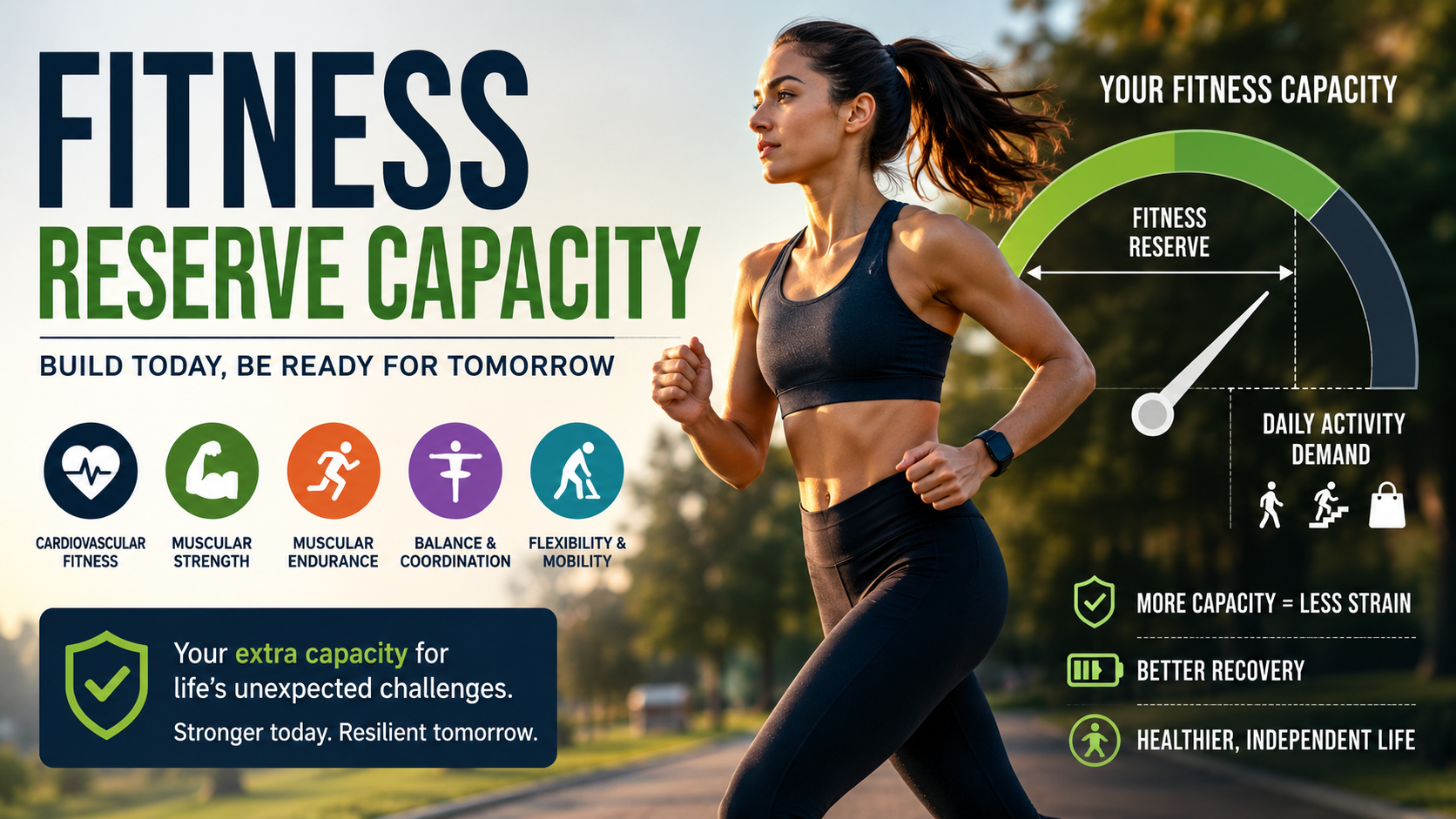
Quando a maioria das pessoas pensa em condicionamento físico, elas se concentram em objetivos visíveis, como perder peso, construir músculos ou melhorar a resistência. No entanto, um conceito frequentemente esquecido, conhecido como capacidade de reserva de fitness (FRC), pode fornecer uma imagem mais significativa de sua saúde e resiliência física a longo prazo.
A capacidade da reserva de fitness refere-se à diferença entre sua capacidade física máxima e a quantidade de condicionamento físico necessário para realizar suas atividades diárias normais. Em termos simples, representa a capacidade física “extra” sobre a qual seu corpo pode recorrer quando a vida se torna mais exigente.
Seja subir vários lances de escada, carregar mantimentos pesados, recuperar-se de uma doença, brincar com crianças ou responder a uma emergência, uma reserva de condicionamento físico maior permite que seu corpo realize essas tarefas com menos esforço e maior segurança.
Pesquisas recentes em fisiologia do exercício e envelhecimento saudável Sugere que a manutenção de uma alta reserva de condicionamento físico esteja associada a uma independência funcional aprimorada, risco reduzido de incapacidade, melhora da qualidade de vida e do envelhecimento mais saudável. Embora o termo em si ainda esteja surgindo nas discussões sobre saúde pública, seus princípios subjacentes são Bem apoiado por décadas de evidências sobre aptidão cardiorrespiratória, força muscular, equilíbrio e função física.
Histórias relacionadas
 Como mantive meu peso durante a menopausa naturalmente
 Melva Porter: vida privada, hábitos de vida, rotina de exercícios e plano de dieta equilibrada
O que é a capacidade da reserva de fitness?
Capacidade de reserva de fitness (FRC) é a diferença entre sua capacidade física máxima e as demandas físicas da vida cotidiana.
Imagine duas pessoas que precisam subir três lances de escada.
- A pessoa A atinge o topo respirando pesadamente e precisa de vários minutos para se recuperar.
- A pessoa B chega ao topo confortavelmente e continua andando sem dificuldade.
Embora ambos tenham completado a mesma tarefa, a pessoa B tem uma reserva de condicionamento físico maior porque as atividades diárias exigem apenas uma pequena porcentagem de sua capacidade física máxima.
Uma reserva mais alta significa que seu corpo tem força, resistência, flexibilidade, equilíbrio e capacidade cardiovascular adicionais disponíveis quando necessário.

Por que a capacidade da reserva de fitness é importante?
Seu corpo se adapta constantemente ao estresse físico. Atividades diárias, trabalho, exercícios, doenças e envelhecimento exigem diferentes demandas de músculos, coração, pulmões e sistema nervoso.
Quando sua capacidade de reserva é alta:
- As atividades diárias são mais fáceis.
- A fadiga se desenvolve mais lentamente.
- A recuperação é mais rápida.
- A independência física é melhor mantida.
- Lesões podem ser menos prováveis durante o movimento de rotina.
- O corpo está mais bem preparado para desafios inesperados.
Por outro lado, indivíduos com baixa capacidade de reserva Frequentemente, a Fadiga durante as tarefas comuns porque essas tarefas consomem uma grande proporção de seus recursos físicos disponíveis.
Componentes da capacidade de reserva de fitness.
A capacidade de reserva de condicionamento físico não é determinada apenas por uma medição. Em vez disso, reflete a interação de vários componentes de condicionamento físico.
1. Aptidão cardiorrespiratória.
A aptidão cardiorrespiratória reflete a eficiência com que o coração, pulmões e músculos trabalham juntos para fornecer oxigênio durante a atividade física.(1),(2),(3)
Indivíduos com maior aptidão aeróbica geralmente têm uma reserva maior porque as atividades de rotina exigem menos esforço cardiovascular.
Caminhada, ciclismo, natação, corrida e exercícios aeróbicos contribuem para melhorar esse componente.
2. Força muscular.
Força determina sua capacidade de gerar força.
Tarefas diárias simples, como levantar bagagem, carregar mantimentos, ficar em pé de uma cadeira ou empurrar objetos pesados se tornam mais fáceis quando a força muscular está bem desenvolvida.
O treinamento de força também ajuda a preservar Massa muscular à medida que as pessoas envelhece.
3. Resistência muscular.
A resistência refere-se à capacidade dos músculos de realizarem contrações repetidas ao longo do tempo sem fadiga excessiva.
Exemplos incluem:
- Caminhando longas distâncias.
- Subindo escadas.
- Jardinagem.
- trabalho doméstico.
- Esportes recreativos.
Maior resistência significa que essas atividades exigem menos esforço.
4. Equilíbrio e coordenação.
Bom equilíbrio Reduz o risco de queda enquanto melhora Eficiência do movimento.
Isso se torna particularmente importante em adultos mais velhos porque o equilíbrio diminui naturalmente com a idade.
Atividades como ioga, tai chi e exercícios de equilíbrio de perna única ajudam a manter a capacidade de reserva.
5. Flexibilidade e mobilidade
As articulações saudáveis se movem eficientemente em toda a amplitude de movimento.
A má mobilidade aumenta a dificuldade do movimento e coloca maior estresse nos músculos e nas articulações.
Os exercícios regulares de alongamento e mobilidade apoiam o movimento funcional ao longo da vida.
Capacidade de reserva de fitness e envelhecimento saudável.
Uma das aplicações mais importantes da A capacidade da reserva de fitness é saudável envelhecimento.
Começando por volta da quarta década de vida, os adultos gradualmente perder músculo Massa, capacidade aeróbica e força se permanecerem inativas.
Este declínio natural reduz a capacidade de reserva.
Quando a capacidade de reserva se torna muito pequena, as atividades diárias que antes pareciam fáceis podem se tornar fisicamente exigentes.
Exemplos incluem:
- Levantar-se do chão.
- Carregando sacolas de compras.
- Caminhando para cima.
- Subindo escadas.
- Brincando com os netos.
Manter um estilo de vida ativo ajuda a preservar a independência funcional e pode atrasar o declínio físico relacionado à idade.
Fatores que influenciam a capacidade da reserva de condicionamento físico.
Vários fatores determinam a capacidade de reserva de um indivíduo.
Atividade física.
O exercício regular continua sendo o fator modificável mais forte.
Indivíduos que realizam consistentemente aeróbica, força, flexibilidade e treinamento de equilíbrio geralmente mantêm uma capacidade de reserva mais alta.(4),(5)
idade.
A capacidade de reserva diminui naturalmente com a idade.
No entanto, a pesquisa mostra consistentemente que os idosos fisicamente ativos geralmente retêm uma capacidade funcional significativamente maior do que os sedentários da mesma idade.
Nutrição.
adequado A ingestão de proteínas suporta músculos Manutenção e recuperação.
dietas equilibradas Rico em frutas, vegetais, grãos integrais, gorduras saudáveis, vitaminas e minerais contribuem para o desempenho físico geral.
Dormir.
O sono de qualidade suporta a recuperação, a regulação hormonal, o reparo muscular e o desempenho atlético.
A privação crônica do sono pode prejudicar a capacidade física ao longo do tempo.
Condições crônicas de saúde.
Condições como obesidade, doenças cardiovasculares, artrite, diabetes e doenças pulmonares crônicas podem Reduza a capacidade de reserva, limitando o desempenho físico.
O manejo médico adequado combinado com atividade física regular geralmente ajuda a melhorar a capacidade funcional.
Como melhorar a capacidade da reserva de condicionamento físico?
Melhorar a capacidade de reserva não requer desempenho atlético de elite.
Melhorias consistentes e consistentes em vários domínios de fitness podem produzir Benefícios significativo.
Faça exercícios aeróbicos regulares.
Apontar para pelo menos 150 minutos de atividade aeróbica de intensidade moderada a cada semana, ou 75 minutos de atividade vigorosa, combinado com exercícios de fortalecimento muscular em dois ou mais dias por semana, de acordo com as diretrizes de atividade física amplamente aceitas.
Exemplos incluem:
- Caminhada rápida.
- ciclismo.
- Nadar.
- Dança.
- Remo.
Treine de força consistentemente.
treinamento de resistência Melhora a força muscular, a saúde óssea e o movimento funcional.
Incluir exercícios direcionados:
- pernas
- verso
- peito
- ombros
- medula
- braços
Progredir gradualmente, mantendo a técnica adequada.
Melhore o equilíbrio.
Os exercícios de equilíbrio tornam-se cada vez mais valiosos com a idade.
As opções simples incluem:
- de pé em uma perna.
- Caminhada de calcanhar aos pés.
- Tai Chi.
- Yoga.
- Brocas de equilíbrio funcional.
Priorize a recuperação.
O exercício estimula a adaptação, mas a recuperação permite que essas adaptações ocorram.
Apoie a recuperação por meio de:
- sono suficiente.
- Hidratação.
- Nutrição equilibrada.
- dias de descanso.
- Gerenciamento do estresse.
Mantenha-se fisicamente ativo durante todo o dia.
Os treinos estruturados são importantes, mas o movimento diário também contribui para a capacidade de reserva.
Aumente a atividade de não exercícios:
- Caminhando durante os intervalos.
- Subindo escadas.
- Jardinagem.
- tarefas domésticas.
- Brincando com as crianças.
- ficar com mais frequência.
Como você pode estimar sua reserva de fitness?
Embora nenhum teste meça diretamente a capacidade de reserva de condicionamento físico, os profissionais de saúde e os especialistas em exercícios geralmente o avaliam usando múltiplas avaliações.
Estes podem incluir:
- Teste de aptidão cardiorrespiratória (como VO₂ Max ou testes de exercício submáximo).
- Força de aperto.
- Testes de sentar para ficar.
- Velocidade de caminhada.
- Teste cronometrado para cima e para ir (tug).
- Avaliações do equilíbrio.
- Testes de flexibilidade.
- Avaliações de movimentos funcionais.
Juntas, essas avaliações ajudam a identificar se sua capacidade física excede substancialmente as demandas da vida cotidiana.
Mitos comuns sobre a capacidade da reserva de fitness.
Mito 1: Apenas atletas precisam de capacidade de reserva.
Realidade: todos os benefícios de ter capacidade física adicional, especialmente à medida que envelhecem ou se recuperam de uma doença.
Mito 2: a perda de peso melhora automaticamente a capacidade de reserva.
Realidade: Enquanto mantém um peso saudável Pode ajudar, melhorias na aptidão aeróbica, força, mobilidade e equilíbrio são igualmente importantes.
Mito 3: os idosos não podem melhorar a capacidade de reserva.
Realidade: Pesquisas mostram consistentemente que o exercício adequadamente prescrito pode Melhore a força, resistência, equilíbrio e capacidade funcional até a idade adulta.
Mito 4: as atividades diárias fornecem exercícios suficientes.
Realidade: Embora permanecer ativo seja benéfico, o exercício aeróbico e resistido estruturado geralmente oferece maiores melhorias na capacidade física do que rotina diária movimento sozinho.
Limitações do conceito.
A capacidade da reserva de fitness é uma estrutura útil, mas não deve ser vista como uma medida médica independente.
A pesquisa atual usa vários termos, incluindo reserva fisiológica, Reserva funcional, e capacidade funcional— Para descrever conceitos semelhantes. Métodos padronizados para medir diretamente a capacidade de reserva de condicionamento físico ainda estão evoluindo.
A capacidade de reserva individual é influenciada pela genética, estado de saúde, estilo de vida, medicamentos e fatores ambientais. Portanto, as avaliações de condicionamento físico devem sempre ser interpretadas no contexto de uma saúde geral da pessoa.
Perguntas frequentes.
1. A capacidade de reserva de fitness é igual a VO₂ MAX?
não VO₂ Max Mede a capacidade aeróbica máxima, enquanto a capacidade de reserva de condicionamento físico reflete a diferença mais ampla entre sua capacidade física máxima e as demandas da vida diária.
2. Os iniciantes podem melhorar sua capacidade de reserva?
Sim. A maioria dos iniciantes experimenta melhorias significativas por meio de exercícios aeróbicos consistentes, treinamento de resistência, trabalho de flexibilidade e exercícios de equilíbrio.
3. O treinamento de força aumenta a capacidade de reserva?
Sim. Músculos mais fortes fazem com que as atividades cotidianas exijam menos esforço relativo, aumentando a reserva funcional.
4. Por que a capacidade de reserva é importante após os 40 anos?
Como a massa muscular, a aptidão aeróbica e a função física declinam naturalmente com a idade, manter uma reserva maior ajuda a preservar a independência e a resiliência.
5. A capacidade de reserva de condicionamento físico pode prever a longevidade?
Embora não seja um preditor direto, níveis mais altos de aptidão cardiorrespiratória, força muscular e função física – componentes-chave da capacidade de reserva – têm sido associados a menores riscos de doenças crônicas e mortalidade prematura em muitos estudos.
Resumindo.
A capacidade da reserva de fitness muda o foco do exercício para longe da aparência, sozinho e para uma resiliência física a longo prazo. Ao manter uma reserva de força, resistência, equilíbrio e aptidão cardiovascular além do que a vida cotidiana exige, os indivíduos estão mais bem preparados para lidar com desafios físicos inesperados, se recuperarem da doença e permanecerem independentes à medida que envelhecem.
Melhorar a capacidade de reserva de condicionamento físico não requer treinos extremos ou capacidade atlética de elite. Exercícios aeróbicos consistentes, treinamento de força regular, nutrição saudável, sono de qualidade e estilo de vida ativo podem construir coletivamente uma reserva maior que apóia a saúde ao longo da vida e o bem-estar funcional. Em vez de perguntar apenas: “Estou em forma o suficiente para hoje?” A capacidade da reserva de fitness incentiva uma pergunta mais valiosa: “Estou construindo capacidade suficiente para os próximos anos?”
+5 fontes
A Verywelfit possui diretrizes rigorosas para a seleção de suas fontes e se baseia em estudos revisados por pares, institutos de pesquisa educacional e organizações médicas. Evitamos o uso de referências terciárias. Você pode saber mais sobre como garantimos a precisão e a atualização do nosso conteúdo lendo nossa Política de Privacidade. política editorial.
- Envelhecimento e atividade: seus efeitos nas capacidades de reserva funcional do coração e dos músculos lisos e vasculares esqueléticos; https://pubmed.ncbi.nlm.nih.gov/16338704/
- capacidade de reserva cardiovascular em humanos mais velhos saudáveis; https://pubmed.ncbi.nlm.nih.gov/7880870/
- Reserva cardíaca fisiológica: desenvolvimento de um método não invasivo e primeiras estimativas no homem; https://pubmed.ncbi.nlm.nih.gov/9602665/
- O papel do exercício no envelhecimento cardíaco: da fisiologia aos mecanismos moleculares; https://pmc.ncbi.nlm.nih.gov/articles/PMC4914047/
- Efeitos do exercício e do envelhecimento no músculo esquelético; https://pmc.ncbi.nlm.nih.gov/articles/PMC5830901/