














 latihan

 meditasi






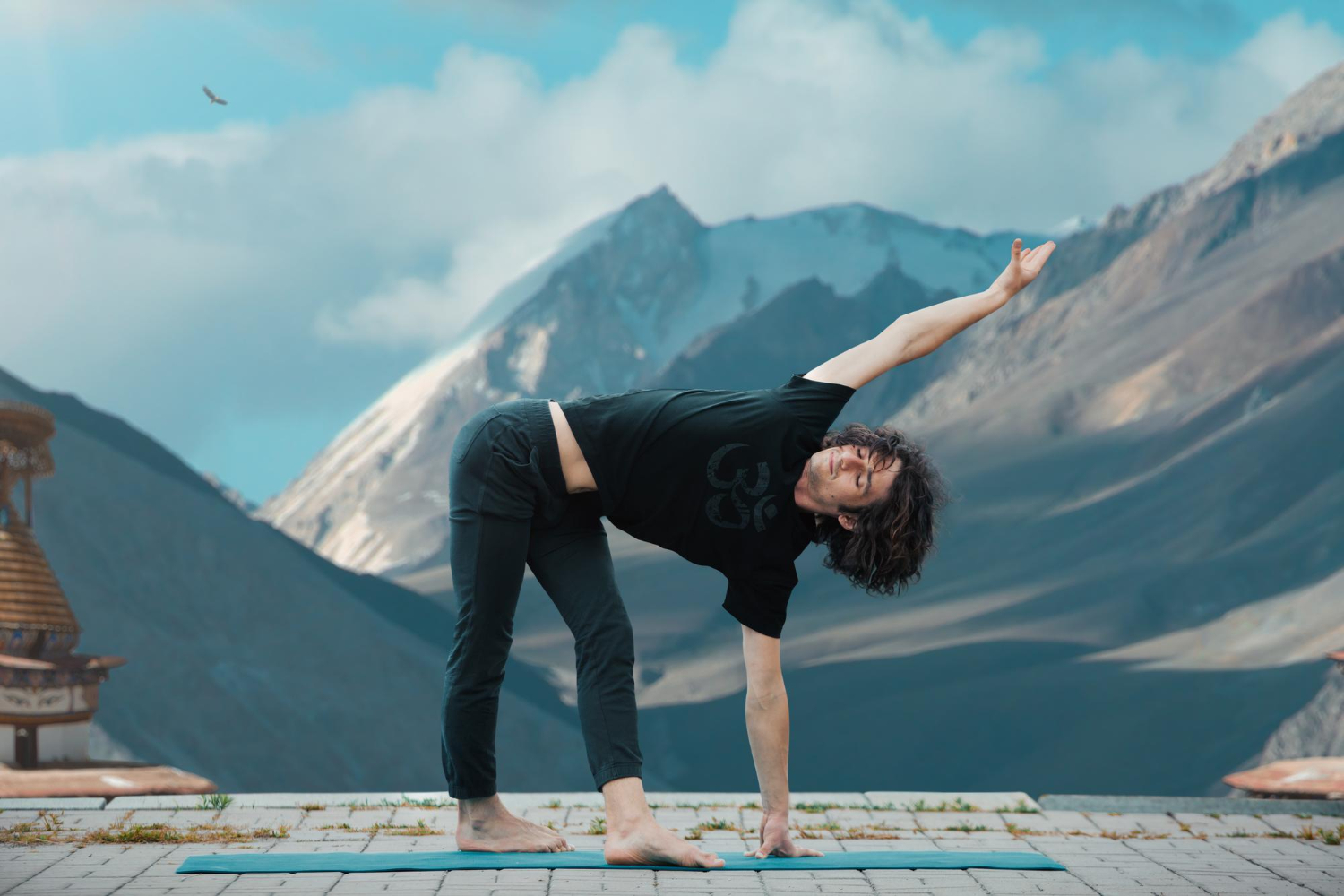
Pose Half Moon yang digulung, umumnya dikenal dengan nama Sansekerta Parivrtta Ardha Chandrasana, adalah postur yoga berdiri tingkat lanjut yang menggabungkan keseimbangan, stabilitas pinggul, rotasi tulang belakang, kekuatan kaki dan konsentrasi.
Pose adalah variasi dari pose setengah bulan. Alih-alih menjaga tubuh menghadap ke samping, praktisi memutar tubuh bagian atas ke arah kaki yang berdiri sambil mengulurkan lengan yang berlawanan ke arah langit-langit.
Karena postur menggabungkan beberapa tuntutan sekaligus, itu bisa menjadi tantangan bahkan bagi orang yang secara teratur berlatih yoga.
Half Moon yang berputar bukan sekadar pose peregangan. itu mengharuskan Anda untuk berkoordinasi:
Cerita terkait
 10 Pose Yoga Restoratif Pembukaan Jantung yang Menakjubkan untuk Pemula
 Menyeimbangkan Energi: Mudra dan Pranayamas Terbaik Selama Musim Dingin Solstice
- Keseimbangan satu kaki
- Stabilitas pinggul
- Mobilitas hamstring
- Rotasi toraks
- Kontrol Inti
- Stabilitas kaki dan pergelangan kaki
- pemusatan
- pernapasan terkontrol
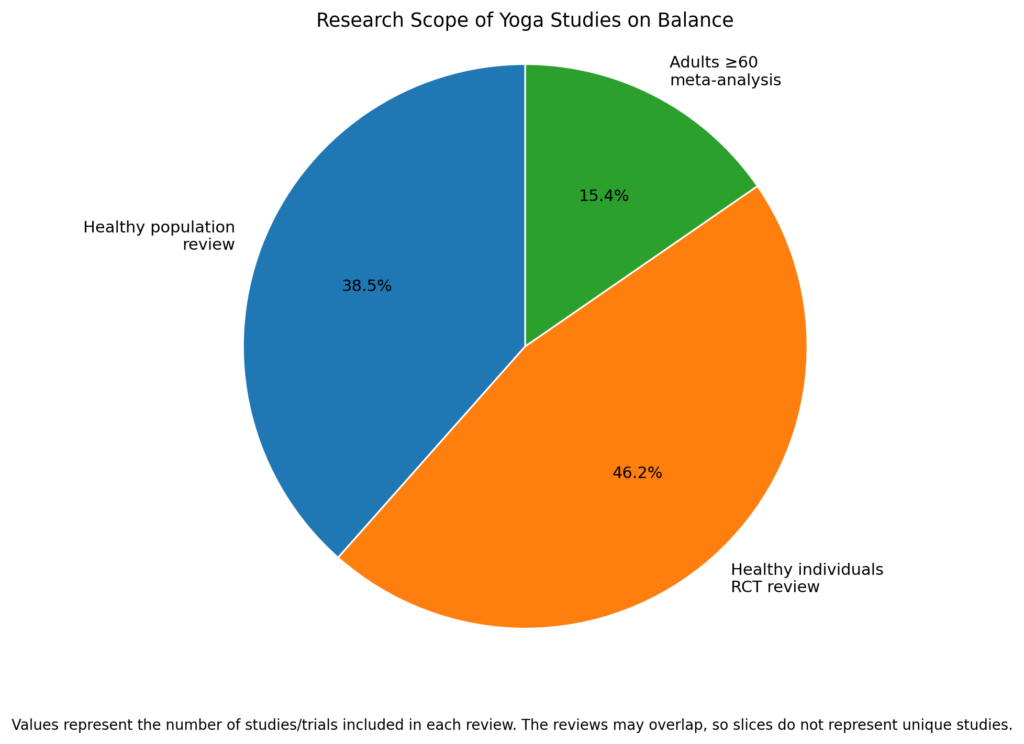
Sebuah tinjauan sistematis yoga pada populasi yang sehat menemukan bahwa yoga dapat meningkatkan keseimbangan, meskipun para peneliti menekankan bahwa perbedaan dalam desain dan pelaporan studi membuat kesimpulan yang pasti menjadi sulit.(1) Bukti yang lebih baru dari 18 uji coba terkontrol secara acak yang melibatkan 1.408 peserta sehat juga menemukan bukti tingkat rendah bahwa yoga dapat meningkatkan keseimbangan, meskipun penelitian menggunakan banyak gaya yoga dan penilaian keseimbangan yang berbeda.(2)
Penting untuk dipahami bahwa studi ini meneliti yoga secara umum, bukan Pose setengah bulan yang berputar secara khusus.
Bagaimana Revolved Half Moon berbeda dari pose Half Moon?
Kedua pose memiliki fondasi yang sama tetapi berbeda secara signifikan dalam posisi batang tubuh.
Pose setengah bulan.
Di setengah bulan:

- Satu kaki menopang tubuh.
- Kaki lainnya memanjang ke belakang.
- Dada umumnya terbuka ke arah samping.
- Satu tangan mungkin tetap berada di lantai atau satu blok.
- Lengan yang berlawanan mencapai ke atas.
Pose setengah bulan yang berputar.
Dalam setengah bulan berputar:
- Satu kaki menopang tubuh.
- Kaki yang berlawanan memanjang ke belakang.
- Batang tubuh berputar ke arah kaki berdiri.
- Satu tangan meraih ke lantai atau blok.
- Lengan yang berlawanan mencapai ke atas.
- tulang punggung dan tulang rusuk berputar sementara panggul tetap relatif terkontrol.
Rotasi ini membuat setengah bulan yang berputar lebih menuntut secara teknis.
Apa yang dilakukan setengah bulan yang berputar?
Pose ini melibatkan beberapa kelompok otot secara bersamaan.
kaki berdiri.
berdiri Pekerjaan kaki untuk menstabilkan tubuh.
Ini mungkin melibatkan:
- paha depan
- paha
- otot gluteal
- otot betis
- Stabilisasi kaki dan pergelangan kaki
kaki yang diperpanjang.
Kaki yang terangkat membutuhkan ekstensi pinggul dan stabilisasi.
Otot gluteal dan hamstring berkontribusi untuk mempertahankan posisi kaki.
inti.
Otot perut dan otot tubuh membantu Kontrol batang tubuh selama rotasi.
Ini termasuk:
- rektus abdominis
- miring
- Abdominis transversal
- Stabilizer tulang belakang yang dalam
tubuh bagian atas.
Lengan membantu menciptakan bentuk karakteristik postur, sementara otot bahu dan punggung atas berkontribusi untuk mempertahankan posisi.
Manfaat pose yoga setengah bulan yang berputar.
Karena penelitian langsung tentang setengah bulan yang berputar itu sendiri terbatas, berikut ini harus dipahami sebagai manfaat potensial berdasarkan tuntutan gerakan dari pose dan bukti yang lebih luas tentang yoga dan pelatihan keseimbangan, daripada efek medis yang terbukti dari postur individu ini.
1. Tantangan keseimbangan.
Keseimbangan adalah salah satu karakteristik yang menentukan dari setengah bulan yang diputar.
Anda mendukung sebagian besar dari Anda Berat Badan pada satu kaki sementara batang tubuh berputar dan kaki lainnya memanjang ke belakang.
Ini membutuhkan penyesuaian terus menerus dari:
- kaki
- kaki
- lutut
- pinggul
- inti
Penelitian yang meneliti yoga secara keseluruhan telah menemukan bukti yang menjanjikan untuk peningkatan keseimbangan. Sebuah tinjauan sistematis tahun 2025 dari 18 uji coba terkontrol secara acak menemukan bahwa hampir semua penelitian yang disertakan melaporkan efek positif pada keseimbangan dibandingkan dengan kontrol tanpa intervensi, meskipun kepastian bukti rendah.
2. Mengembangkan stabilitas tubuh bagian bawah.
Berdiri dengan satu kaki membutuhkan pinggul dan pergelangan kaki otot untuk bekerja terus menerus.
Ini dapat membantu Anda menjadi lebih sadar tentang bagaimana kaki, lutut, dan pinggul Anda berinteraksi selama gerakan kaki tunggal.
Namun, teknik yang baik lebih penting daripada menahan pose untuk waktu yang lama.
3. Mendorong kontrol pinggul.
Kaki yang terangkat dan kaki berdiri memiliki peran yang berbeda.
Pinggul berdiri perlu menstabilkan panggul sementara kaki yang berlawanan memanjang ke belakang.
Ini menciptakan tantangan yang berguna untuk kontrol pinggul.
4. Menantang stabilitas inti.
Tubuh berputar sementara tubuh tetap seimbang di atas satu kaki.
Otot perut dan tulang belakang karena itu berkontribusi pada pengendalian gerakan yang tidak diinginkan.
Tujuannya bukan untuk menciptakan ketegangan perut yang maksimal.
Sebaliknya, pikirkan tentang mempertahankan batang tubuh yang stabil dan terkontrol saat bernapas secara normal.
5. Mempromosikan rotasi toraks.
Setengah bulan yang berputar termasuk rotasi melalui batang tubuh.
Bagi banyak orang, tulang belakang toraks—bagian tengah tulang belakang—menyediakan banyak rotasi yang diinginkan.
Ini adalah salah satu alasan penting untuk tidak memaksakan gerakan dari punggung bawah.
6. Mendorong mobilitas hamstring.
Kaki yang berdiri seringkali relatif lurus sementara batang tubuh bergerak ke arah lantai.
Hal ini dapat menempatkan permintaan peregangan pada paha belakang.
Namun, pose tidak boleh digunakan untuk memaksa fleksibilitas hamstring maksimum.
Menggunakan blok dapat mengurangi kebutuhan untuk mencapai lantai.
7 .Meningkatkan kesadaran tubuh.
Karena begitu banyak Bagian tubuh Bekerja secara bersamaan, pose dapat mendorong kesadaran akan:
- Posisi kaki
- Penjajaran panggul
- Rotasi pinggul
- kedudukan tulang belakang
- Posisi bahu
- pernafasan
- imbangan
Kesadaran ini bisa lebih berharga daripada sekadar Mencoba membuat pose terlihat sempurna.
8. mengembangkan konsentrasi.
Keseimbangan satu kaki yang dikombinasikan dengan rotasi membutuhkan perhatian.
Jika pikiran Anda mengembara, akan lebih mudah untuk kehilangan keseimbangan.
Hal ini membuat setengah bulan Revolved menjadi kesempatan untuk Praktek terfokus perhatian.
9. dapat meningkatkan kepercayaan diri gerakan.
berkembang secara bertahap dari didukung Variasi untuk pose penuh Dapat membantu praktisi menjadi lebih nyaman dengan posisi keseimbangan yang menantang.
Kepercayaan diri harus datang dari praktik terkontrol daripada memaksa postur.
10. memberikan tantangan seluruh tubuh.
Meskipun terlihat seperti pose fleksibilitas, setengah bulan yang berputar melibatkan beberapa kualitas fisik:
- kekuatan
- mobilitet
- imbangan
- koordinasi
- kestabilan
- pemusatan
Kombinasi itu membuatnya menjadi postur yang menuntut.
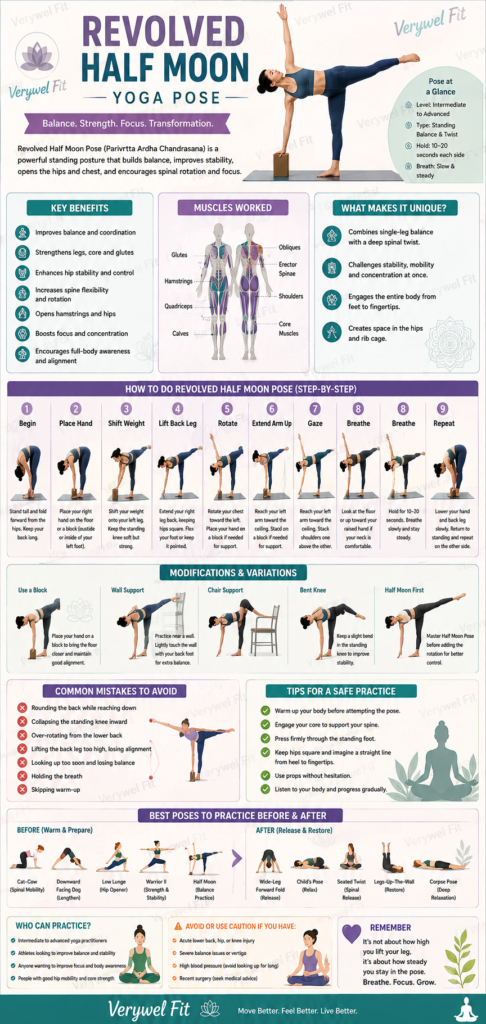
Bagaimana cara melakukan pose setengah bulan?
Pemula harus menggunakan blok yoga atau berlatih di dekat dinding.
Langkah 1: Mulailah berdiri di lipatan ke depan.
Mulailah dengan posisi kaki Anda dengan nyaman.
Lipat ke depan dari pinggul.
Jaga lutut sedikit ditekuk jika perlu.
Langkah 2: Letakkan satu tangan di atas blok.
Letakkan tangan di seberang kaki yang berdiri di atas blok yoga.
Blok dapat diposisikan pada ketinggian yang berbeda.
Pilih ketinggian yang memungkinkan Anda untuk mempertahankan kontrol tanpa pembulatan berlebihan.
Langkah 3: Geser berat badan ke satu kaki.
Secara bertahap pindahkan berat badan Anda ke kaki berdiri.
Jaga agar lutut berdiri tetap lembut daripada menguncinya secara agresif.
Langkah 4: Angkat kaki yang berlawanan.
Perlahan-lahan rentangkan kaki yang berlawanan ke belakang.
Cobalah untuk menjaga panggul relatif terkontrol.
Anda tidak perlu mengangkat kaki terlalu tinggi.
Langkah 5: Putar batang tubuh.
Mulailah memutar dada ke arah kaki yang berdiri.
Pikirkan tentang berputar melalui punggung atas dan tengah daripada memaksa tulang belakang bawah.
Langkah 6: Perpanjang lengan atas.
Saat stabil, rentangkan lengan yang berlawanan ke arah langit-langit.
Lengan menciptakan hubungan vertikal antara lantai dan langit-langit.
Langkah 7: Temukan tatapan yang stabil.
Lihatlah ke arah lantai pada awalnya.
Jika keseimbangan membaik, Anda dapat secara bertahap mengalihkan pandangan ke arah atas.
Tidak ada keharusan untuk melihat ke atas.
Langkah 8: Bernapaslah.
Ambil napas yang lambat dan nyaman.
Hindari menahan napas.
Langkah 9: Keluar perlahan.
Turunkan lengan yang terangkat.
Turunkan kaki yang terangkat secara bertahap.
Kembali ke lipatan depan sebelum berdiri.
Ulangi di sisi yang berlawanan.
Berapa lama Anda harus memegang setengah bulan yang berputar?
Pemula tidak perlu menahan pose untuk waktu yang lama.
Mulailah dengan kira-kira:
10-20 detik per sisi.
Saat keseimbangan meningkat, Anda dapat secara bertahap meningkatkan durasi.
Kualitas lebih penting daripada durasi.
Tahan 10 detik yang terkontrol lebih berguna daripada penangguhan 60 detik dengan keselarasan yang buruk.
Putaran setengah bulan dengan blok yoga.
Blok adalah salah satu modifikasi terbaik untuk pemula.
Ini membantu mengurangi jarak antara tangan dan lantai.
posisi blok.
Anda dapat menggunakan:
- Pengaturan tinggi
- Pengaturan Sedang
- Pengaturan rendah
Mulai tinggi.
betapa Mobilitas dan kontrol meningkat, secara bertahap turunkan blok jika nyaman.
Jangan merasa bahwa mencapai lantai adalah tujuan akhir.
Tujuan dari blok ini adalah untuk membuat postur dapat diakses sambil mempertahankan keselarasan.
Putaran setengah bulan ke dinding.
Dinding dapat memberikan dukungan tambahan.
Berdirilah dengan ruang yang cukup untuk memungkinkan kaki yang terangkat bergerak mundur.
Jika keseimbangan menjadi sulit, kaki yang terangkat dapat dengan ringan menyentuh dinding.
Ini mengurangi rasa takut jatuh dan memungkinkan Anda untuk berkonsentrasi pada rotasi.
Setengah bulan yang ditopang kursi.
Kursi yang kokoh dapat berguna bagi pemula atau orang yang membutuhkan lebih banyak dukungan.
Letakkan satu tangan di kursi saat berlatih rotasi.
Ini bisa sangat berguna selama pelatihan keseimbangan.
Pastikan kursinya stabil dan tidak mudah digeser.
Variasi lutut bengkok.
Jika meluruskan kaki yang berdiri menyebabkan ketegangan yang berlebihan, pertahankan sedikit tikungan.
Ini dapat membantu:
- Mengurangi ketegangan hamstring
- Meningkatkan keseimbangan
- Mengurangi penguncian lutut
- membuat postur lebih mudah diakses
Luruskan kaki secara bertahap hanya jika tetap nyaman.
Putaran setengah bulan untuk pemula.
Jangan mulai dengan mencoba pose penuh di tengah ruangan.
Sebaliknya, ikuti perkembangan.
tingkat 1.
Praktekkan keseimbangan berdiri.
Tingkat 2.
Berlatih setengah bulan dengan satu blok.
Tingkat 3.
Latih rotasi batang tubuh sambil menjaga kedua kaki di lantai.
Tingkat 4.
Berlatih setengah bulan berputar menggunakan dinding.
Tingkat 5.
Latih posenya dengan satu blok.
Tingkat 6.
mengurangi dukungan secara bertahap.
Perkembangan ini memungkinkan Anda untuk mengembangkan komponen individu sebelum menggabungkannya.
kesalahan umum.
1. berusaha mencapai lantai.
Banyak praktisi menjadi fokus untuk mendapatkan tangan mereka ke lantai.
Hal ini dapat menyebabkan:
- tulang belakang bulat
- Kehilangan keseimbangan
- Rotasi tulang belakang yang berlebihan
- Kontrol pinggul yang buruk
Gunakan blok sebagai gantinya.
2. Berputar dari punggung bawah.
Tujuannya bukan untuk memaksa tulang belakang lumbar menjadi rotasi.
Pikirkan tentang memanjang melalui tulang belakang dan membiarkan tulang rusuk berputar.
3. membuka panggul terlalu banyak.
Adalah normal bagi panggul untuk bergerak, tetapi pembukaan yang berlebihan dapat mengubah mekanisme postur.
4. Mengunci lutut berdiri.
Hindari mendorong lutut ke belakang secara agresif.
Pertahankan keterlibatan kaki yang aktif tetapi terkontrol.
5. Mengangkat kaki terlalu tinggi.
Lebih tinggi belum tentu lebih baik.
Kaki yang diangkat hanya perlu mencapai posisi di mana Anda dapat menjaga keseimbangan dan kontrol.
6. menahan napas.
menahan napas dapat meningkatkan ketegangan yang tidak perlu.
Tetap bernapas secara alami.
7 . Melihat ke atas terlalu cepat.
Melihat ke arah langit-langit membuat tantangan keseimbangan lebih sulit.
Mulailah dengan melihat ke lantai.
8. berlatih tanpa pemanasan.
Postur keseimbangan dan rotasi yang menantang seharusnya tidak menjadi gerakan pertama sesi Anda.
Pemanasan sebelum setengah bulan berputar.
Pemanasan yang berguna mungkin termasuk:
sapi-sapi.
Bergerak perlahan di antara fleksi dan ekstensi tulang belakang.
anjing menghadap ke bawah.
Gunakan versi yang nyaman untuk menghangatkan rantai posterior.
lunge rendah.
Siapkan pinggul.
setengah terbelah.
secara bertahap mengeksplorasi mobilitas hamstring.
lutut berdiri terangkat.
Latih keseimbangan satu kaki.
setengah bulan.
Latih komponen keseimbangan sebelum menambahkan rotasi.
Rutinitas persiapan selama 15 menit.
menit 1-3.
Mobilitas tulang belakang yang lembut.
menit 4–6.
Patung-patung rendah dan mobilitas pinggul.
menit 7-9.
Persiapan hamstring.
menit 10-12.
Keseimbangan satu kaki.
menit 13-15.
Half moon dan persiapan setengah bulan berputar.
Pendekatan ini umumnya lebih tepat daripada segera mencoba postur penuh.
bernapas selama setengah bulan berputar.
Pernapasan harus tetap stabil.
Coba:
Tarik napas: Memperpanjang tulang belakang.
Buang napas: Perdalam rotasi dengan lembut tanpa memaksanya.
Ini tidak berarti mendorong tubuh Anda lebih jauh dengan setiap pernafasan.
Gerakan harus tetap nyaman.
Apakah Revolved Half Moon bagus untuk fleksibilitas?
Ini dapat menantang fleksibilitas di beberapa bidang, terutama:
- paha
- pinggul
- tulang belakang toraks
- pundak
Namun, bukti ilmiah langsung yang secara khusus meneliti hal ini Efek Pose pada fleksibilitas kurang.
Penelitian tentang yoga umumnya menunjukkan bahwa yoga dapat mempengaruhi fungsi fisik dan mobilitas, tetapi hasilnya bervariasi sesuai dengan jenis, durasi, dan populasi yang dipelajari.
Oleh karena itu, lebih akurat untuk mengatakan bahwa setengah bulan yang berputar membutuhkan dan mempraktikkan mobilitas daripada mengklaimnya secara definitif meningkatkan fleksibilitas.
Apakah setengah bulan yang digulung baik untuk keseimbangan?
Pose tersebut jelas menantang keseimbangan karena membutuhkan dukungan satu kaki.
Penelitian tentang yoga umumnya memberikan beberapa dukungan untuk peningkatan keseimbangan. Sebuah tinjauan sistematis tahun 2014 mencakup 15 studi yang melibatkan 688 peserta yang sehat dan menemukan bahwa 11 melaporkan hasil positif yang signifikan dalam setidaknya satu hasil keseimbangan, sementara juga mencatat variasi substansial dalam kualitas dan metode studi.
Tinjauan sistematis 2025 yang lebih baru dari uji coba secara acak juga melaporkan peningkatan signifikan dalam keseimbangan statis dalam analisis gabungan, tetapi menilai kepastian bukti sebagai rendah karena heterogenitas dan keterbatasan metodologis.
Oleh karena itu, setengah bulan yang berputar secara wajar dapat dianggap sebagai postur yoga yang menantang keseimbangan, tetapi penelitian tidak menetapkan bahwa mempraktikkan individu ini pose membaik keseimbangan lebih efektif daripada latihan lainnya.
Putaran setengah bulan dan kekuatan inti.
Pose membutuhkan kontrol bagasi.
Namun, itu tidak boleh dianggap sebagai pengganti program penguatan inti yang lengkap.
Jika tujuan Anda adalah kekuatan inti, Anda dapat melengkapi yoga dengan latihan seperti:
- kumbang mati
- anjing burung
- papan samping
- papan
- pers
Latihan yang tepat tergantung pada tingkat kebugaran dan tujuan Anda.
Putaran setengah bulan dan atlet.
Atlet dapat menggunakan latihan keseimbangan rotasi untuk menantang koordinasi dan kontrol.
Namun, para Pose harus melengkapi—tidak mengganti—pelatihan khusus olahraga.
Misalnya, pelari dapat Manfaatkan kekuatan dan keseimbangan Latihan yang sangat mencerminkan mekanika lari.
Atlet juga harus mempertimbangkan tuntutan olahraga mereka sebelum memilih postur yoga.
Bisakah orang dewasa yang lebih tua berlatih setengah bulan?
Orang dewasa yang lebih tua dapat berlatih yoga yang dimodifikasi, tetapi setengah bulan penuh mungkin tidak pantas untuk beberapa orang karena menggabungkan:
- Keseimbangan satu kaki
- Tekuk ke depan
- perputaran
- Posisi yang relatif tidak stabil
Penelitian menunjukkan bahwa olahraga berbasis yoga dapat meningkatkan keseimbangan dan mobilitas pada orang dewasa yang lebih tua. Sebuah tinjauan sistematis dan meta-analisis dari enam percobaan yang melibatkan 307 peserta menemukan efek kecil pada keseimbangan dan efek sedang pada mobilitas fisik.(3)
Namun, ini tidak berarti bahwa setiap orang dewasa yang lebih tua harus melakukan setengah bulan yang berputar.
Opsi yang lebih aman mungkin termasuk:
- Keseimbangan yang didukung kursi
- Keseimbangan yang didukung dinding
- Latihan rotasi dua kaki
- Latihan pinggul berdiri
Kemampuan individu harus menentukan variasinya.
Putaran setengah bulan selama kehamilan.
Kehamilan dapat mengubah keseimbangan, mobilitas sendi dan kenyamanan.
Postur memutar kaki tunggal yang menuntut mungkin tidak cocok untuk semua orang.
Jika Anda hamil, terutama di kemudian hari dalam kehamilan, gunakan modifikasi khusus kehamilan dan cari bimbingan dari profesional yoga prenatal yang memenuhi syarat.
Hindari variasi yang menciptakan:
- rasa sakit
- kepuyengan
- tekanan perut
- sesak nafas
- Kehilangan keseimbangan
Putaran setengah bulan dengan sakit punggung.
Jika Anda punya sakit punggung, Jangan berasumsi bahwa memutar akan menghilangkannya.
Rotasi mungkin nyaman untuk satu orang dan memberatkan orang lain.
Jika pose menghasilkan:
- sakit punggung tajam
- Rasa sakit berjalan ke kaki
- mati rasa
- geli
- kelemahan
berhenti dan mencari penilaian profesional yang sesuai.
Siapa yang harus menghindari pose penuh?
Kehati-hatian ekstra mungkin cocok untuk orang-orang dengan:
- Masalah keseimbangan yang signifikan
- Cedera ekstremitas bawah baru-baru ini
- sakit punggung akut
- Operasi pinggul baru-baru ini
- Operasi lutut baru-baru ini
- Vertigo parah
- pusing yang tidak terkendali
- berarti nyeri pergelangan tangan
Ini tidak berarti yoga harus dihindari sepenuhnya.
Versi yang dimodifikasi mungkin dimungkinkan.
pertimbangan pergelangan tangan.
Half moon yang diputar biasanya melibatkan satu tangan yang menopang tubuh.
Jika Anda mengalami nyeri pergelangan tangan, gunakan blok yang lebih tinggi atau penyangga lain.
Hindari memaksa pergelangan tangan ke posisi yang menyebabkan rasa sakit.
Variasi yang didukung lengan bawah terkadang lebih nyaman, tergantung pada alasan gejala pergelangan tangan.
keamanan lutut.
Lutut berdiri harus tetap stabil.
Hindari membiarkan lutut runtuh ke dalam.
Pada saat yang sama, jangan terobsesi untuk mempertahankan posisi yang kaku sempurna.
Lutut aktif yang sedikit ditekuk dan aktif dapat sesuai.
Seberapa sering Anda harus berlatih?
Untuk pemula, dua hingga tiga sesi per minggu dapat memberikan latihan yang cukup.
Anda tidak perlu melakukan setengah bulan yang diputar tiap hari.
Rutinitas yoga yang lebih luas harus mencakup:
- mobilitet
- kekuatan
- imbangan
- pengenduran
- pernafasan
Variasi dapat membantu mencegah pengulangan yang berlebihan.
Bagaimana kemajuan dengan aman?
kemajuan satu variabel pada satu waktu.
Misalnya:
PERTAMA: meningkatkan keseimbangan.
Kemudian: Meningkatkan kontrol pinggul.
Kemudian: Tambahkan rotasi.
Kemudian: Kurangi dukungan tangan.
Akhirnya: Bereksperimenlah dengan tatapan.
Jangan mengembangkan semua komponen secara bersamaan.
Setengah bulan vs segitiga berputar.
Kedua pose melibatkan rotasi.
segitiga berputar.
Kedua kaki tetap berada di lantai.
setengah bulan berputar
Satu kaki diangkat.
Oleh karena itu, setengah bulan yang berputar umumnya menambah tantangan keseimbangan yang lebih besar.
Jika Anda berjuang dengan setengah bulan yang berputar, berlatih segitiga putar dapat membantu Anda menjadi akrab dengan gerakan rotasi sebelum memperkenalkan keseimbangan satu kaki.
Putaran setengah bulan vs setengah bulan.
Half Moon menekankan:
- Keseimbangan satu kaki
- Stabilitas pinggul
- pembukaan lateral
Half Moon yang diputar menambahkan:
- Permintaan rotasi yang lebih besar
- Kontrol batang tubuh yang lebih kompleks
- Tantangan keseimbangan yang meningkat
Bagi banyak praktisi, Half Moon adalah prasyarat yang berguna.
Bagaimana cara membuat pose lebih mudah?
Coba:
- Menggunakan blok tinggi
- Berlatih di samping tembok
- Menjaga pandangan ke bawah
- Menjaga lutut berdiri sedikit ditekuk
- Mengurangi ketinggian kaki yang diangkat
- berlatih penahanan yang lebih pendek
Bagaimana membuatnya lebih menantang?
Hanya setelah menguasai postur dasar, Anda dapat:
- Turunkan blok
- menjauh dari dinding
- Rentangkan kaki yang terangkat
- Pertahankan pose lebih lama
- Putar pandangan ke atas
- Transisi perlahan di antara pose
Variasi lanjutan tidak boleh membahayakan kontrol.
Apakah Revolved Half Moon adalah pose selamat pagi?
Ini dapat dimasukkan dalam urutan yoga pagi jika tubuh cukup dihangatkan.
Namun, segera setelah bangun tidur, beberapa orang merasa kaku.
Mulailah dengan mobilitas lembut sebelum mencoba postur keseimbangan yang menuntut.
Bisakah setengah bulan yang berputar membantu menurunkan berat badan?
tidak secara langsung.
satu pose yoga tidak menentukan secara berarti Penurunan Berat.
Yoga dapat berkontribusi pada aktivitas fisik, tetapi manajemen berat badan melibatkan keseluruhan Keseimbangan Energi, pola makan, aktivitas fisik, tidur dan faktor lainnya.
Oleh karena itu, setengah bulan yang berputar harus dipraktikkan untuk gerakan, keseimbangan, kekuatan, dan mobilitas daripada sebagai jalan pintas yang membakar kalori.
Bagaimana cara mengajar setengah bulan yang berputar?
Guru harus memprioritaskan:
- kesentosa
- Hapus Pengaturan
- Alat peraga yang sesuai
- imbangan
- pernafasan
- Modifikasi individu
Hindari memaksa siswa untuk bergiliran.
Isyarat verbal sering lebih disukai daripada mendorong tubuh atau panggul siswa secara manual.
Isyarat yang berguna termasuk:
- “Perpanjang tulang belakangmu.”
- “Jaga lutut berdirimu tetap lembut.”
- “Tekan melalui kaki berdirimu.”
- “Gunakan blok.”
- “Putar melalui punggung atas.”
- “Tetap bernafas.”
- “Hanya putar kepalamu saat stabil.”
pertanyaan yang sering diajukan.
1. Apa pose setengah bulan yang diputar?
Half Moon yang digulung, atau Parivrtta ardha chandrasana, adalah postur yoga berdiri yang menggabungkan keseimbangan satu kaki, engsel ke depan, rotasi batang tubuh, dan stabilitas pinggul.
2 . Apakah setengah bulan yang berputar sulit?
YA. Secara umum dianggap sebagai postur keseimbangan yang menantang karena menggabungkan dukungan satu kaki dengan rotasi tulang belakang.
3. Otot apa yang bekerja setengah bulan yang berputar?
Ini menantang kaki, glutes, paha belakang, betis, inti dan menstabilkan otot di sekitar pinggul, pergelangan kaki, dan kaki.
4. Apakah setengah bulan yang berputar meningkatkan keseimbangan?
Ini sangat menantang keseimbangan, dan penelitian yang lebih luas menunjukkan bahwa yoga dapat meningkatkan keseimbangan. Namun, penelitian belum secara khusus menetapkan efektivitas pose individu ini.
5. Bisakah pemula melakukan setengah bulan?
Ya, dengan modifikasi. Pemula harus menggunakan blok yoga dan sebaiknya berlatih di dekat dinding.
6. Haruskah saya menggunakan blok yoga?
YA. Sebuah blok dapat membuat pose jauh lebih mudah diakses dan dapat membantu Anda mempertahankan keselarasan yang lebih baik.
7 Mengapa saya terus jatuh dari setengah bulan yang berputar?
Alasan umum termasuk stabilitas kaki tunggal yang tidak mencukupi, rotasi tubuh yang berlebihan, melihat ke atas terlalu dini atau mencoba mengangkat kaki belakang terlalu tinggi.
8. Haruskah kaki belakang saya benar-benar lurus?
belum tentu. Kaki bisa sedikit ditekuk saat Anda mengembangkan kontrol. Secara bertahap bekerja menuju ekstensi yang lebih besar jika nyaman.
9. Di mana saya harus mencari?
Pemula umumnya harus melihat ke arah lantai. Setelah stabil, Anda dapat secara bertahap mengalihkan pandangan Anda ke arah atas.
10. Apakah setengah bulan yang digulung baik untuk paha belakang?
Ini dapat menempatkan permintaan peregangan pada paha belakang, terutama di kaki berdiri, tetapi tidak boleh digunakan untuk memaksakan fleksibilitas.
11. Apakah setengah bulan yang berputar baik untuk tulang belakang?
Ini melibatkan rotasi tulang belakang, tetapi bukan pengobatan untuk kondisi tulang belakang. Orang dengan masalah punggung harus menggunakan modifikasi yang tepat dan bimbingan profesional saat diperlukan.
12. Bisakah saya berlatih dengan dinding?
YA. Dinding dapat memberikan dukungan keseimbangan tambahan dan sangat berguna untuk pemula.
13. Berapa lama saya harus memegang pose?
Mulailah dengan sekitar 10-20 detik per sisi dan secara bertahap tingkatkan durasi saat kontrol Anda meningkat.
14. Seberapa sering saya harus berlatih?
Dua atau tiga kali seminggu bisa menjadi titik awal yang masuk akal, di samping yoga yang seimbang atau rutinitas olahraga.
15. Bisakah orang dewasa yang lebih tua berlatih setengah bulan?
Beberapa mungkin dapat melakukan versi yang dimodifikasi, tetapi pose penuh dapat menjadi tantangan karena tuntutan keseimbangannya. Alternatif yang didukung kursi atau dinding mungkin lebih tepat.
16. Bisakah saya berlatih setengah bulan berputar selama kehamilan?
Kehamilan membutuhkan modifikasi individual. Pose keseimbangan memutar yang menuntut mungkin tidak sesuai untuk semua orang, terutama saat kehamilan berlangsung.
17. Bisakah setengah bulan yang berputar menyebabkan cedera?
Setiap latihan yang menantang dapat menyebabkan masalah ketika dilakukan dengan teknik yang buruk, kekuatan yang berlebihan atau perkembangan yang tidak tepat. Gunakan alat peraga, maju secara bertahap dan berhenti jika Anda mengalami rasa sakit atau pusing.
18. Apakah setengah bulan Revolved lebih baik daripada pose setengah bulan?
Tidak ada yang lebih baik secara universal. Half moon yang diputar menambahkan komponen rotasi dan umumnya lebih kompleks, sedangkan setengah bulan mungkin merupakan titik awal yang lebih mudah diakses.
19. Bisakah setengah bulan yang berputar mengurangi lemak perut?
Tidak ada satu pun pose yoga yang secara khusus dapat mengurangi lemak perut. Pengurangan lemak tubuh tergantung pada keseimbangan energi dan faktor gaya hidup secara keseluruhan.
20. Apakah Revolved Half Moon adalah latihan inti yang baik?
Ini menantang stabilitas bagasi, tetapi harus melengkapi daripada mengganti latihan inti khusus jika kekuatan inti adalah tujuan utama Anda.
garis bawah.
Pose Yoga Half Moon yang digulung adalah postur berdiri yang menantang yang menggabungkan keseimbangan, stabilitas pinggul, mobilitas hamstring, kontrol inti, dan rotasi tubuh. Ini bisa menjadi tambahan yang bermanfaat untuk latihan yoga menengah atau lanjutan, tetapi tidak perlu dilakukan tanpa dukungan agar efektif.
Pemula harus mulai dengan blok yoga dan dinding, menjaga pandangan ke lantai, mempertahankan kaki berdiri yang terkontrol dan fokus pada panjang tulang belakang daripada memaksa rotasi.
Penelitian tentang yoga secara lebih luas menunjukkan potensi manfaat untuk keseimbangan. Sebuah tinjauan sistematis 2025 dari 18 uji coba terkontrol secara acak yang melibatkan 1.408 peserta sehat menemukan bukti tingkat rendah bahwa yoga meningkatkan keseimbangan, sementara bukti tinjauan sistematis sebelumnya juga melaporkan hasil keseimbangan positif di beberapa studi yoga. Namun, studi ini melakukan tak Secara khusus menguji setengah bulan, sehingga bukti tidak boleh ditafsirkan sebagai bukti bahwa pose khusus ini mengobati gangguan keseimbangan atau kondisi medis.
Pendekatan terbaik adalah memperlakukan setengah bulan yang digulung sebagai keterampilan untuk berkembang secara bertahap. Bangun keseimbangan Anda terlebih dahulu, gunakan dukungan yang tepat, pertahankan pernapasan yang nyaman dan kemajuan hanya ketika Anda dapat mengontrol gerakan. Jika Anda mengalami cedera, masalah keseimbangan yang signifikan, rasa sakit yang terus-menerus, atau kondisi medis yang memengaruhi gerakan, mintalah saran individual dari profesional perawatan kesehatan atau rehabilitasi yang memenuhi syarat sebelum mencoba postur penuh.
+3 Sumber
VeryWelFit memiliki pedoman pengadaan yang ketat dan bergantung pada studi peer-review, lembaga penelitian pendidikan, dan organisasi medis. Kami menghindari penggunaan referensi tersier. Anda dapat mempelajari lebih lanjut tentang bagaimana kami memastikan konten kami akurat dan terkini dengan membaca Kebijakan Editorial.
- tinjauan sistematis yoga untuk keseimbangan dalam populasi yang sehat; https://pubmed.ncbi.nlm.nih.gov/24517304/
- Pengaruh Yoga terhadap Keseimbangan, Jatuh, dan Metabolisme Tulang: Tinjauan Sistematis Uji Coba Terkendali Acak pada Individu Sehat; https://pubmed.ncbi.nlm.nih.gov/39607489/
- Latihan berbasis yoga meningkatkan keseimbangan dan mobilitas pada orang berusia 60 tahun ke atas: tinjauan sistematis dan meta-analisis; https://pubmed.ncbi.nlm.nih.gov/26707903/