
















 latihan

 meditasi






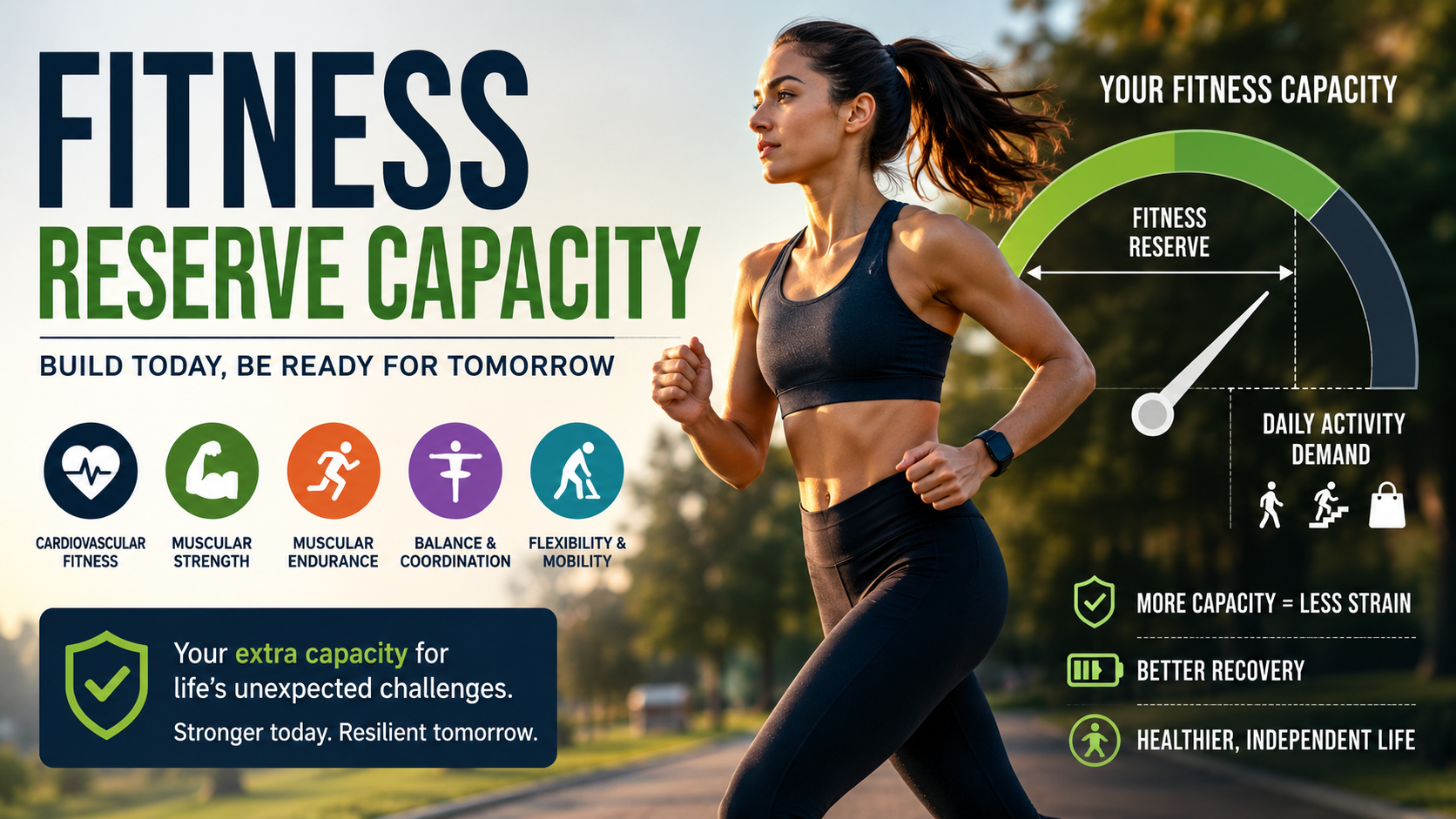
Ketika kebanyakan orang berpikir tentang kebugaran, mereka fokus pada tujuan yang terlihat seperti menurunkan berat badan, membangun otot, atau meningkatkan daya tahan. Namun, konsep yang sering diabaikan yang dikenal sebagai Fitness Reserve Capacity (FRC) dapat memberikan gambaran yang lebih berarti tentang kesehatan jangka panjang dan ketahanan fisik Anda.
Kapasitas Cadangan Kebugaran mengacu pada perbedaan antara kapasitas fisik maksimum Anda dan jumlah kebugaran yang diperlukan untuk melakukan aktivitas normal sehari-hari Anda. Secara sederhana, ini mewakili kemampuan fisik “ekstra” yang dapat digunakan tubuh Anda ketika hidup menjadi lebih menuntut.
Baik itu menaiki beberapa tangga, membawa bahan makanan berat, pulih dari penyakit, bermain dengan anak-anak, atau menanggapi keadaan darurat, cadangan kebugaran yang lebih besar memungkinkan tubuh Anda melakukan tugas-tugas ini dengan sedikit usaha dan keamanan yang lebih besar.
Penelitian terbaru dalam fisiologi olahraga dan Penuaan sehat menunjukkan bahwa mempertahankan cadangan kebugaran tinggi dikaitkan dengan peningkatan kemandirian fungsional, pengurangan risiko kecacatan, peningkatan kualitas hidup, dan penuaan yang lebih sehat. Sementara istilah itu sendiri masih muncul dalam diskusi kesehatan masyarakat, prinsip-prinsip yang mendasarinya adalah Didukung dengan baik oleh bukti puluhan tahun tentang kebugaran kardiorespirasi, kekuatan otot, keseimbangan, dan fungsi fisik.
Cerita terkait
 Mat Pilates : Bagaimana Melakukan, Manfaat dan Kesalahan Umum
 Olahraga Penurunan Berat Badan untuk Anak-Anak: Manfaat dan 10 Olahraga Terbaik
Apa itu Kapasitas Cadangan Kebugaran?
Fitness Reserve Capacity (FRC) adalah perbedaan antara kemampuan fisik puncak Anda dan tuntutan fisik kehidupan sehari-hari.
Bayangkan dua individu yang keduanya perlu menaiki tiga tangga.
- Orang A mencapai bagian atas dengan napas berat dan membutuhkan beberapa menit untuk pulih.
- Orang B mencapai puncak dengan nyaman dan terus berjalan tanpa kesulitan.
Meskipun keduanya menyelesaikan tugas yang sama, Orang B memiliki cadangan kebugaran yang lebih besar karena aktivitas sehari-hari hanya membutuhkan sebagian kecil dari kapasitas fisik maksimum mereka.
Cadangan yang lebih tinggi berarti tubuh Anda memiliki kekuatan tambahan, daya tahan, fleksibilitas, keseimbangan, dan kapasitas kardiovaskular yang tersedia saat dibutuhkan.

Mengapa Kapasitas Cadangan Kebugaran Penting?
Tubuh Anda terus-menerus beradaptasi dengan stres fisik. Aktivitas sehari-hari, pekerjaan, olahraga, penyakit, dan penuaan semuanya menempatkan tuntutan yang berbeda pada otot, jantung, paru-paru, dan sistem saraf.
Ketika kapasitas cadangan Anda tinggi:
- Aktivitas sehari-hari terasa lebih mudah.
- Kelelahan berkembang lebih lambat.
- pemulihan lebih cepat.
- Kemandirian fisik lebih terjaga.
- Cedera mungkin lebih kecil kemungkinannya selama gerakan rutin.
- Tubuh lebih siap untuk tantangan yang tidak terduga.
Sebaliknya, individu dengan kapasitas cadangan rendah Sering mengalami Kelelahan selama tugas-tugas biasa karena tugas-tugas tersebut menghabiskan sebagian besar sumber daya fisik yang tersedia.
Komponen kapasitas cadangan kebugaran.
Kapasitas cadangan kebugaran tidak ditentukan oleh satu pengukuran saja. Sebaliknya, itu mencerminkan interaksi beberapa komponen kebugaran.
1. Kebugaran kardiorespirasi.
Kebugaran kardiorespirasi mencerminkan seberapa efisien jantung, paru-paru, dan otot bekerja sama untuk memberikan oksigen selama aktivitas fisik.(1),(2),(3)
Individu dengan kebugaran aerobik yang lebih tinggi umumnya memiliki cadangan yang lebih besar karena aktivitas rutin membutuhkan lebih sedikit upaya kardiovaskular.
Berjalan kaki, bersepeda, berenang, jogging, dan latihan aerobik semuanya berkontribusi pada peningkatan komponen ini.
2. Kekuatan otot.
Kekuatan menentukan kemampuan Anda untuk menghasilkan kekuatan.
Tugas sehari-hari yang sederhana seperti mengangkat bagasi, membawa bahan makanan, berdiri dari kursi, atau mendorong benda-benda berat menjadi lebih mudah ketika kekuatan otot berkembang dengan baik.
Latihan kekuatan juga membantu melestarikan Massa otot seiring bertambahnya usia.
3. Ketahanan otot.
Ketahanan mengacu pada kemampuan otot untuk melakukan kontraksi berulang dari waktu ke waktu tanpa kelelahan yang berlebihan.
Contohnya meliputi:
- Berjalan jauh.
- Mendaki tangga.
- berkebun.
- pekerjaan rumah.
- olahraga rekreasi.
Daya tahan yang lebih besar berarti kegiatan ini membutuhkan lebih sedikit usaha.
4. Keseimbangan dan koordinasi.
Keseimbangan yang baik Mengurangi risiko jatuh sambil meningkatkan efisiensi gerakan.
Ini menjadi sangat penting pada orang dewasa yang lebih tua karena keseimbangan menurun secara alami seiring bertambahnya usia.
Kegiatan seperti yoga, tai chi, dan latihan keseimbangan satu kaki membantu menjaga kapasitas cadangan.
5. Fleksibilitas dan Mobilitas
Sendi yang sehat bergerak secara efisien melalui rentang gerak penuhnya.
Mobilitas yang buruk meningkatkan kesulitan gerakan dan menempatkan tekanan yang lebih besar pada otot dan persendian.
Latihan peregangan dan mobilitas secara teratur mendukung gerakan fungsional sepanjang hidup.
Kapasitas cadangan kebugaran dan penuaan sehat.
Salah satu aplikasi yang paling penting dari Kapasitas cadangan kebugaran sehat Penuaan.
Mulai sekitar dekade keempat kehidupan, orang dewasa secara bertahap kehilangan otot massa, kapasitas aerobik, dan kekuatan jika tetap tidak aktif.
Penurunan alami ini mengurangi kapasitas cadangan.
Ketika kapasitas cadangan menjadi terlalu kecil, aktivitas sehari-hari yang dulu terasa mudah mungkin menjadi tuntutan fisik.
Contohnya meliputi:
- Bangun dari lantai.
- membawa tas belanja.
- Berjalan menanjak.
- Mendaki tangga.
- bermain dengan cucu.
Mempertahankan gaya hidup aktif membantu menjaga kemandirian fungsional dan dapat menunda penurunan fisik terkait usia.
Faktor-faktor yang mempengaruhi kapasitas cadangan kebugaran.
Beberapa faktor menentukan seberapa besar kapasitas cadangan yang dimiliki seseorang.
aktivitas fisik.
Olahraga teratur tetap menjadi faktor yang paling kuat yang dapat dimodifikasi.
Individu yang secara konsisten melakukan aerobik, kekuatan, fleksibilitas, dan latihan keseimbangan umumnya mempertahankan kapasitas cadangan yang lebih tinggi.(4),(5)
usia.
Kapasitas cadangan secara alami menurun seiring bertambahnya usia.
Namun, penelitian secara konsisten menunjukkan bahwa orang dewasa yang lebih tua yang aktif secara fisik sering kali mempertahankan kapasitas fungsional yang jauh lebih besar daripada individu yang tidak banyak bergerak pada usia yang sama.
Nutrisi.
cukup Asupan protein mendukung otot pemeliharaan dan pemulihan.
Diet seimbang Kaya akan buah-buahan, sayuran, biji-bijian, lemak sehat, vitamin, dan mineral berkontribusi pada kinerja fisik secara keseluruhan.
Tidur.
Kualitas tidur mendukung pemulihan, regulasi hormon, perbaikan otot, dan kinerja atletik.
Kurang tidur kronis dapat mengganggu kapasitas fisik dari waktu ke waktu.
kondisi kesehatan kronis.
Kondisi seperti obesitas, penyakit kardiovaskular, arthritis, diabetes, dan penyakit paru-paru kronis dapat Kurangi kapasitas cadangan dengan membatasi kinerja fisik.
Manajemen medis yang tepat dikombinasikan dengan aktivitas fisik secara teratur sering kali membantu meningkatkan kemampuan fungsional.
Bagaimana cara meningkatkan kapasitas cadangan kebugaran?
Meningkatkan kapasitas cadangan tidak memerlukan kinerja atletik elit.
Peningkatan kecil dan konsisten di beberapa domain kebugaran dapat menghasilkan Manfaat yang berarti.
Lakukan latihan aerobik secara teratur.
Bertujuan untuk setidaknya 150 menit aktivitas aerobik intensitas sedang setiap minggu, atau 75 menit aktivitas berat, dikombinasikan dengan latihan penguatan otot pada dua hari atau lebih per minggu, konsisten dengan pedoman aktivitas fisik yang diterima secara luas.
Contohnya meliputi:
- jalan cepat.
- bersepeda.
- berenang.
- Menari.
- mendayung.
Latihan kekuatan secara konsisten.
latihan ketahanan Meningkatkan kekuatan otot, kesehatan tulang, dan gerakan fungsional.
Sertakan penargetan latihan:
- kaki
- punggung
- peti mayat
- pundak
- inti
- perang
maju secara bertahap sambil mempertahankan teknik yang tepat.
meningkatkan keseimbangan.
Latihan keseimbangan menjadi semakin berharga seiring bertambahnya usia.
Pilihan sederhana meliputi:
- berdiri dengan satu kaki.
- berjalan kaki dari tumit.
- Tai Chi.
- Yoga.
- Latihan keseimbangan fungsional.
Prioritaskan pemulihan.
Latihan merangsang adaptasi, tetapi pemulihan memungkinkan adaptasi tersebut terjadi.
Dukungan pemulihan melalui:
- tidur yang cukup.
- hidrasi.
- Nutrisi seimbang.
- hari istirahat.
- manajemen stres.
Tetap aktif secara fisik sepanjang hari.
Latihan terstruktur itu penting, tetapi gerakan harian juga berkontribusi pada kapasitas cadangan.
Tingkatkan aktivitas non-olahraga dengan:
- berjalan saat istirahat.
- mengambil tangga.
- berkebun.
- pekerjaan rumah tangga.
- bermain dengan anak-anak.
- berdiri lebih sering.
Bagaimana Anda bisa memperkirakan cadangan kebugaran Anda?
Meskipun tidak ada tes tunggal secara langsung mengukur kapasitas cadangan kebugaran, profesional kesehatan dan spesialis olahraga sering mengevaluasinya menggunakan beberapa penilaian.
Ini mungkin termasuk:
- Tes kebugaran kardiorespirasi (seperti VO ₂ maks atau tes latihan submaksimal).
- kekuatan pegangan.
- Tes duduk-ke-berdiri.
- kecepatan berjalan.
- Timed up and go (tug) tes.
- penilaian keseimbangan.
- tes fleksibilitas.
- evaluasi gerakan fungsional.
Bersama-sama, penilaian ini membantu mengidentifikasi apakah kapasitas fisik Anda secara substansial melebihi tuntutan kehidupan sehari-hari.
Mitos umum tentang kapasitas cadangan kebugaran.
Mitos 1: Hanya atlet yang membutuhkan kapasitas cadangan.
kenyataan: Semua orang diuntungkan dari memiliki kapasitas fisik tambahan, terutama seiring bertambahnya usia atau sembuh dari penyakit.
Mitos 2: Penurunan berat badan secara otomatis meningkatkan kapasitas cadangan.
kenyataan: Sambil mempertahankan Berat badan sehat Dapat membantu, peningkatan kebugaran aerobik, kekuatan, mobilitas, dan keseimbangan sama pentingnya.
Mitos 3: Orang dewasa yang lebih tua tidak dapat meningkatkan kapasitas cadangan.
kenyataan: Penelitian secara konsisten menunjukkan bahwa latihan yang ditentukan dengan tepat dapat Meningkatkan kekuatan, daya tahan, keseimbangan, dan kemampuan fungsional hingga dewasa yang lebih tua.
Mitos 4: Aktivitas sehari-hari memberikan latihan yang cukup.
kenyataan: Meskipun tetap aktif bermanfaat, latihan aerobik terstruktur dan latihan resistensi sering kali memberikan peningkatan yang lebih besar dalam kapasitas fisik daripada rutin setiap hari gerakan saja.
keterbatasan konsep.
Kapasitas cadangan kebugaran adalah kerangka kerja yang berguna, tetapi tidak boleh dilihat sebagai pengukuran medis mandiri.
Penelitian saat ini menggunakan berbagai istilah—termasuk cagar alam, cagar alam, dan Kapasitas Fungsional—untuk menggambarkan konsep serupa. Metode standar untuk mengukur kapasitas cadangan kebugaran secara langsung masih terus berkembang.
Kapasitas cadangan individu dipengaruhi oleh genetika, Status kesehatan, gaya hidup, obat-obatan, dan faktor lingkungan. Oleh karena itu, penilaian kebugaran harus selalu ditafsirkan dalam konteks kesehatan orang secara keseluruhan.
pertanyaan yang sering diajukan.
1. Apakah kapasitas cadangan kebugaran sama dengan VO₂ Max?
ndak VO₂ Max mengukur kapasitas aerobik maksimal, sedangkan kapasitas cadangan kebugaran mencerminkan perbedaan yang lebih luas antara kemampuan fisik maksimal dan tuntutan kehidupan sehari-hari.
2. Dapatkah pemula meningkatkan kapasitas cadangan mereka?
YA. Sebagian besar pemula mengalami peningkatan yang berarti melalui latihan aerobik yang konsisten, latihan ketahanan, latihan fleksibilitas, dan latihan keseimbangan.
3. Apakah latihan kekuatan meningkatkan kapasitas cadangan?
YA. Otot yang lebih kuat membuat aktivitas sehari-hari membutuhkan lebih sedikit usaha relatif, meningkatkan cadangan fungsional.
4. Mengapa kapasitas cadangan penting setelah usia 40 tahun?
Karena massa otot, kebugaran aerobik, dan fungsi fisik secara alami menurun seiring bertambahnya usia, mempertahankan cadangan yang lebih besar membantu menjaga kemandirian dan ketahanan.
5. Dapatkah kapasitas cadangan kebugaran memprediksi umur panjang?
Meskipun bukan prediktor langsung, tingkat kebugaran kardiorespirasi yang lebih tinggi, kekuatan otot, dan fungsi fisik—komponen kunci dari kapasitas cadangan—telah dikaitkan dengan risiko penyakit kronis dan kematian dini yang lebih rendah dalam banyak penelitian.
garis bawah.
Kapasitas cadangan kebugaran mengalihkan fokus latihan dari penampilan saja dan menuju ketahanan fisik jangka panjang. Dengan mempertahankan cadangan kekuatan, daya tahan, keseimbangan, dan kebugaran kardiovaskular melebihi apa yang dibutuhkan kehidupan sehari-hari, individu lebih siap untuk menangani tantangan fisik yang tidak terduga, pulih dari penyakit, dan tetap mandiri seiring bertambahnya usia.
Meningkatkan kapasitas cadangan kebugaran tidak memerlukan latihan ekstrim atau kemampuan atletik elit. Latihan aerobik yang konsisten, latihan kekuatan yang teratur, nutrisi yang sehat, kualitas tidur, dan gaya hidup aktif secara kolektif dapat membangun cadangan yang lebih besar yang mendukung kesehatan seumur hidup dan kesejahteraan fungsional. Daripada hanya bertanya, “Apakah saya cukup fit untuk hari ini?” Kapasitas cadangan kebugaran mendorong pertanyaan yang lebih berharga: “Apakah saya membangun kapasitas yang cukup untuk tahun-tahun mendatang?”
+5 sumber
VeryWelFit memiliki pedoman pengadaan yang ketat dan bergantung pada studi peer-review, lembaga penelitian pendidikan, dan organisasi medis. Kami menghindari penggunaan referensi tersier. Anda dapat mempelajari lebih lanjut tentang bagaimana kami memastikan konten kami akurat dan terkini dengan membaca Kebijakan Editorial.
- Penuaan dan aktivitas: efeknya pada kapasitas cadangan fungsional jantung dan otot polos dan rangka vaskular; https://pubmed.ncbi.nlm.nih.gov/16338704/
- kapasitas cadangan kardiovaskular pada manusia tua yang sehat; https://pubmed.ncbi.nlm.nih.gov/7880870/
- Cadangan jantung fisiologis: pengembangan metode non-invasif dan perkiraan pertama pada manusia; https://pubmed.ncbi.nlm.nih.gov/9602665/
- Peran olahraga dalam penuaan jantung: dari fisiologi ke mekanisme molekuler; https://pmc.ncbi.nlm.nih.gov/articles/PMC4914047/
- efek olahraga dan penuaan pada otot rangka; https://pmc.ncbi.nlm.nih.gov/articles/PMC5830901/