



































 Dar certo

 Meditação





Os fatos rápidos
- This article lays out a practical, evidence-aligned framework for using micro-movement and breathwork to support focus at work — not as a “wellness perk,” but as an operational strategy.
- But when it becomes the default, the body shifts into sympathetic dominance — a mild but persistent fight-or-flight state.
- This sends a simple signal to the brain.
Os locais de trabalho modernos têm um problema de foco.
- Por que o foco diminui em ambientes de trabalho modernos?
- O custo oculto de “Just Push Through”.
- O que o micromovimento realmente é (e por que funciona).
- Por que o bafômetro é importante (e por que a maioria das versões do local de trabalho falha).
- O impacto no desempenho: por que uma melhoria do foco de 15 a 25% é realista.
- Uma estrutura prática para as organizações.
- Frequência.
- duração.
- Formatos de entrega.
- O que é necessário.
- Componentes essenciais de um protocolo do Workplace.
- Por que os gerentes desempenham um papel crítico?
- Treinamento de gerente: apoiando o foco sem aumentar a pressão.
- O que os gerentes podem fazer ativamente?
- O que os gerentes devem evitar?
- Exemplos de implementação em nível de equipe.
- Medindo o sucesso sem super-projetá-lo.
- abordando as preocupações comuns.
- O quadro organizacional maior.
Não é um problema de motivação.
Não é um problema de talento.
Não é um problema de “pessoas que não se importam mais”.
A problema de fisiologia.
Histórias relacionadas
 Desbloqueando a energia dentro: 10 melhores poses de ioga do plexo solar
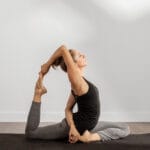 Desbloqueio Serenidade Através da Minha Prática: Compreender a Girafa Yoga Pose
A maioria das organizações tenta resolver o declínio do foco e o aumento do esgotamento com:
- Ferramentas de produtividade
- Sistemas de gerenciamento de tempo
- pressão de desempenho
- oficinas de resiliência
E embora eles possam ajudar na superfície, eles geralmente perdem o verdadeiro gargalo:
O sistema nervoso humano nunca foi projetado para oito horas de quietude, demanda cognitiva constante e zero sinais de recuperação.
Até que os líderes entendam isso, as iniciativas do Focus continuarão caindo.
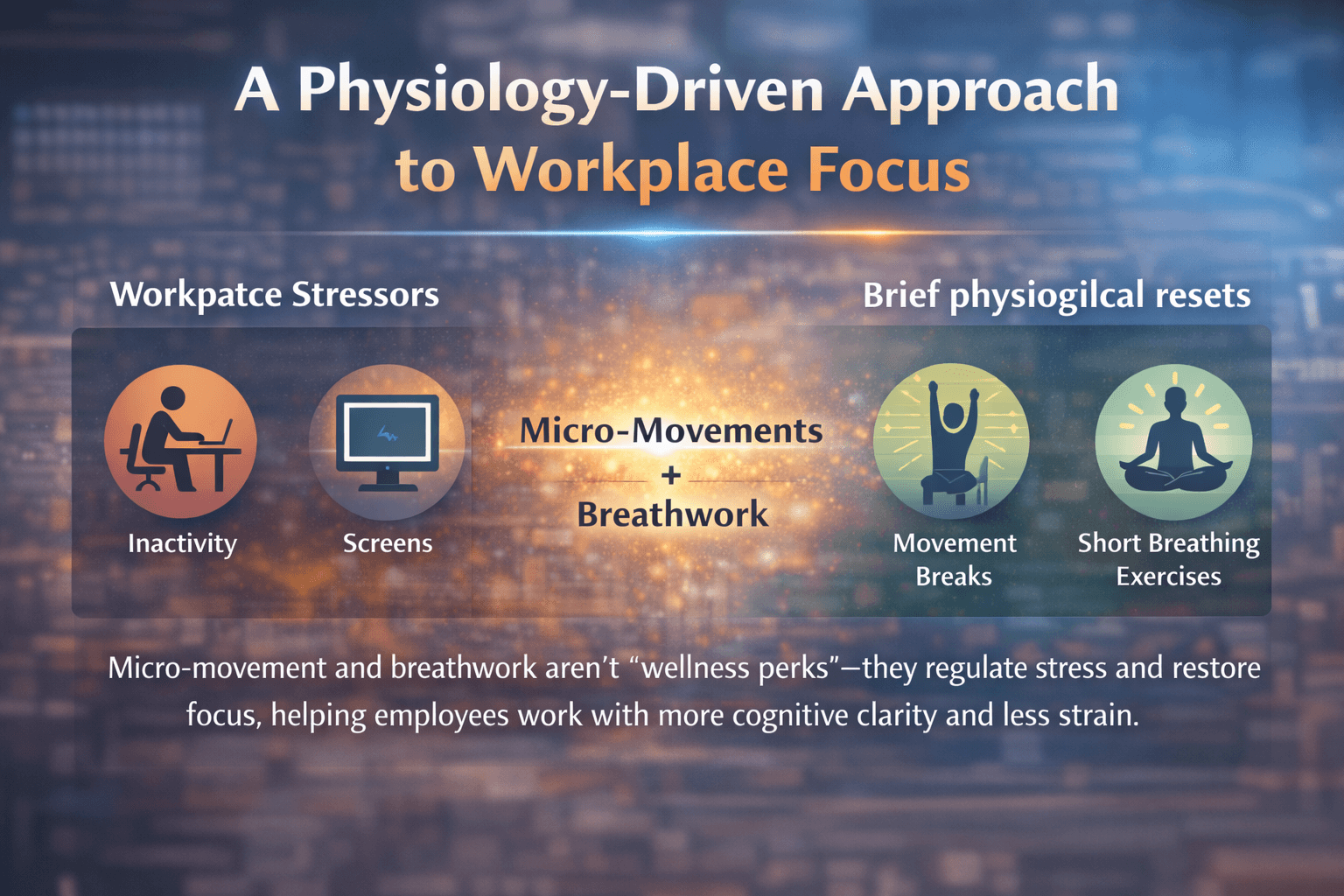
Este artigo apresenta uma Estrutura prática e alinhada à evidência por usar Micromovimento e respiração Para apoiar o foco no trabalho – não como uma “perk de bem-estar”, mas como uma estratégia operacional.
Por que o foco diminui em ambientes de trabalho modernos?
A maioria dos funcionários não perde o foco porque está distraído com os telefones ou não tem disciplina.
Eles perdem o foco porque seu sistema nervoso está operando sob Estresse crônico de baixo grau.
Considere um dia de trabalho típico:
- sessão prolongada
- Exposição contínua da tela
- Carga cognitiva elevada
- Mudança de tarefas frequentes
- Avaliação social (reuniões, e-mails, aplicativos de mensagens)
Para o sistema nervoso, parece:
“Fique alerta. Não se mova. preste atenção. Algo importante pode acontecer.”
Esse estado é útil a curto prazo.
Mas quando se torna o padrão, o corpo muda para Dominância simpática — Um estado de luta ou fuga suave, mas persistente.
O resultado:
- atenção estreitada
- Memória de trabalho reduzida
- Tomada de decisão mais lenta
- Aumento das taxas de erro
- Fadiga mental que não resolve com pausas
Nesse ponto, nenhum hack de produtividade pode anular a biologia.
O custo oculto de “Just Push Through”.
Muitas culturas do local de trabalho ainda recompensam:
- Sentado mais
- Pulando pausas
- Alimentando através da fadiga
Na superfície, isso parece um compromisso.
Fisiologicamente, cria:
- reduzido Frequência cardíaca variabilidade
- Função do córtex pré-frontal prejudicada
- Maior reatividade ao estresse
- Burnout cognitivo mais rápido
Os funcionários podem parecer produtivos, mas seu pensamento se torna:
- rígido
- reativo
- menos criativo
- Mais propenso a erros
Isso geralmente é confundido com “desempenho sob pressão”, quando na verdade é Degradação de desempenho sob estresse.
O que o micromovimento realmente é (e por que funciona).
Micromovimento não é exercício, rotinas de alongamento ou programação de condicionamento físico.
é pequeno, entrada física intencional Projetado para restaurar Equilíbrio do sistema nervoso sem atrapalhar o trabalho.
Normalmente:
- 30 segundos a 5 minutos
- Baseado em mesa ou em pé
- Sem suor
- nenhum equipamento
- Sem troca de roupa
Do ponto de vista fisiológico, micromovimento:
- Reativa sensores proprioceptivos
- Melhora a circulação e o fornecimento de oxigênio
- Reduz a proteção muscular
- Restaura reflexos posturais
Isso envia um sinal simples para o cérebro:
“O corpo está seguro. Os recursos podem voltar a pensar.”
Quando isso acontece, o foco melhora naturalmente.

Por que o bafômetro é importante (e por que a maioria das versões do local de trabalho falha).
O bafismo é frequentemente mal compreendido em ambientes profissionais.
Muitas pessoas associam isso a:
- Técnicas intensa
- Segurando a respiração
- Liberação emocional
- Precisando de privacidade
Isso não é apropriado para o local de trabalho – e não é necessário.
O trabalho de respiração no local de trabalho deve ser sutil e invisível.
O padrão mais eficaz também é o mais simples:
- respiração nasal
- ritmo lento
- Exalar mais do que inspirar
Isso estimula a atividade parassimpática, reduz a sinalização do estresse e melhora a clareza cognitiva – sem sedação ou intensidade emocional.
Se o trabalho de respiração causa tontura ou desconforto, está sendo feito de forma muito agressiva.
O impacto no desempenho: por que uma melhoria do foco de 15 a 25% é realista.
Pesquisa aplicada em fisiologia ocupacional, ergonomia e desempenho neurocognitivo de forma consistente mostra que Intervenções curtas de movimento e respiração pode melhorar:(1)
- atenção sustentada
- Eficiência de troca de tarefas
- Memória de trabalho
- Detecção de erros
Quando implementadas de forma consistente, as organizações geralmente veem:
- Blocos de foco ininterruptos mais longos
- Menos erros cognitivos
- Fadiga reduzida à tarde
- Baixa dependência da cafeína
Esses ganhos não são picos dramáticos – são melhorias constantes que se compõem ao longo do tempo.

Uma estrutura prática para as organizações.
Frequência.
todos 60–90 minutos durante o trabalho cognitivamente exigente.
duração.
2–5 minutos por reinicialização.
Formatos de entrega.
- Reinicializações de mesa individuais
- Transições pós-encontro
- Pausas em toda a equipe durante longas sessões
- Dicas amigáveis ao trabalho remoto
O que é necessário.
nada.
Sem tapetes. Sem academia. Não há sala de bem-estar.
Componentes essenciais de um protocolo do Workplace.
1 Movimento articular suave.
Exemplos:
- Rotações do pescoço (pequena faixa)
- Rolos de ombro
- Movimentos do tornozelo ou do pé
Objetivo:
- Reduza a tensão muscular
- Melhore o feedback sensorial
- Diminuir os sinais de ameaça do sistema nervoso
2 resets posturais.
Exemplos:
- Extensão da coluna vertebral assentada
- abertura do peito
- Retração do ombro
Objetivo:
- Melhore a mecânica da respiração
- Reduza a tensão no pescoço e nos ombros
- Aumente o estado de alerta sem estresse
3 Respiração nasal lenta.
Exemplo:
- Inspire 4 segundos
- Expire 6 segundos
Objetivo:
- Reduza a ativação simpática
- Melhore a variabilidade da frequência cardíaca
- Restaure a clareza cogni
Por que os gerentes desempenham um papel crítico?
Micromovimento funciona melhor quando é normalizado, não obrigatório.
Os funcionários têm dicas da liderança.
Se Gerentes:
- Modelo de resets curtos
- Permitir pausas breves
- Evite glorificar a sessão ininterrupta
A participação aumenta naturalmente.
Se os gerentes dispensarem ou apressar a recuperação, os funcionários suprimirão suas necessidades – e pagarão por isso mais tarde com esgotamento e desengajamento.
Treinamento de gerente: apoiando o foco sem aumentar a pressão.
Reformulação de chaves para líderes.
O foco não é um traço de personalidade.
é um expor, influenciado por:
- carga do sistema nervoso
- quietude física
- Oportunidades de recuperação
Os gerentes não precisam motivar mais – eles precisam Reduza o atrito.
O que os gerentes podem fazer ativamente?
- Incentive o movimento após longas reuniões
- Crie reinicializações de 2 minutos em agendas
- Normalize em pé ou alongamento brevemente
- Use linguagem como:
- “Vamos reiniciar por um minuto”
- “Pausa rápida antes de continuarmos”
Essas pistas legitimam a regulamentação.
O que os gerentes devem evitar?
- Participação obrigatória
- Chamando pessoas publicamente
- Usando o bafismo como disciplina ou controle
- Enquadrar quebras como “recompensas” em vez de necessidades.(2)
A regulamentação funciona melhor quando é voluntária e normalizada.

Exemplos de implementação em nível de equipe.
- Após reuniões: 2 minutos de movimento antes de retornar às tarefas
- Durante os blocos de trabalho profundos: Reinicialização opcional na metade
- Equipes remotas: Dicas de lembrete compartilhados ou prompts de calendário
- Sessões longas: Pausas de recuperação planejadas a cada 60 a 90 minutos
A consistência importa mais do que a duração.
Medindo o sucesso sem super-projetá-lo.
Você não precisa de métricas complexas.
Indicadores comuns:
- Menos releituras do mesmo material
- Períodos de foco mais longos
- Comutação de tarefas mais suaves
- Irritabilidade reduzida
- Menos erros no final do dia
O feedback qualitativo geralmente soa como:
“O trabalho parece mais leve.”
“Estou menos esgotado.”
“Posso pensar novamente à tarde.”
Isso é sucesso.
abordando as preocupações comuns.
“Isso não vai reduzir a produtividade?”
não . Normalmente, aumenta o tempo de trabalho eficaz.
“Isso está substituindo o exercício?”
não . Objetivo diferente, sistema diferente.
“E se as pessoas não participarem?”
Isso é bom. A adoção voluntária ainda muda a cultura.
“Isso é baseado em evidências?”
Sim — baseado em fisiologia do sistema nervoso e pesquisa ocupacional.
O quadro organizacional maior.
O esgotamento não é resolvido apenas com o treinamento de resiliência.
é resolvido por Alterando as entradas diárias:
- movimento
- respiração
- Dicas de recuperação
Organizações que apoiam a regulamentação do sistema nervoso consultem:
- Foco aprimorado
- Melhor colaboração
- Menos erros relacionados ao estresse
- Desempenho mais sustentável
Isso não é suave.
É estratégico.
Pensamento final para líderes e equipes.
O foco não vem da pressão.
vem de Apoiar o corpo que pensa.
Micromovimento e respiração não adicionam mais ao dia de trabalho.
Eles removem a interferência.
E quando a interferência cai, a clareza retorna — silenciosa, confiável e sustentável.
+2 Fontes
VerywelFit tem estrita de abastecimento de diretrizes e depende de estudos peer-reviewed, educacional, institutos de pesquisa e organizações médicas. Devemos evitar o uso terciário referências. Você pode aprender mais sobre como vamos garantir nosso conteúdo é preciso e atualizado através da leitura de nosso política editorial.
- Efeitos das práticas de respiração e meditação de 7 minutos na redução do estresse; https://pmc.ncbi.nlm.nih.gov/articles/PMC10917090/
- “Dê-me um tempo!” uma revisão sistemática e meta-análise sobre a eficácia das micro-interrupções para aumentar o bem-estar e o desempenho; https://pmc.ncbi.nlm.nih.gov/articles/PMC9432722/