











 latihan

 meditasi






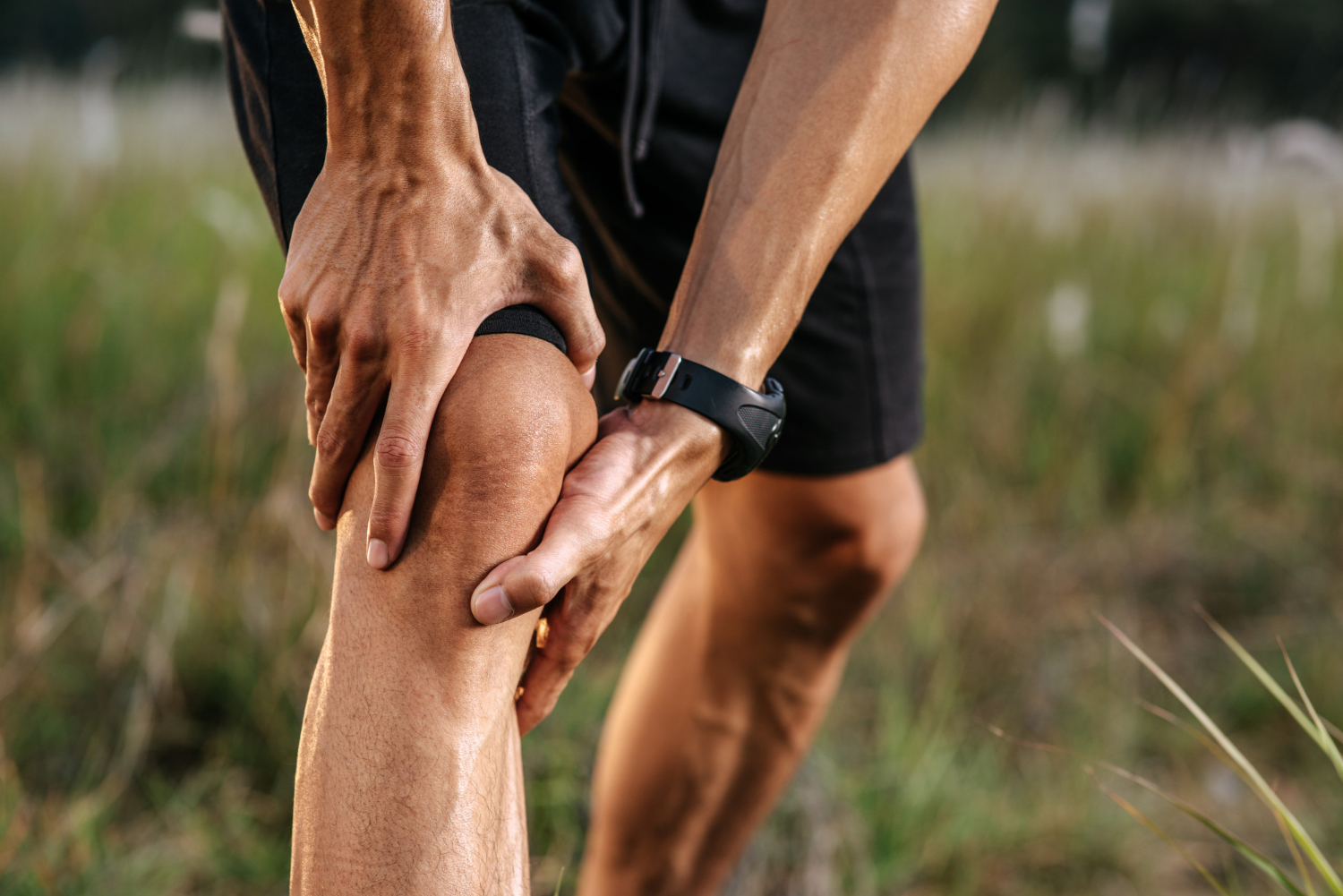
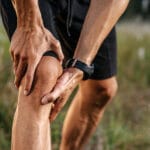
Robekan meniskus adalah cedera lutut umum yang melibatkan salah satu dari dua potongan tulang rawan berbentuk bulan sabit yang berada di antara tulang paha (femur) dan tulang kering (tibia). Menisci membantu mendistribusikan beban, menyerap goncangan, meningkatkan stabilitas sendi, dan melindungi permukaan lutut. Air mata dapat terjadi secara tiba-tiba selama gerakan memutar atau berkembang secara bertahap karena degenerasi terkait usia.
Robekan meniskus berkisar dari cedera kecil yang stabil yang membaik dengan konservatif pengobatan air mata yang menyebabkan Nyeri persisten, pembengkakan, penangkapan, atau penguncian dan mungkin memerlukan penilaian bedah.
Salah satu pertanyaan yang paling umum adalah: apakah air mata meniskus sembuh dengan sendirinya? Jawabannya sangat tergantung pada lokasi, ukuran, pola, suplai darah, usia air mata, dan apakah itu traumatis atau degeneratif. Beberapa air mata memiliki kapasitas yang lebih baik untuk menyembuhkan daripada yang lain.
Artikel ini menjelaskan jenis air mata meniskus, gejala, penyebab, diagnosis, pilihan pengobatan, waktu penyembuhan, rehabilitasi, dan latihan yoga yang tepat sambil menjaga rekomendasi berbasis bukti.
Cerita terkait
 Kekuatan Bhumisparsha Mudra: Menyampaikan Manfaat dan Panduan Langkah-demi-Langkahnya
 10 Pose Yoga Equinox Musim Gugur Terbaik dan Manfaatnya yang Menakjubkan
PENTING: Yoga tidak boleh dianggap sebagai pengobatan yang memperbaiki meniskus yang robek. Bila digunakan dengan tepat, yoga lembut dapat melengkapi program rehabilitasi dengan bekerja pada mobilitas, kekuatan, keseimbangan, dan kesadaran tubuh. Itu harus dimodifikasi sesuai dengan saran rehabilitasi cedera dan profesional.
Apa itu meniskus?
Lutut mengandung dua menisci:
- Meniskus medial - Terletak di sisi dalam lutut.
- meniskus lateral - Terletak di sisi luar.
Mereka bertindak agak seperti bantal antara tulang paha dan tibia.
Menisci membantu dengan:

- peredam
- Distribusi Beban
- Stabilitas lutut
- pelumasan sendi
- Kontrol gerakan
- Perlindungan tulang rawan sendi
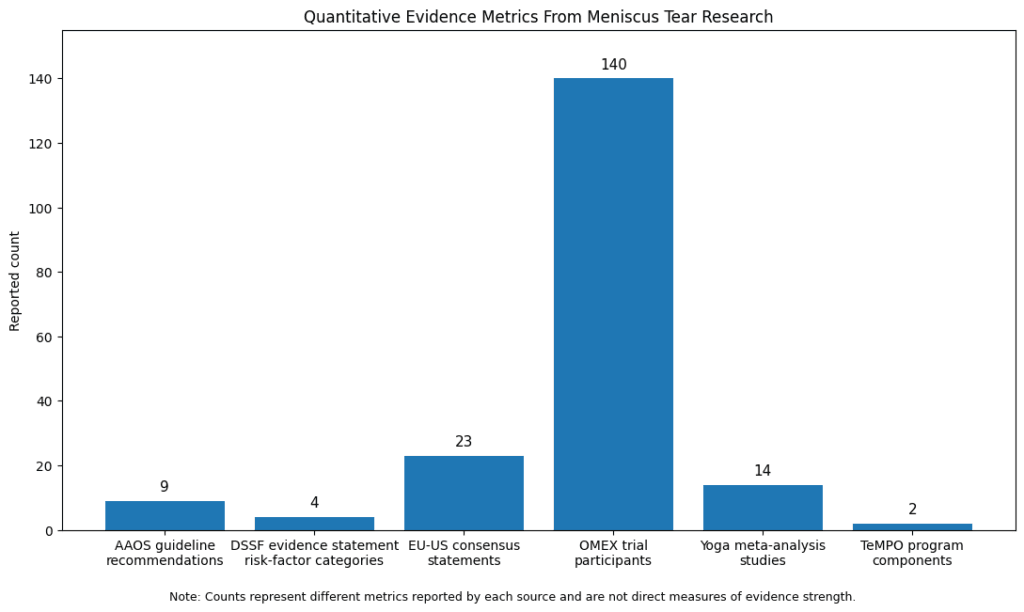
Karena mereka melakukan fungsi mekanis yang penting, melestarikan jaringan meniscal yang sehat sebanyak mungkin umumnya merupakan tujuan penting ketika pengobatan dipertimbangkan. American Academy of Orthopaedic Surgeons (AAOS) menekankan menjaga jaringan meniskus yang sehat jika memungkinkan.(1)
Apa penyebab air mata meniskus?
Meniskus dapat robek baik melalui cedera mendadak atau degenerasi bertahap.
cedera terkait olahraga.
Perubahan arah yang tiba-tiba saat kaki ditanam dapat menempatkan kekuatan puntir yang substansial melalui lutut.
Aktivitas umum yang berhubungan dengan cedera meniscal akut meliputi:
- sepak bola
- bola basket
- tenis
- sepak bola
- hal ski
- pergulatan
- Olahraga pivot lainnya
gerakan sehari-hari.
Air mata juga dapat terjadi selama aktivitas seperti:
- berjongkok
- kelu
- Bangun dari kursi rendah
- yg mempesonakan
- mengangkat sambil memutar
- melangkah dengan canggung
degenerasi terkait usia.
Seiring bertambahnya usia, jaringan meniscal bisa menjadi kurang tangguh.
Air mata degeneratif dapat berkembang tanpa cedera yang berkesan.
Penelitian dan panduan klinis membedakan lesi degeneratif dari air mata traumatis karena pengobatan dan prognosisnya dapat berbeda.(2)
Jenis air mata meniskus.
Tidak hanya ada satu jenis robekan meniskus. Dokter mengklasifikasikan air mata menurut bentuk, lokasi, dan karakteristiknya.
Pola umum meliputi:
1. air mata longitudinal.
Air mata mengalir di sepanjang meniskus.
Beberapa robekan longitudinal mungkin cocok untuk diperbaiki tergantung pada lokasi dan suplai darahnya.
2. Robekan horizontal.
Air mata mengalir lebih horizontal melalui jaringan meniscal.
Air mata ini sering dikaitkan dengan perubahan degeneratif, meskipun dapat terjadi dalam keadaan lain.
3. Robekan radial.
Robekan radial memanjang dari tepi dalam menuju bagian luar meniskus.
Efeknya dapat sangat bergantung pada lokasi dan kedalamannya.
4. Robek pegangan ember.
Robekan pegangan ember adalah robekan longitudinal yang dipindahkan.
Bagian dari meniskus dapat bergerak menuju bagian tengah lutut.
Hal ini terkadang dapat menyebabkan penguncian atau ketidakmampuan untuk meluruskan lutut sepenuhnya, membuat penilaian ortopedi yang cepat menjadi penting.
5. Robekan Flap.
Sebagian meniskus menjadi terlepas sebagian dan dapat bergerak selama gerakan lutut.
Ini dapat menghasilkan klik, menangkap, atau nyeri intermiten.
6. air mata yang kompleks.
Robekan kompleks mengandung lebih dari satu pola air mata.
Meniskus degeneratif dapat mengembangkan pola yang kompleks dari waktu ke waktu.
7 Robekan akar.
Robekan akar meniscal terjadi di dekat perlekatan meniskus ke tibia.
Cedera akar dapat secara signifikan mempengaruhi kemampuan meniskus untuk mendistribusikan beban dan oleh karena itu layak mendapatkan evaluasi yang cermat.
Gejala robekan meniskus.
Gejalanya sangat bervariasi.
Beberapa orang mengalami robekan yang relatif kecil dengan gejala minimal, sementara yang lain mengalami rasa sakit yang signifikan dan keterbatasan fungsional.
Gejala umum termasuk:
- sakit lutut
- bengkak
- kekakuan
- klik
- yg menular
- sensasi ketidakstabilan
- Kesulitan menekuk atau meluruskan lutut
- Nyeri saat memutar
- Sakit saat berjongkok
- Kesulitan menaiki tangga
AAOS mencatat bahwa rasa sakit, pembengkakan, gerakan terbatas, dan gejala mekanis dapat terjadi dengan cedera meniscal.
Bisakah robekan meniskus menyebabkan penguncian lutut?
YA.
Robekan yang dipindahkan, terutama robekan pegangan ember, dapat mengganggu gerakan lutut secara mekanis.
Lutut yang terkunci dan tidak dapat diluruskan sepenuhnya berbeda dengan hanya mengalami rasa sakit atau kaku.
Jika lutut Anda tiba-tiba terkunci, terutama setelah cedera, cari evaluasi medis daripada mencoba memaksanya lurus.
Apakah air mata meniskus sembuh?
Ini adalah salah satu pertanyaan yang paling penting.
Beberapa dapat sembuh, sementara yang lain terbatas Potensi penyembuhan.
Bagian luar meniskus memiliki suplai darah yang lebih baik daripada bagian dalam. Robekan yang terletak di daerah vaskularisasi mungkin memiliki kapasitas penyembuhan yang lebih besar daripada robekan di daerah dengan suplai darah yang buruk.
Namun, lokasi bukan satu-satunya faktor.
Penyembuhan juga dapat bergantung pada:
- pola air mata
- Ukuran robekan
- kestabilan
- menuakan
- Kesehatan lutut secara keseluruhan
- cedera terkait
- Tingkat aktivitas
- pengobatan
- apakah robekan itu traumatis atau degeneratif?
Oleh karena itu, tidak mungkin memprediksi penyembuhan hanya dengan mengetahui bahwa seseorang memiliki “robek meniskus.”
Apakah air mata meniskus sembuh dengan sendirinya?
Beberapa air mata yang simtomatik dapat membaik tanpa operasi.
Manajemen konservatif dapat mencakup:
- Modifikasi aktivitas
- terapi fisik
- Penguatan progresif
- kerja mobilitas
- manajemen nyeri
- Kembali ke aktivitas secara bertahap
Rekomendasi konsensus internasional saat ini menyatakan bahwa pengobatan non-operatif, termasuk terapi fisik, adalah pendekatan lini pertama untuk lesi meniscal degeneratif dan mungkin juga sesuai untuk beberapa robekan akut.(3)
Namun, “penyembuhan” dan “merasa lebih baik” belum tentu sama.
Seseorang dapat menjadi kurang menyakitkan dan mendapatkan kembali fungsinya bahkan jika kelainan tetap terlihat pada pencitraan.
Berapa lama air mata meniskus sembuh?
Tidak ada waktu penyembuhan tunggal untuk setiap robekan meniskus.
Pemulihan tergantung pada jenis cedera dan perawatan.
Cedera ringan yang dikelola secara konservatif dapat membaik selama beberapa minggu, sementara robekan yang signifikan atau perbaikan bedah mungkin memerlukan beberapa bulan rehabilitasi terstruktur.
Setelah perbaikan meniskus, pemulihan umumnya lebih lama daripada setelah program rehabilitasi langsung untuk robekan degeneratif yang stabil karena jaringan yang diperbaiki membutuhkan perlindungan saat sembuh.
Spesialis ortopedi dan fisioterapis Anda harus menentukan perkembangan yang tepat.
Hindari memilih tanggal kembali ke olahraga hanya berdasarkan garis waktu online.
Bagaimana air mata meniskus didiagnosis?
Seorang profesional kesehatan biasanya dimulai dengan riwayat dan pemeriksaan fisik Anda.
Mereka mungkin menilai:
- dimana rasa sakit itu terjadi
- Bagaimana cedera itu terjadi
- Rentang gerak lutut
- bengkak
- Kelembutan joint-line
- kestabilan
- Gejala mekanik
Tes klinis seperti tes McMurray dan Thessaly dapat digunakan, meskipun tidak ada tes tunggal yang sempurna. AAOS mencatat bahwa tes klinis sering paling baik ditafsirkan bersama daripada dalam isolasi.
MRI.
MRI biasanya digunakan ketika pencitraan diperlukan karena dapat memvisualisasikan jaringan lunak seperti menisci.
AAOS menggambarkan MRI sebagai sangat akurat untuk mendiagnosis robekan meniscal.
Namun, temuan MRI harus selalu ditafsirkan bersamaan dengan gejala dan temuan pemeriksaan.
Kelainan meniscal dapat terjadi bahkan pada orang yang tidak memiliki gejala yang signifikan.
pengobatan untuk meniskus air mata.
Perawatan tergantung pada cedera individu.
pengobatan konservatif.
Untuk air mata yang tepat, perawatan konservatif dapat mencakup:
- istirahat relatif
- Modifikasi aktivitas sementara
- terapi fisik
- penguatan
- Latihan gerak
- Kembali ke aktivitas secara bertahap
Tujuannya bukan hanya untuk “beristirahat sampai terasa lebih baik.”
Rehabilitasi biasanya bertujuan untuk memulihkan:
- Mobilitas lutut
- Kekuatan paha depan
- kekuatan paha
- Kekuatan Pinggul
- imbangan
- Kontrol neuromuskular
- Kapasitas Fungsional
Konsensus internasional baru-baru ini mengidentifikasi terapi fisik dan rehabilitasi sebagai komponen penting dari manajemen non-operatif.
operasi.
Pembedahan dapat dipertimbangkan dalam kasus tertentu.
Prosedur yang mungkin termasuk:
- perbaikan meniskus
- Menisektomi parsial
- Rekonstruksi meniscal dalam keadaan tertentu
Pilihannya tergantung pada air mata dan individu.
Ketika perbaikan memungkinkan, melestarikan meniskus umumnya diinginkan karena menghilangkan jaringan meniscal dapat mempengaruhi biomekanik jangka panjang lutut.
Apakah semua robekan meniskus perlu dioperasi?
ndak .
Ini sangat penting untuk robekan meniscal degeneratif.
Bukti menunjukkan bahwa pengobatan berbasis olahraga dapat sangat berguna untuk banyak orang dewasa paruh baya dan lebih tua dengan lesi meniscal degeneratif. Pernyataan bukti sistematis menemukan bukti moderat bahwa latihan dapat meningkatkan rasa sakit dan berfungsi pada tingkat yang sama seperti pembedahan pada robekan meniscal degeneratif.
Penelitian jangka panjang juga tidak menemukan perbedaan yang bermakna secara klinis dalam beberapa hasil yang dilaporkan pasien antara menisektomi parsial arthroscopic dan terapi olahraga pada orang dengan air mata degeneratif.(4)
Namun, temuan ini tidak boleh digeneralisasi untuk setiap jenis robekan meniskus.
Seorang atlet muda dengan robekan akut adalah situasi klinis yang berbeda dari orang dewasa yang lebih tua dengan robekan degeneratif.
Rehabilitasi air mata meniskus.
Rehabilitasi harus bersifat individual.
Program rehabilitasi yang khas dapat berkembang melalui beberapa tahap.
Tahap 1: Mengurangi iritasi.
Tujuan awalnya adalah untuk mengendalikan gejala dan menghindari aktivitas yang memperburuk lutut.
Tahap 2: Mengembalikan gerakan.
Latihan rentang gerak yang lembut dapat diperkenalkan sesuai dengan cedera.
Tahap 3: Membangun kekuatan.
Latihan mungkin menargetkan:
- paha depan
- paha
- glutes
- lembu jantan
- Penstabil pinggul
Tahap 4: Meningkatkan keseimbangan.
Latihan keseimbangan dan neuromuskular dapat membantu memulihkan kepercayaan diri dan kontrol.
Tahap 5: Pelatihan Fungsional.
Latihan menjadi semakin mirip dengan kegiatan sehari-hari atau olahraga.
Tahap 6: Kembali ke aktivitas.
Olahraga atau aktivitas yang menuntut harus dilanjutkan sesuai dengan tonggak fungsional daripada hanya karena beberapa minggu telah berlalu.
Konsensus rehabilitasi Meniskus EU-AS 2024 secara khusus merekomendasikan perkembangan berbasis kriteria untuk kembali ke olahraga.
Bisakah yoga membantu dengan air mata meniskus?
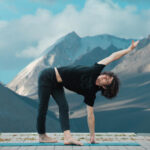
Yoga berpotensi dimasukkan ke dalam rehabilitasi bila dimodifikasi dengan tepat, tetapi tidak boleh dianggap sebagai metode untuk memperbaiki meniskus yang robek secara langsung.
Yoga dapat membantu mengerjakan:
- keluwesan
- imbangan
- kesadaran tubuh
- Kekuatan lembut
- mobilitet
- pengenduran
Penelitian tentang yoga khusus untuk robekan meniskus terbatas.
Ada banyak penelitian tentang yoga untuk osteoartritis lutut, yang bukan kondisi yang sama.
Sebuah tinjauan sistematis 2026 dan meta-analisis dari 14 penelitian yang melibatkan 1.183 orang dengan osteoartritis lutut menemukan bukti tingkat rendah bahwa yoga meningkatkan rasa sakit dan fungsi fisik, sambil mencatat keterbatasan dalam bukti.(5)
Oleh karena itu, yoga berpotensi dianggap sebagai tambahan untuk rehabilitasi, daripada penggantian pengobatan meniskus yang tepat.
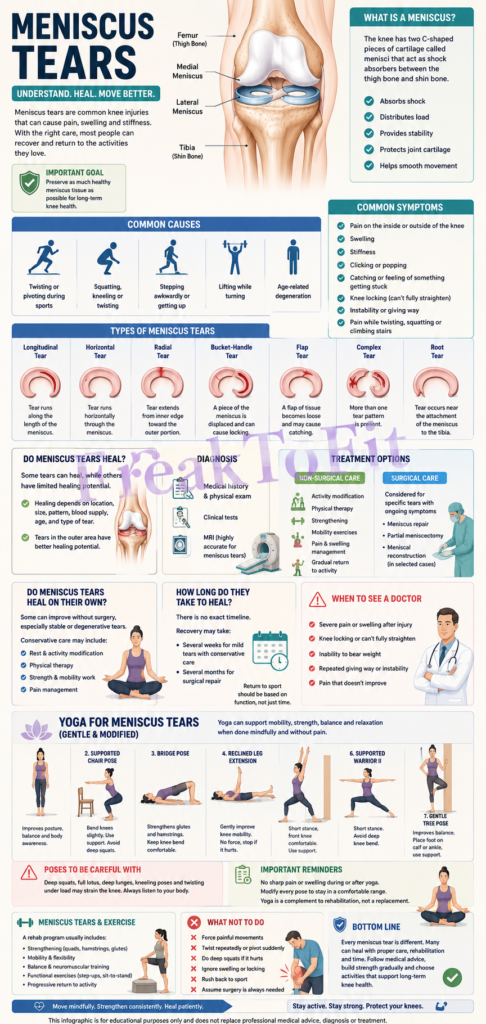
Yoga lembut untuk meniskus air mata.
Gerakan berikut mungkin cocok untuk beberapa orang selama pemulihan, tetapi mereka harus individual.
Jangan melakukannya selama cedera akut hanya karena tampak lembut. Fisioterapis atau profesional ortopedi Anda harus menentukan apakah mereka sesuai untuk robekan khusus Anda.
1. pose gunung.
Berdirilah dengan nyaman dengan kaki Anda ditopang.
Jaga lutut Anda lembut daripada terkunci secara paksa.
Rilekskan bahu Anda.
Ambil beberapa napas lambat.
Mengapa Menggunakannya: Ini dapat mendorong postur tubuh, keseimbangan, dan kesadaran tubuh yang tegak tanpa memerlukan fleksi lutut yang dalam.
2. Pose kursi yang didukung.
Berdiri di dekat dinding atau kursi kokoh.
Alih-alih melakukan squat yang dalam, tekuk lutut Anda sedikit.
Jaga agar berat badan Anda terdistribusi secara merata.
Tahan sebentar dan kembali berdiri.
PENTING: Hindari fleksi lutut dalam jika meningkatkan rasa sakit atau gejala mekanis.
3. Pose jembatan.
Berbaring telentang dengan lutut ditekuk hanya ke sudut yang nyaman.
Tekan dengan lembut melalui kaki Anda dan angkat pinggul Anda.
turun perlahan.
Pose jembatan dapat memperkuat glutes dan rantai posterior sambil menjaga gerakan tetap terkendali.
Namun, posisi lutut harus tetap nyaman.
4. Ekstensi kaki bersandar.
Berbaring dengan nyaman di punggung Anda.
Jaga satu lutut ditekuk dan perlahan-lahan luruskan kaki lainnya sesuai toleransi.
kembalikan ke posisi awal.
Ini lebih merupakan latihan mobilitas daripada tradisional pose yoga.
Jangan memaksa lutut ke dalam kisaran yang menyakitkan.
5. Prajurit yang Didukung i.
Gunakan sikap yang lebih pendek dari yang biasanya Anda gunakan.
Jaga lutut depan tetap nyaman dan hindari memaksanya ke dalam fleksi yang dalam.
Gunakan dinding atau kursi untuk keseimbangan jika perlu.
6. Prajurit yang didukung II.
Sekali lagi, gunakan kuda-kuda yang lebih pendek dan tikungan lutut sedang.
Jangan memaksakan lutut depan ke posisi yang dalam.
Jika Pose menyebabkan nyeri sendi-line, klik dengan rasa sakit, atau bengkak, berhenti.
7 .Pose pohon lembut.
berdiri di samping dinding.
Tempatkan kaki yang tidak menahan beban pada betis atau pergelangan kaki bagian dalam daripada memaksanya tinggi ke paha.
Pegang dinding jika diperlukan.
Ini dapat bekerja pada keseimbangan tanpa memerlukan gerakan lutut yang signifikan.
Yoga berpose untuk berhati-hati.
Beberapa tradisional Pose Yoga Tempatkan tuntutan substansial pada fleksi atau rotasi lutut.
Tergantung pada robekan, Anda mungkin perlu memodifikasi atau menghindari:
- Posisi jongkok yang dalam
- Teratai Penuh
- setengah teratai
- pose pahlawan
- Patung-parung dalam
- Variasi Prajurit yang Dalam
- pose berlutut
- Memutar posisi di bawah beban
Masalahnya bukan karena pose-pose ini pada dasarnya “buruk.”
Masalahnya adalah apakah mereka menempatkan tekanan berlebihan pada lutut Anda yang terluka.
Bisakah yoga membuat robekan meniskus lebih buruk?
Itu bisa jika latihannya melibatkan beban berlebihan, fleksi dalam, puntiran, atau gerakan di luar kapasitas rehabilitasi Anda saat ini.
Rasa sakit adalah sinyal penting.
Jika suatu pose menyebabkan:
- rasa sakit yang tajam
- Pembengkakan baru
- yg menular
- kunci
- ketidakstabilan
- Gejala yang meningkat setelah berolahraga
Hentikan gerakan dan diskusikan dengan profesional kesehatan Anda.
Jangan berasumsi bahwa ketidaknyamanan berarti latihannya adalah “menyembuhkan cedera.”
Latihan air mata meniskus selain yoga.
Program rehabilitasi akan sering melibatkan penguatan progresif.
Contohnya bisa meliputi:
- Angkat kaki lurus
- jembatan glute
- Latihan duduk-ke-berdiri
- tingkat tambahan
- betis naik
- penguatan hamstring
- Penguatan paha depan
- Latihan penculik pinggul
- Latihan keseimbangan
Pemilihan latihan yang tepat harus bergantung pada tahap pemulihan.
Pendekatan rehabilitasi standar untuk robekan meniscal degeneratif dan osteoartritis lutut meliputi penguatan, peregangan, pelatihan fungsional, dan latihan neuromuskular.(6)
Bisakah Anda berjalan dengan robekan meniskus?
Beberapa orang dapat berjalan dengan robekan meniskus, sementara yang lain mengalami rasa sakit atau gejala mekanis yang signifikan.
Kemampuan berjalan tidak memberi tahu Anda betapa seriusnya air mata itu.
Jika berjalan kaki nyaman dan profesional kesehatan Anda telah menyarankan aktivitas, berjalan bertahap mungkin tepat.
Jika setiap Langkah menyebabkan rasa sakit yang signifikan, pembengkakan, atau ketidakstabilan, jangan memaksakan diri untuk berjalan jauh hanya untuk “menguatkan” lutut.
Bisakah Anda berolahraga dengan robekan meniskus?
Seringkali, ya—tetapi latihan harus sesuai untuk cedera.
Aktivitas berdampak rendah dan rehabilitasi terstruktur sering digunakan selama pemulihan.
Namun, latihan yang melibatkan:
- yg menggigil
- Arah tiba-tiba berubah
- jongkok yang dalam
- loncatan
- Pendaratan berdampak tinggi
mungkin perlu dibatasi sementara tergantung pada robekan.
Tujuannya adalah pemuatan progresif, bukan tidak aktif sepenuhnya.
Kapan Anda harus ke dokter?
Carilah evaluasi medis jika Anda memiliki:
- Pembengkakan lutut yang signifikan setelah cedera
- nyeri parah atau memburuk
- Ketidakmampuan untuk menanggung berat badan
- lutut yang mengunci
- Ketidakmampuan untuk meluruskan lutut sepenuhnya
- Episode pemberian jalan berulang
- Ketidakstabilan yang signifikan
- Gejala persisten meskipun perawatan konservatif
Lutut yang tiba-tiba terkunci setelah cedera patut mendapat perhatian khusus karena fragmen meniscal yang terlantar dapat mengganggu gerakan.
Bisakah robekan meniskus menyebabkan radang sendi?
Cedera meniscal berhubungan dengan peningkatan risiko osteoartritis lutut di masa depan, meskipun hubungan tersebut dipengaruhi oleh banyak faktor.
Meniskus membantu mendistribusikan kekuatan di seluruh lutut, sehingga hilangnya jaringan meniscal dapat mengubah mekanika sendi.
ini adalah satu alasan pelestarian sehat Jaringan meniscal merupakan tujuan pengobatan yang penting.
Namun, robekan meniskus tidak tak berarti arthritis tidak dapat dihindari.
Rehabilitasi yang tepat, pengelolaan faktor yang berkontribusi, latihan kekuatan, pemeliharaan aktivitas fisik, dan perawatan medis yang tepat semuanya dapat menjadi bagian penting dari kesehatan lutut jangka panjang.
Air mata meniskus: apa yang tidak boleh dilakukan.
Selama pemulihan, hindari dengan asumsi bahwa lebih banyak olahraga selalu lebih baik.
Jangan:
- Paksa gerakan lutut yang menyakitkan
- berulang kali memutar lutut
- Lakukan squat dalam meskipun gejalanya
- Abaikan pembengkakan berulang
- Lanjutkan melalui rasa sakit yang tajam
- Terburu-buru kembali ke olahraga
- Asumsikan setiap robekan membutuhkan operasi
- Asumsikan setiap air mata akan sembuh tanpa pengobatan
- Gunakan yoga sebagai pengganti rehabilitasi
pertanyaan yang sering diajukan.
1. Apakah air mata meniskus sembuh dengan sendirinya?
Beberapa dapat membaik tanpa operasi, terutama air mata stabil atau degeneratif tertentu. Potensi penyembuhan tergantung pada lokasi, pola, suplai darah, dan faktor lainnya.
2 . Berapa lama air mata meniskus sembuh?
Tidak ada timeline universal. Pemulihan dapat berkisar dari beberapa minggu untuk beberapa cedera yang dikelola secara konservatif hingga beberapa bulan untuk robekan yang diperbaiki secara pembedahan.
3. Apa saja jenis utama dari air mata meniskus?
Pola umum termasuk longitudinal, horizontal, radial, pegangan ember, flap, kompleks, dan root robekan.
4. Bisakah Anda berjalan dengan robekan meniskus?
Beberapa orang dapat berjalan normal atau dengan ketidaknyamanan ringan, sementara yang lain tidak. Kemampuan berjalan saja tidak menentukan tingkat keparahan air mata.
5. Apakah robekan meniskus selalu membutuhkan operasi?
ndak Banyak robekan meniscal degeneratif pada awalnya dapat dikelola dengan rehabilitasi berbasis olahraga dan pendekatan konservatif lainnya.
6. Bisakah yoga menyembuhkan robekan meniskus?
Tidak ada cukup bukti untuk mengatakan bahwa yoga memperbaiki meniskus yang robek. Yoga yang lembut dan dimodifikasi dapat melengkapi rehabilitasi dengan melatih mobilitas, keseimbangan, kekuatan, dan relaksasi.
7 Yoga mana yang terbaik untuk air mata meniskus?
Tidak ada satu gaya terbaik secara universal. Gerakan lembut dan termodifikasi seperti pose gunung, pose pohon yang didukung, pose jembatan yang lembut, dan pose berdiri yang dimodifikasi dengan hati-hati mungkin cocok untuk beberapa orang. Mereka harus dipilih sesuai dengan tahap cedera dan rehabilitasi.
8. Haruskah saya melakukan squat dalam dengan robekan meniskus?
tidak otomatis. Fleksi lutut yang dalam dapat memperburuk gejala pada beberapa orang. Ikuti batasan yang diberikan oleh profesional ortopedi atau fisioterapis Anda.
9. Bisakah robekan meniskus bertambah parah?
YA. Air mata tertentu bisa menjadi lebih bergejala atau tidak stabil, terutama dengan gerakan yang memberatkan berulang. Nyeri persisten, pembengkakan, penguncian, atau ketidakstabilan harus dievaluasi.
10. Apakah terapi fisik efektif untuk meniskus air mata?
Rehabilitasi berbasis olahraga merupakan pilihan pengobatan yang penting, terutama untuk lesi meniscal degeneratif. Bukti menunjukkan bahwa olahraga dapat memberikan hasil yang sebanding dengan operasi untuk banyak orang dewasa paruh baya dan lebih tua dengan air mata degeneratif.
garis bawah.
Robekan meniskus sangat bervariasi. Robekan kecil yang stabil dan robekan ember yang dipindahkan atau robekan akar meniscal tidak boleh diperlakukan sebagai kondisi yang sama.
Pengobatan yang paling tepat tergantung pada faktor-faktor seperti usia, pola air mata, lokasi, gejala, tingkat aktivitas, kerusakan lutut terkait, dan apakah cedera itu traumatis atau degeneratif.
Yang penting, tidak setiap robekan meniskus memerlukan pembedahan. Bagi banyak air mata degeneratif, latihan terstruktur dan rehabilitasi adalah pendekatan lini pertama yang penting, dan penelitian telah menemukan bahwa menambahkan menisektomi parsial arthroscopic ke olahraga tidak selalu memberikan hasil yang dilaporkan pasien jangka panjang yang lebih baik.
Yoga mungkin memiliki tempat sebagai kegiatan pelengkap, terutama untuk menjaga mobilitas, keseimbangan, kekuatan, dan kesadaran tubuh. Penelitian tentang yoga untuk osteoarthritis lutut menunjukkan kemungkinan perbaikan dalam nyeri dan fungsi fisik, meskipun kepastian bukti bervariasi dan penelitian ini tidak dapat secara langsung ditafsirkan sebagai bukti bahwa yoga menyembuhkan robekan meniskus.
Jika Anda memiliki dugaan atau air mata yang dikonfirmasi, pendekatan yang paling aman adalah dengan menilai lutut dan membangun perkembangan latihan Anda di sekitar cedera tertentu. Hindari memaksakan tekuk lutut yang dalam, puntiran, atau posisi yang menyakitkan hanya karena mereka adalah bagian dari urutan yoga tradisional.
+6 sumber
VeryWelFit memiliki pedoman pengadaan yang ketat dan bergantung pada studi peer-review, lembaga penelitian pendidikan, dan organisasi medis. Kami menghindari penggunaan referensi tersier. Anda dapat mempelajari lebih lanjut tentang bagaimana kami memastikan konten kami akurat dan terkini dengan membaca Kebijakan Editorial.
- pengelolaan patologi meniscal akut terisolasi; https://www.orthoinfo.org/globalassets/pdfs/plain-language-summary_meniscus-tears-2024.pdf
- Faktor risiko, diagnosis dan pengobatan non-bedah untuk robekan meniscal: bukti dan rekomendasi: makalah pernyataan yang ditugaskan oleh Danish Society of Sports Physical Therapy (DSSF); https://pubmed.ncbi.nlm.nih.gov/29420236/
- Konsensus Rehabilitasi Meniskus Uni Eropa-AS 2024: Sebuah Inisiatif Esska-AOSSM-AASPT. Bagian II-Pencegahan, pengobatan non-operatif dan kembali ke olahraga; https://pubmed.ncbi.nlm.nih.gov/40501314/
- Menisektomi parsial arthroscopic versus terapi latihan untuk air mata meniscal degeneratif: 10 tahun tindak lanjut dari uji coba terkontrol acak OMEX; https://pubmed.ncbi.nlm.nih.gov/39326908/
- Efek yoga pada nyeri, fungsi fisik, dan hasil biomekanik/penurunan pada osteoartritis lutut: tinjauan sistematis dan meta-analisis tiga tingkat; https://pubmed.ncbi.nlm.nih.gov/41761497/
- Proses berbasis konsensus yang mengidentifikasi terapi fisik dan perawatan olahraga untuk pasien dengan air mata meniscal degeneratif dan OA lutut: Intervensi Terapi Fisik Tempo dan Program Latihan Rumah; https://pubmed.ncbi.nlm.nih.gov/31684921/