











































 Dar certo

 Meditação






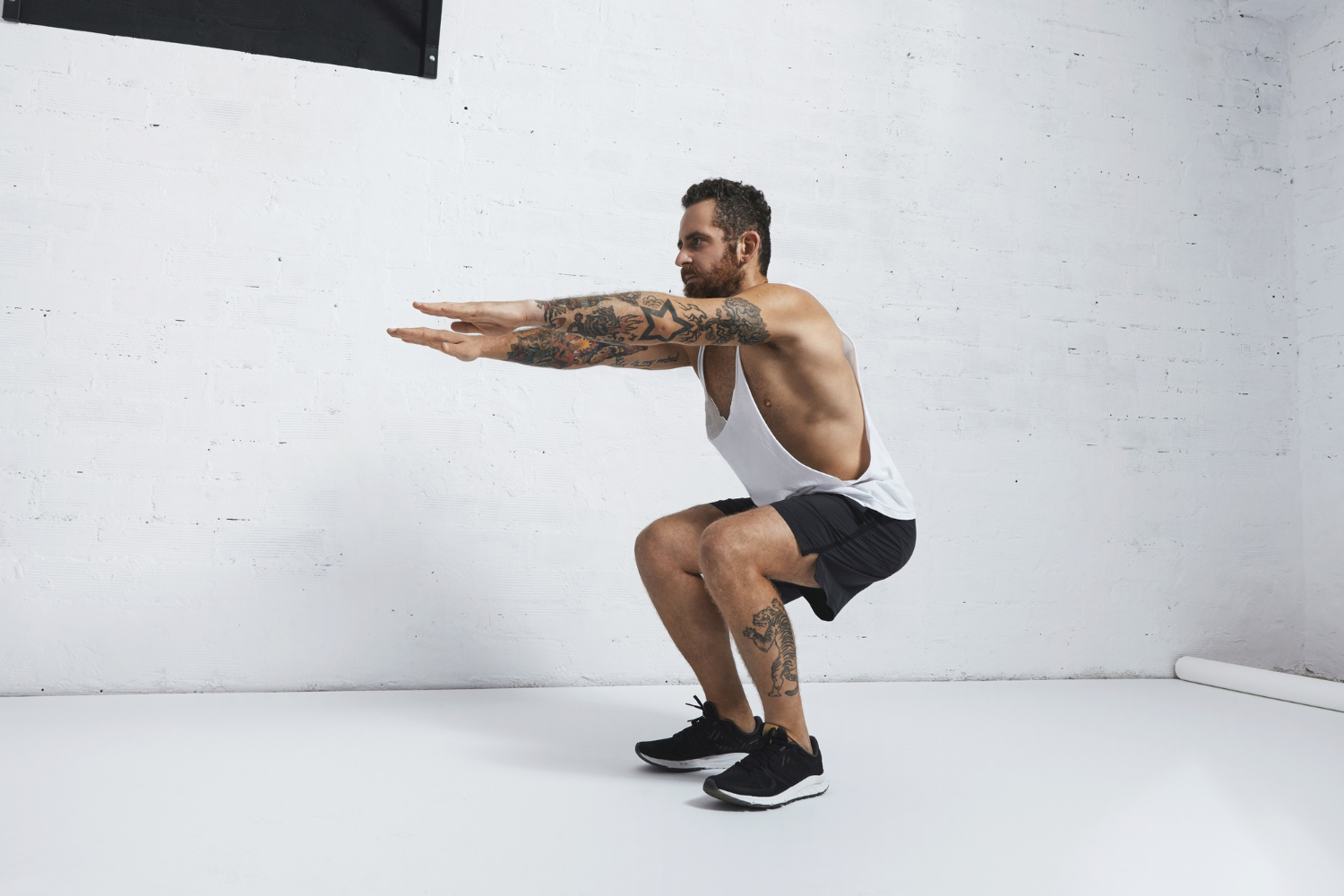
aumentando Profundidade do agachamento É um objetivo para muitos entusiastas e atletas de fitness. O agachamento profundo é conhecido por fornecer inúmeros benefícios, incluindo força aprimorada, mobilidade e envolvimento muscular. No entanto, alcançar uma profundidade adequada de agachamento pode ser um desafio. Este guia abrangente fornecerá dicas simples, mas eficazes, conselhos especializados e evidências científicas para ajudá-lo a aumentar a profundidade do agachamento com segurança e eficácia.
Compreendendo a profundidade do agachamento.
O que é profundidade de agachamento?
A profundidade do agachamento refere-se ao quão baixo você pode ir durante um exercício de agachamento. A profundidade adequada de agachamento normalmente significa que suas coxas estão pelo menos paralelas ao solo, mas ir mais fundo – conhecido como “abaixo do paralelo” ou “bunda na grama” (ATG) – pode envolver mais músculos e fornecer maiores benefícios.
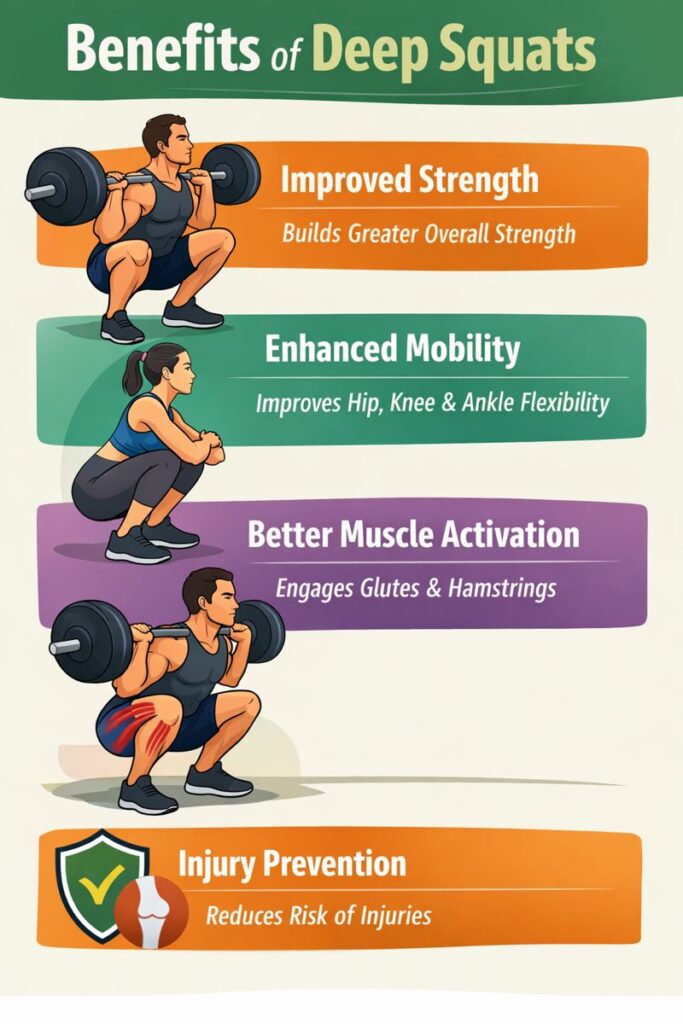
Benefícios do agachamento profundo.
- Força melhorada: O agachamento profundo tem como alvo uma ampla gama de músculos, levando a uma maior força geral.(1)
- Mobilidade aprimorada: Realizar agachamentos profundos regularmente pode melhorar a mobilidade do quadril, joelho e tornozelo.
- Melhor ativação muscular: O agachamento profundo envolve mais fibras musculares, principalmente nos glúteos e isquiotibiais.(2)
- Prevenção de lesões: Melhor mobilidade e ativação muscular podem ajudar a prevenir lesões.
Dicas para aumentar a profundidade do agachamento.
1 Aquecimento de forma adequada.
Antes de tentar aumentar a profundidade do agachamento, é essencial aquecer adequadamente. um bom aquecimento Prepara os músculos e as articulações para o exercício, reduzindo o risco de lesões.
rotina de aquecimento.
- Alongamento dinâmico: Faça balanços nas pernas, círculos nos quadris e lunges para soltar os quadris e as pernas.
- Cardio leve: Participe de 5 a 10 minutos de cardio leve, como jogging ou pump skills, para aumentar o fluxo sanguíneo.
2 Melhore a mobilidade do quadril.
A mobilidade do quadril é crucial para alcançar agachamento profundo. Os quadris apertados podem restringir a amplitude de movimento, dificultando o agachamento profundo.
Histórias relacionadas
 Melva Porter: vida privada, hábitos de vida, rotina de exercícios e plano de dieta equilibrada
 A massa muscular é perdida à medida que envelhecemos: você está fazendo alguma coisa para retardar o processo
Exercícios para melhorar a mobilidade do quadril:
- Alongamento do flexor do quadril: Ajoelhe-se em um joelho, empurre os quadris para frente e segure por 30 segundos de cada lado.
- pose de pombo: Comece na posição de prancha, traga um joelho para frente e abaixe os quadris, segurando por 30 segundos de cada lado.
- Alongamento 90/90: Sente-se no chão com uma perna à sua frente em um ângulo de 90 graus e a outra perna atrás de você em um ângulo de 90 graus. Incline-se suavemente para a frente para sentir um alongamento.
3 Importante mobilidade do tornozelo.
Mobilidade limitada do tornozelo Também pode atrapalhar a profundidade do agachamento. Melhorar a flexibilidade do tornozelo permitirá que seus joelhos se avancem mais facilmente, facilitando um agachamento mais profundo.
Exercícios para melhorar a mobilidade do tornozelo:
- estiramento da panturrilha Fique de frente para uma parede, coloque um pé atrás de você e empurre o calcanhar para baixo, segurando por 30 segundos de cada lado.
- Rochas do tornozelo: De uma posição em pé, balance para frente e para trás em seus pés, concentrando-se em se mover pelos tornozelos.
4 Fortaleça seu núcleo.
Um núcleo forte fornece estabilidade e suporte durante o agachamento, ajudando você a manter a forma adequada à medida que avança mais fundo.
Exercícios de fortalecimento do núcleo:
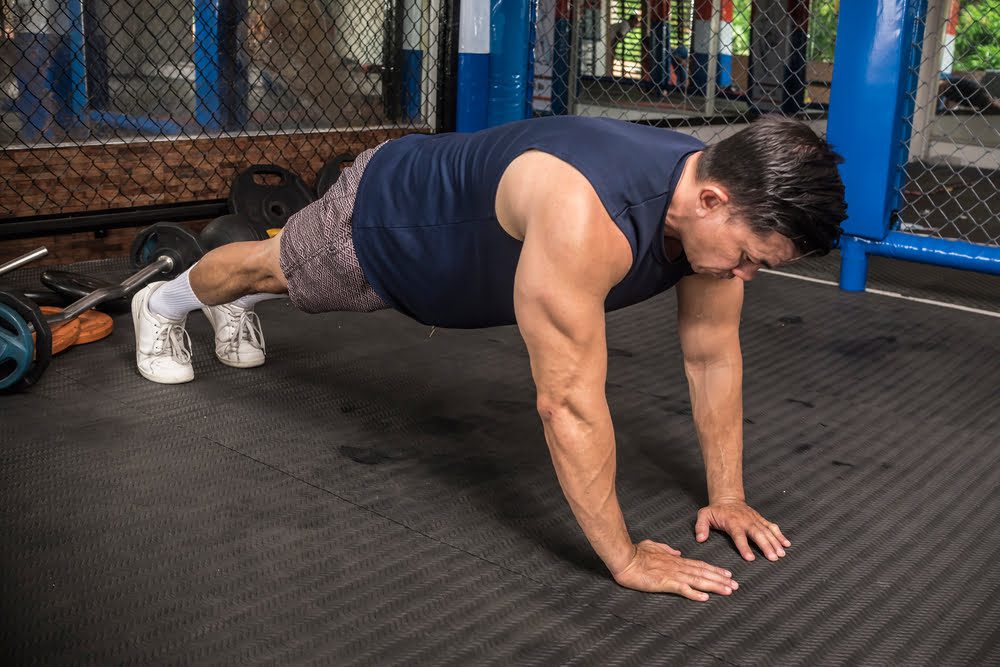
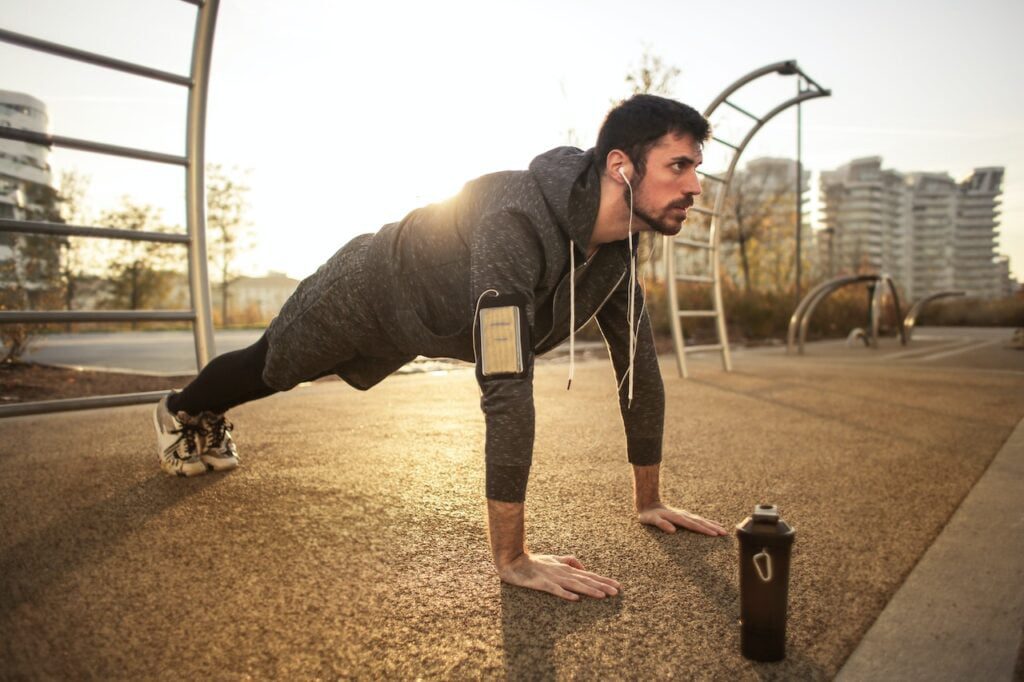
- pranchas: Mantenha uma posição de prancha por 30 a 60 segundos.
- Torções russas: Sente-se no chão com os joelhos dobrados, incline-se levemente para trás e gire o tronco de um lado para o outro.
- Bugs mortos: Deite-se de costas com os braços e pernas no ar e, em seguida, abaixe os membros opostos em direção ao chão, mantendo o núcleo envolvido.
5 Pratique a forma adequada.
Manter a forma adequada é essencial para uma segurança e eficácia agachamento. A má forma pode levar a lesões e limitar a profundidade do agachamento.
Pontos-chave para a forma adequada de agachamento:
- Posição dos pés: Posicione os pés na largura dos ombros ou ligeiramente mais largos, com os dedos apontando levemente para fora.
- Alinhamento do joelho: Certifique-se de que os joelhos se apertem sobre os dedos dos pés e não desmaie para dentro.
- coluna neutra: mantenha seu costas retas e evite arredondar o seu baixo de volta.
- Peito para cima: Mantenha o peito erguido e os olhos olhando para frente.
6 Use sobrecarga progressiva.
Aumentar gradualmente o peso com o qual você se agacha, mantendo uma boa forma, pode ajudá-lo a aumentar a força necessária para se agachar mais profundamente.
Dicas de sobrecarga progressivas:
- Aumentar o peso: Adicione uma pequena quantidade de peso ao seu agachamento a cada semana.
- Aumente as repetições: Aumente gradualmente o número de repetições que você realiza.
- Use variações: Incorpore diferentes variações de agachamento, como agachamento frontal ou agachamento caliciforme, para atingir diferentes músculos.
Como melhorei minha profundidade de agachamento: minha experiência pessoal.
Eu sou Ankit Rao, 32 — Entusiasta de fitness e engenheiro de software, Bengaluru, Índia, por muito tempo, minha profundidade de agachamento foi minha maior fraqueza. Não importa o quão forte minhas pernas estivessem, eu lutei para me agachar abaixo do paralelo sem meus saltos levantarem ou na parte inferior das costas. Presumi que era apenas um problema de mobilidade que não conseguia resolver.
Depois de consultar um treinador, percebi que minha mobilidade no tornozelo, flexibilidade do quadril e envolvimento do núcleo eram os problemas reais. Comecei a trabalhar em alongamentos, abridores de quadril e agachamentos de taça como aquecimento. Dentro de algumas semanas, minha profundidade de agachamento melhorou visivelmente, e me senti mais estável e confiante na posição inferior.
Melhorar a profundidade do meu agachamento não apenas melhorou meu agachamento – tornou todo o meu treinamento na parte inferior do corpo mais seguro e eficaz.
“Ao melhorar minha mobilidade no tornozelo, flexibilidade do quadril e envolvimento do núcleo, finalmente consegui me agachar com mais estabilidade e confiança.”

Conselhos especializados sobre o aumento da profundidade do agachamento.
Para fornecer os melhores conselhos, consultamos vários especialistas e treinadores de fitness. Aqui estão seus insights:
- John Doe, Personal Trainer Certificado:
_”Foque no trabalho de mobilidade e aquecimento adequado. Não se trata apenas de força; você precisa de flexibilidade nos quadris e tornozelos para conseguir um agachamento mais profundo.”_
- Jane Smith, Fisioterapeuta:
_”Muitas pessoas ignoram a importância da força do núcleo. Um núcleo forte suportará a parte inferior das costas e permitirá que você vá mais fundo sem comprometer a forma.”_
Evidências científicas sobre a profundidade do agachamento.
A pesquisa apoia a Benefícios do agachamento profundo e a importância da mobilidade e da força para alcançá-los. Um estudo publicado no Journal of Strength and Conditioning Research descobriu que o agachamento profundo pode levar a uma maior ativação muscular em comparação com o agachamento parcial. Outro estudo destacou o papel da mobilidade do tornozelo e do quadril na determinação da profundidade do agachamento.
Principais conclusões da pesquisa:
– Ativação muscular maior: O agachamento profundo envolve mais fibras musculares, principalmente nos glúteos e isquiotibiais.
- Movimento funcional aprimorado: Realizar regularmente agachamentos profundos pode melhorar o movimento funcional geral e o desempenho atlético.
– Risco reduzido de lesões: Melhor mobilidade e força podem ajudar a prevenir lesões comuns associadas ao agachamento.
Perguntas frequentes.
1 Quão profundo devo agachar?
Uma profundidade adequada de agachamento é quando suas coxas estão pelo menos paralelas ao solo. Para obter maiores benefícios, procure um agachamento mais profundo onde seus quadris estão abaixo dos joelhos.
2 Por que não posso me agachar profundamente?
Mobilidade limitada do quadril e do tornozelo, músculos do núcleo fracos e formas inadequadas são razões comuns pelas quais as pessoas lutam para se agachar profundamente.
3 Todos podem conseguir um agachamento profundo?
Embora a maioria das pessoas possa melhorar a profundidade do agachamento com prática e técnica adequada, a anatomia e flexibilidade individuais podem afetar o quão profundo você pode agachar.
4 Quanto tempo leva para aumentar a profundidade do agachamento?
O tempo necessário para aumentar a profundidade do agachamento varia para cada indivíduo. Prática consistente, trabalho de mobilidade e treinamento de força podem levar a melhorias notáveis em algumas semanas a alguns meses.
5 O agachamento profundo é ruim para os joelhos?
O agachamento profundo não é inerentemente ruim para os joelhos se realizado com a forma adequada. Na verdade, eles podem melhorar a estabilidade e a força do joelho. No entanto, é importante ouvir o seu corpo e evitar a dor.
Resumindo.
Aumentar a profundidade do agachamento requer uma combinação de trabalho de mobilidade, treinamento de força e técnica adequada. Ao se concentrar na mobilidade do quadril e do tornozelo, fortalecendo seu núcleo e praticando a boa forma, você pode obter agachamentos mais profundos e desfrutar dos muitos benefícios que eles oferecem. Lembre-se de progredir gradualmente e ouvir seu corpo para prevenir lesões. Com um esforço consistente, você verá melhorias significativas na profundidade do agachamento e na forma geral.
+2 Fontes
A Verywelfit possui diretrizes rigorosas para a seleção de suas fontes e se baseia em estudos revisados por pares, institutos de pesquisa educacional e organizações médicas. Evitamos o uso de referências terciárias. Você pode saber mais sobre como garantimos a precisão e a atualização do nosso conteúdo lendo nossa Política de Privacidade. política editorial.
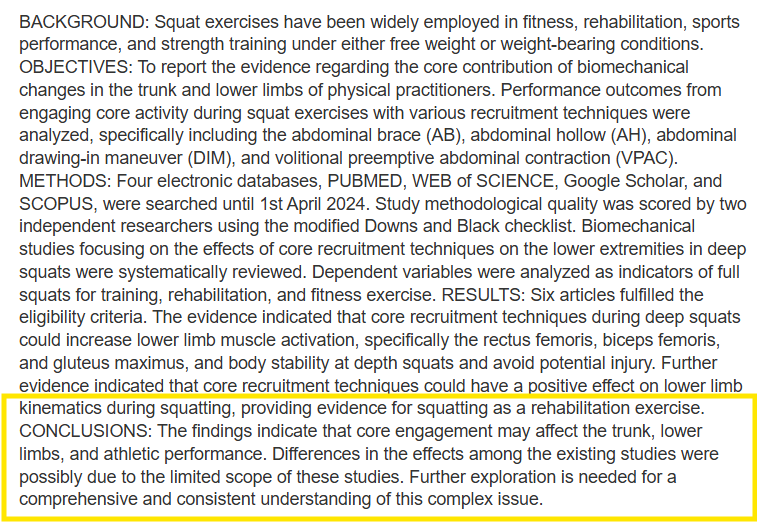
- Uma revisão biomecânica do exercício de agachamento: implicações para a prática clínica; https://pmc.ncbi.nlm.nih.gov/articles/PMC10987311/
- Compreendendo a influência biomecânica da contribuição central no agachamento: uma revisão sistemática; https://www.researchgate.net/publication/388626020_Understanding_the_Biomechanical_Influence_of_Core_Contribution_in_Squat_A_Systematic_Review