








































 latihan

 meditasi






Fakta-fakta cepat
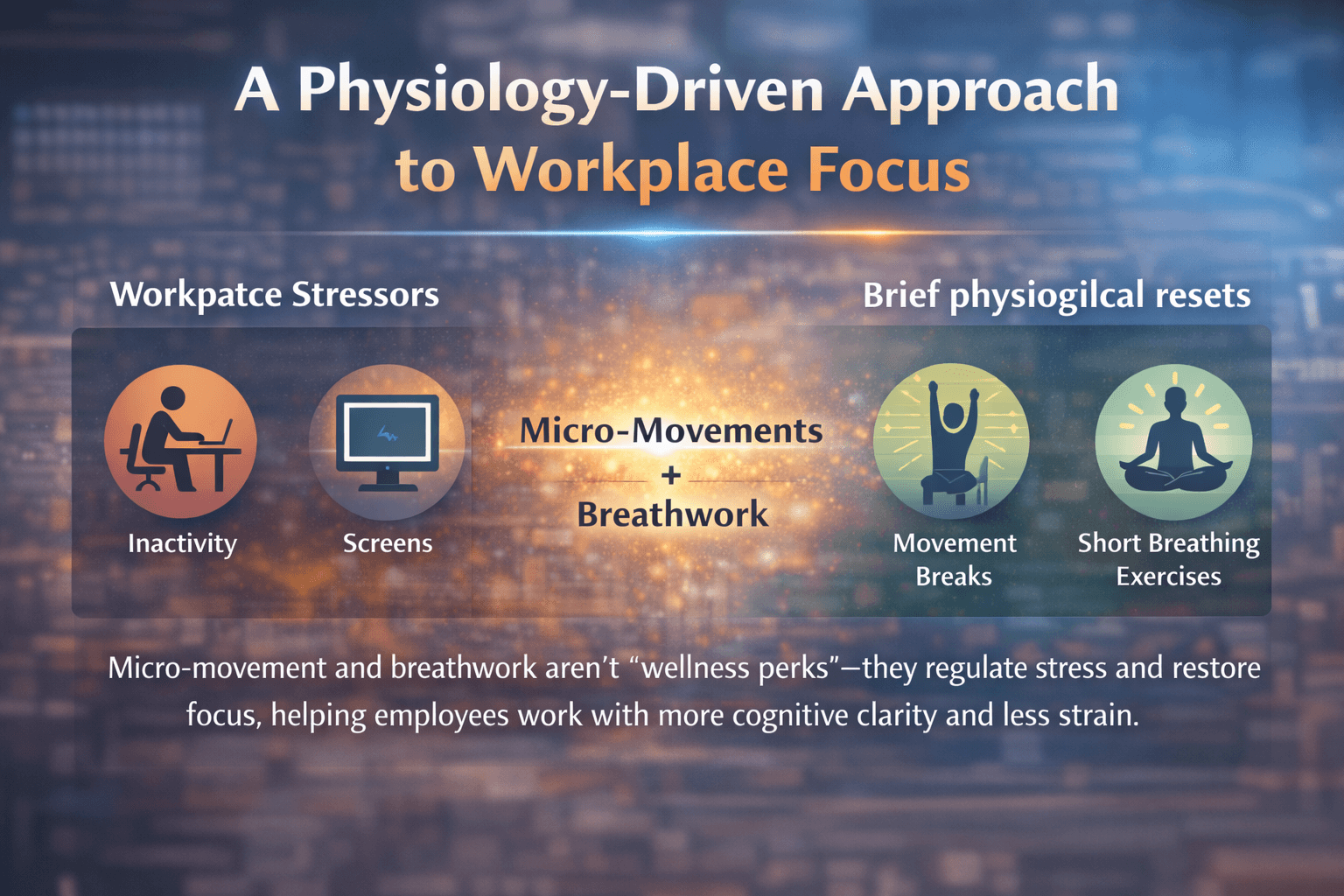
- This article lays out a practical, evidence-aligned framework for using micro-movement and breathwork to support focus at work — not as a “wellness perk,” but as an operational strategy.
- But when it becomes the default, the body shifts into sympathetic dominance — a mild but persistent fight-or-flight state.
- This sends a simple signal to the brain.

Tempat kerja modern memiliki masalah fokus.
Bukan masalah motivasi.
Bukan masalah bakat.
Bukan masalah “orang tidak peduli lagi”.
A Masalah Fisiologi.
Cerita terkait
 Kekuatan Bhumisparsha Mudra: Menyampaikan Manfaat dan Panduan Langkah-demi-Langkahnya
 Eka Pada Bakasana: Manfaat, Cara Melakukan dan Variasi
Sebagian besar organisasi mencoba untuk memecahkan fokus yang menurun dan peningkatan kelelahan dengan:
- Alat Produktivitas
- Sistem manajemen waktu
- Tekanan kinerja
- Lokakarya Ketahanan
Dan sementara itu dapat membantu di permukaan, mereka sering melewatkan kemacetan nyata:
Sistem saraf manusia tidak pernah dirancang selama delapan jam keheningan, permintaan kognitif yang konstan, dan sinyal pemulihan nol.
Sampai para pemimpin memahami itu, inisiatif fokus akan terus gagal.
Artikel ini menjabarkan Kerangka kerja yang praktis dan selaras dengan bukti untuk menggunakan Gerakan mikro dan pernafasan Untuk mendukung fokus di tempat kerja — bukan sebagai “kesehatan kesehatan”, tetapi sebagai strategi operasional.
Mengapa fokus menurun di lingkungan kerja modern?
Sebagian besar karyawan tidak kehilangan fokus karena mereka terganggu oleh telepon atau kurang disiplin.
Mereka kehilangan fokus karena sistem saraf mereka beroperasi di bawah Stres kronis tingkat rendah.
Pertimbangkan hari kerja biasa:
- Duduk lama
- Eksposur layar terus menerus
- beban kognitif tinggi
- Pergantian tugas yang sering
- Evaluasi sosial (rapat, email, aplikasi perpesanan)
Untuk sistem saraf, ini terasa seperti:
“Tetap waspada. Jangan bergerak. Perhatikan. sesuatu yang penting mungkin terjadi.”
Keadaan itu berguna jangka pendek.
Tetapi ketika menjadi default, tubuh bergeser ke Dominasi simpatik — keadaan fight-or-flight yang ringan tapi terus-menerus.
Hasilnya:
- Perhatian yang menyempit
- Memori kerja berkurang
- Pengambilan keputusan yang lebih lambat
- Tingkat kesalahan yang meningkat
- Kelelahan mental yang tidak sembuh dengan istirahat
Pada saat itu, tidak ada peretasan produktivitas yang dapat mengesampingkan biologi.
Biaya tersembunyi “hanya dorong”.
Banyak budaya tempat kerja masih menghargai:
- Duduk lebih lama
- Melewatkan istirahat
- Menghidupkan melalui kelelahan
Di permukaan, ini terlihat seperti komitmen.
Secara fisiologis, ia menciptakan:
- yg dipotong jantung sifat
- Fungsi korteks prefrontal yang terganggu
- Reaktivitas stres yang lebih tinggi
- Kelelahan kognitif yang lebih cepat
Karyawan mungkin tampak produktif, tetapi pemikiran mereka menjadi:
- berat
- yg tdk sesuai d
- Kurang kreatif
- Lebih rawan kesalahan
Ini sering disalahartikan sebagai “kinerja di bawah tekanan,” padahal sebenarnya penurunan kinerja di bawah tekanan.
Apa sebenarnya gerakan mikro (dan mengapa itu berhasil).
Gerakan mikro bukanlah latihan, rutinitas peregangan, atau pemrograman kebugaran.
itu kecil, masukan fisik yang disengaja Dirancang untuk memulihkan Keseimbangan sistem saraf tanpa mengganggu pekerjaan.
Biasanya:
- 30 detik sampai 5 menit
- Berbasis meja atau berdiri
- Tidak berkeringat
- Tidak ada peralatan
- Tidak ada pakaian ganti
Dari sudut pandang fisiologis, gerakan mikro:
- Mengaktifkan kembali sensor proprioseptif
- Meningkatkan sirkulasi dan pengiriman oksigen
- Mengurangi pengaman otot
- Mengembalikan refleks postural
Ini mengirimkan sinyal sederhana ke otak:
“Tubuhnya aman. Sumber daya dapat kembali berpikir.”
Ketika itu terjadi, fokus meningkat secara alami.

Mengapa Breathwork Penting (dan mengapa sebagian besar versi tempat kerja gagal)..
Pernapasan sering disalahpahami dalam pengaturan profesional.
Banyak orang mengaitkannya dengan:
- Teknik intens
- Tahan nafas
- pelepasan emosional
- Membutuhkan privasi
Itu tidak sesuai untuk tempat kerja — dan itu tidak perlu.
Latihan pernapasan di tempat kerja harus halus dan tidak terlihat.
Pola yang paling efektif juga yang paling sederhana:
- Nafas hidung
- mondar-mandir
- hembuskan napas lebih lama daripada menghirup
Ini merangsang aktivitas parasimpatis, mengurangi sinyal stres, dan meningkatkan kejernihan kognitif — tanpa sedasi atau intensitas emosional.
Jika pernapasan menyebabkan pusing atau ketidaknyamanan, itu dilakukan terlalu agresif.
Dampak Kinerja: Mengapa Peningkatan Fokus 15–25% realistis.
Penelitian terapan dalam fisiologi kerja, ergonomi, dan kinerja neurokognitif secara konsisten menunjukkan bahwa Intervensi gerakan pendek dan pernapasan dapat meningkatkan:(1)
- Perhatian berkelanjutan
- Efisiensi peralihan tugas
- memori kerja
- deteksi kesalahan
Ketika diterapkan secara konsisten, organisasi sering melihat:
- Blok fokus yang lebih panjang tidak terganggu
- kesalahan kognitif lebih sedikit
- Kelelahan sore berkurang
- Ketergantungan pada kafein yang lebih rendah
Keuntungan ini bukanlah lonjakan dramatis — itu adalah peningkatan yang stabil yang bertambah seiring waktu.

kerangka kerja praktis untuk organisasi.
frekuensi.
tiap 60–90 menit selama pekerjaan yang menuntut kognitif.
durasi.
2-5 menit per reset.
format pengiriman.
- Meja ulang individu
- Transisi pasca pertemuan
- Jeda di seluruh tim selama sesi panjang
- Isyarat ramah kerja jarak jauh
Apa yang dibutuhkan.
Tidak ada.
Tidak ada tikar. Tidak ada gym. Tidak ada ruang kesehatan.
komponen inti dari protokol tempat kerja.
1 Gerakan sendi yang lembut.
Contoh:
- Rotasi leher (kisaran kecil)
- gulungan bahu
- Gerakan pergelangan kaki atau kaki
Tujuan:
- Mengurangi ketegangan otot
- Tingkatkan umpan balik sensorik
- Mengurangi sinyal ancaman sistem saraf
2 reset postural.
Contoh:
- Ekstensi tulang belakang duduk
- bukaan dada
- Pencabutan bahu
Tujuan:
- Meningkatkan mekanika pernapasan
- Mengurangi ketegangan leher dan bahu
- Meningkatkan kewaspadaan tanpa stres
3 Nafas hidung lambat.
Contoh:
- Tarik napas 4 detik
- Buang napas 6 detik
Tujuan:
- Mengurangi aktivasi simpatik
- Meningkatkan variabilitas detak jantung
- Kembalikan kejelasan kognitif
Mengapa manajer memainkan peran penting?
Gerakan mikro bekerja paling baik saat itu yg dinormalisasi, tidak diwajibkan.
Karyawan mengambil isyarat dari kepemimpinan.
Jika manajer:
- Model ulang pendek
- Izinkan jeda singkat
- Hindari mengagungkan duduk tanpa henti
Partisipasi meningkat secara alami.
Jika manajer memberhentikan atau terburu-buru pemulihan, karyawan akan menekan kebutuhan mereka — dan membayarnya nanti dengan kelelahan dan pelepasan.
Pelatihan manajer: Mendukung fokus tanpa meningkatkan tekanan.
Reframe kunci untuk pemimpin.
Fokus bukanlah sifat kepribadian.
itu adalah menyatakan, dipengaruhi oleh:
- beban sistem saraf
- Keheningan fisik
- Peluang pemulihan
Manajer tidak perlu memotivasi lebih keras — mereka perlu mengurangi gesekan.
Apa yang dapat dilakukan manajer secara aktif?
- Dorong gerakan setelah pertemuan yang panjang
- Bangun 2 menit disetel ulang menjadi agenda
- Normalisasikan berdiri atau peregangan sebentar
- Gunakan bahasa seperti:
- “Mari kita reset sebentar”
- “Istirahat gerakan cepat sebelum kita melanjutkan”
Isyarat ini melegitimasi regulasi.
Apa yang harus dihindari oleh manajer?
- Partisipasi wajib
- memanggil individu secara publik
- Menggunakan pernapasan sebagai disiplin atau kontrol
- Pembingkaian istirahat sebagai “hadiah” alih-alih kebutuhan.(2)
Regulasi bekerja paling baik ketika itu sukarela dan dinormalisasi.

Contoh implementasi tingkat tim.
- Setelah pertemuan: 2 menit pergerakan sebelum kembali ke tugas
- Selama blok kerja yang dalam: Reset opsional di tengah jalan
- Tim jarak jauh: Isyarat pengingat atau petunjuk kalender bersama
- Sesi yang panjang: Pemulihan yang direncanakan berhenti setiap 60-90 menit
Konsistensi lebih penting daripada durasi.
Mengukur kesuksesan tanpa merekayasa berlebihan.
Anda tidak perlu metrik yang rumit.
Indikator umum:
- Lebih sedikit membaca ulang dari materi yang sama
- Periode fokus yang lebih lama
- Peralihan tugas yang lebih lancar
- Mengurangi sifat mudah marah
- Lebih sedikit kesalahan di akhir hari
Umpan balik kualitatif sering terdengar seperti:
“Kerja terasa lebih ringan.”
“Aku kurang lelah.”
“Aku bisa berpikir lagi di sore hari.”
Itu kesuksesan.
mengatasi masalah umum.
“Bukankah ini akan mengurangi produktivitas?”
ndak . Biasanya meningkatkan waktu kerja yang efektif.
“Apakah ini menggantikan latihan?”
ndak . Tujuan yang berbeda, sistem yang berbeda.
“Bagaimana jika orang tidak berpartisipasi?”
Itu baik-baik saja. Adopsi sukarela masih menggeser budaya.
“Apakah ini berdasarkan bukti?”
Ya — didasarkan pada fisiologi sistem saraf dan penelitian pekerjaan.
gambaran organisasi yang lebih besar.
Kelelahan tidak diselesaikan dengan pelatihan ketahanan saja.
itu diselesaikan oleh Mengubah input harian:
- gerakan
- pernafasan
- Isyarat pemulihan
Organisasi yang mendukung regulasi sistem saraf lihat:
- Fokus yang ditingkatkan
- Kolaborasi yang lebih
- lebih sedikit kesalahan terkait stres
- Kinerja yang lebih berkelanjutan
Ini tidak lembut.
Ini strategis.
Pemikiran terakhir untuk para pemimpin dan tim.
Fokus tidak datang dari tekanan.
itu berasal dari Mendukung tubuh yang melakukan pemikiran.
Gerakan mikro dan latihan pernapasan tidak menambah lebih banyak hari kerja.
Mereka menghilangkan gangguan.
Dan ketika gangguan turun, kejernihan kembali — dengan tenang, andal, dan berkelanjutan.
+2 Sumber
VeryWelFit memiliki pedoman pengadaan yang ketat dan bergantung pada studi peer-review, lembaga penelitian pendidikan, dan organisasi medis. Kami menghindari penggunaan referensi tersier. Anda dapat mempelajari lebih lanjut tentang bagaimana kami memastikan konten kami akurat dan terkini dengan membaca Kebijakan Editorial.
- efek dari 7 menit latihan pernapasan dan meditasi pada pengurangan stres; https://pmc.ncbi.nlm.nih.gov/articles/PMC10917090/
- “Beri aku istirahat!” tinjauan sistematis dan meta-analisis tentang kemanjuran mikro-rebreak untuk meningkatkan kesejahteraan dan kinerja; https://pmc.ncbi.nlm.nih.gov/articles/PMC9432722/