










































 تدرب
تدرب

 تأمل
تأمل




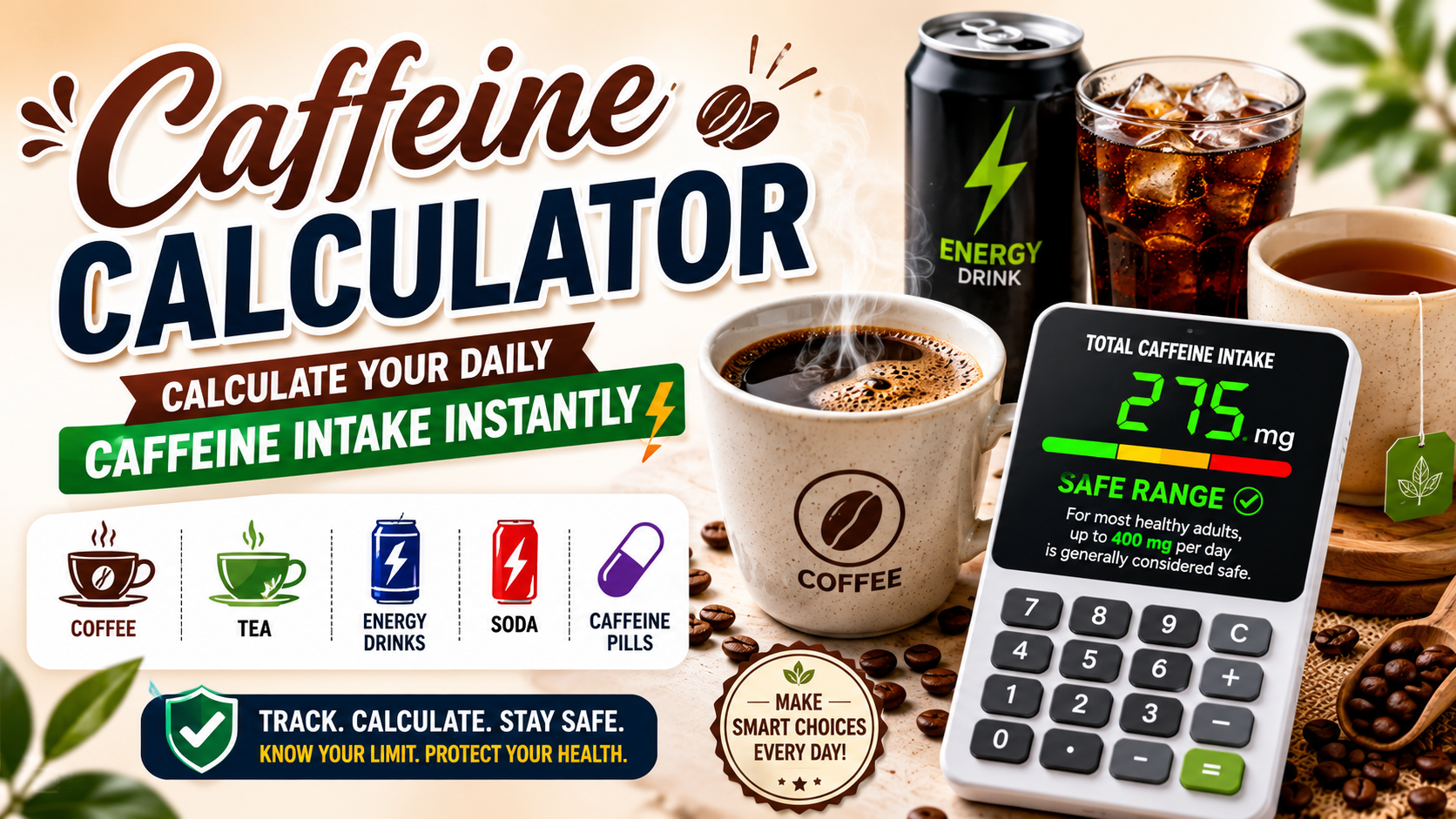
Caffeine is a stimulant that is consumed by millions of people worldwide. Caffeine, found in coffee, tea, energy drinks, soft drinks, chocolate and supplements, can help to maintain alertness, concentration and help to reduce fatigue. But excessive caffeine can cause negative effects like insomnia, anxiety, fast heart rate and digestive upset.
Use our Caffeine Calculator to quickly determine how many cups of coffee (or other caffeinated beverages) you consume each day. Knowing how much caffeine you use, from all the main sources, helps to become aware of your caffeine habits and if you are exceeding the recommended amounts.
What Is a Caffeine Calculator?
Caffeine Calculator is an online calculator that estimates how much caffeine you ingest each day. It considers all types of caffeinated drinks and supplements, such as:
- قهوة.
- Tea.
- Energy drinks.
- Soft drinks (soda).
- Pills or supplements containing caffeine.
The calculator then calculates your total amount of caffeine, in milligrams (mg) and tells you if your intake is low, moderate, or high.
قصص ذات صلة
 مخطط وجبات متزامنة مع الشمس: قم بمحاذاة وجباتك مع إيقاعات الساعة البيولوجية الطبيعية
 محلل تعداد الدم الكامل (CBC): افهم ما تعنيه نتائجك
Why Monitor Your Caffeine Intake?
People drink caffeinated beverages on a regular basis without knowing the amount of caffeine that is in them. Keeping track of how much caffeine you have can help you:(1),(2)
Improve Sleep Quality.
Excessive caffeine consumption, especially later in the day, may interfere with sleep quality and duration.
Lower down stress and jitters.
Excessive caffeine consumption can cause nervousness, restlessness and anxiety in the sensitive person.
Prevent Caffeine Dependence.
It also lets you keep tabs on how much caffeine you consume, preventing you from becoming addicted to it.

Support Heart Health.
Caffeine can cause an increase in معدل ضربات القلب and blood pressure in some people.
Make Healthier Lifestyle Choices.
Knowing how much caffeine you’re consuming can help you make decisions about your روتين يومي.
حاسبة الكافيين
Estimate your daily caffeine intake from coffee, tea, energy drinks, soda, and caffeine supplements.
Total Daily Caffeine
How to Use the Caffeine Calculator?
The calculator is easy to use and will only take a few minutes to use.
Step 1: Enter the Number of Cups of Coffee
Enter the amount of coffee you usually drink per day.
Step 2: Enter the Number of Cups of Tea.
Include amount of black, green or other caffeinated tea consumed per day.
Step 3: Add Energy Drink Consumption.
Type in the number of energy drinks that you drink in a day.
Step 4: Enter Soda Intake.
Add any soft drinks or sodas that contain caffeine.
Step 5: Add Caffeine Pills or Supplements.
Enter the number of caffeine tablets/supplements used daily.
Step 6: Click “Calculate Caffeine Intake”.
You'll find out how much caffeine you're consuming a day, and you will see it on the calculator screen right away.
Understanding Your Results.
Safe Range.
Your result will be considered safe for most healthy adults if your level of caffeine is within the advised range.
Moderate Intake.
Moderate caffeine consumption is fine for some people, but might cause trouble for those who are sensitive to caffeine.
High Intake.
Eating too much of caffeine can raise the risk of:
- Sleep disturbances.
- Anxiety.
- Restlessness.
- الصداع.
- Elevated heart rate.
- مشاكل في الجهاز الهضمي.
How Much Caffeine Is Considered Safe?
Caffeine doses of up to 400 mg per day are generally safe for most healthy adults. This is approximately the same as:
- 4 cups of brewed coffee.
- 8 to 10 cups of tea.
- Several cans of coke or other carbonated drink with caffeine.
- Multiple caffeine sources, such as multiple drinks.
Tolerance varies by person, depending on age, وزن الجسم, medications, and health.
Common Sources of Caffeine.
قهوة.
Coffee contains one of the highest concentrations of caffeine and can range between 70–150mg per cup, depending on how it's brewed.
Tea.
Most caffeinated teas, such as black tea and green tea, usually have less caffeine than coffee.
Energy Drinks.
Energy drinks are loaded with caffeine and sometimes with other stimulants, like Guarana.
Soft Drinks.
Many sodas have a moderate amount of caffeine that can contribute to the daily limit.
المكملات.
Pills and work out supplements may have a lot of caffeine in one serving.
Who Should Be Careful With Caffeine?
Some people should avoid caffeine, such as:
- المرأة الحامل.
- Breastfeeding mothers.
- Children and teenagers.
- Individuals who suffer from anxiety disorders.
- Those who have health issues relating to the heart.
- For people who are sensitive to stimulants.
If you've any medical condition, speak to your healthcare professional about how much caffeine you can take.
الأسئلة المتداولة.
1. Does caffeine have the same effect for all people?
No. The effect of caffeine is different for different people, and largely depends on genes, body weight, age, metabolism and health.
2. Does caffeine lead to sleep issues?
Yes. Caffeine late in the day can affect sleep and make it difficult to fall asleep.
3. Is caffeine addictive?
People who regularly consume caffeine may become dependent on it, and might feel withdrawal symptoms when they have less or no caffeine.
4. Should I get rid of all caffeine?
Not necessarily. Most healthy adults should be fine with moderate amounts of caffeine, and it can have some benefits when it is used responsibly.
الأفكار النهائية.
While caffeine can be beneficial for increased alertness and productivity, caution should be used in its consumption. The Caffeine Calculator is designed to help you figure out how much caffeine you're getting each day, and whether or not it's safe.
Include the calculator in your routine to monitor your habits, make informed choices, and maintain a balanced caffeine consumption.
+2 مصادر
لدى VeryWelfit إرشادات صارمة بشأن المصادر وتعتمد على الدراسات التي راجعها الأقران ومعاهد البحوث التعليمية والمنظمات الطبية. نتجنب استخدام المراجع من الدرجة الثالثة. يمكنك معرفة المزيد حول كيفية ضمان دقة المحتوى الخاص بنا وتحديثه من خلال قراءة سياسة التحرير.
- The Safety of Ingested Caffeine: A Comprehensive Review; https://pmc.ncbi.nlm.nih.gov/articles/PMC5445139/
- Caffeine as a Factor Influencing the Functioning of the Human Body—Friend or Foe?; https://pmc.ncbi.nlm.nih.gov/articles/PMC8467199/