






























 تدرب
تدرب

 تأمل
تأمل





الحقائق السريعة
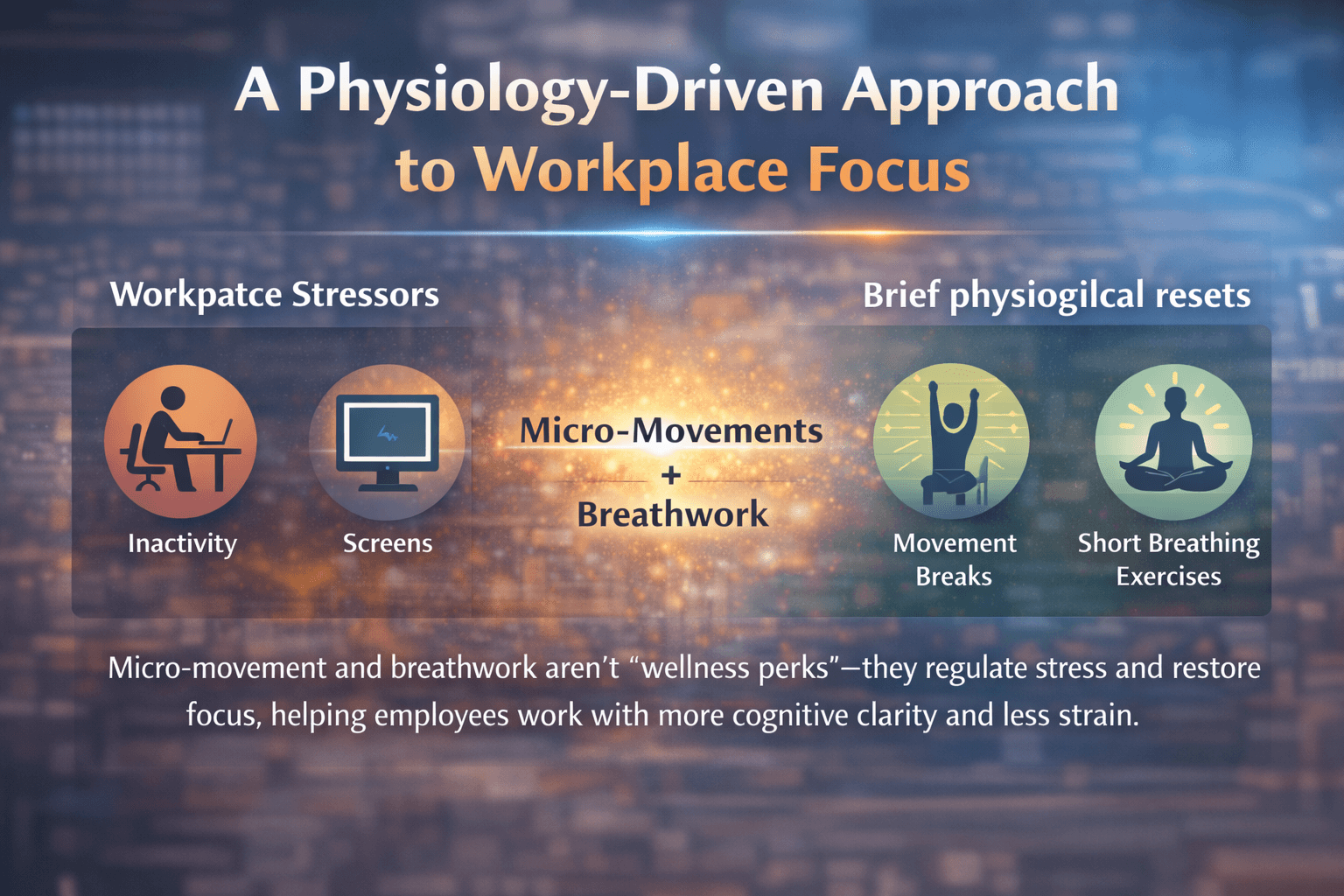
- This article lays out a practical, evidence-aligned framework for using micro-movement and breathwork to support focus at work — not as a “wellness perk,” but as an operational strategy.
- But when it becomes the default, the body shifts into sympathetic dominance — a mild but persistent fight-or-flight state.
- This sends a simple signal to the brain.

أماكن العمل الحديثة لديها مشكلة تركيز.
ليست مشكلة دافع.
ليست مشكلة موهبة.
ليست مشكلة “لا يهتم الناس بعد الآن”.
A مشكلة فسيولوجيا.
قصص ذات صلة
 دورجا مودرا: الفوائد والآثار الجانبية وكيفية القيام بذلك والاحتياطات
 اليوغا التصالحية الأعلى 8 تطرح للألم المزمن بخطوات
تحاول معظم المؤسسات حل تراجع التركيز وتزايد الإرهاق باستخدام:
- أدوات الإنتاجية
- نظم إدارة الوقت
- ضغط الأداء
- ورشات الصمود
وبينما يمكن أن يساعد هؤلاء على السطح ، غالبًا ما يفوتون عنق الزجاجة الحقيقي:
لم يتم تصميم الجهاز العصبي البشري مطلقًا لمدة ثماني ساعات من السكون والطلب المعرفي المستمر وإشارات التعافي الصفرية.
حتى يفهم القادة ذلك ، ستستمر مبادرات التركيز في التراجع.
هذه المقالة توضح أ إطار عملي متوافق مع الأدلة للاستخدام حركة صغيرة وحركة التنفس لدعم التركيز في العمل - ليس كـ “ميزة صحية” ، ولكن كاستراتيجية تشغيلية.
لماذا ينخفض التركيز في بيئات العمل الحديثة؟
لا يفقد معظم الموظفين التركيز لأنهم مشتتون بالهواتف أو يفتقرون إلى الانضباط.
يفقدون التركيز لأن جهازهم العصبي يعمل تحت إجهاد مزمن منخفض الدرجة.
فكر في يوم عمل نموذجي:
- الجلوس لفترات طويلة
- التعرض المستمر للشاشة
- عبء معرفي عالي
- تبديل المهام المتكرر
- التقييم الاجتماعي (الاجتماعات، رسائل البريد الإلكتروني، تطبيقات المراسلة)
بالنسبة للجهاز العصبي، يبدو هذا كالتالي:
“ابق في حالة تأهب. لا تتحرك. انتبه. قد يحدث شيء مهم ”.”
هذه الحالة مفيدة على المدى القصير.
ولكن عندما يصبح الافتراض يتحول الجسم إلى هيمنة متعاطفة - حالة قتال أو رحلة معتدلة ولكنها مستمرة.
النتيجة:
- ضيق الانتباه
- انخفاض ذاكرة العمل
- أبطأ اتخاذ القرار
- زيادة معدلات الخطأ
- التعب العقلي الذي لا يزول مع الفواصل
في هذه المرحلة ، لا يمكن لأي اختراق في الإنتاجية تجاوز علم الأحياء.
التكلفة الخفية لـ “مجرد الدفع”.
لا تزال العديد من ثقافات مكان العمل تكافئ:
- الجلوس لفترة أطول
- تخطي الفواصل
- القوة من خلال التعب
على السطح ، يبدو هذا وكأنه التزام.
من الناحية الفسيولوجية، يخلق:
- مخفض معدل ضربات القلب المتقلبية
- ضعف وظيفة القشرة الجبهية
- تفاعل أعلى للإجهاد
- أسرع حرق معرفي
قد يبدو الموظفون منتجين، لكن تفكيرهم يصبح:
- جاسئ
- متفاعل
- أقل إبداعًا
- أكثر عرضة للخطأ
غالبًا ما يتم الخلط بينه وبين “الأداء تحت الضغط” في حين أنه في الواقع تدهور الأداء تحت الضغط.
ما هي الحركة الدقيقة في الواقع (ولماذا تعمل).
الحركة الدقيقة ليست تمرينًا أو تمارين إطالة أو برمجة اللياقة البدنية.
إنه قاصر, ، المدخلات المادية المتعمدة مصممة لاستعادة توازن الجهاز العصبي دون تعطيل العمل.
عادة:
- 30 ثانية إلى 5 دقائق
- مكتب أو دائم
- ممنوع التعرق
- لا توجد معدات
- لا تغيير للملابس
من وجهة نظر فسيولوجية ، الحركة الدقيقة:
- يعيد تنشيط أجهزة الاستشعار
- يحسن الدورة الدموية وتوصيل الأكسجين
- يقلل من حراسة العضلات
- يعيد ردود الفعل الوضعية
هذا يرسل إشارة بسيطة إلى الدماغ:
“الجسد آمن. يمكن أن تعود الموارد إلى التفكير”.”
عندما يحدث ذلك ، يتحسن التركيز بشكل طبيعي.

لماذا يهم Breathwork (ولماذا تفشل معظم إصدارات مكان العمل)..
غالبًا ما يُساء فهم أعمال التنفس في البيئات المهنية.
كثير من الناس يربطونه بـ:
- تقنيات مكثفة
- حبس النفس
- الافراج عن المشاعر
- بحاجة إلى الخصوصية
هذا ليس مناسبًا لمكان العمل - وليس ضروريًا.
يجب أن يكون عمل التنفس في مكان العمل خفيًا وغير مرئي.
النمط الأكثر فعالية هو أيضًا أبسط:
- التنفس الأنفي
- بطىء
- زفير أطول من الاستنشاق
هذا يحفز النشاط السمبتاوي ، ويقلل من إشارات التوتر ، ويحسن الوضوح المعرفي - دون التخدير أو الشدة العاطفية.
إذا تسبب التنفس في الدوخة أو الانزعاج ، يتم القيام به بقوة.
تأثير الأداء: لماذا يعد تحسين التركيز 15-25% واقعيًا.
الأبحاث التطبيقية في علم وظائف الأعضاء المهني وبيئة العمل والأداء الإدراكي العصبي تظهر باستمرار ذلك حركات قصيرة وحركات التنفس يمكن تحسين:(1)
- اهتمام مستمر
- كفاءة تبديل المهام
- ذاكرة عاملة
- كشف الأخطاء
عندما تنفذ باستمرار، فإن المؤسسات تنظر إلى ما يلي:
- كتل تركيز أطول دون انقطاع
- أخطاء معرفية أقل
- خفض التعب بعد الظهر
- الاعتماد على الكافيين
هذه المكاسب ليست طفرات دراماتيكية - إنها تحسينات مطردة تتضاعف بمرور الوقت.

إطار عملي للمنظمات.
التردد.
كل 60-90 دقيقة أثناء العمل المعرفي المتطلب.
المدة.
2-5 دقائق لكل إعادة تعيين.
صيغ التسليم.
- إعادة تعيين مكتب فردي
- انتقالات ما بعد الاجتماع
- توقف على نطاق الفريق أثناء الجلسات الطويلة
- إشارات ودية للعمل عن بعد
ما هو مطلوب.
لا شيء.
لا ماتس. لا صالة رياضية. لا توجد غرفة صحية.
المكونات الأساسية لبروتوكول مكان العمل.
1 حركة مفصلية لطيفة.
أمثلة:
- دوران الرقبة (مدى صغير)
- لفات الكتف
- حركات الكاحل أو القدم
الغرض:
- تقليل التوتر العضلي
- تحسين ردود الفعل الحسية
- تقليل إشارات تهديد الجهاز العصبي
2 إعادة ضبط الوضعية.
أمثلة:
- تمديد العمود الفقري
- فتحة الصدر
- تراجع الكتف
الغرض:
- تحسين ميكانيكا التنفس
- تقليل إجهاد الرقبة والكتف
- زيادة اليقظة دون ضغوط
3 التنفس البطيء للأنف.
مثال:
- يستنشق 4 ثوان
- زفير 6 ثوان
الغرض:
- تقليل التنشيط الودي
- تحسين تقلب معدل ضربات القلب
- استعادة الوضوح المعرفي
لماذا يلعب المديرون دورًا حاسمًا؟
تعمل الحركة الصغيرة بشكل أفضل عندما تكون متناسق, ، غير مفوض.
يأخذ الموظفون إشارات من القيادة.
إذا كان المديرون:
- إعادة تعيين النموذج القصير
- السماح بفترات توقف قصيرة
- تجنب تمجيد الجلوس بدون توقف
تزداد المشاركة بشكل طبيعي.
إذا رفض المديرون أو يندفعون للتعافي ، فسيقوم الموظفون بقمع احتياجاتهم - ودفع ثمنها لاحقًا مع الإرهاق وفك الارتباط.
تدريب المدير: دعم التركيز دون زيادة الضغط.
إعادة صياغة المفتاح للقادة.
التركيز ليس سمة شخصية.
إنها أ صرح, ، متأثرًا بـ:
- تحميل الجهاز العصبي
- السكون المادي
- فرص الانتعاش
لا يحتاج المدراء إلى تحفيزهم بشكل أكبر - فهم بحاجة إلى ذلك تقليل الاحتكاك.
ما الذي يمكن للمديرين القيام به بنشاط؟
- شجع الحركة بعد اجتماعات طويلة
- إنشاء إعادة تعيين لمدة دقيقتين في جداول الأعمال
- تطبيع الوقوف أو التمدد لفترة وجيزة
- استخدم لغة مثل:
- “دعنا نعيد ضبط لمدة دقيقة”
- “استراحة سريعة قبل أن نواصل”
هذه الإشارات تضفي الشرعية على التنظيم.
ما الذي يجب على المديرين تجنبه؟
- المشاركة الإلزامية
- استدعاء الأفراد علانية
- استخدام التنفس كنظام أو تحكم
- فواصل التأطير على أنه “مكافآت” بدلاً من الضروريات.(2)
يعمل التنظيم بشكل أفضل عندما يكون طوعيًا ومستقيمًا.

أمثلة على التنفيذ على مستوى الفريق.
- بعد الاجتماعات: 2 دقيقة من الحركة قبل العودة إلى المهام
- أثناء عمل كتل العمل العميق: إعادة تعيين اختياري في منتصف الطريق
- فرق عن بعد: إشارات التذكير المشتركة أو مطالبات التقويم
- جلسات طويلة: توقف الانتعاش المخطط له كل 60-90 دقيقة
الاتساق مهم أكثر من المدة.
قياس النجاح دون المبالغة في هندسة ذلك.
لا تحتاج إلى مقاييس معقدة.
المؤشرات المشتركة:
- عدد أقل من إعادة قراءة نفس المادة
- فترات تركيز أطول
- تبديل المهام بشكل أكثر سلاسة
- انخفاض التهيج
- أخطاء أقل في وقت متأخر من اليوم
غالبًا ما تبدو التعليقات النوعية مثل:
“العمل يبدو أخف.”
“أنا أقل استنزافًا.”
“يمكنني التفكير مرة أخرى بعد الظهر.”
هذا هو النجاح.
معالجة المخاوف المشتركة.
“ألا يقلل هذا من الإنتاجية؟”
لا . عادة ما يزيد من وقت العمل الفعال.
“هل هذا هو الاستبدال؟”
لا هدف مختلف ، نظام مختلف.
“ماذا لو لم يشارك الناس؟”
لا بأس. لا يزال التبني الطوعي يغير الثقافة.
“هل هذا مبني على الأدلة؟”
نعم - يرتكز على علم وظائف الأعضاء والبحوث المهنية.
الصورة التنظيمية الأكبر.
لا يتم حل الإرهاق من خلال التدريب على الصمود وحده.
تم حلها بواسطة تغيير المدخلات اليومية:
- حركة
- تنفس
- إشارات الانتعاش
المنظمات التي تدعم تنظيم الجهاز العصبي انظر:
- تحسين التركيز
- تعاون أفضل
- اخطاء اقل من الإجهاد
- أداء أكثر استدامة
هذا ليس لينة.
إنها استراتيجية.
الفكر النهائي للقادة والفرق.
التركيز لا يأتي من الضغط.
يأتي من دعم الجسد الذي يقوم بالتفكير.
لا تضيف الحركة الدقيقة وحركة التنفس المزيد إلى يوم العمل.
يزيلون التداخل.
وعندما ينخفض التداخل ، يعود الوضوح - بهدوء وموثوقية ومستدامة.
+2 مصادر
لدى VeryWelfit إرشادات صارمة بشأن المصادر وتعتمد على الدراسات التي راجعها الأقران ومعاهد البحوث التعليمية والمنظمات الطبية. نتجنب استخدام المراجع من الدرجة الثالثة. يمكنك معرفة المزيد حول كيفية ضمان دقة المحتوى الخاص بنا وتحديثه من خلال قراءة سياسة التحرير.
- آثار ممارسات التنفس والتأمل لمدة 7 دقائق على تقليل التوتر ؛; https://pmc.ncbi.nlm.nih.gov/articles/PMC10917090/
- “أعطني استراحة!” مراجعة منهجية وتحليل تلوي حول فعالية الفواصل الدقيقة لزيادة الرفاهية والأداء ؛; https://pmc.ncbi.nlm.nih.gov/articles/PMC9432722/